
Spätzle is Spätzli is Spaetzle is Knöpfle


It’s spätzle in Germany.  In Switzerland it’s spätzli.  Here in the U.S., where we lazy Americans despise umlauts and other funny puncuations, it’s spelled spaetzle.  And in Hungary, which seems to always be a contrarian troublemaker, it’s knöpfle.

So, what is spaetzle?  It’s a pasta that cooks like a dumpling and tastes like a little bit of heaven.  It’s a side dish accented with cheese.  It’s the tidy little bed for a hearty main course.  It’s a breakfast with eggs.  It is, in short, a wonderfully tasty, amazingly versatile, incredibly easy dish that you’ll want to pair in culinary experiments with many of your favorite dishes.

What you’ll need:

  • 2 ½ cups flour
  • 1 tsp. salt (and more for salted water in which to boil the spaetzle)
  • 1 ½ cups water
  • 2 eggs
  • Butter for toasting the spaetzle
Flour, salt, water, eggs, butter, and spaetzle maker

Flour, salt, water, eggs, butter, and spaetzle maker

Step 1:

Mix or sift together the flour and salt.  Whisk together the eggs and water.  Blend the egg/water mixture into the flour and salt.  The result should be the consistency of pancake batter (see photograph below).  If too thick, thin with water.  If too thin, thicken with additional flour.  Let your batter sit for thirty minutes.

Mix together flour and salt; whisk together egg and water

Mix together flour and salt; whisk together egg and water

Blend egg and water into flour and salt

Blend egg and water into flour and salt

Step 2:

While resting the batter for that thirty minutes, bring a large pot of salted water to a rolling boil.  Place your spaetzle maker over the pot (you may want to wear mitts; steam can burn!).  Working in batches, pour batter into the spaetzle maker’s bin.  Slide the spaetzle bin back and forth across grate, causing thick drops of batter to fall into the boiling water.  The spaetzle will rise after two or three minutes.  With a slotted spoon or other draining device, scoop out the spaetzle as it floats to the top.  Drain well and set aside in a large bowl as you continue with subsequent batches.

Place spaetzle maker over salted, rapidly boiling water

Place spaetzle maker over salted, rapidly boiling water

Pour batter into spaetzle maker bin

Pour batter into spaetzle maker bin

Slide bin to and fro to drop spaetzle batter into water

Slide bin to and fro to drop spaetzle batter into water

Spaetzle will float to the top when done — about two to three minutes

Spaetzle will float to the top when done — about two to three minutes

Scoop out and drain well the spaetzle

Scoop out the spaetzle and drain well

Step 3:

Heat a large cast iron skillet to medium hot.  Toss in some butter and some of the spaetzle.  Don’t crowd the pan — once again you’ll be working in batches.  Breaking apart any clumps, toss the spaetzle in the butter until nicely browned and slightly toasted.  Remove the batch and continue with the remaining spaetzle until all of it is toasted.

Toast batches of spaetzle with butter

Toast batches of spaetzle with butter

Toast until lightly browned

Toast until lightly browned

Before and after difference between toasted and untoasted spaetzle

Before and after difference between toasted and untoasted spaetzle

Step 4:

If this spaetzle is to be used as a side dish, consider tossing it with freshly grated Parmesan or a flavorful Swiss Emmentaler or Gruyère cheese.  If this is part of your main course, use the spaetzle in place of rice, pasta, or even potatoes.  This is especially effective with hearty, thick-sauced dishes such as Hungarian goulash, German sauerbraten, or dark gravy-based dishes.

What else can you do with it, especially the leftovers?  Try serving it the next day for breakfast by topping it with a sunny side up or over easy eggs in place of grits or hash browns.

So, just how versatile is spaetzle?  Take a look at the dish below.  Looks like Hungarian goulash, doesn’t it?  It isn’t.  It’s actually my not-yet-world-famous New Mexico-style chili colorado con puerco (translation: pork in red chili).  Remind me sometime and I might give you that recipe as well.

Spaetzle with chili colorado con puerco

Spaetzle with chili colorado con puerco

3 Comments

Filed under Photography, Wine & Food

What Does Sandy Hook Elementary School Have in Common with . . .


. . . Columbine High School, Virginia Tech, and the Century Aurora 16 Theater?  We’ll get to the answer to that riddle in a moment.  First, however, I want to address the recent tragedy that occurred at the Sandy Hook Elementary School in Newtown, Connecticut, and the inevitable outcries to “do something.”

Smith & Wesson SW99

Homicides by firearm peaked in the United States at over 14,000 gun murders back in 1994.  That peak followed a nine-year surge in such crimes that began in 1985.  In 2011 there were 12,626 murders of which 8,552 (67.7%) were committed with firearms.  In a nation of 311,591,917 that comes out to a rate of 2.74 deaths per 100,000.  Contrast that to the rate of 10.39 traffic deaths per 100,000 and you can see that you are at considerably more risk of losing your life every time you get into that incredibly dangerous horseless carriage contraption upon which you rely daily, but that’s not really the point of this missive.

In 2004 this country’s ten-year assault weapons ban was allowed to lapse despite dire predictions that such a lapse would result in an immediate upsurge in deaths nationwide.  It didn’t happen.  Assault weapons were never really the problem as they only accounted for less than 5% of crimes committed with firearms.

Meanwhile, what has happened since 1994?  Why are gun crime rates down nationwide despite the lapse of the “assault weapon” ban?

Well, for one thing the number of states authorizing private citizens to carry a handgun, either in the open or concealed, has gone from just a very few to 41.  Many of these states granting concealed weapons licenses have entered into reciprocal agreements with other states.  For instance, as a licensee of the state of Texas, I can carry a concealed weapon in Alabama, Alaska, Arizona, Arkansas, Colorado, Delaware, Florida, Georgia, Idaho, Indiana, Iowa, Kansas, Kentucky, Louisiana, Michigan, Mississippi, Missouri, Montana, Nebraska, New Mexico, North Carolina, North Dakota, Oklahoma, Pennsylvania, South Carolina, South Dakota, Tennessee, Utah, Vermont, Virginia, West Virginia, Wisconsin, and Wyoming subject, of course, to the laws and restrictions in each of those states.

Likewise, concealed carry licensees in those state can and do routinely carry weapons while visiting us here in Texas.

But how can this be?  Nationwide gun-related crime rates are down, not up, right?  After all, isn’t reducing gun violence the whole raison d’être behind the Brady Center and their call for increasing gun restrictions?  Isn’t this the mantra — reduce guns to reduce violence — of New York City Mayor Michael Bloomberg, a man with 24/7 police protection available to him?

Now notice some of the states not on the above list, states such as Illinois (home of Chicago); Washington, D.C. (I know.  Not really a state, but you get my meaning); New York (home of New York City); California, Massachusetts, New Jersey, and other high-crime states.  You’ll notice that also on the list is Connecticut, home to the community of Newtown and the Sandy Hook Elementary School.

Coincidence?  Not at all.  Blanket gun laws disarm one group, and one group only — the law abiding citizen — and deny to that citizen the right of self-protection.  The criminal doesn’t care about such laws; he will be armed regardless.

In other words, if you rely upon 911 and the police to protect you, then your “savior” will arrive only after the crime has been committed and the criminal has long departed.  Or, as a good friend and former law enforcement friend of mine likes to say, “When seconds mean the difference between life and death, remember that the police are only minutes away.”

The main danger now is the public outcry to “do something.”  This country has a long and rich tradition of, during a period of emotional urgency, creating both bad policy and bad law.

In the wake of assassinations in the 1960s, for example, came the Gun Control Act of 1968.  That law prohibited the importation of the ever popular Walther PPK because of its small, concealable size.  The result was the PPK/S — a handgun nearly as small, just as concealable, but with one additional round carried in the magazine because of the mandated expansion of the weapon’s grip to make it legal.  That’s an improvement?  Then, to further get around the restriction, PPK manufacture was taken up by an American company resulting in an even cheaper version of the weapon than what was previously coming into the country from West Germany and France.

Walther PPK and Walther PPK/S

Other examples of how we overreact as a nation include the Gulf of Tonkin Resolution which resulted in the escalation of the Vietnam War.  Want a more current example?  Consider the creation of the monolithic, bureaucratic Department of Homeland Security and the much despised Transportation Safety Administration as well as the unwarranted and costly invasion of Iraq in the aftermath of the 9/11 attacks and the calls to “do something.”  Now is not the time to make hasty and irrational mistakes with the Second Amendment, which isn’t the Amendment causing the current problems in any case.

You read that correctly.  It’s Freedom of Speech (particularly the Press) rather than the Right to Bear Arms that is fueling this latest wave of violence. By publicizing the names, sensationalizing the crimes, and making the perpetrators famous, the media are encouraging other deranged individuals to take a similar path.  It’s called the Copycat Effect.

Yet somehow I don’t hear the same media now advocating for restrictions on Amendment 2 calling for restraint on their part in the exercise of Amendment 1.  Indeed, far from it in today’s never ending 24-hour news cycle.

Walther P99c AS

Now, back to our original question:

What does Sandy Hook Elementary School have in common with Columbine High School, Virginia Tech, and the Century Aurora 16 Theater?

The answer:  All four areas were designated by either law or by posted corporate policy as “Gun-Free Zones,” yet in not one of the cases cited did those responsible for those designations take adequate (or even any) steps to ensure that the law-abiding citizens they were disarming were protected from those who would ignore their “Gun-Free Zones.”

One last point aimed (pun intended) at those who advocate the elimination of the Second Amendment — and this is a point they simply must answer for any credibility whatsoever:

In Switzerland, every able-bodied male between the ages of 19 and 31 is trained on and issued a fully automatic (read: machine gun) military (read: real assault) weapon, which they store along with ammunition in their homes. When they exit mandatory military service, they are offered the option of having that weapon converted from full automatic to semiautomatic so that they may keep that weapon as their own. That means there is either a fully automatic or semiautomatic “assault weapon” in many Swiss homes, and Switzerland leads the world in gun ownership with 45.7 weapons per 100 residents.

Meanwhile, Mexico has some of the strictest gun ownership laws in the world.

So the point that must be answered by those who fear private ownership of weapons are these:

If availability of weapons is truly the problem, then why isn’t Switzerland the most dangerous country on the planet, and why isn’t Mexico a violence-free paradise?  Why has the expansion in the U.S. of both gun ownership and the right to carry a weapon in public for self-defense been accompanied by the lowest gun-homicide rates seen in this country since the early 1970s?

5 Comments

Filed under Author, Firearms, Opinion Piece

Random Photo Week — Friday


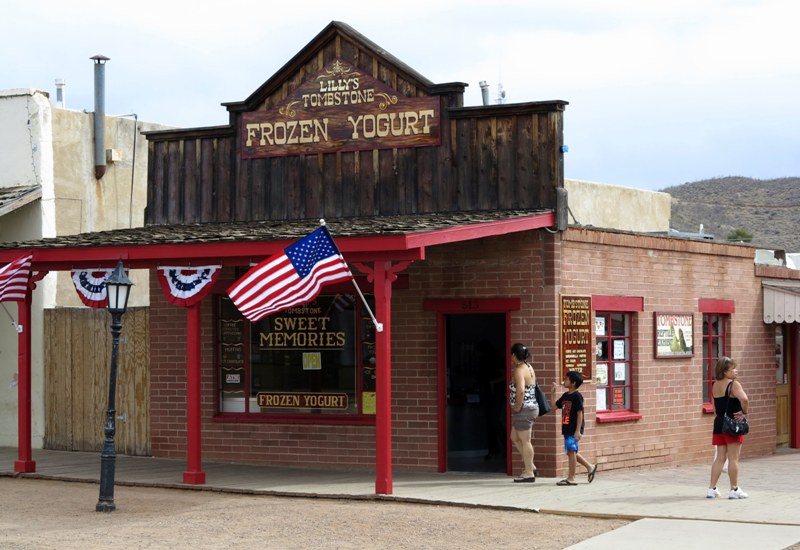
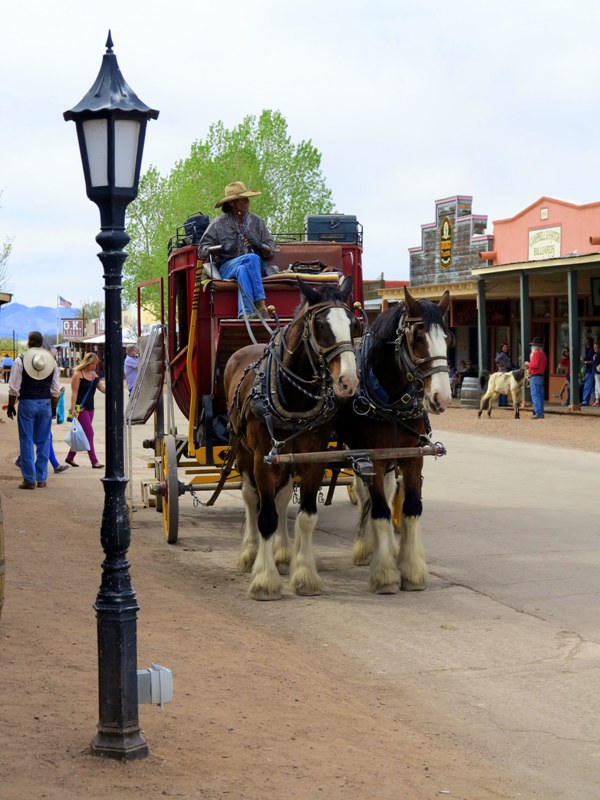
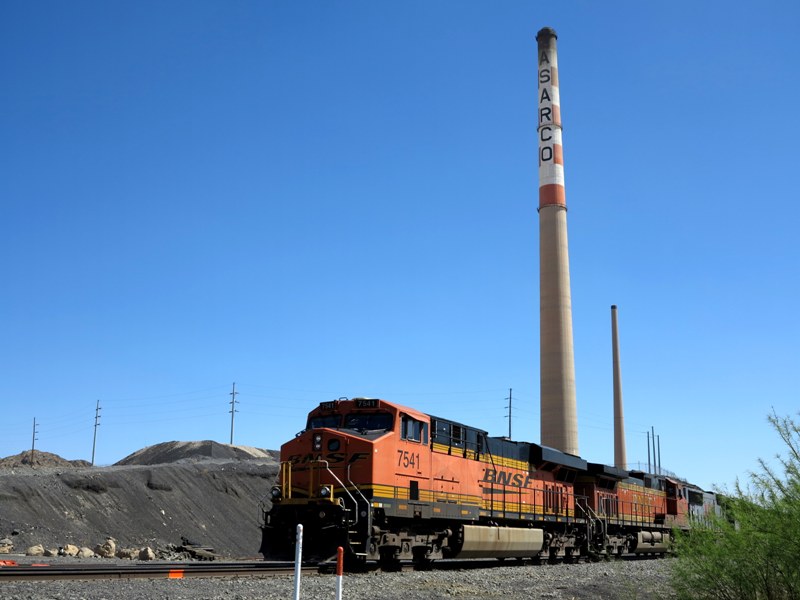
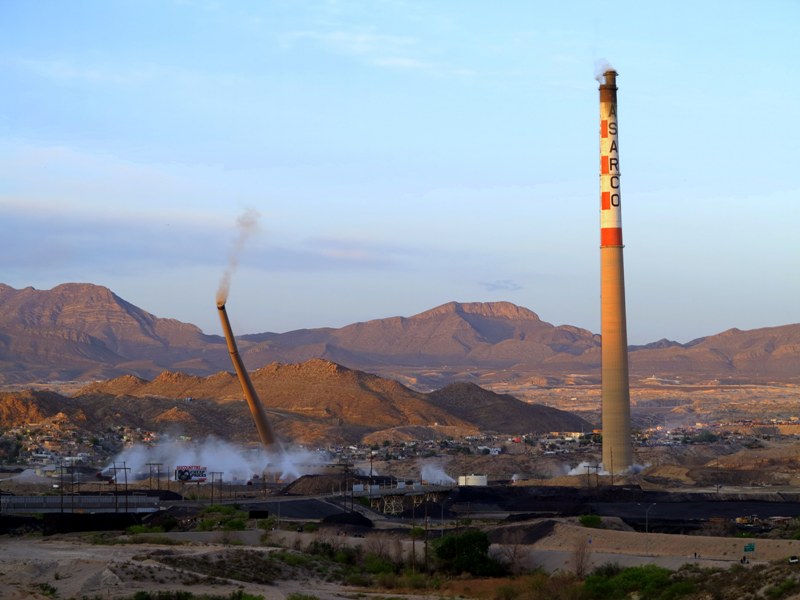
Today concludes what I feel has been a fun week in photography.  I hope you enjoy today’s eclectic array of images, starting with my favorite from this set:

Framing the Mission

Framing the Mission

Want to enlarge an image from the gallery below?  Just click on it:

1 Comment

Filed under Photography