
Over the past several weeks I took a break whilst showing you the fascinating Kolmanskop ghost town (that five-week series began on 6 April at this link: The Ghost Town Picture Series — Part 1). Now it’s time to show you the port our cruise ship. the Azamara Journey, visited for that trip to Kolmanskop. So, before I begin another extensive and exhausting travel series, I have two additional things to present to you. This week will feature Lüderitz, Namibia. Next week is a series on classic and collectible Smith and Wesson revolvers. Meanwhile, while my Ghost Town, Lüderitz, and S&W revolver series play out, I’m off to rest, relax, recharge, perform jury duty, and head out on a trans-Panama Canal repositioning cruise from Miami to Seattle. After all that, I’ll be showing you Southeast Asia — ranging from a return to Singapore, to Angkor Wat in Cambodia, to the streets of Bangkok, stops in Malaysia, an elephant safari in Sri Lanka, and extensive travels throughout India, including a tiger safari.

Now let’s discuss Lüderitz, a very small town (population about 16,000) on the coast in southwest Namibia. It sits on the western edge of the Namib desert. So, how dry is the Namib? Average rainfall is 0.39 inches/10mm per year. And it gets even drier along the cost, with rainfall there coming in a 5mm!

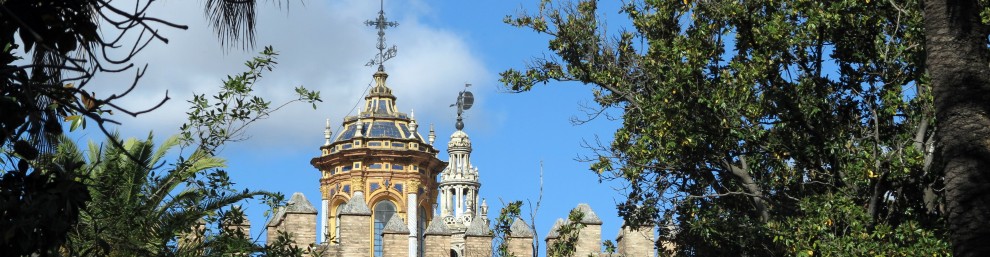
As with much of Namibia, German influences abound everywhere. After all, Namibia used to be the German Southwest Africa colony until July 1915 and the Southwest Africa Campaign during World War I. These German influences are especially evident in Namibian architecture, which ranges from German Colonial (a combination of Neo-Renaissance, Neo-Baroque, and Neo-Gothic styles) to Art Nouveau to Jugendstil — a German-Austrian offshoot of the Art Nouveau movement. This is Goerke House, which is in the Jugendstil style. And if that weren’t German enough for you, Goerke House is at the intersection of Diamantberg St. at Zepplin.

An interesting feature of the Goerke House is a wall-mounted, north-facing (we are, after all, south of the equator), vertical sundial built into the north façade. You can see it on the right side of the tower in the image above. That tower, by the way, faces another Lüderitz landmark on nearby Diamond Hill, the imposing Felsenkirche. I will present Felsenkirche to you in Wednesday’s article. But for now, here is a better view of the Goerke House sundial:

Farther north, on Hohe St. just downhill from Felsenkirche, I snagged this fun image with Goerke House in the background:

Near this house, where Kirche St. merges into Berg, is where I snagged this image of Haus Grünewald and the Painted Ladies of Lüderitz:

Where Hohe St. T-bones into Dias St. is the Namibia Maritime Museum. We didn’t go inside the museum, but we did stomp around the grounds for some fun photographs, some of which I’ll be sharing in this week’s Fun Photo Friday. Until those photographs publish, you’ll just have to content yourself with this massive, colorful, Maritime Museum compass rose:

Outside the grounds of the Namibia Maritime Museum, along Dias St. just north of the intersection with Nachtigall St., we stumbled upon this:

By now we were getting a bit tired and decided to head by to the Azamara Journey, so we headed north toward Roberts Harbour. But when we reached a traffic circle we detoured a bit back to the south on Bismark St. Here we came across the historic Deutsche Afrika Bank building constructed in 1907. As you can see, it is in the German Colonial style, and it was the first bank erected in Lüderitz:

We were feeling a bit parched by this time, so we took a break just north of this bank and went into the Cosy Corner Coffee Shop. Being forewarned against drinking the local water, and bearing in mind that ice is made from water, we opted for canned refreshments. So, I’ll leave you today with this “Pause that Refreshes” featuring local soda. The can on the right is Sparletta Creme Soda, and on the left is Stoney Ginger Beer:

Слава Україні! (Slava Ukraini!)
 Decisions — Murder in Paradise
 The Globe — Murder in Luxury
