
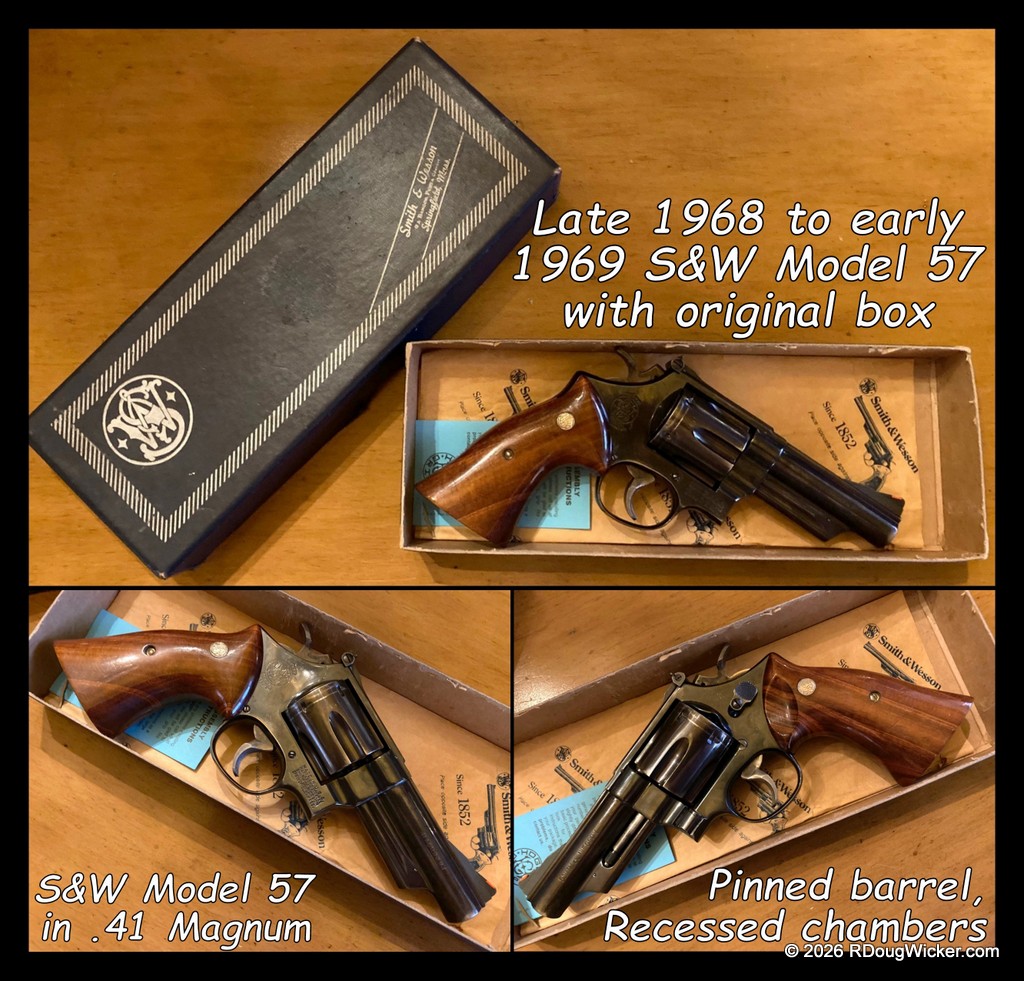
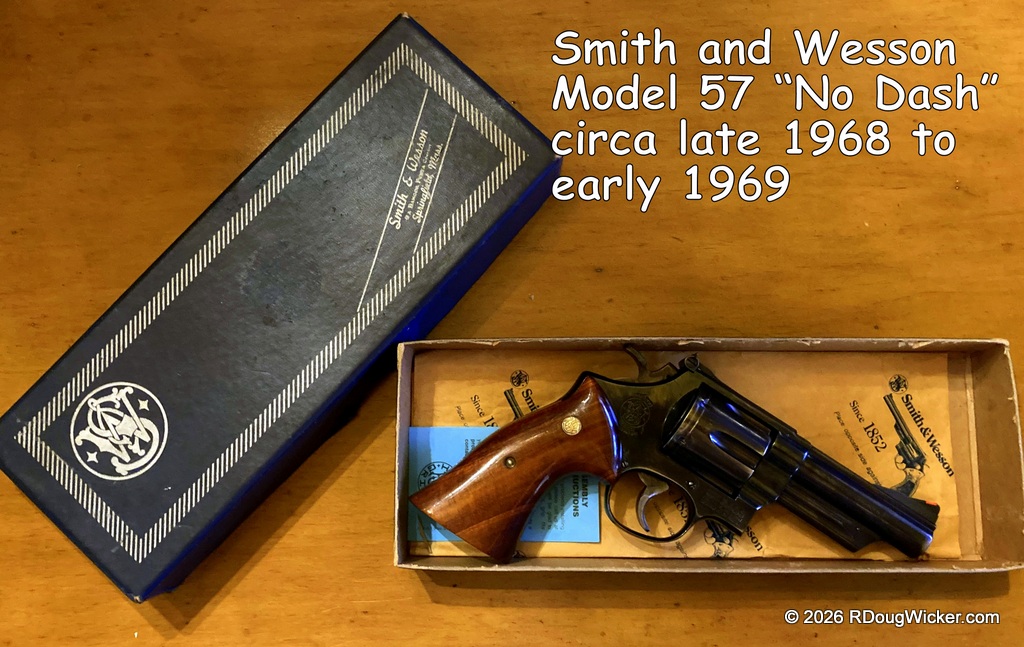
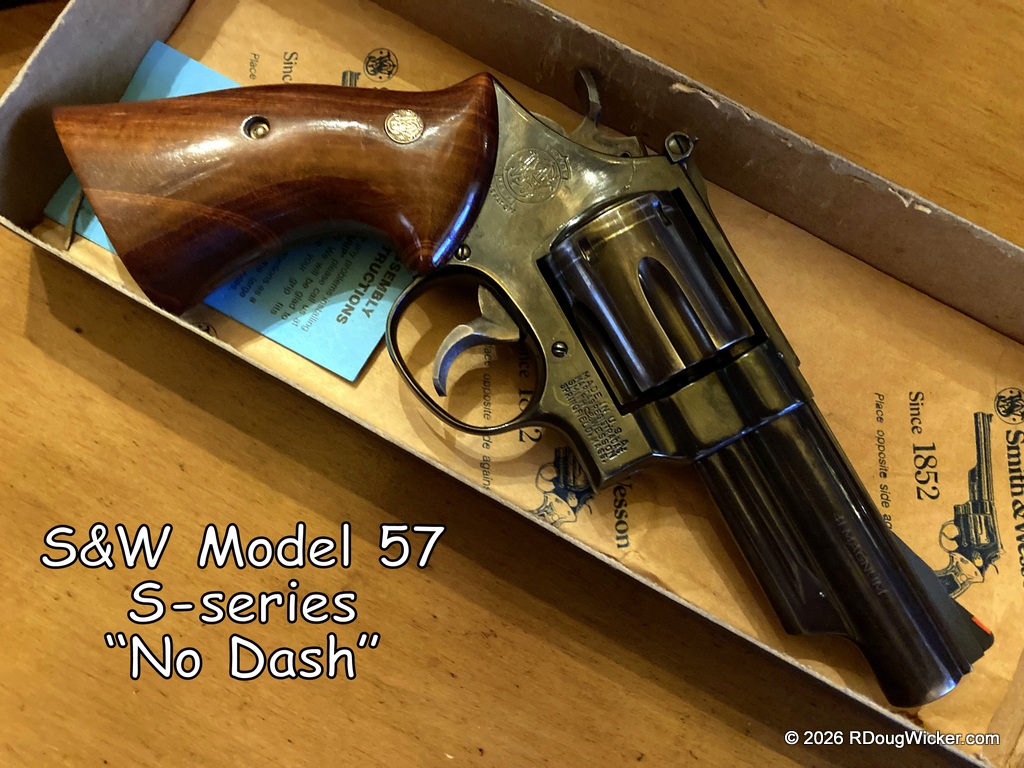
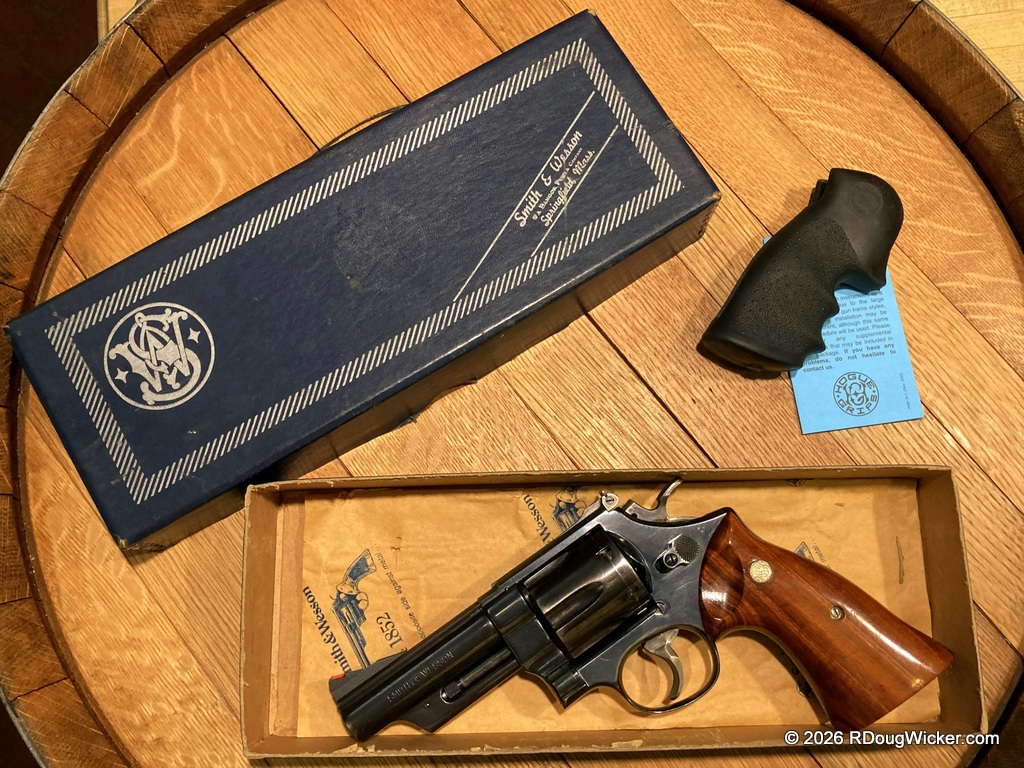
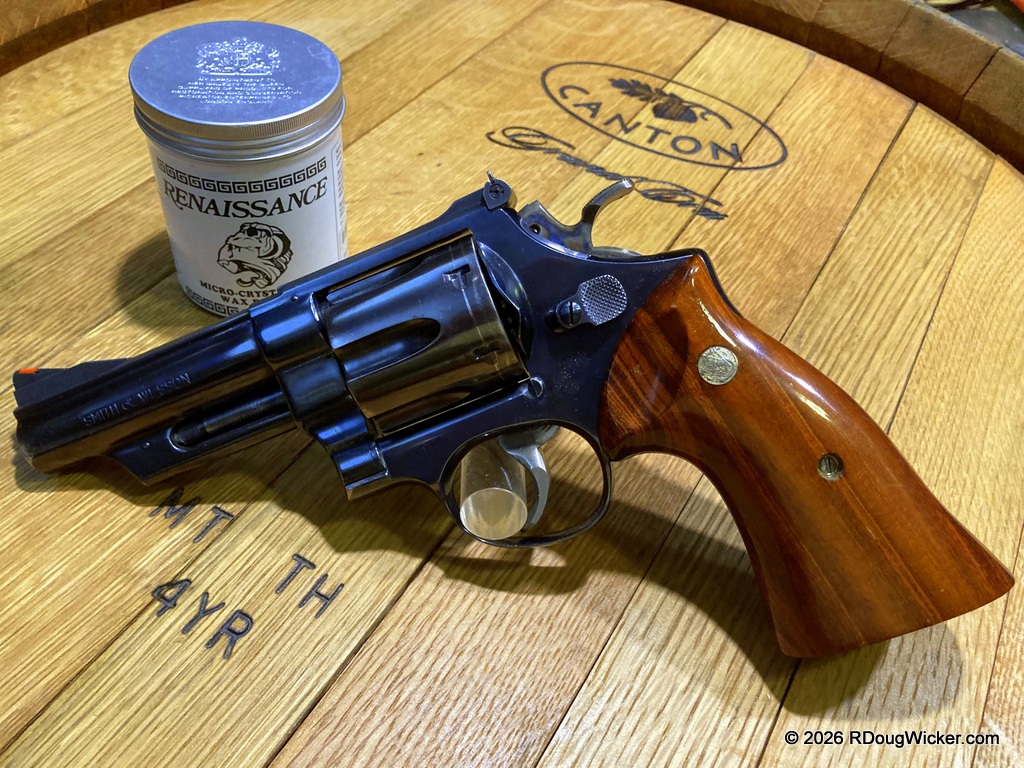
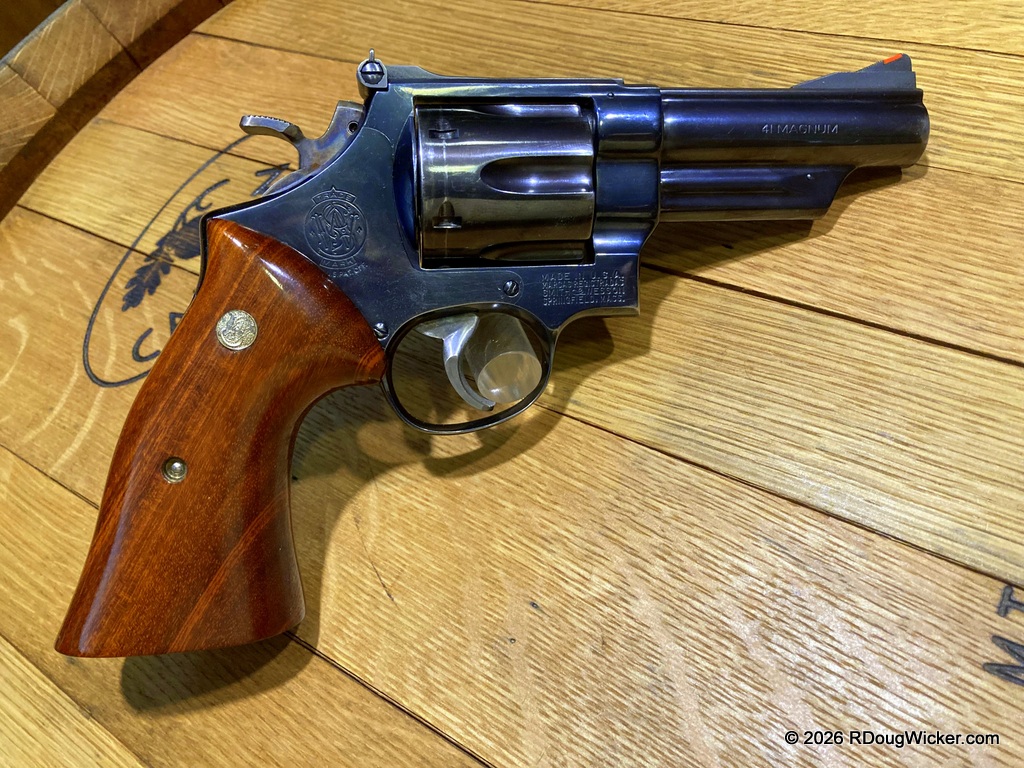
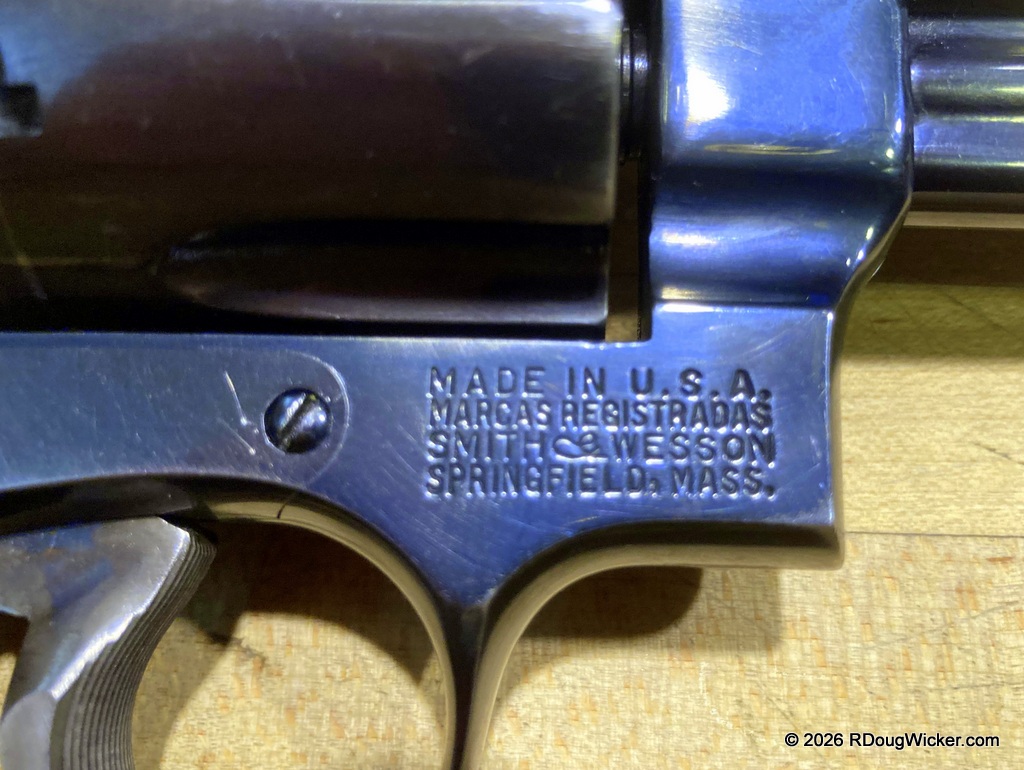
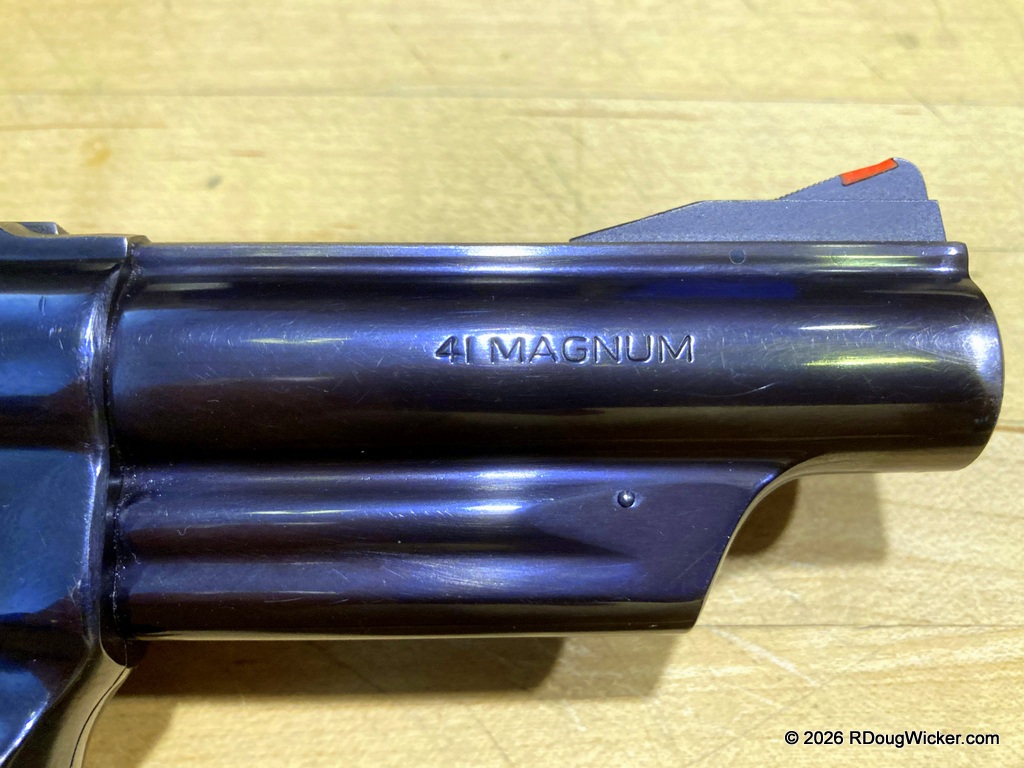
Today I present to you a bit of a civilian handgun history, as opposed to Monday’s military handguns history on the Smith and Wesson “Victory” Model used during World War II. What makes this gun historical is that the Smith and Wesson Model 57 was the first handgun chambered for the powerful, versatile, and, in my view, vastly underrated .41 Remington Magnum. The S&W Model 57 you see pictured today is an early “No Dash” sporting an S-series serial number, pinned barrel, and recessed chambers. (For a lesson on what all that means, see my article: Smith & Wesson Revolver Lesson/Quiz — What do “Pinned,” “Recessed,” and “No-Dash” mean?) Later no-dash Model 57s transitioned to an N-series serial number in early 1970. That means this one is earlier. Specifically, based upon the serial number range, this gun was born in late 1968 to early 1969. My guess, based upon that range, is very early in 1969.
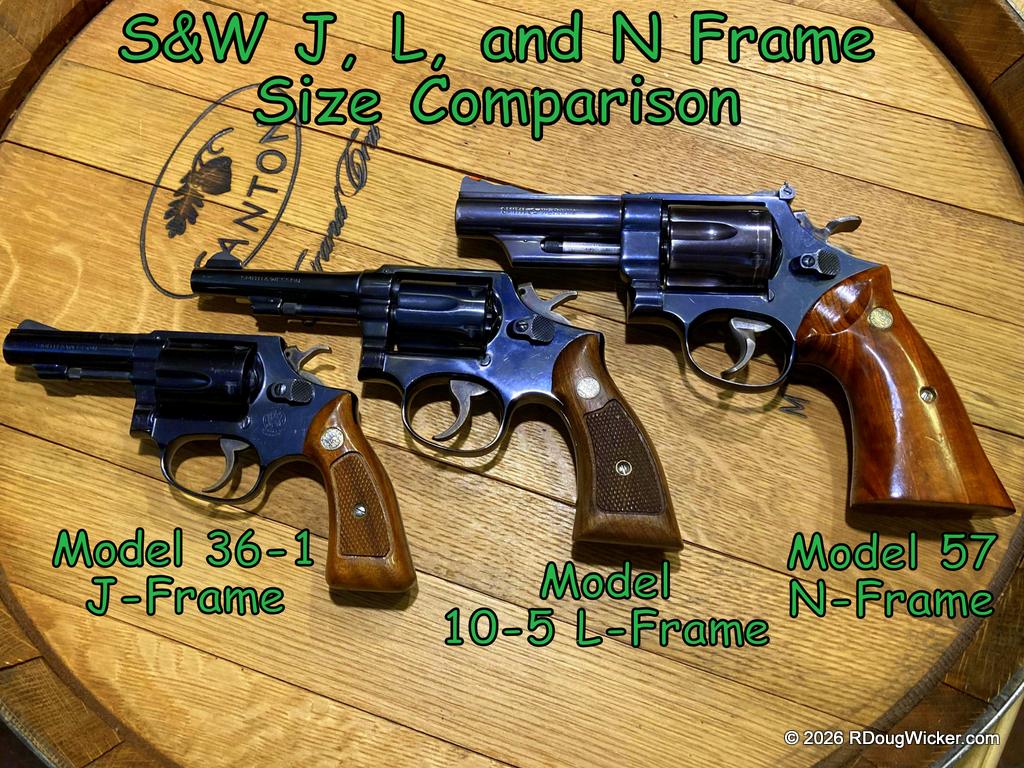
Whereas Monday featured a mid-size S&W L-frame, and this week’s Fun Firearm Friday will present S&W’s smaller J-frame, today’s Model 57 is a large N-frame. N-frame revolvers originated with the Smith & Wesson .44 Hand Ejector 1st Model ‘New Century,’ a.k.a., the ‘Triple Lock.’ Now for a comparison featuring a misleading large S&W Model 36 J-frame with a longer than normal barrel and larger grip:
Some of you read that title and said to yourselves, “That’s a typo. Surely he means .44 Magnum.” Well, that’s not a typo, and don’t call me Shirley. So, what’s all this .41 Magnum stuff all about: It all began with a handgun ballistics genius named Elmer Keith. Elmer Keith developed the first Magnum cartridge way back in 1935, and it quickly became a legendary law enforcement round — the .357 Magnum. In the 1950s Keith developed the .44 Magnum, a round he designed for large game, but which also soon gained a much-deserved reputation for protection from grizzly bears and other large predators.
So, if .357 Magnum is a great law enforcement round, and .44 Magnum (which San Francisco PD Inspector Harry Callahan famously dubbed “… the most powerful handgun in the world, and would blow your head clean off….”) is superb for hunting and outdoor protection from predators, what’s the raison d’être for the .41 Magnum? Keith reasoned that the .44 Magnum was just too powerful. He perceived a gap between the .357 and .44 Magnum, and he wanted to give law enforcement an upgrade to the .357 that would also serve both hunters and target shooters. A true multi-purpose handgun round.
Keith’s intent was to fashion two loadings for the .41 Magnum — a milder “.41 Police” load pushing a 200 grain/13g semiwadcutter bullet at 900 to 1,050 feet/274-320 meters per second, and a more powerful load for hunters and target shooters propelling a 210 grain/14g projectile at a phenomenal 1,400–1,500 fps/427-457ms. For a target shooter, that second load translates to a very flat-shooting bullet. Sounds great. What really makes sense about this concept is that the .357 Magnum can shoot the cheaper, easier to handle, .38 S&W Special; and the .44 Magnum also chambers the cheaper, much more pleasant to shoot .44 S&W Special. As the .41 Magnum had no weaker sibling, Keith wanted to just adjust the load to fit a broad spectrum of uses.
Unfortunately, law enforcement never bit on the concept. While a lot of highway patrols used the .357 Magnum, many police departments were wedded to the .38 Special. Even though reduced in power, the “.41 Police” was deemed too powerful, epecially for urban environments where overpenetration is always a concern. Another factor weighing against the round is that the N-frame is not a light gun, and the .41 Magnum has considerably more recoil than the .38 Special. Police departments stayed away in droves.
But hunters appreciated the 20% reduction in recoil over the .44 Magnum, and target shooters enjoyed the .41 Magnum’s flatter trajectory (although that’s overhyped; at 150 yards the difference is barely noticeable). With this crowd the round became a mild success and developed an almost cult status. But beyond that, the .41 Magnum never really took off.
Now it’s time to discuss the S&W Model 57 and its law enforcement cousin, the Model 58. The Models 57 and 58 came out in 1964 in conjuction with the introduction with the .41 Remington Magnum. The Model 57 featured adjustable sight and a ramped front sight with a red insert. The Model 58, geared toward the law enforcement market, had a fixed notch, channel-set rear sight, no insert on the front sight, cheaper “magna service” grips, and lacked a shroud for the ejector rod.
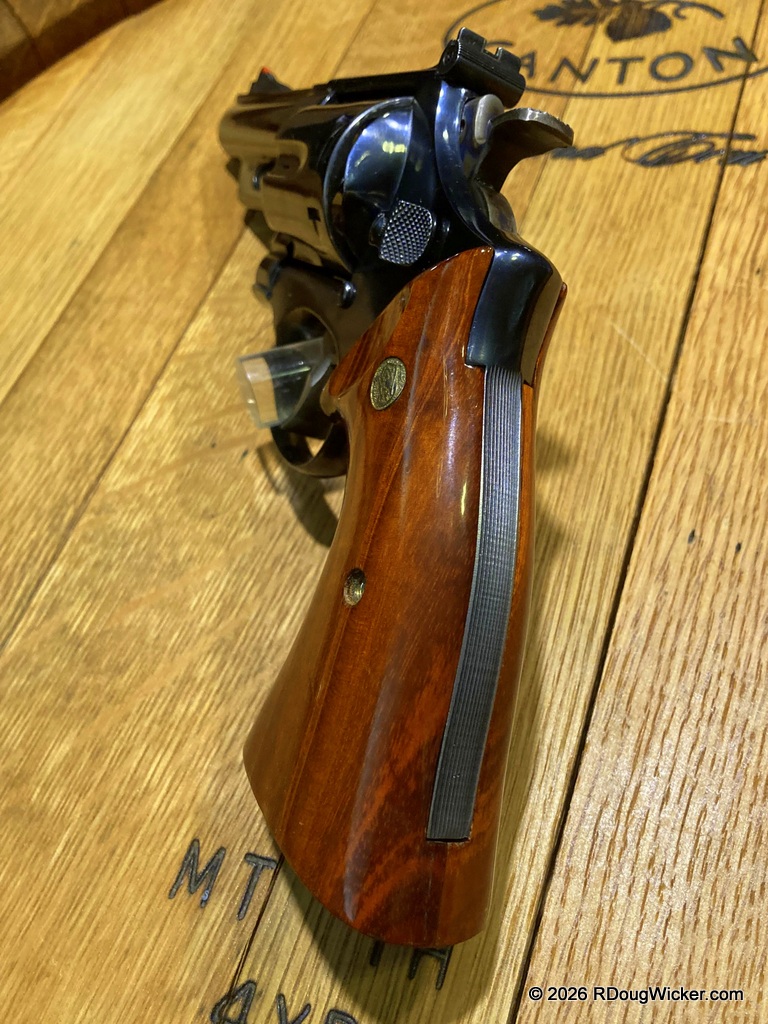
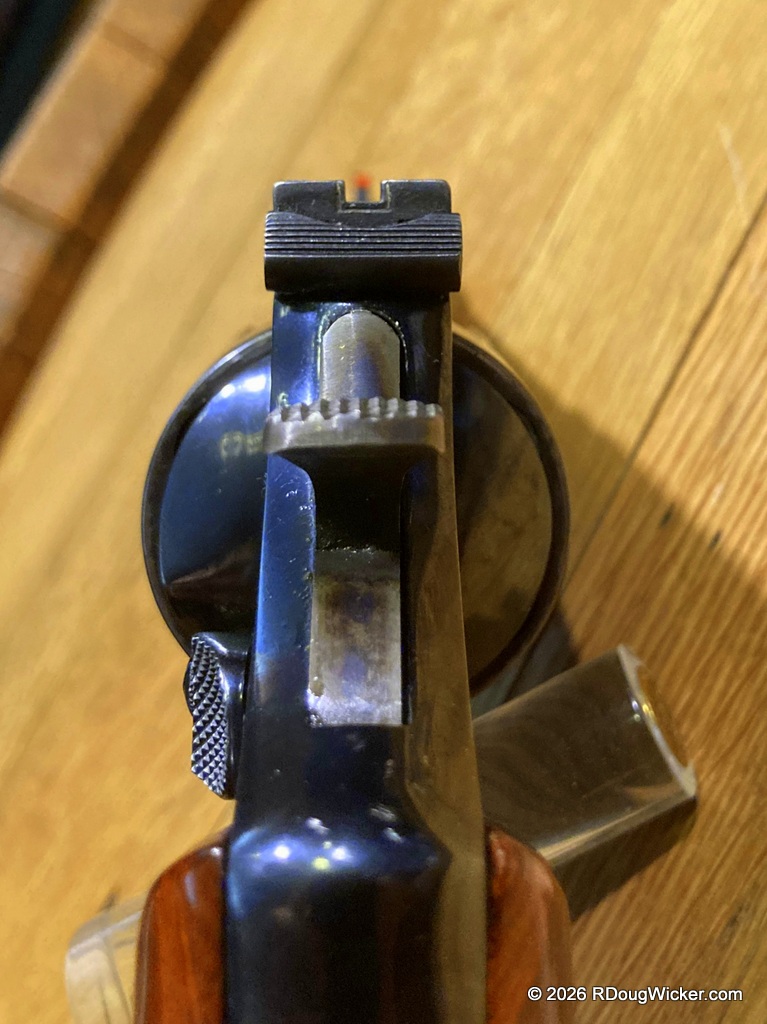
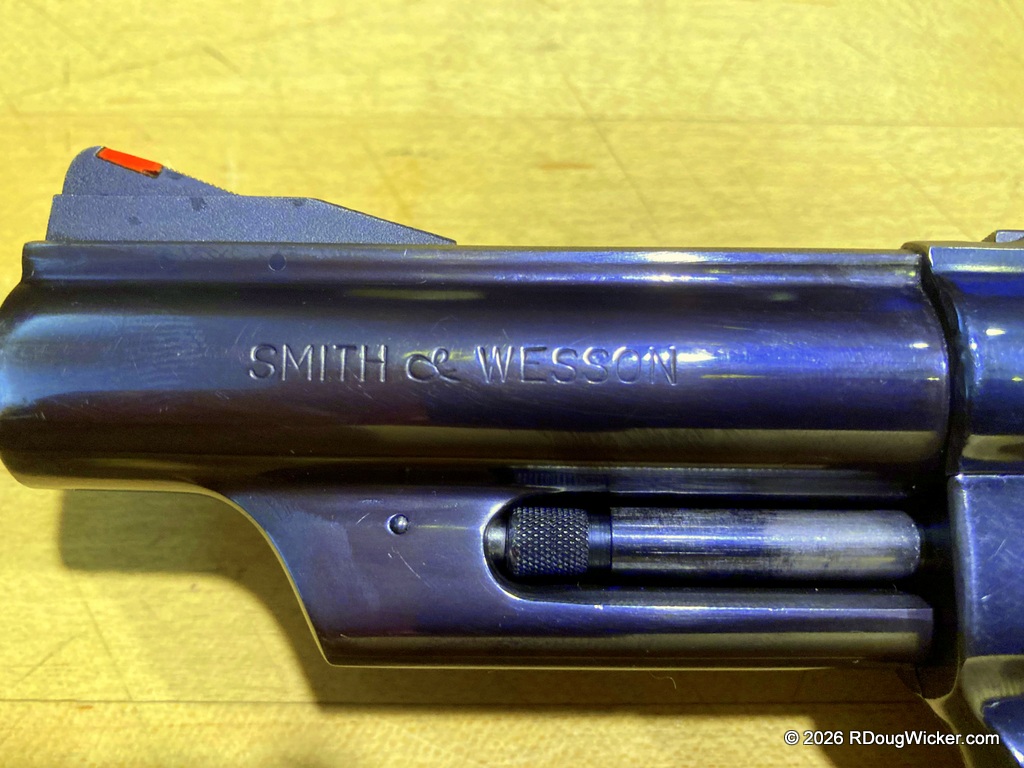
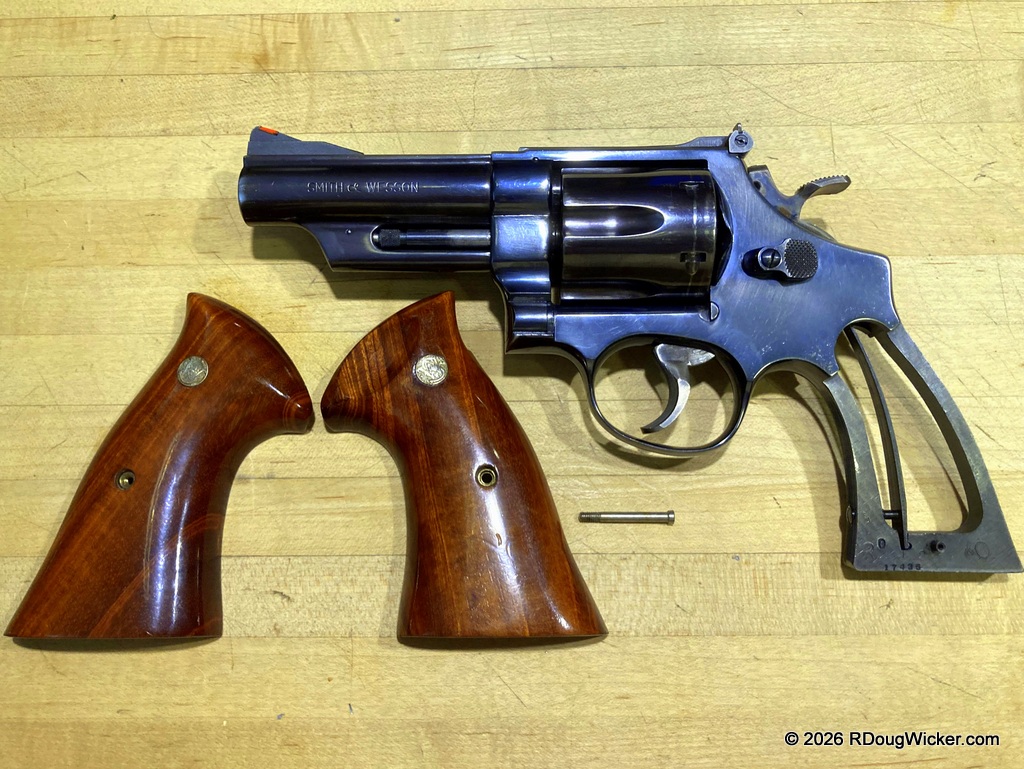
If you recall me previous articles on Smith and Wesson revolvers, you may remember that the serial number is always located on the butt, and almost never anywhere else. Monday’s Victory was an exception, as it had the serial number in three locations. Today’s Model 57 is also an exception. You have to remove the grips to find the serial number in the normal location:
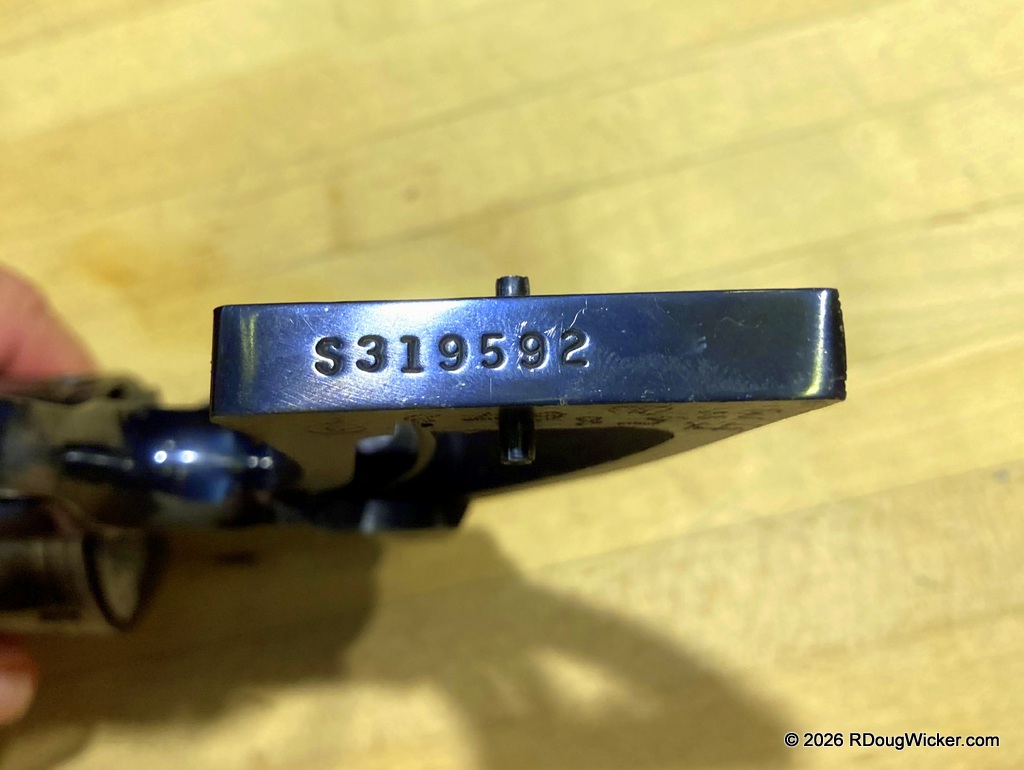
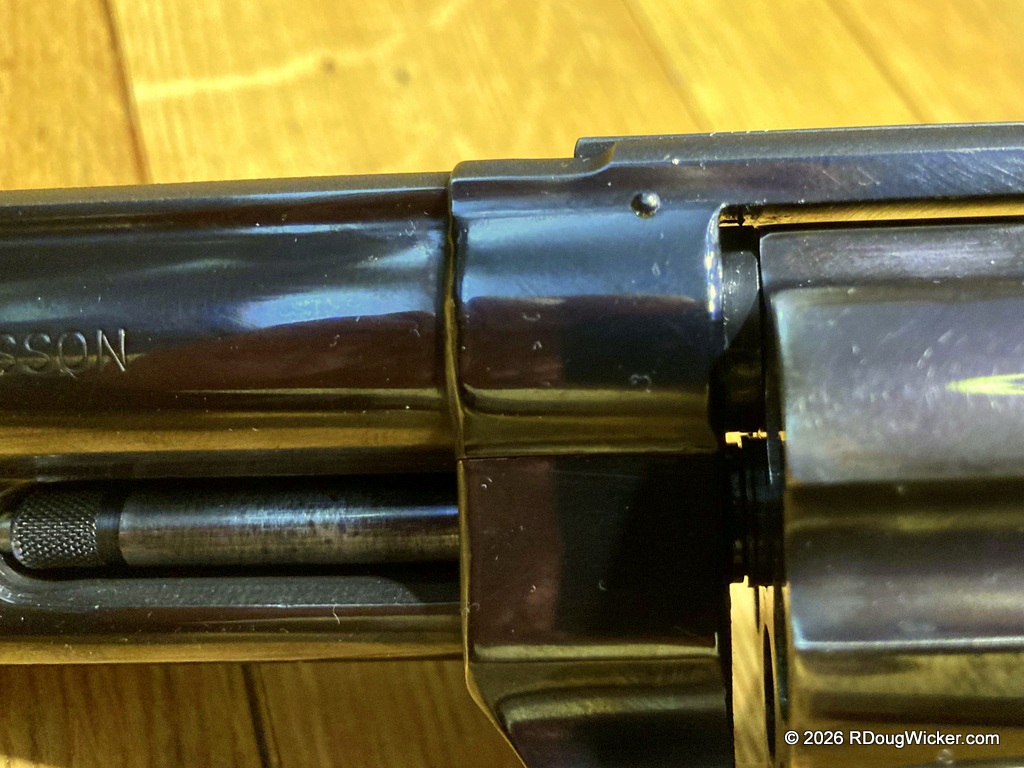
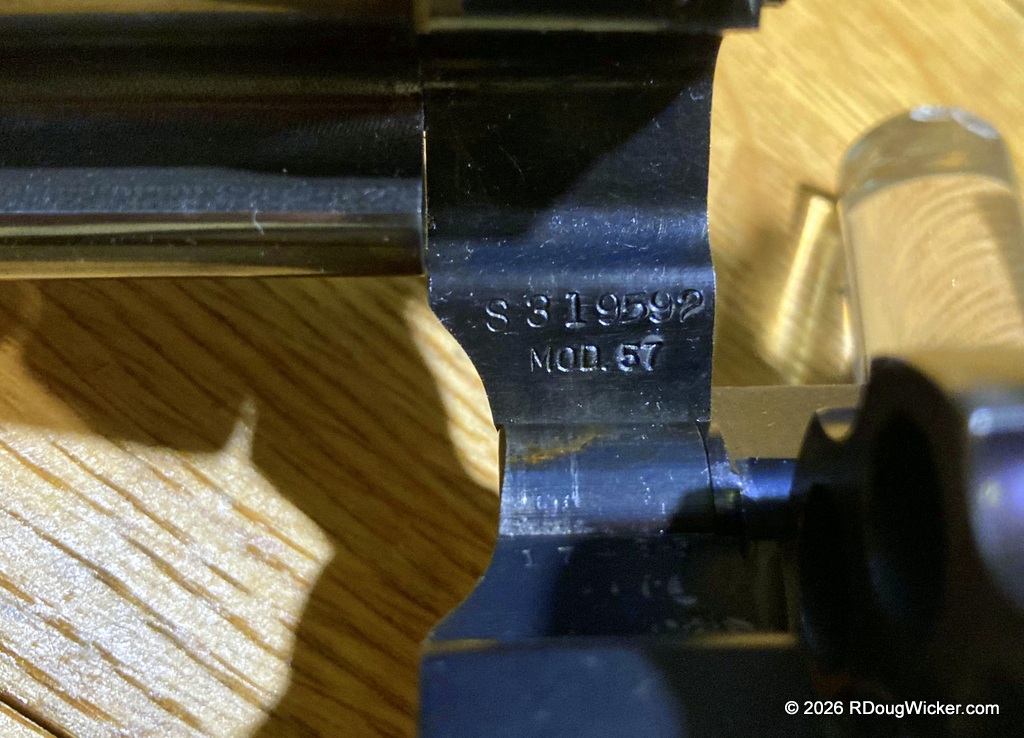
But I also found the serial number stamped on the crane, along with the usual location for the model and change numbers. As this is a no-dash, there is no change number following the model number:
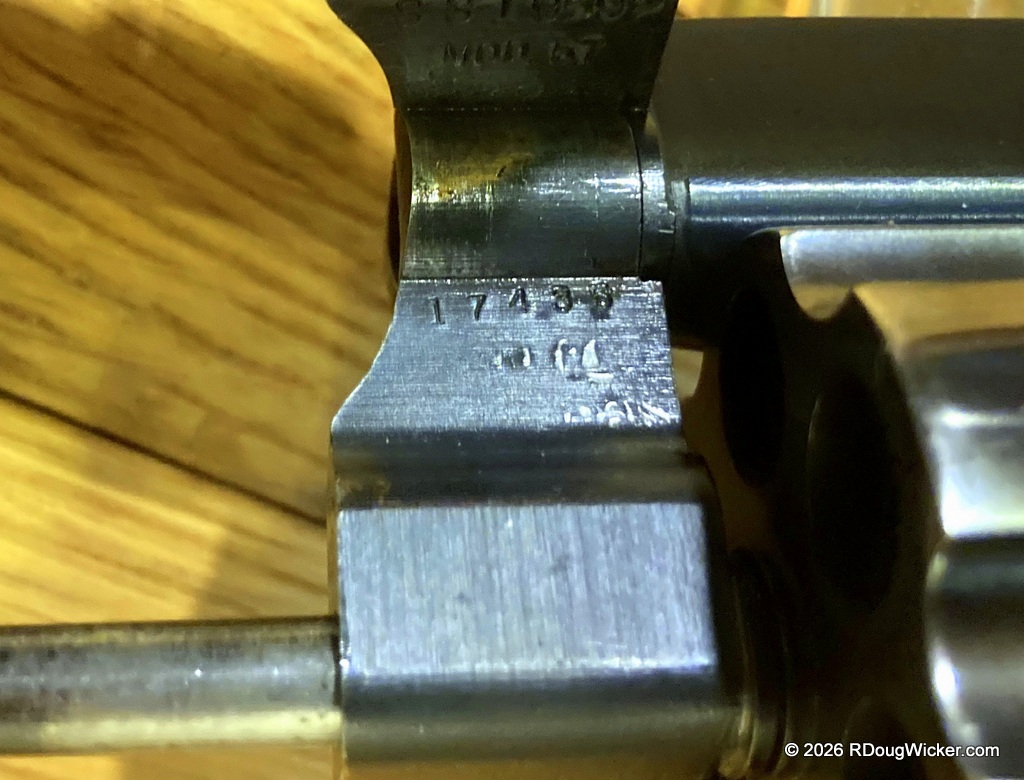
That number opposite the numbers above, on the yoke, is an internal assembly number used to track the hand fitted parts:
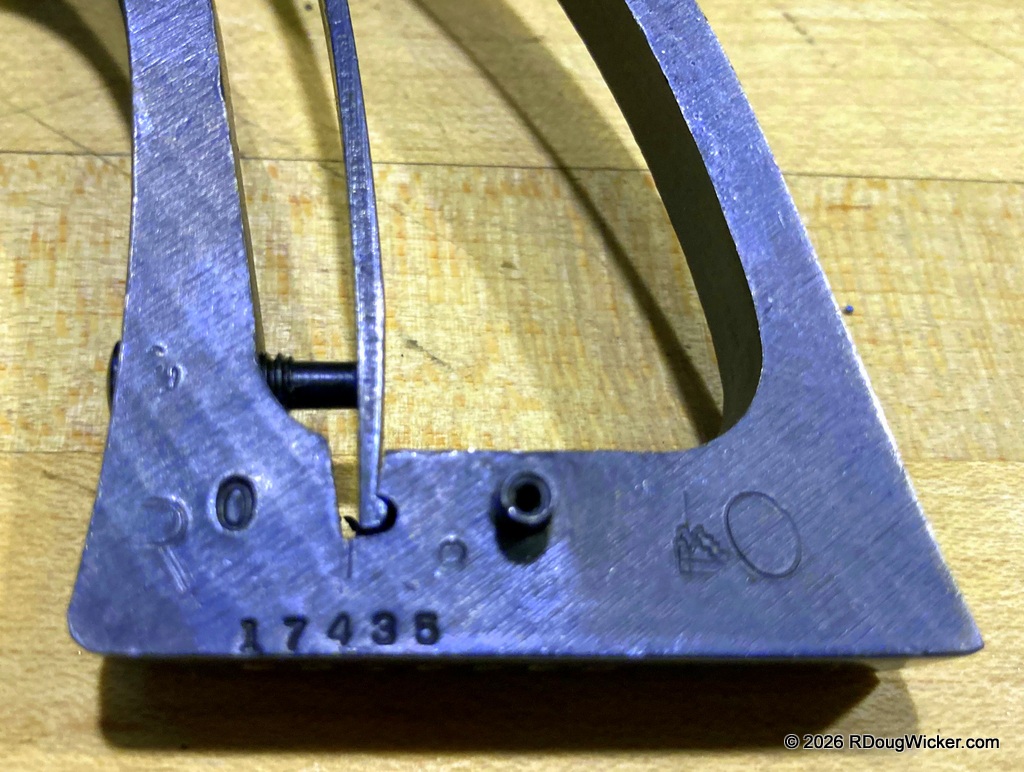
This Model 57 also sported an assembly identical assembly number on the left side of the frame butt:
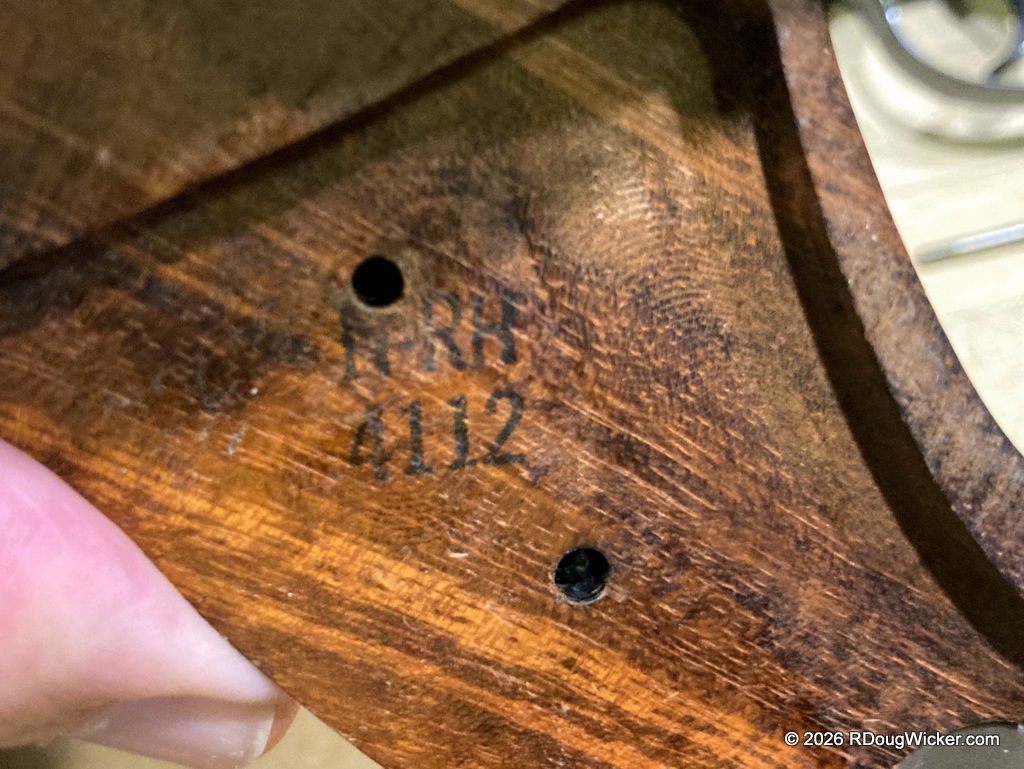
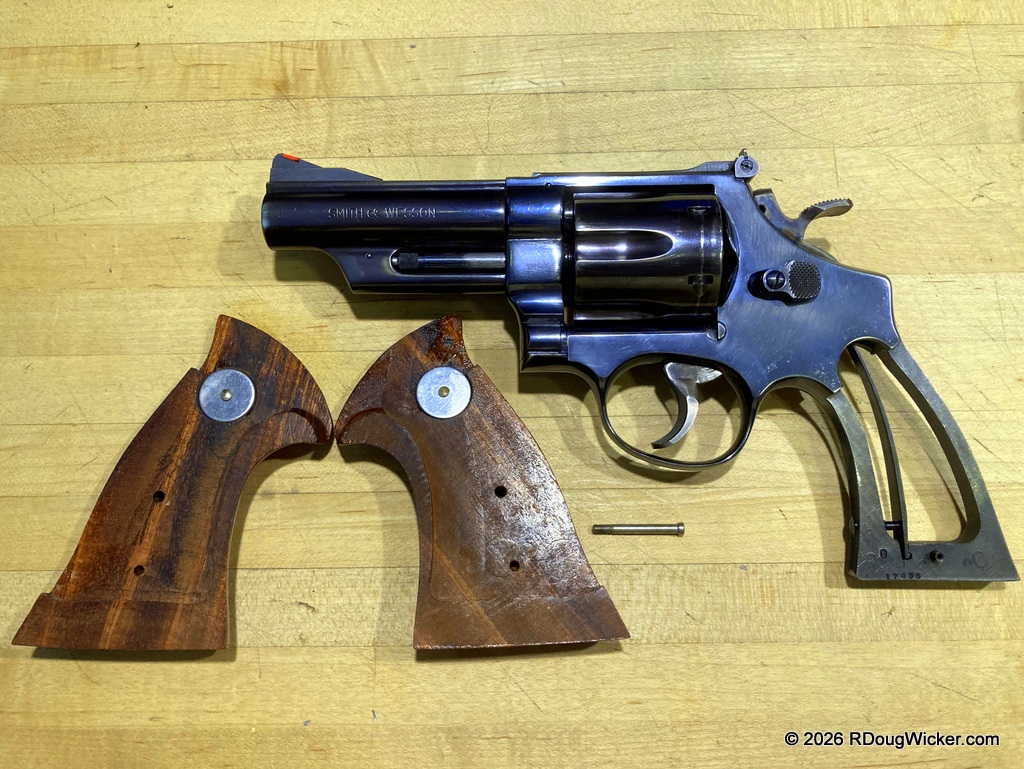
If your early Model 57 has all matching serial and assembly numbers, you might want to ensure that the grips are original. Remove them and on the inside of the grip panels you should see matching inventory numbers preceded by N-LH on one, and N-RH on the other. That stands for N-frame Left Hand and N-frame Right Hand respectively. These were included to ensure the hand-fitted grip panels matched up:
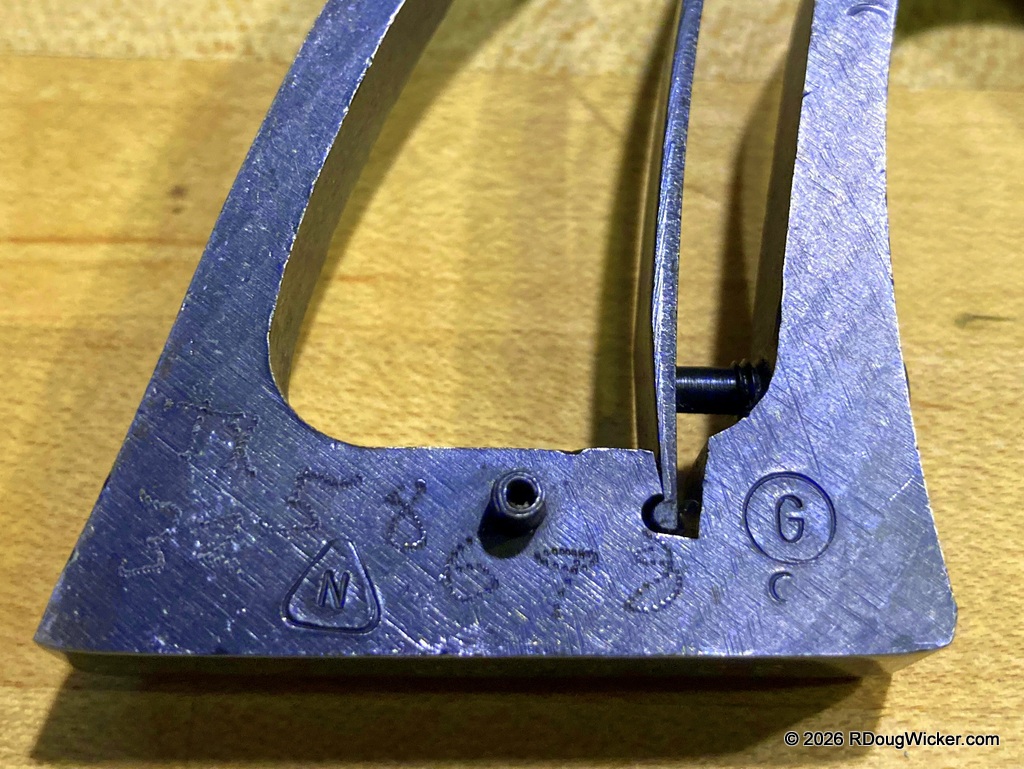
Check out the right side of the frame butt for inspection marks. This one has two — a circle containing a “G” and a triangle surrounding an “N”. As for the 58698 engraved in the same location, I have no idea. If you know, please leave me a comment.
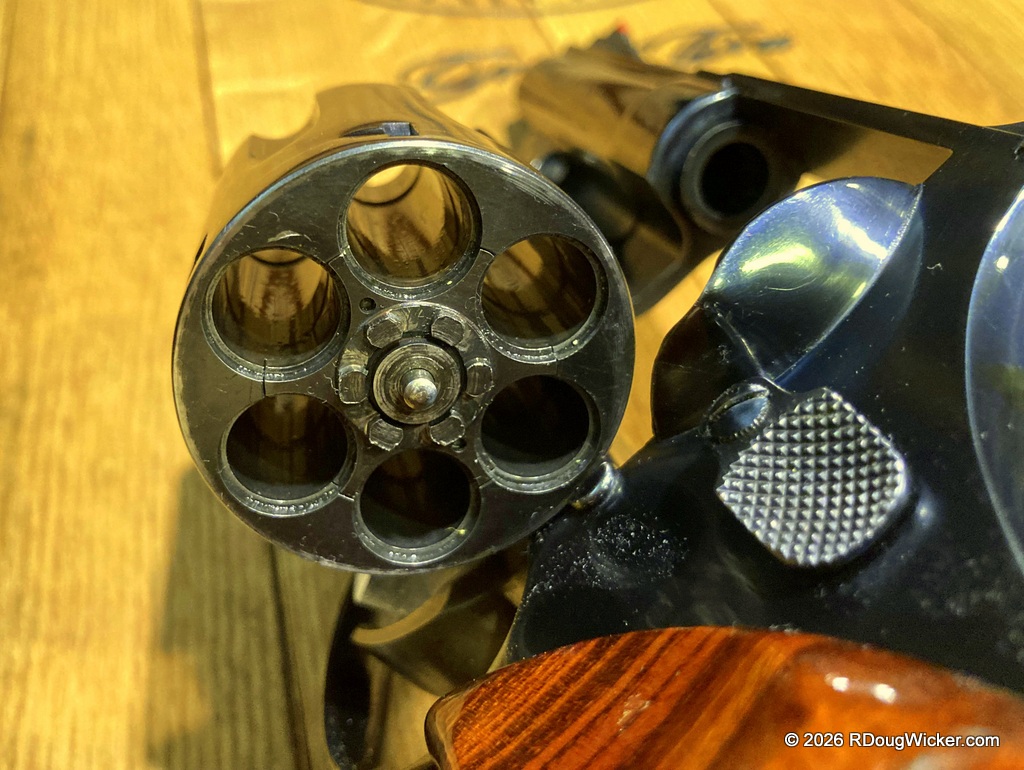
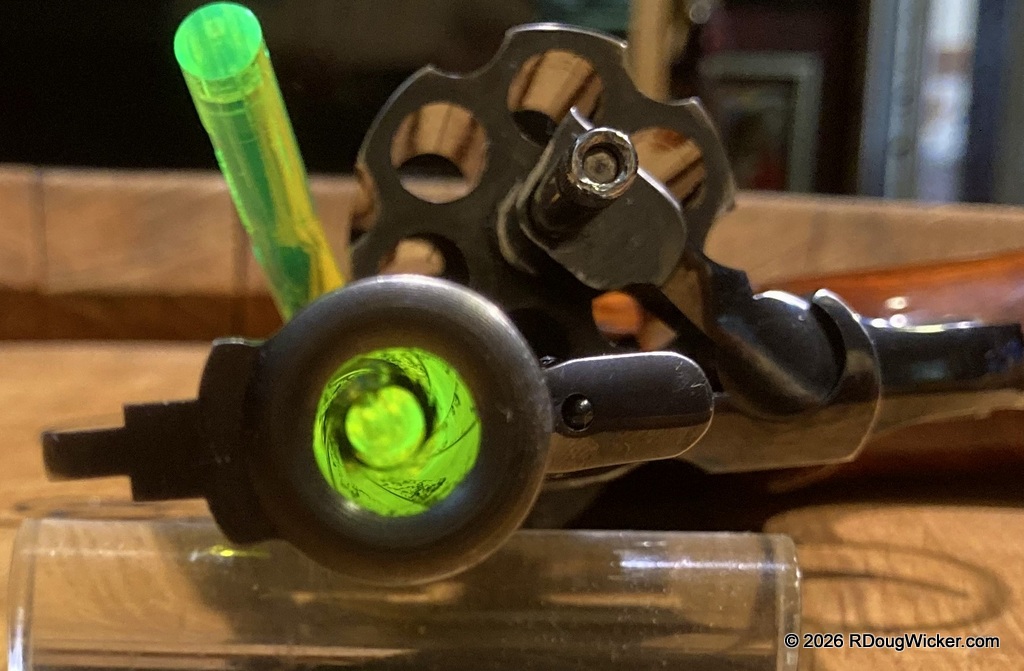
If you’re serious about gun collecting, make sure you carry around something to inspect the inside of the barrel. Look for clean rifling and no pitting or corrosion:
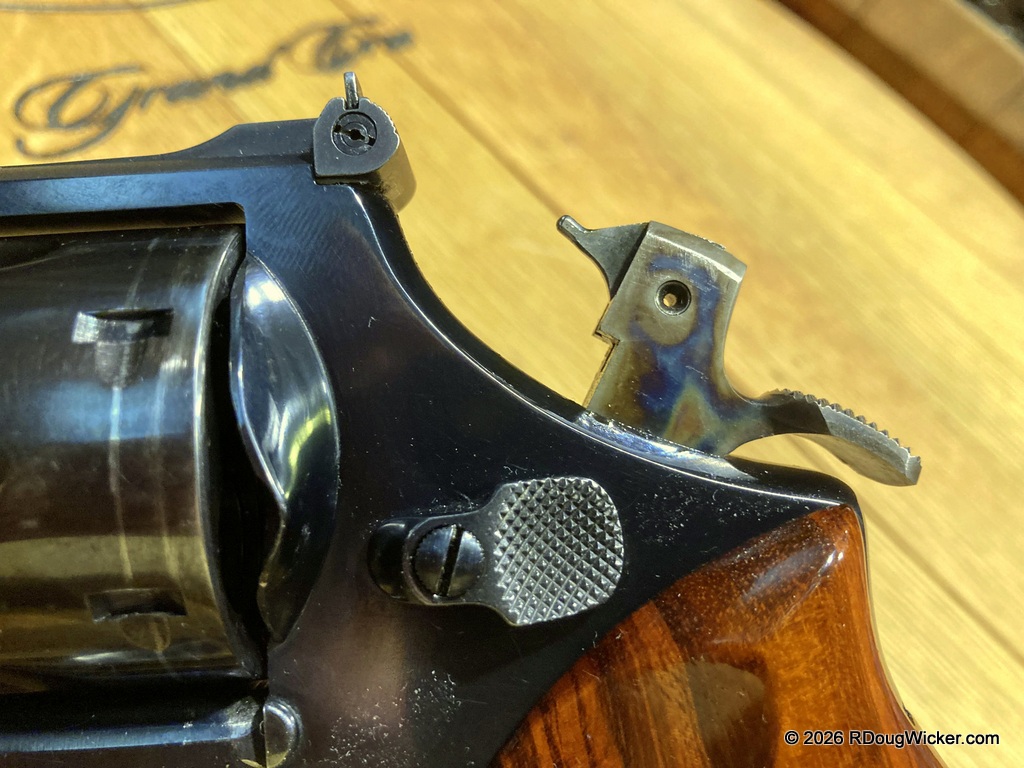
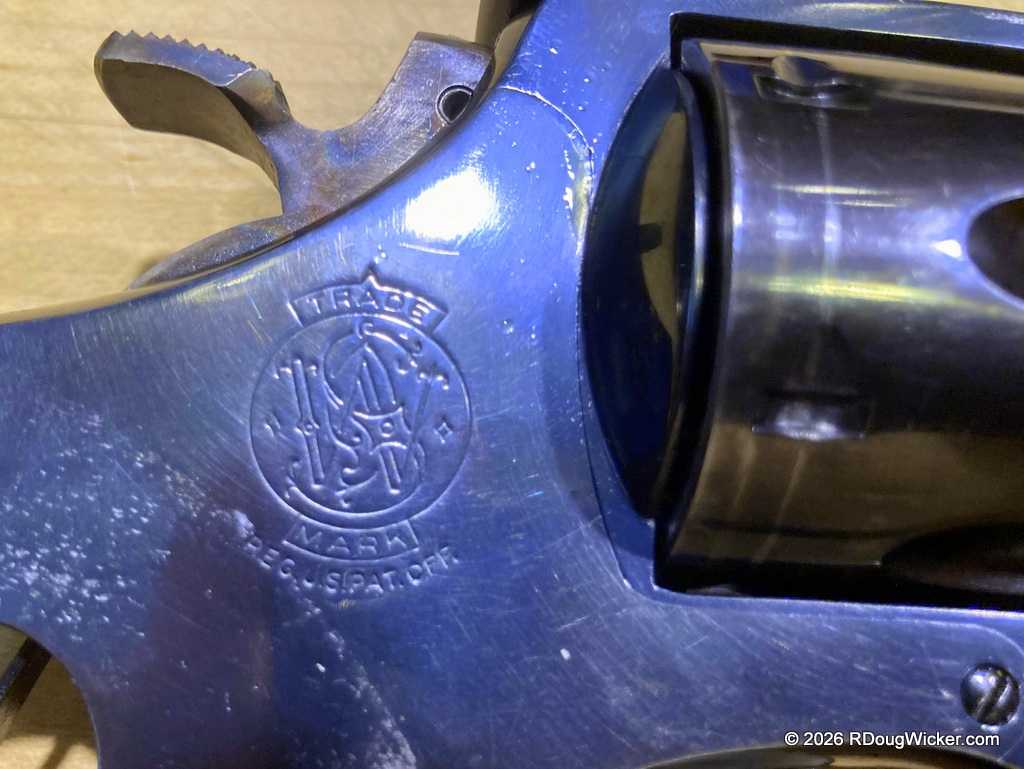
Check the trigger and hammer. They should show typical Smith and Wesson case hardening rather than being blued.
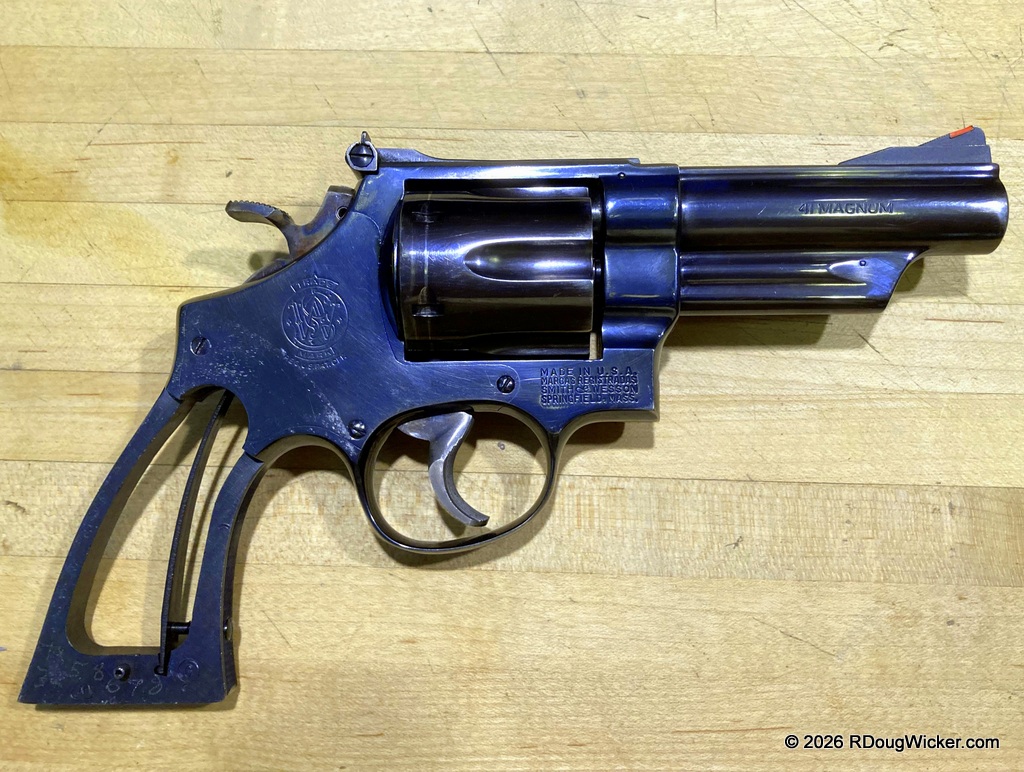
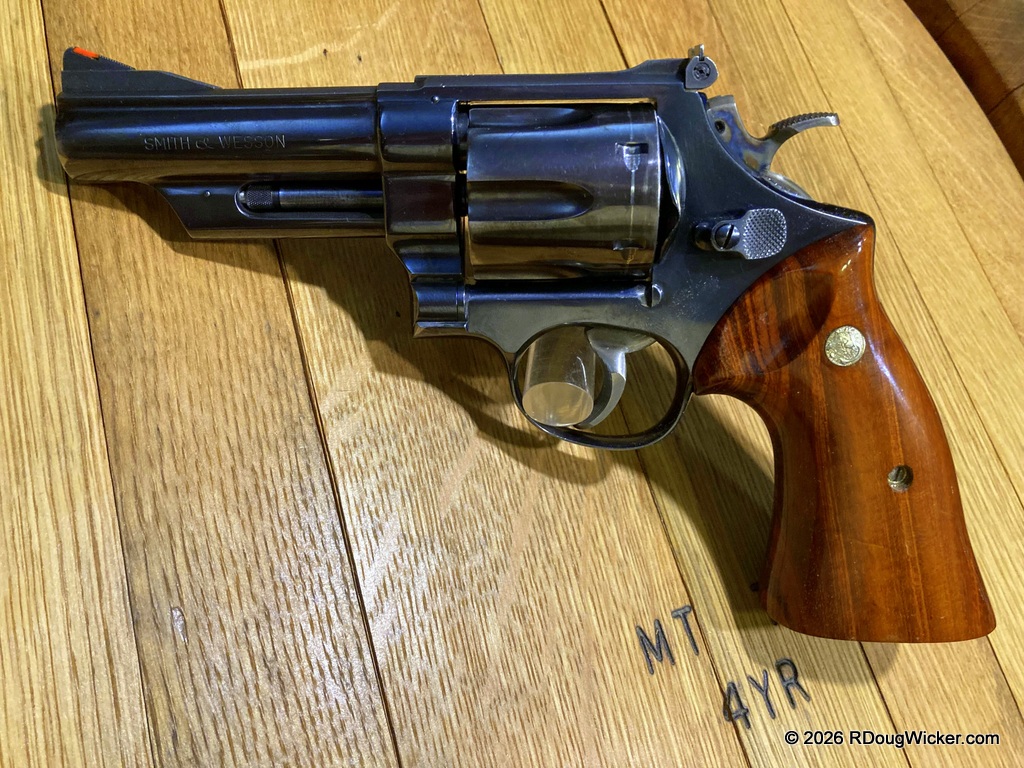
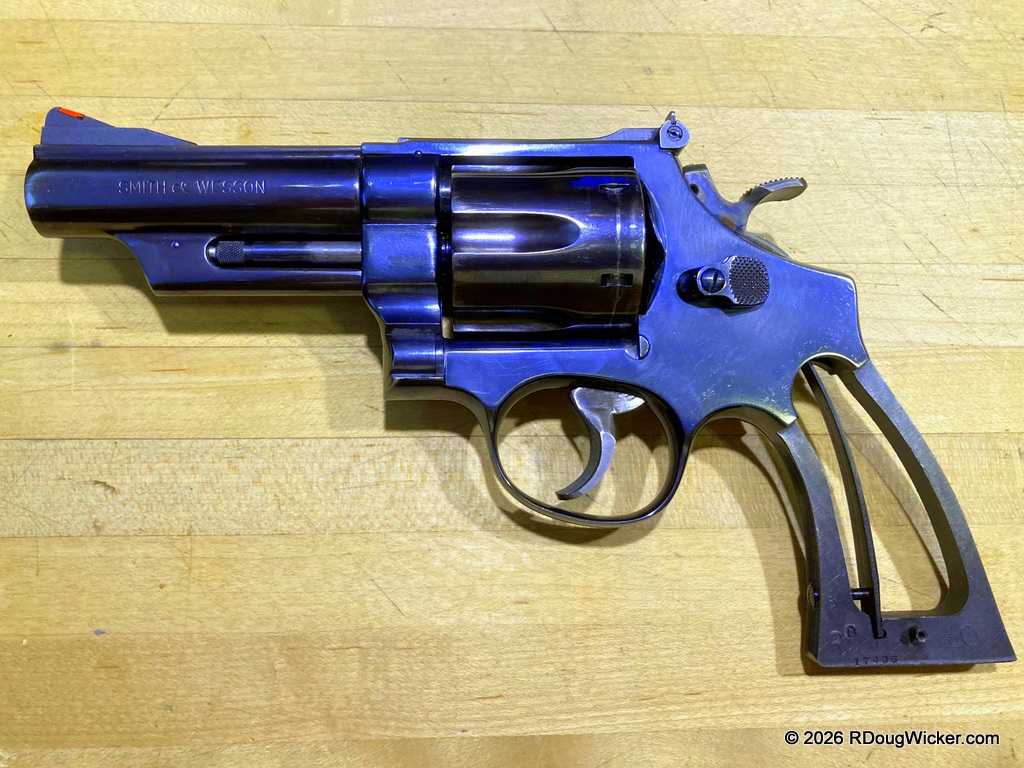
Now for a photo gallery/slide show of Model 57 images, including how the frame appears beneath the grips:
Слава Україні! (Slava Ukraini!)
 Decisions — Murder in Paradise
 The Globe — Murder in Luxury
