
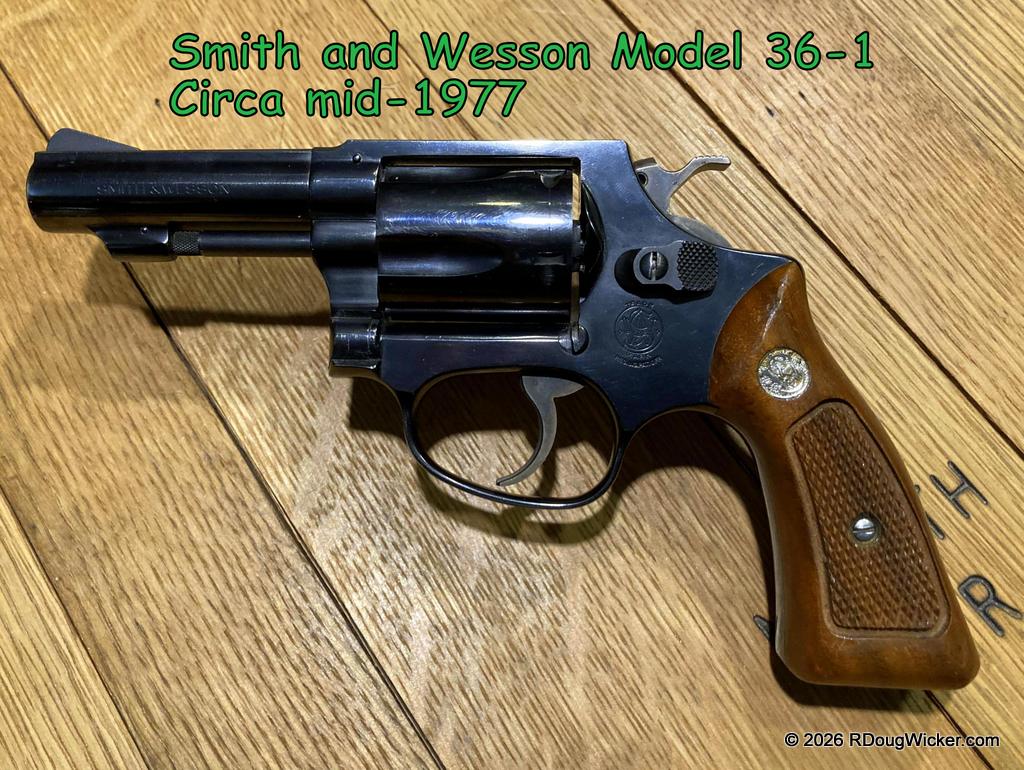
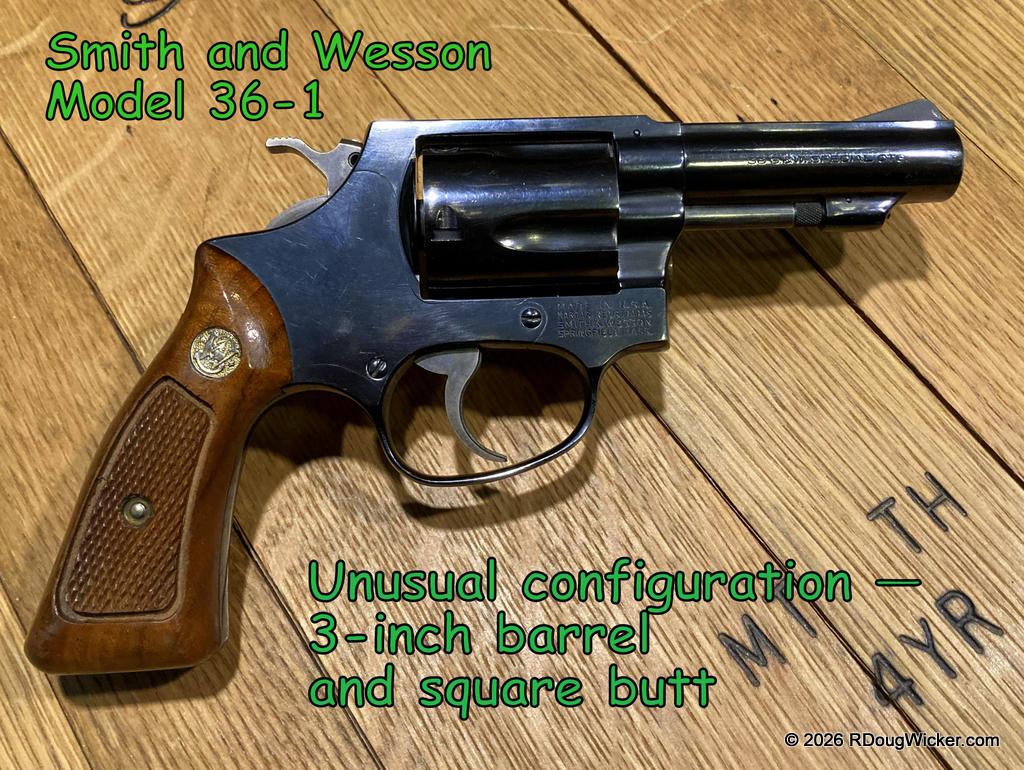
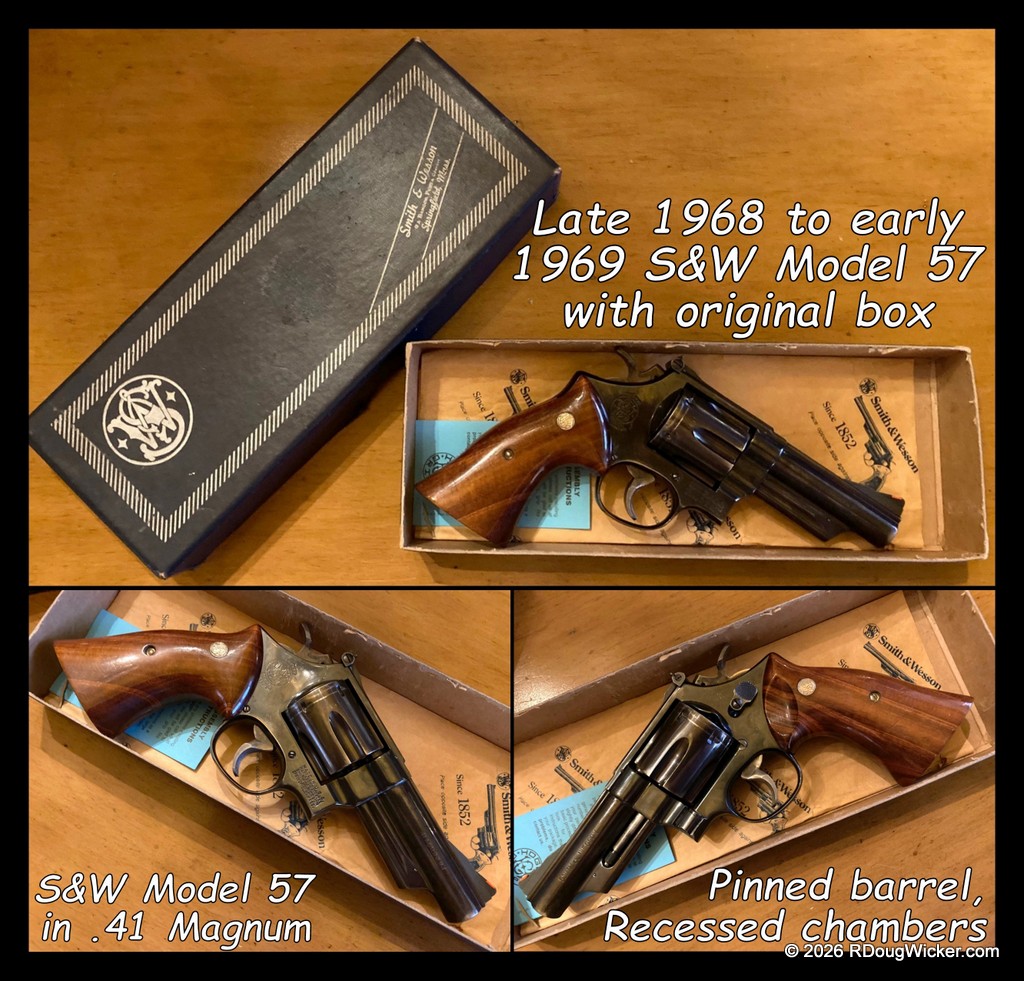
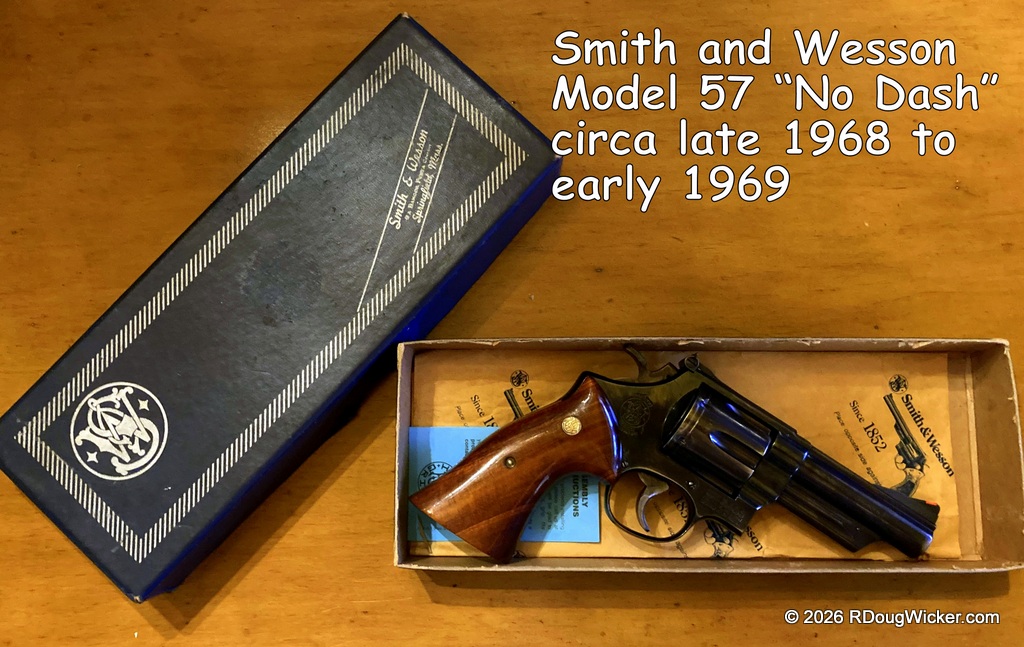
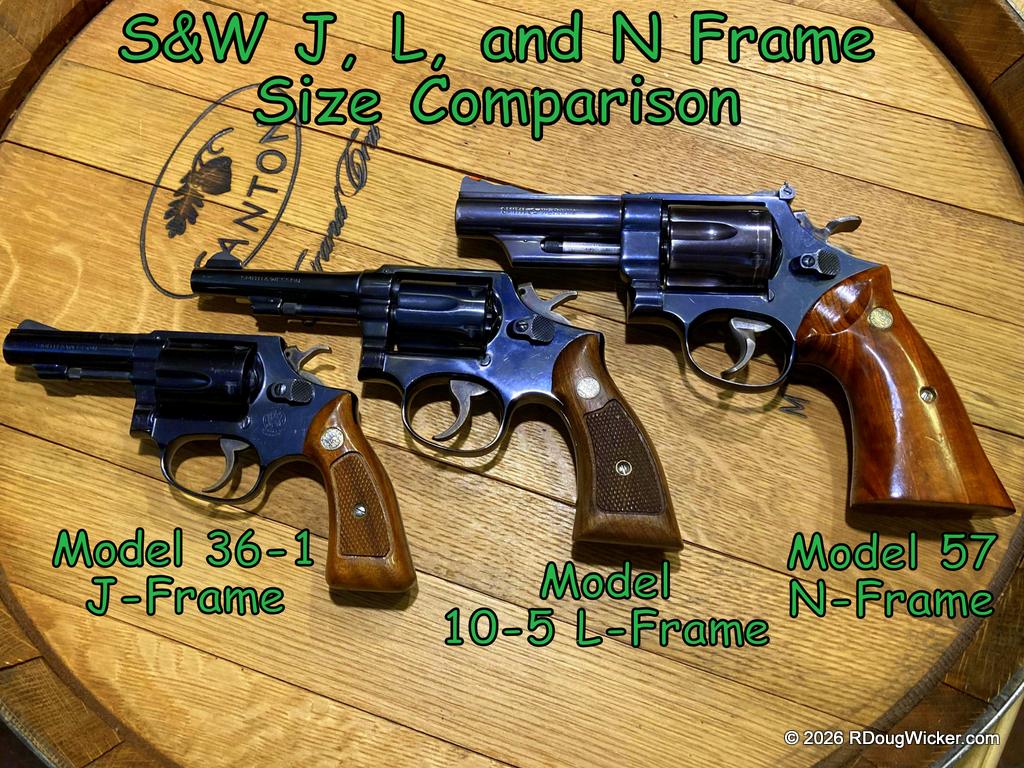
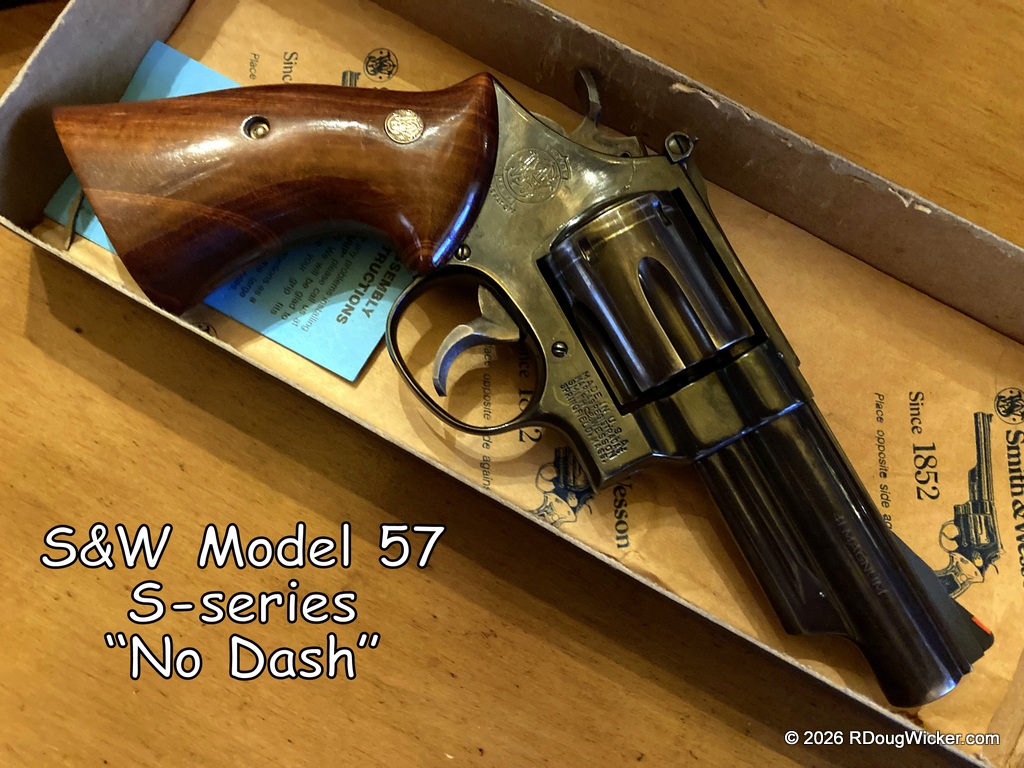
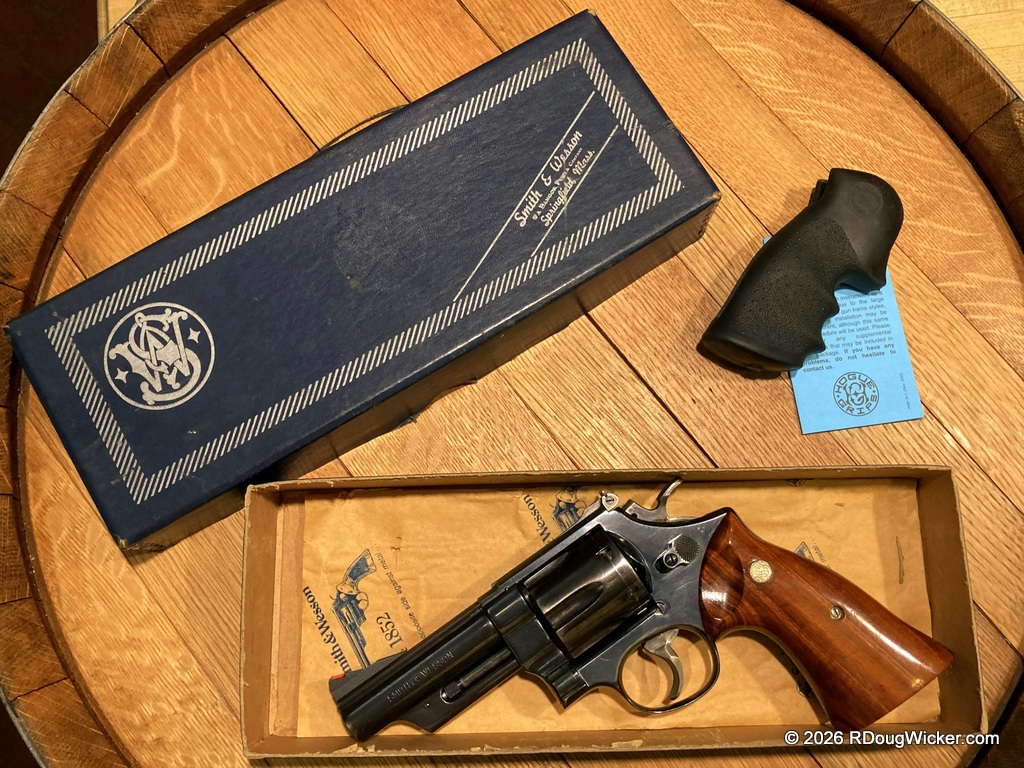
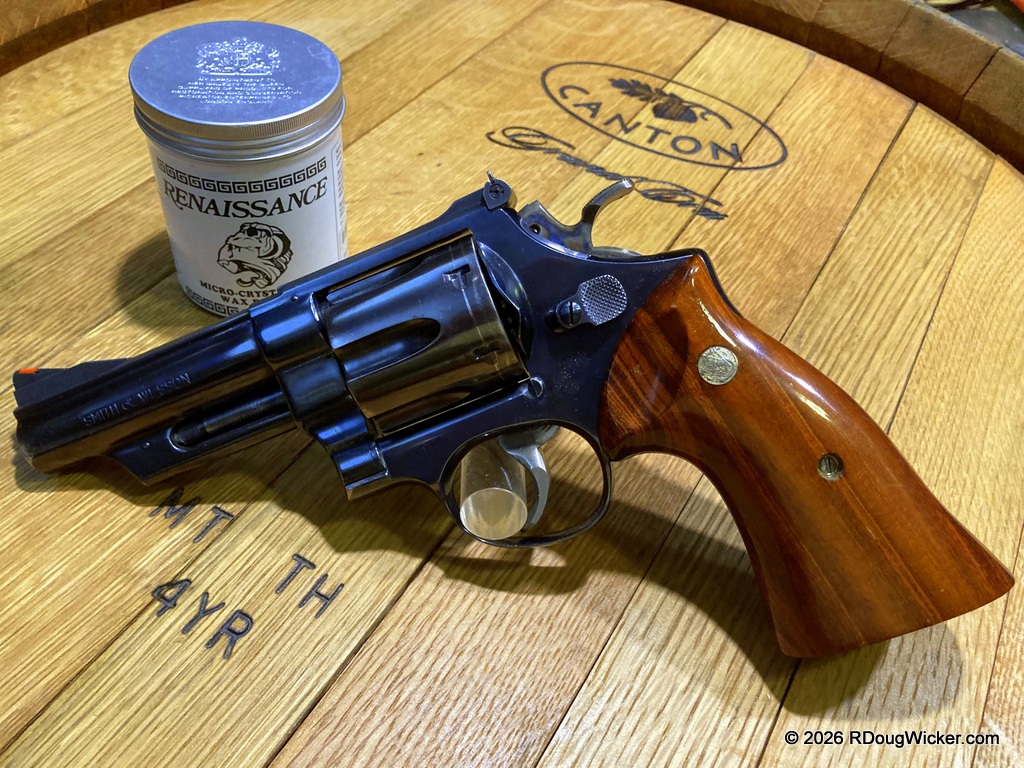
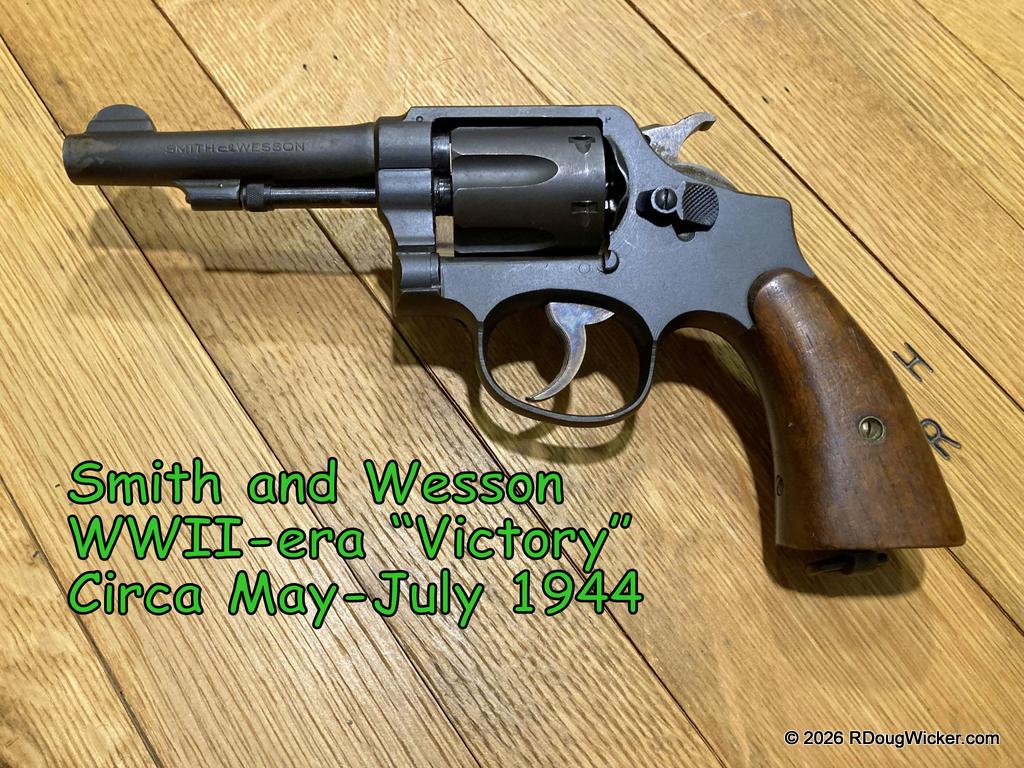
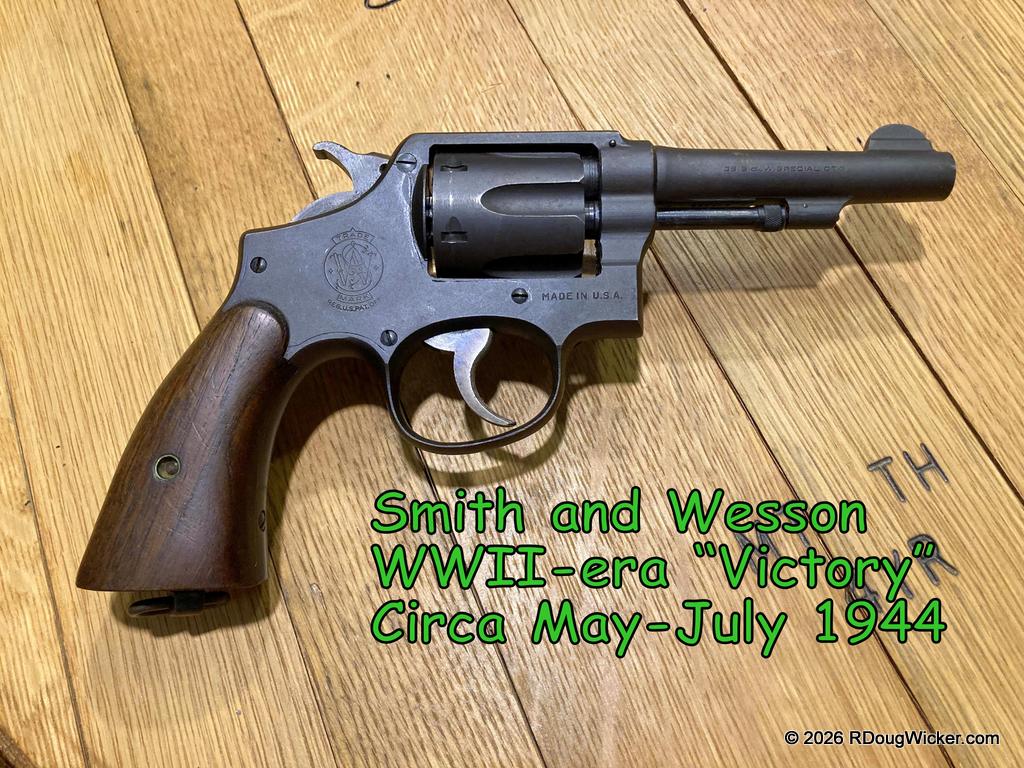
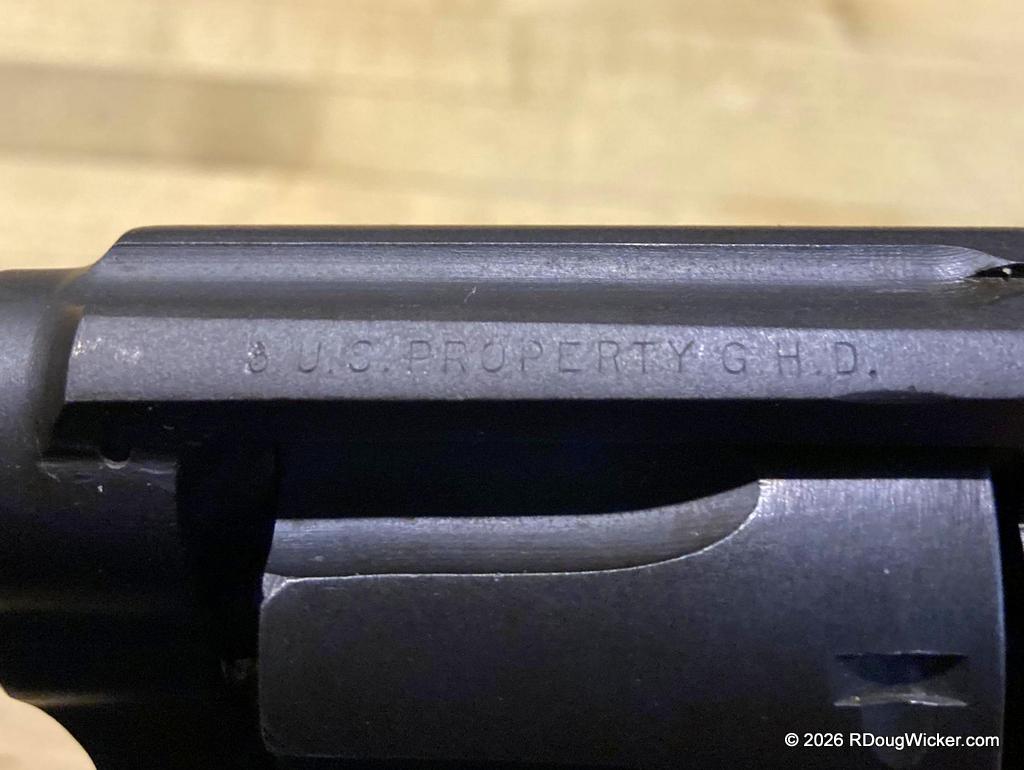
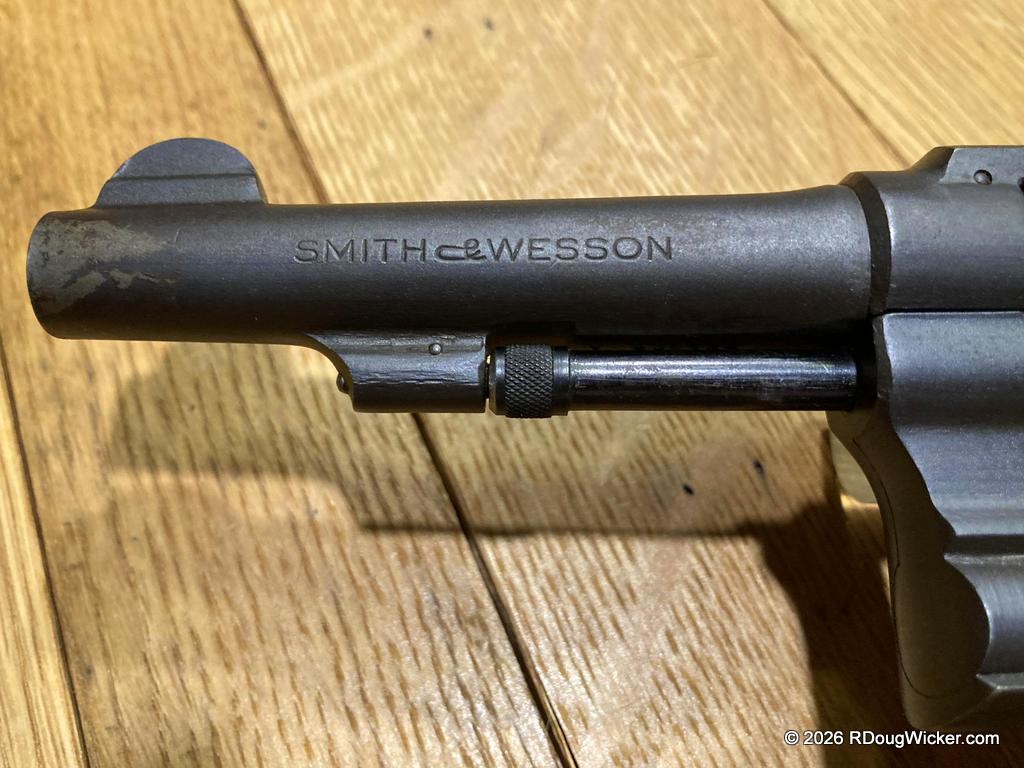
You may have noticed over the past few years that I’ve developed a bug for older Smith and Wesson revolvers, and this week only serves to put an exclamation point on that observation. Military Monday featured a World War II S&W Victory, which was derived from the existing L-Frame S&W M&P (Military and Police). Magnum Wednesday highlighted a “no-dash” example of the S&W Model 57, an N-Frame chambered for the fascinating, versatile, and, in my opinion, underrated .41 Remington Magnum. Today’s Fun Firearm Friday belongs to an uncommonly configured S&W Model 36-1. Taking a look at the photograph above, can you see what makes this an unusual configuration? We’ll get to that in a moment, but first a bit of Model 36 History:
The S&W Model 36 began life in 1950 as the “.38 Chiefs Special,” a smallish, concealable revolver with a five-chamber cylinder built on Smith’s new J-Frame. In the late 1950s, Smith and Wesson transitioned from model names to model numbers. For instance, the 1935 “Registered Magnum,” which was renamed the “.357 Magnum” in 1939, became the “Model 27” in 1957. That same year Smith and Wesson dropped the “M&P” name in favor of “Model 10,” and the “Chiefs Special” became the “Model 36.”
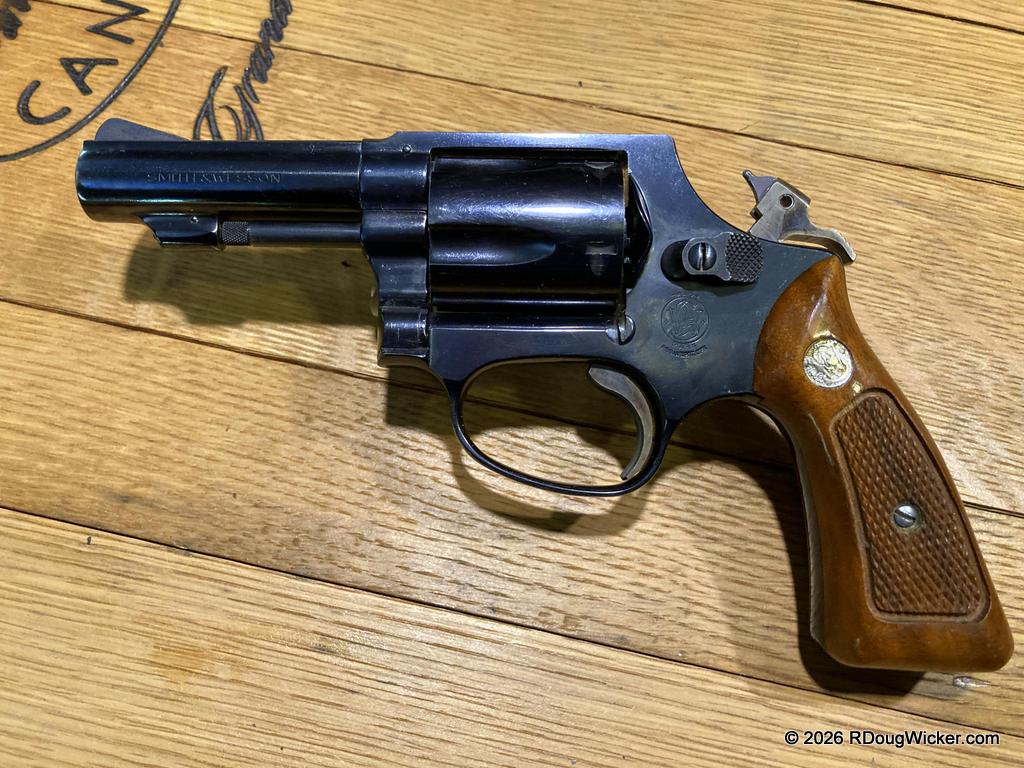
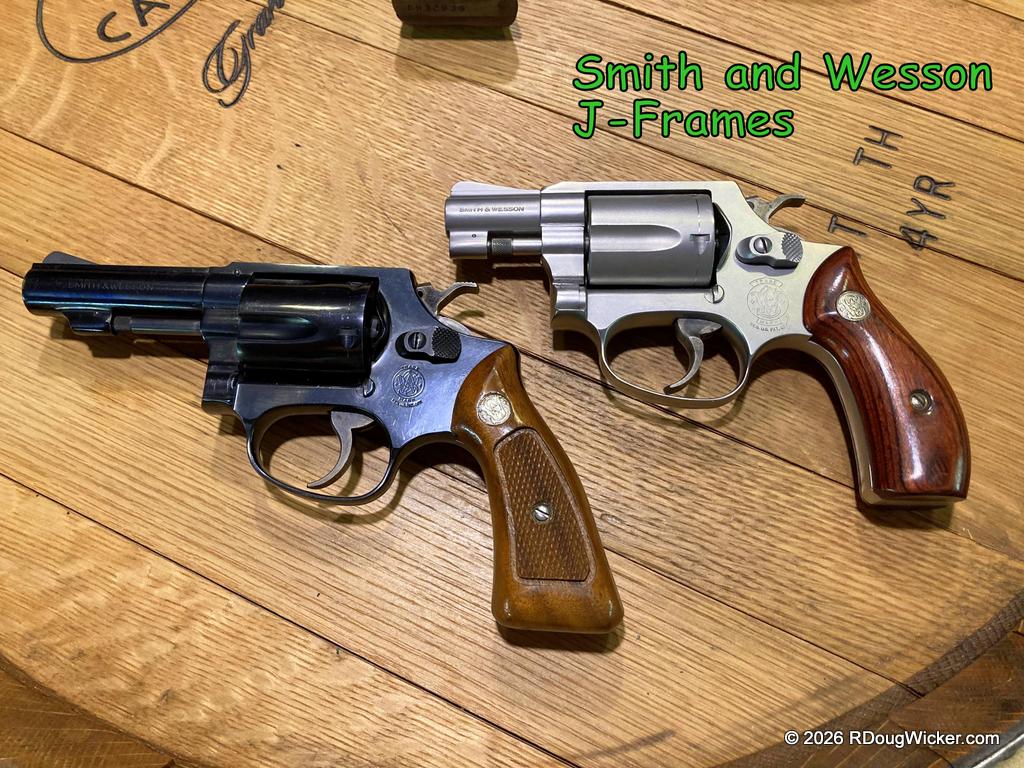
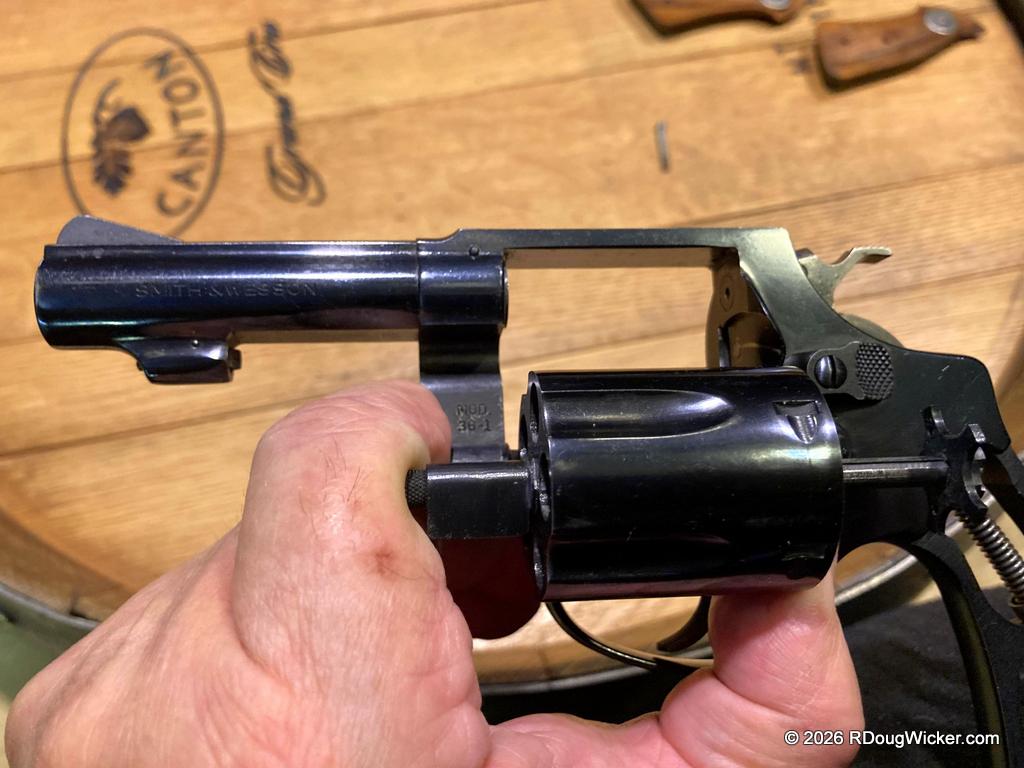
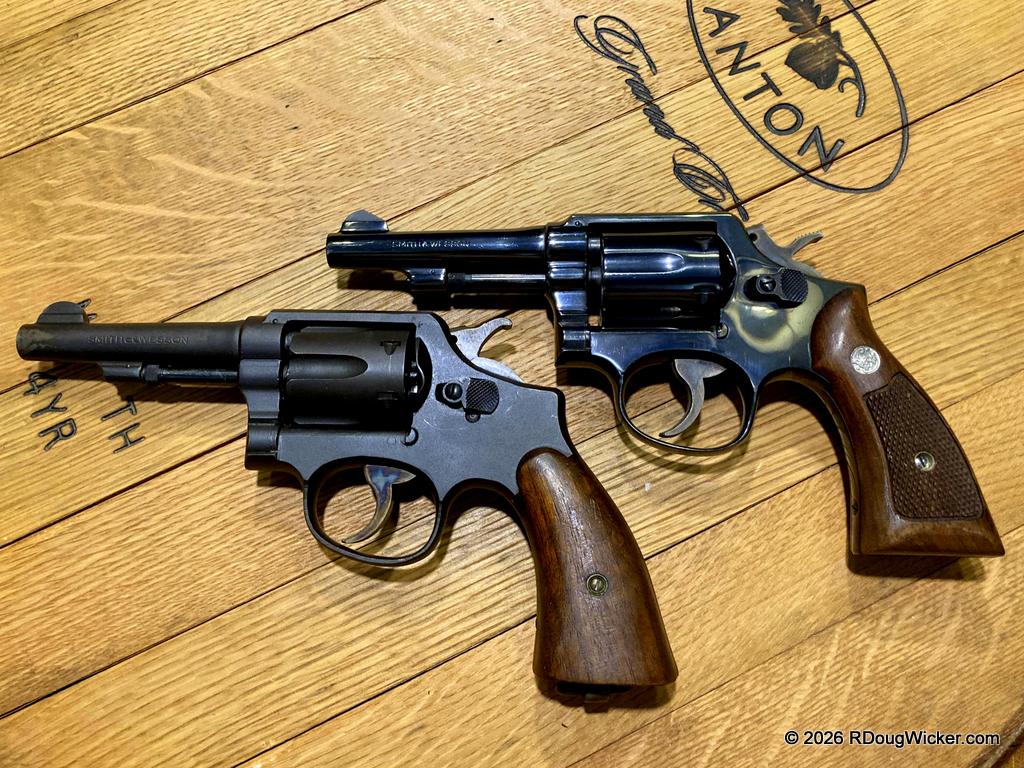
Model 36 was Smith’s answer to the Colt Detective Special, a compact, six-round revolver normally configured with a 2-inch/51mm barrel and a rounded butt. And there’s your clue as to what makes this particular Model 36 somewhat unique — it sports a 3-inch/76mm barrel and a square butt rather than the 36’s usual 1.875-inch/48mm barrel and round butt configuration. The stainless-steel version of the Model 37 is designated Model 60, and I acquired a “Ladysmith” version of that pistol five years ago (for my article on that revolver, see: Revolver Week — Ladies’ Day with a S&W Model 60-7 “Lady Smith”). Here’s a comparison of these Model 36/Model 60 configurations: the long-barrel/square butt variant (left) and the more common short-barrel/round butt:
And if the J-Frame looks familiar with a round butt and 1.875-inch barrel, you may be getting old, as in, old enough to remember the original Hawaii Five-O (1968-1980). The Model 36 was Steve McGarrett’s sidearm of choice for the first seven seasons of that series. It’s also the gun you saw being loaded during the original Five-O opening credit sequence.
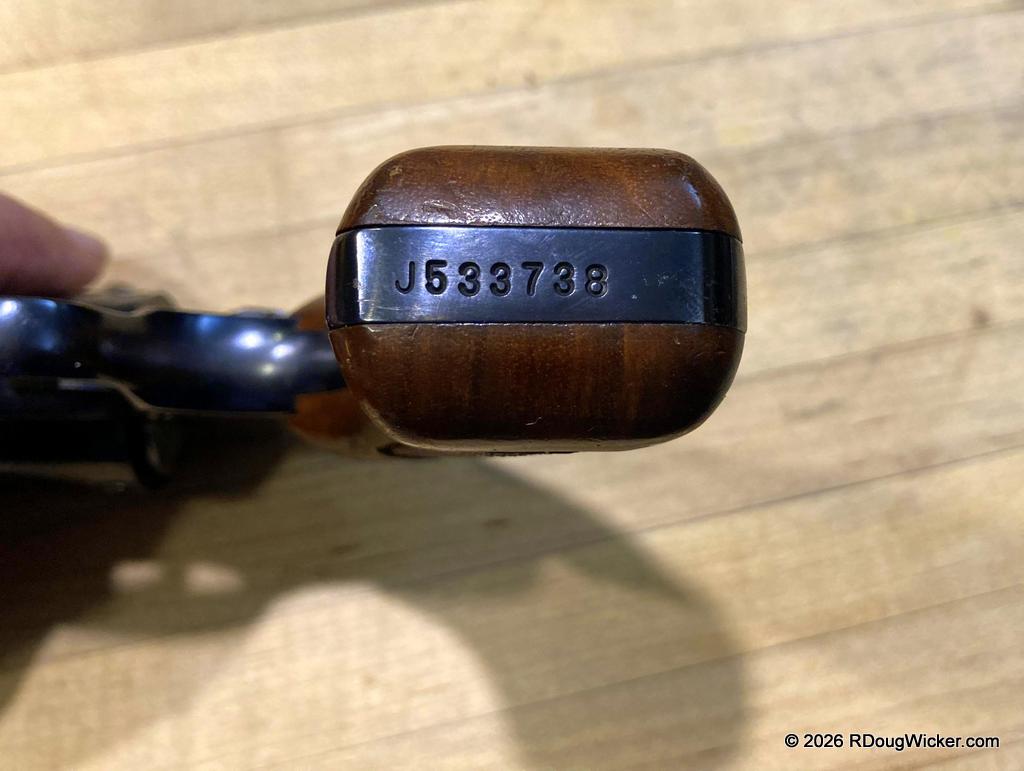
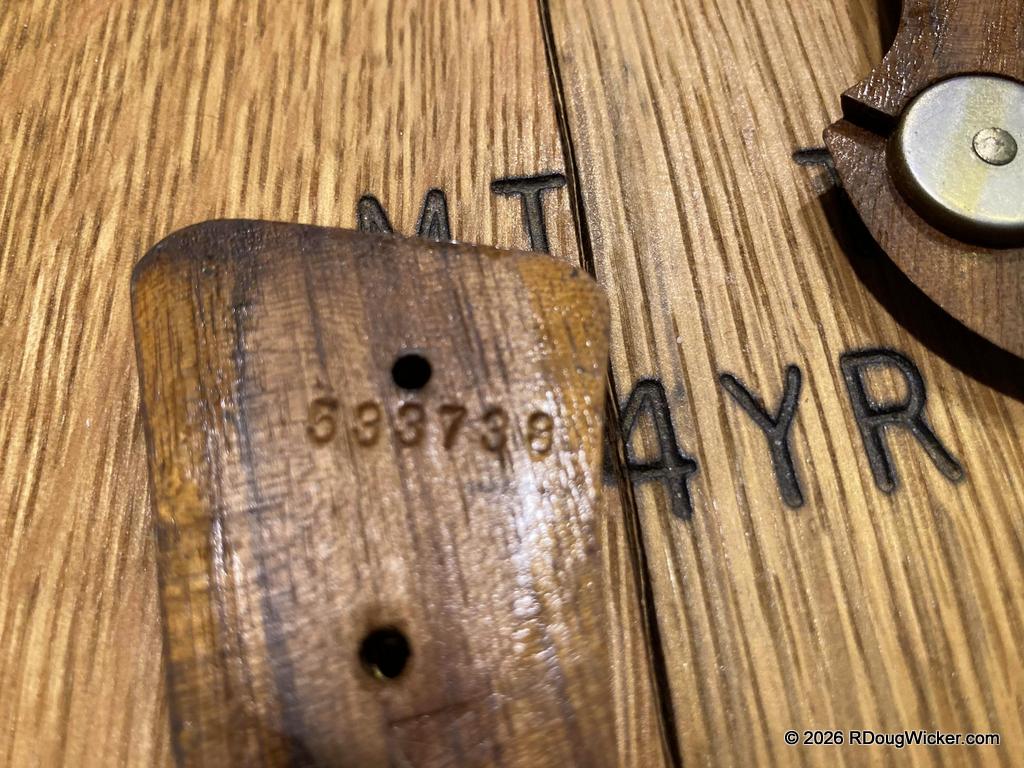
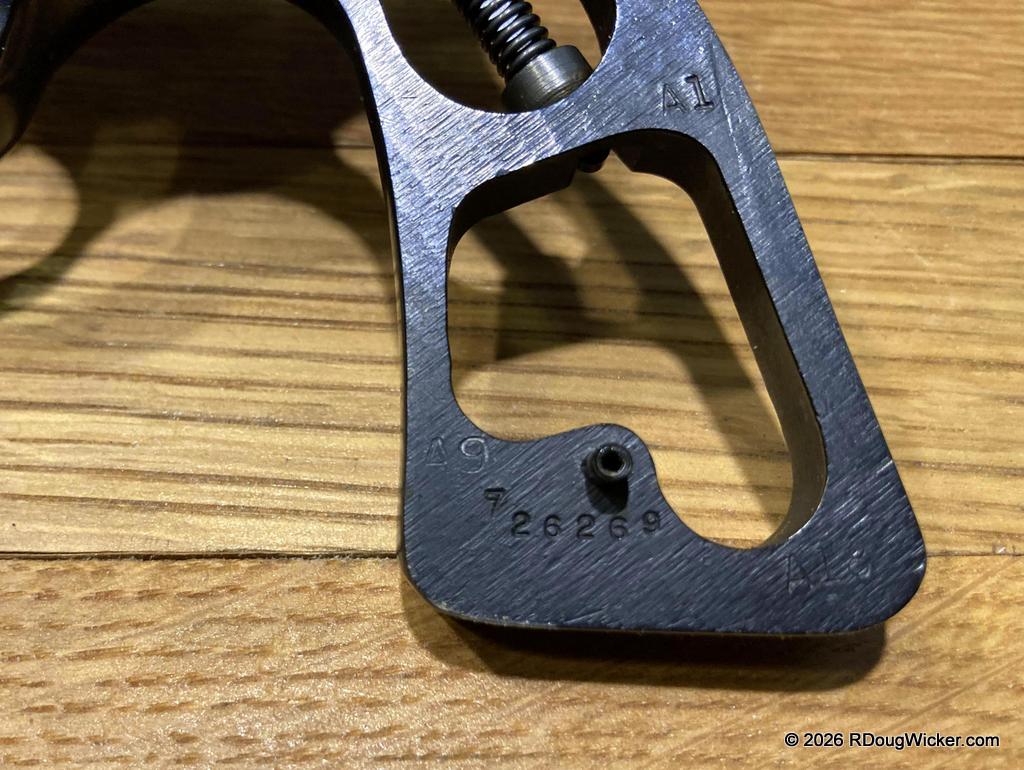
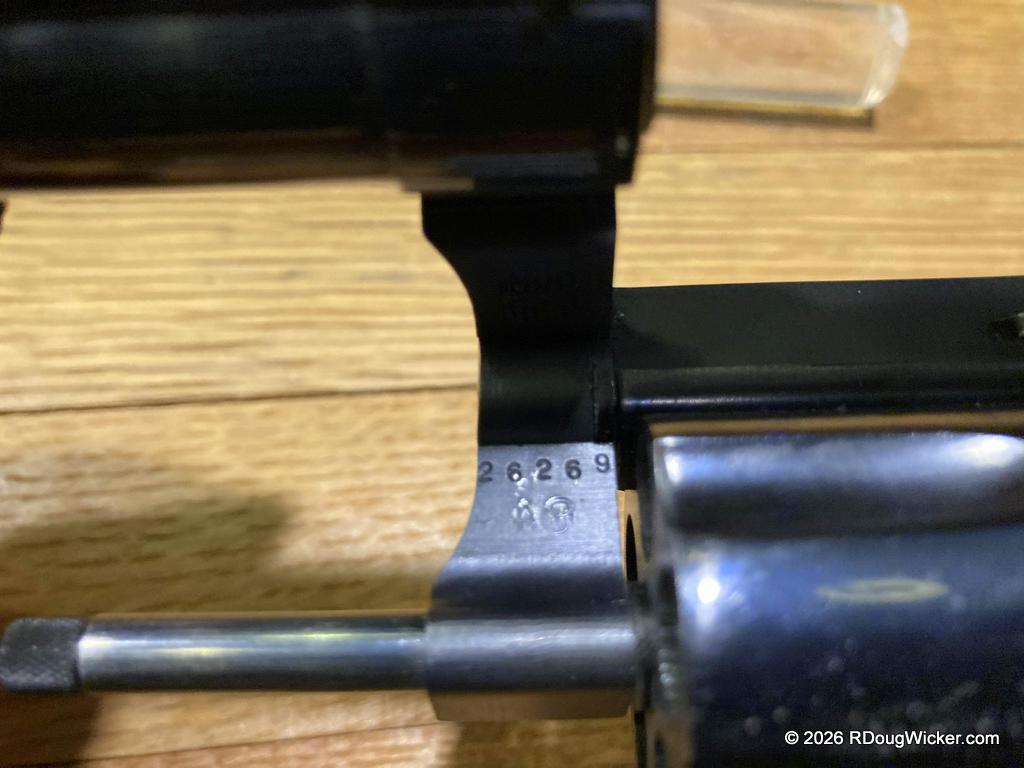
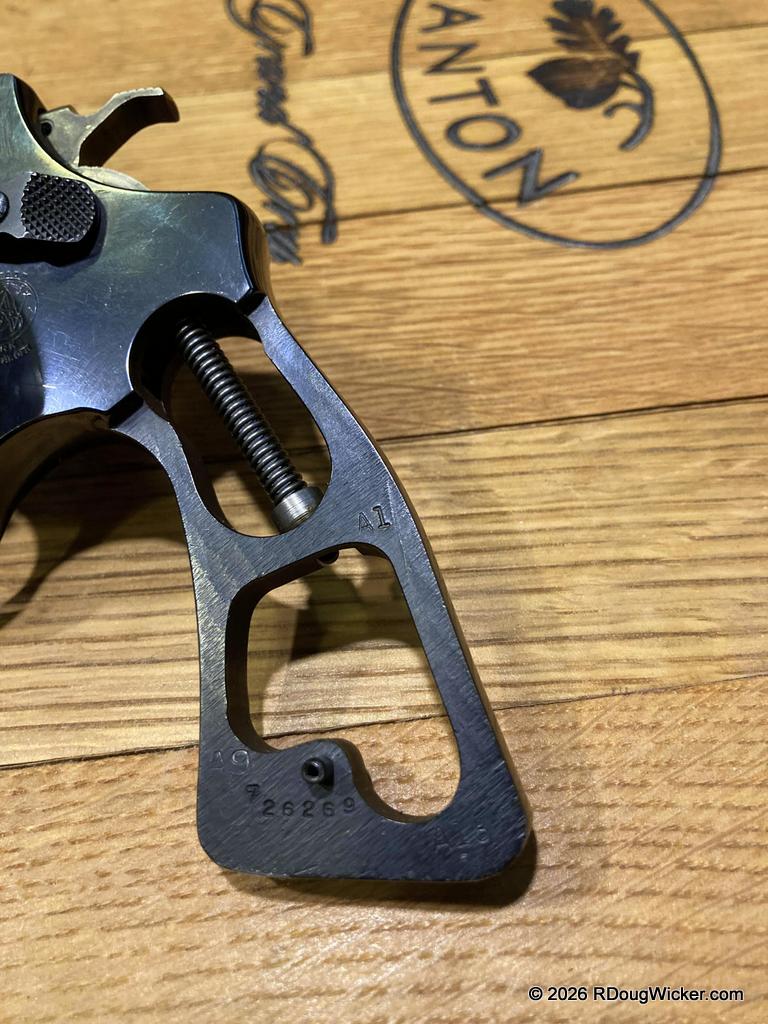
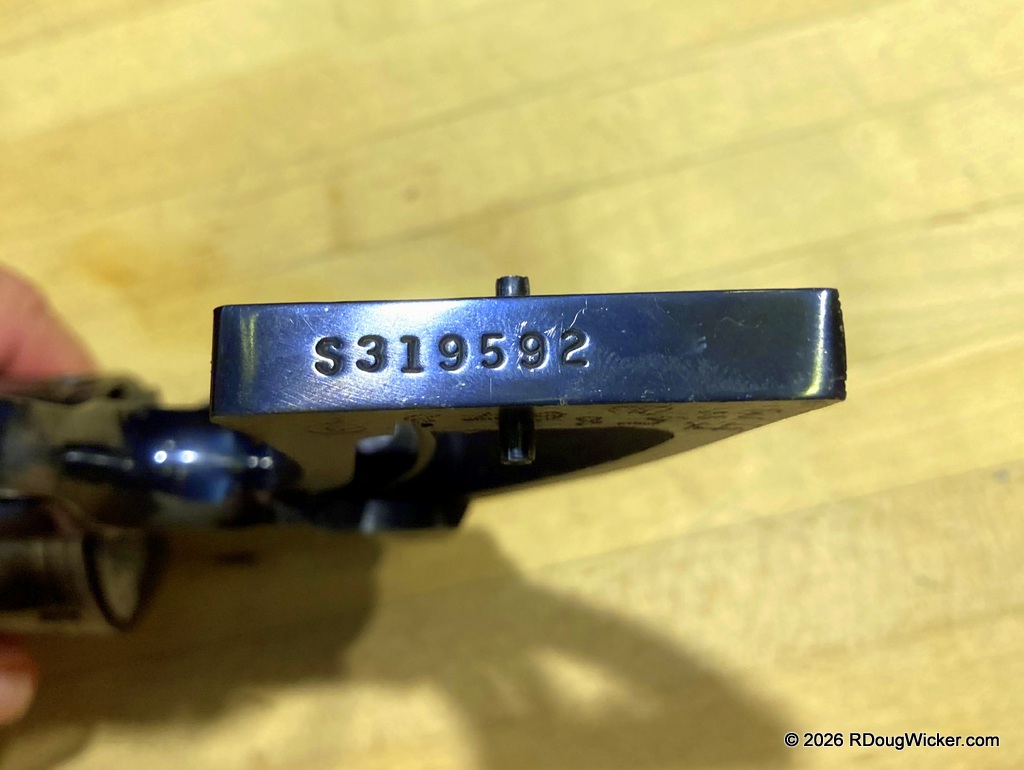
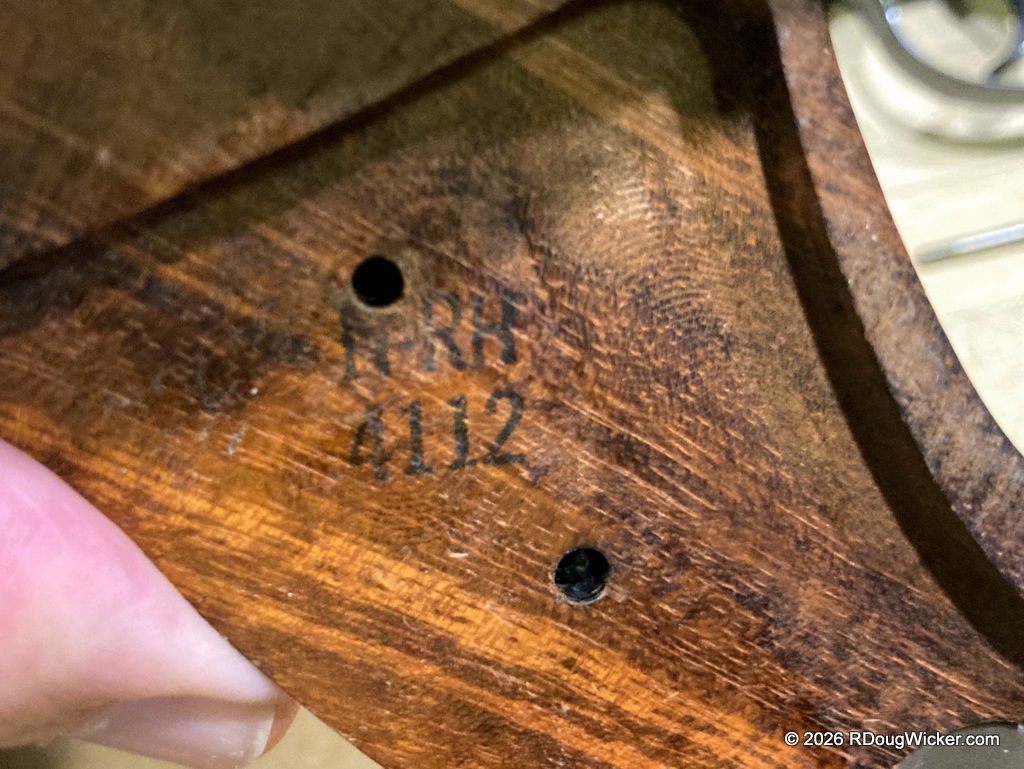
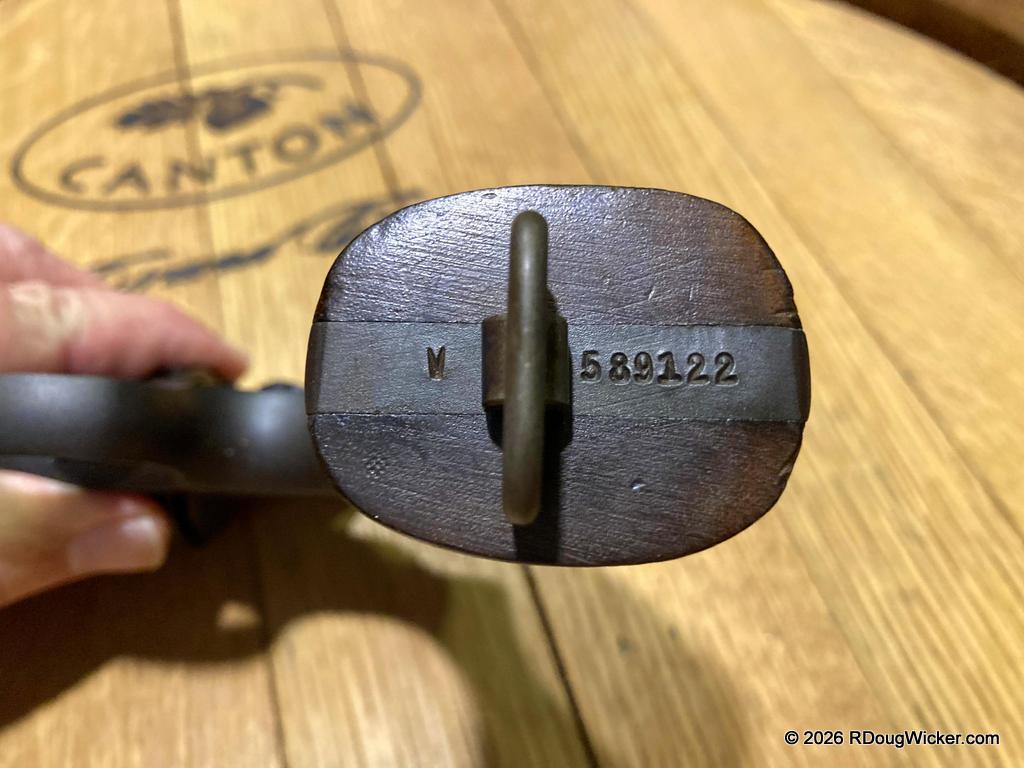
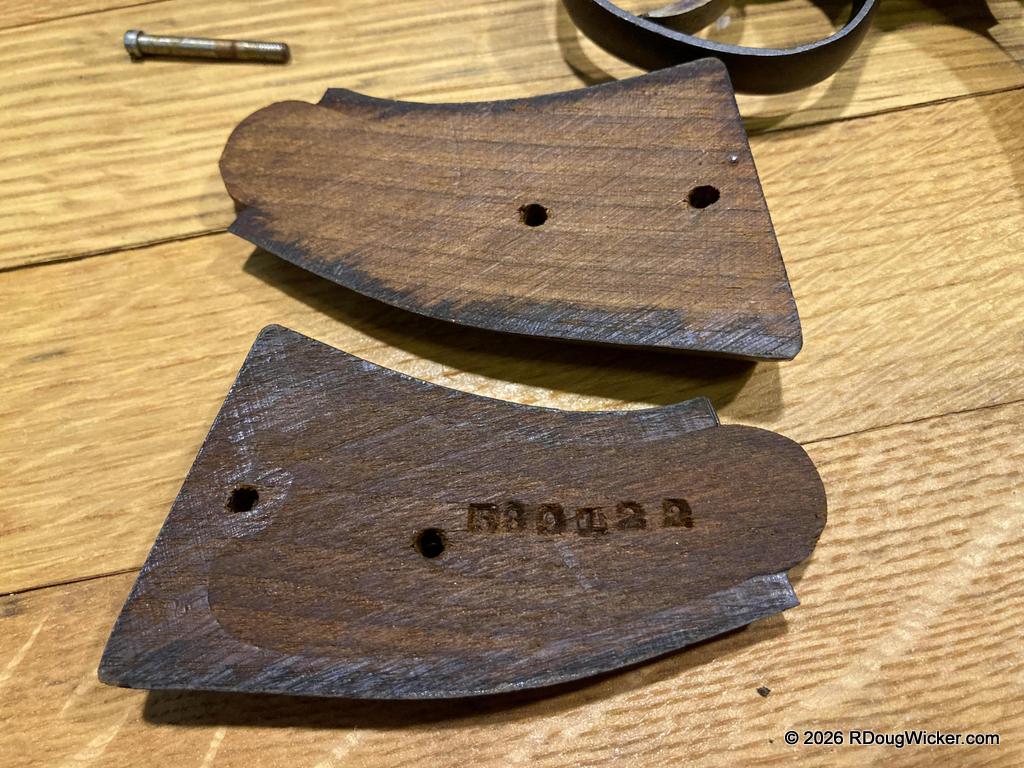
The serial number on this particular Model 36-1 puts it in the 1976-1977 range, with the high number indicating to me that it was made in mid to late 1977. As with all Smith and Wesson revolvers, you’ll find the serial number stamped on the butt, and this one also has the serial number, minus the letter prefix, pressed inside the right-side wood grip panel:
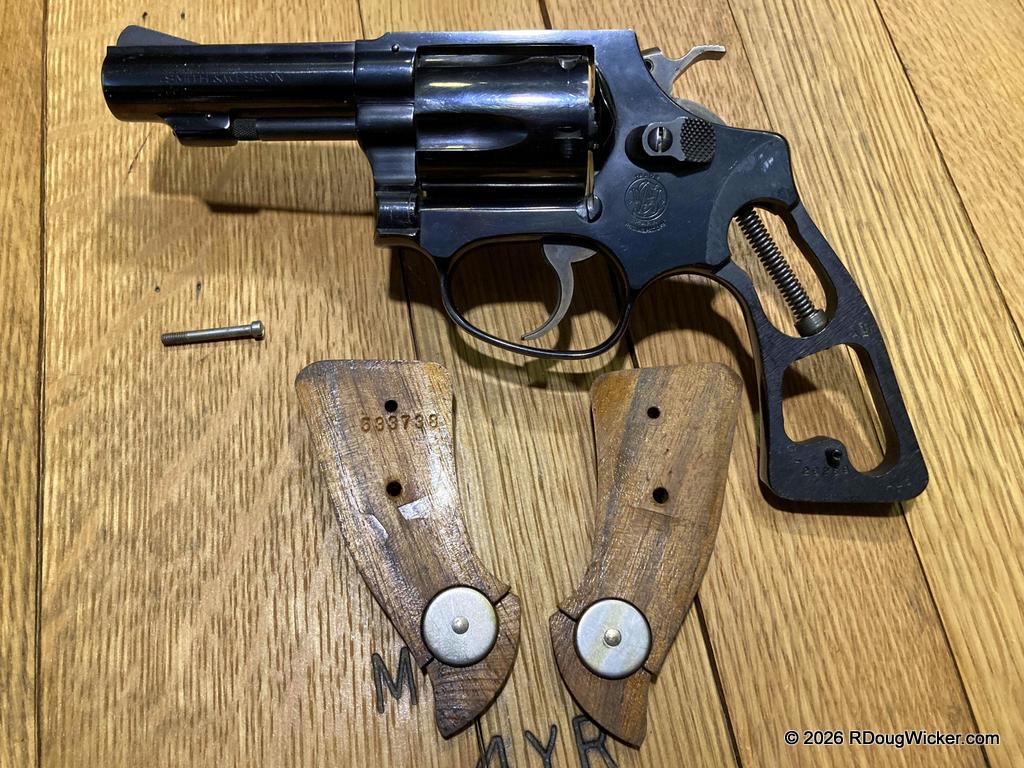
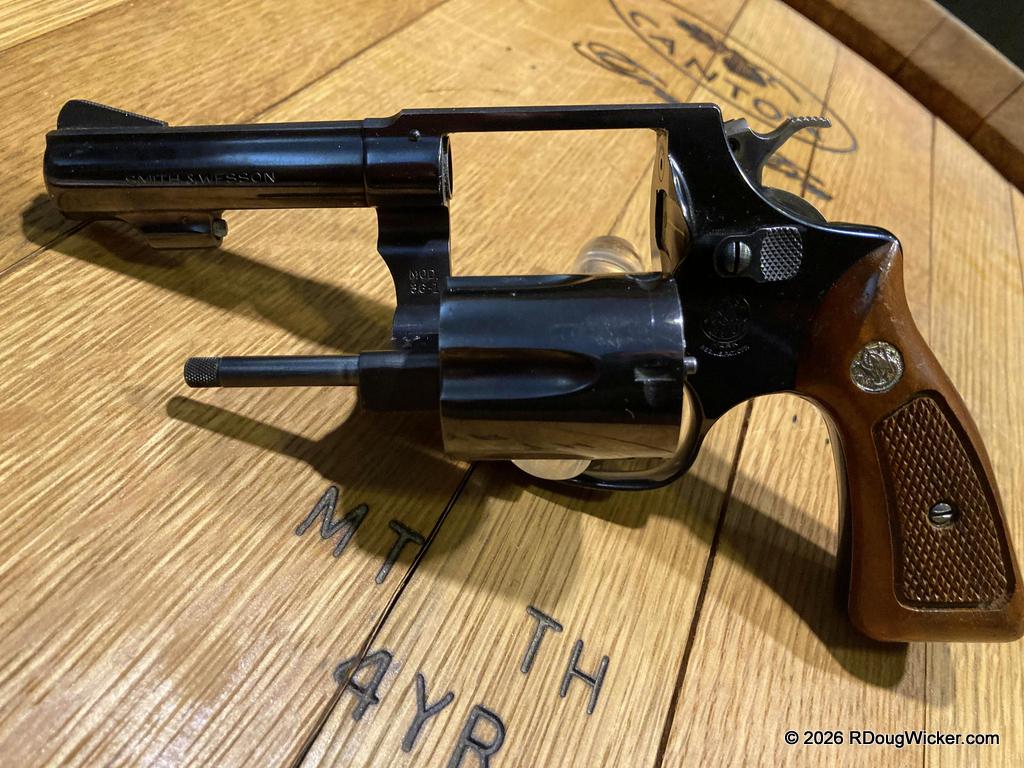
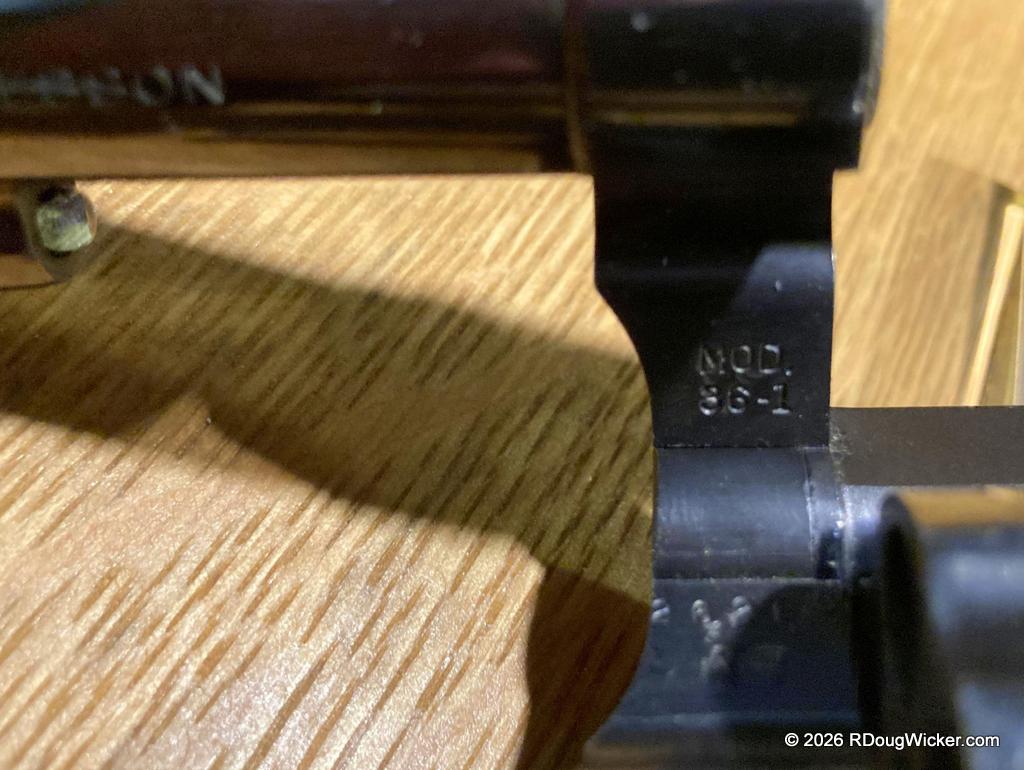
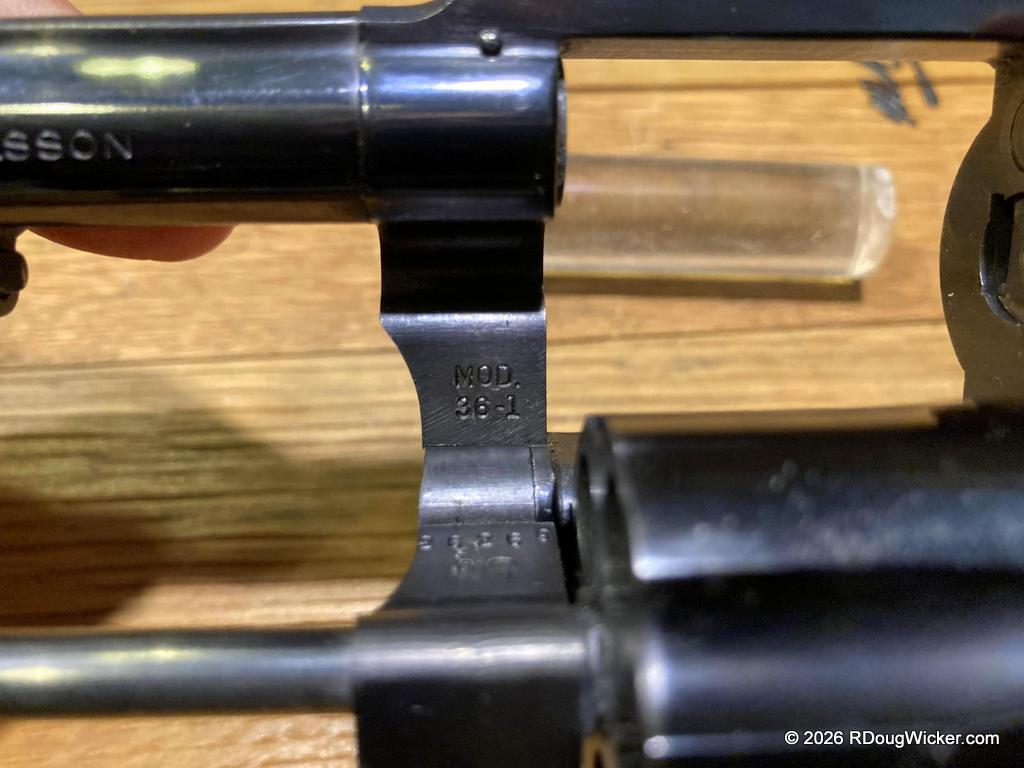
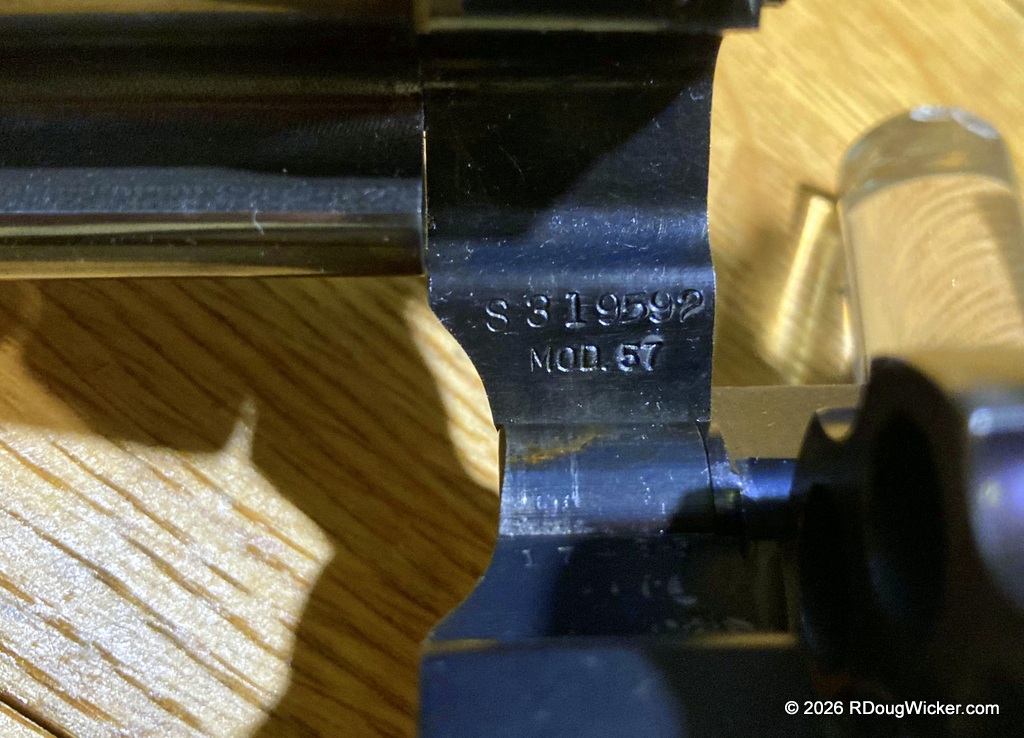
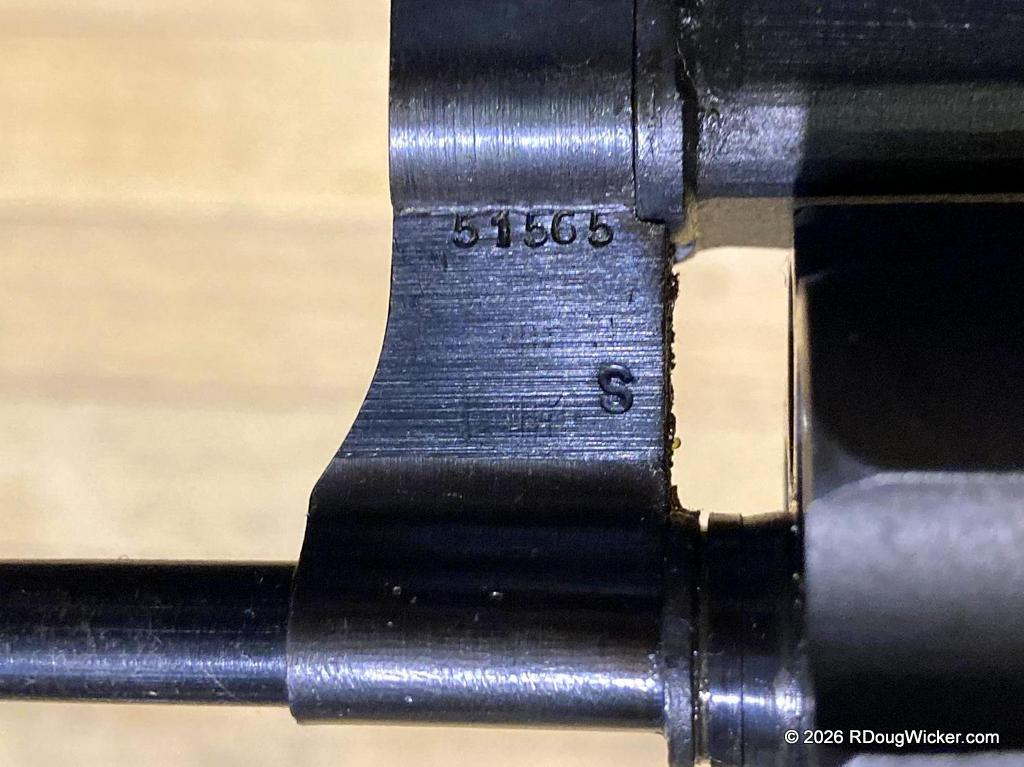
I’ve covered this particular Smith and Wesson anomaly before, but I’ll repeat it here for those who are new to this blog. On Smith revolvers you’ll also other stamped numbers. One, of course, is model number, including the engineering change number, on the frame beneath the cylinder crane. Looking at the photo below reveals this to be a Model 36, engineering change 1 (hence: 36-1). “No-dash” Model 36/Chief Specials were made from 1950 until 1966. Change 1 ran from 1967 through 1982, when the S&W phased out the pinned barrel. For a primer on “no dash,” “pinned,” and “recessed,” see: Smith & Wesson Revolver Lesson/Quiz — What do “Pinned,” “Recessed,” and “No-Dash” mean?
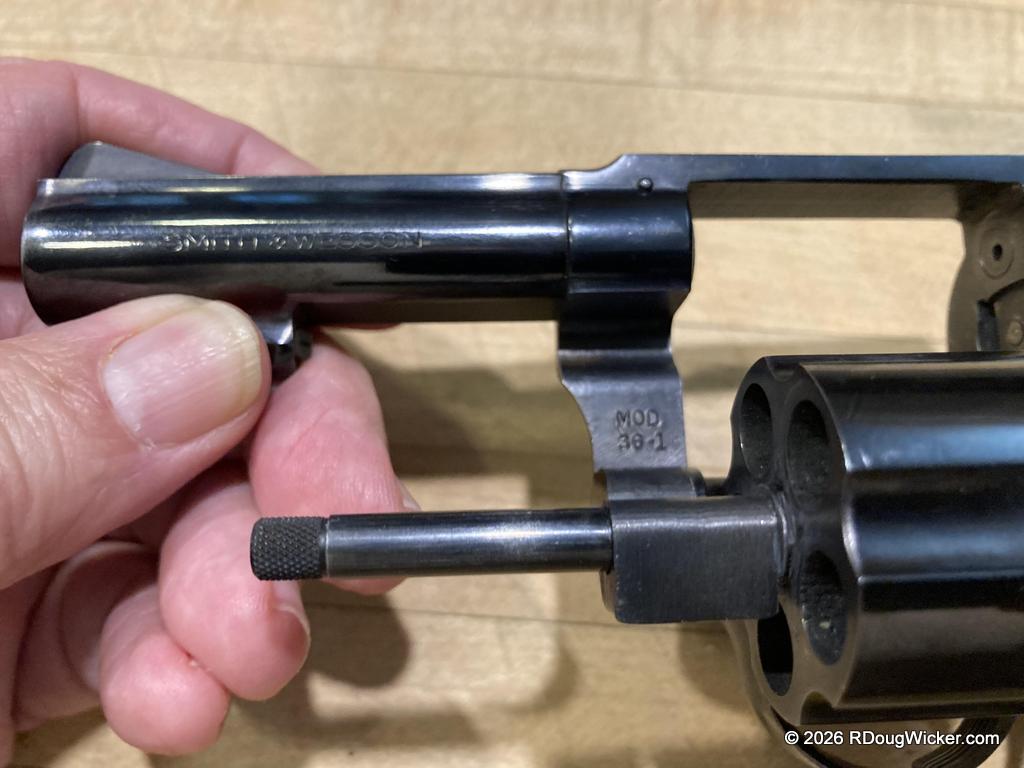
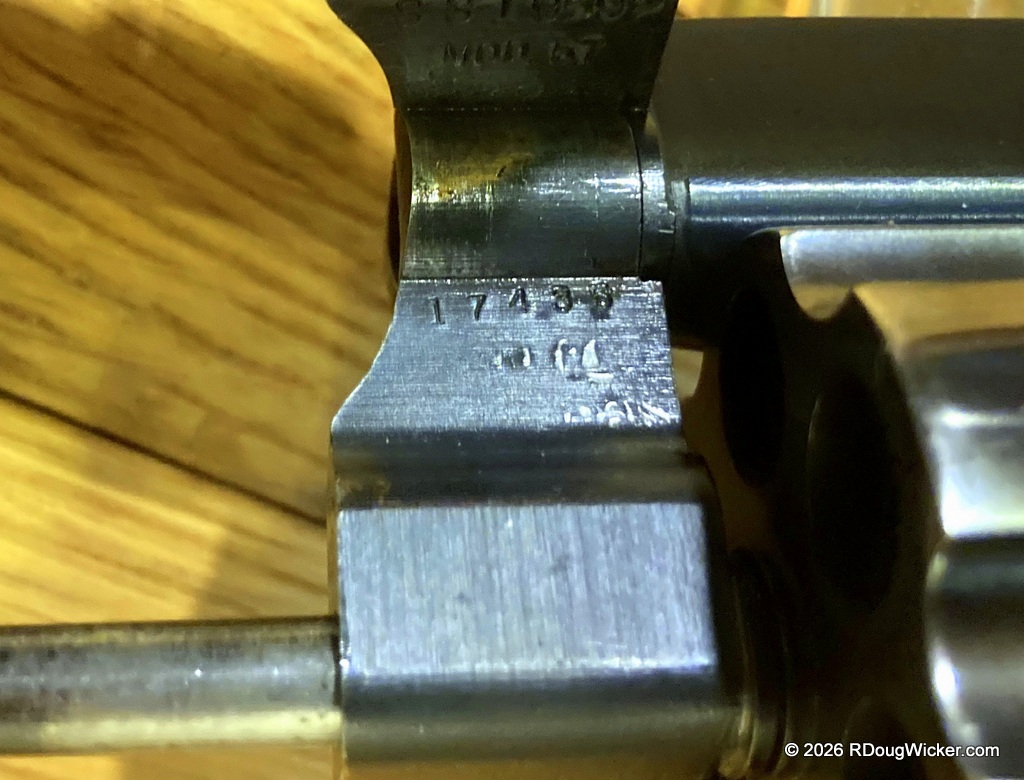
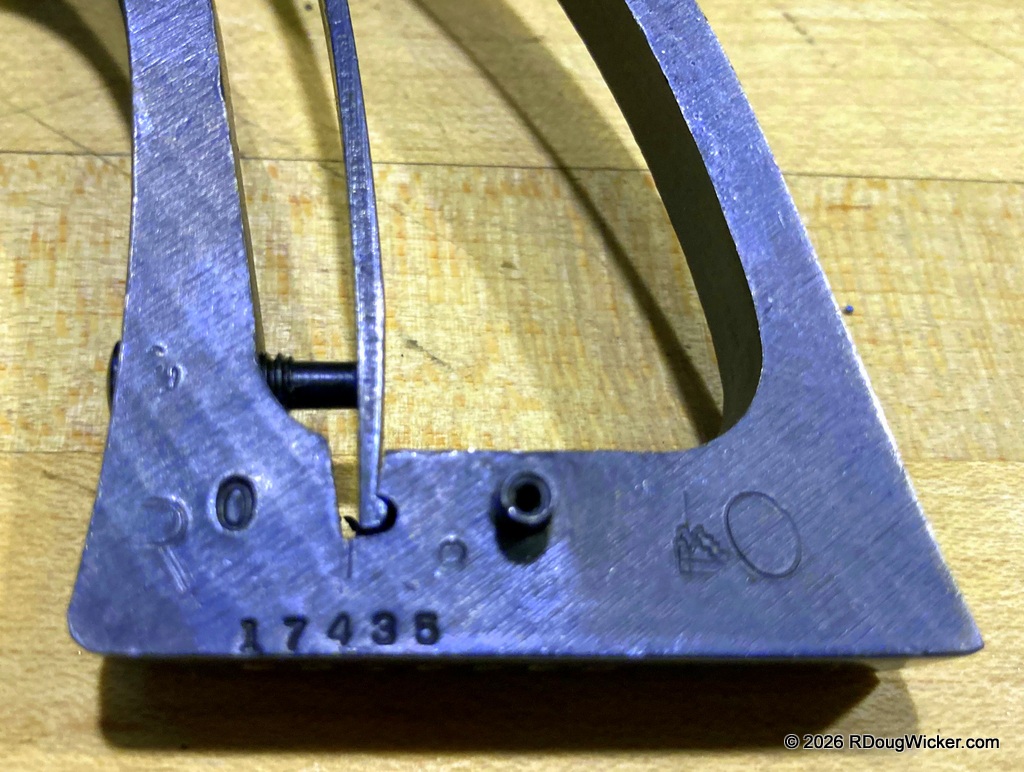
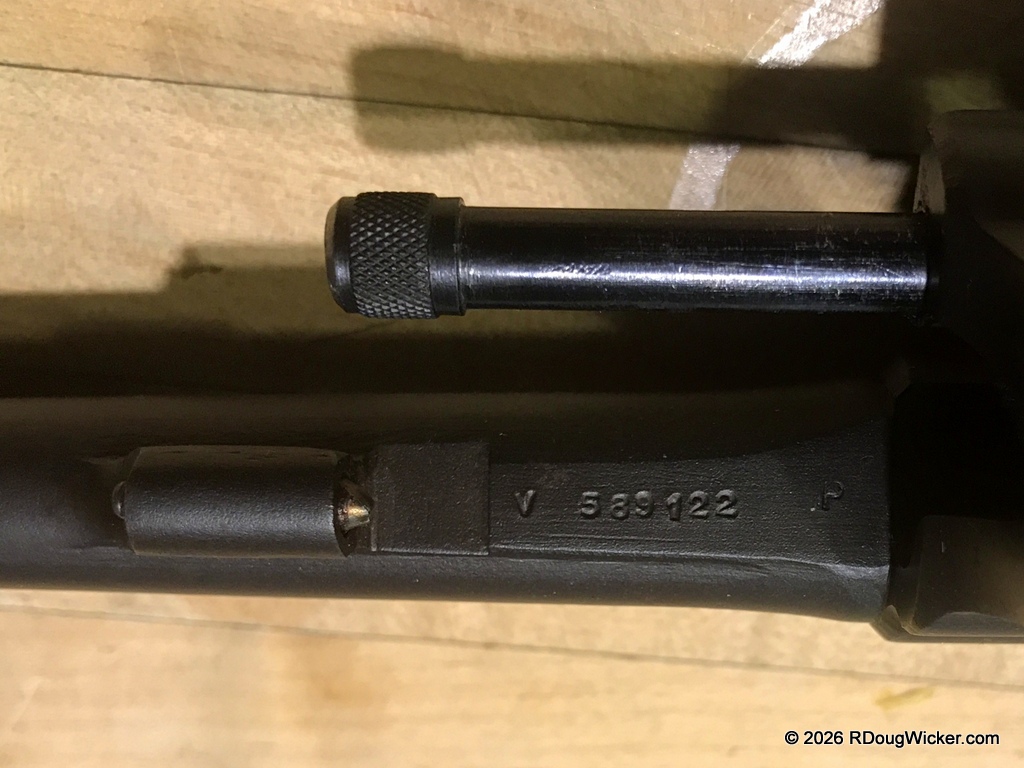
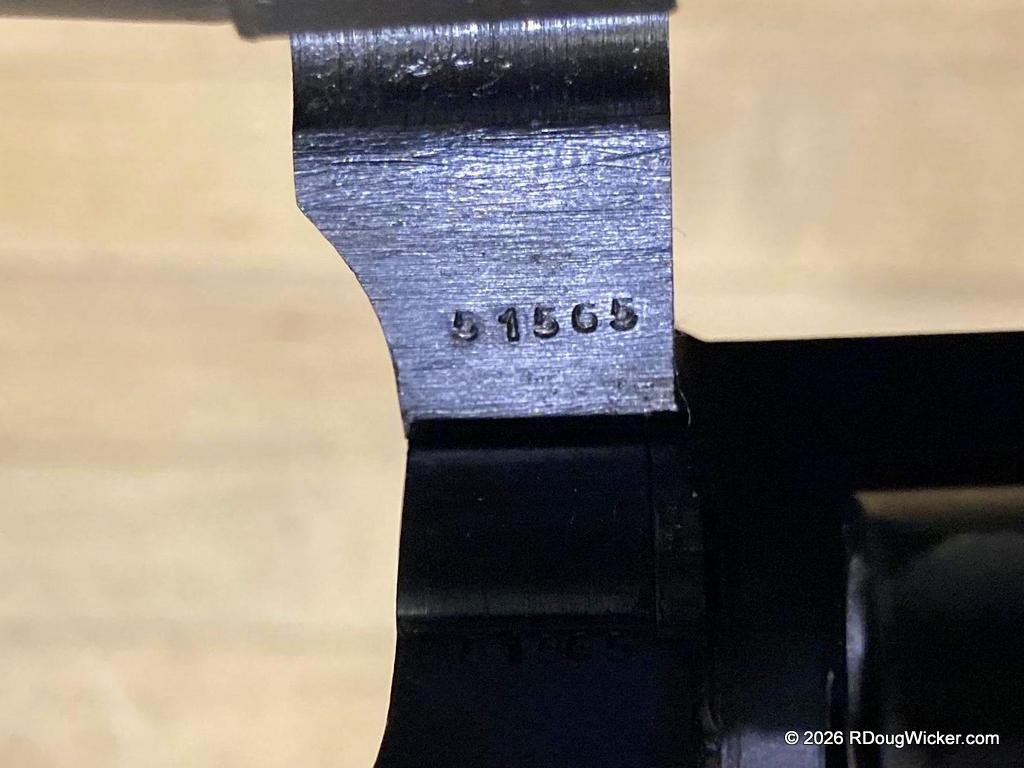
But there’s another number you’ll find stamped on older S&W revolvers, and this stamp is frequently confused by novices for the serial number. It’s not. It’s the assembly number, and that was used internally by Smith to ensure matched parts stayed together during the hand fitting and assembly stages of production. About the only thing these numbers were good for once the gun left the plant is to tell you if you’re looking at an all-matching example, which is worth far more to a collector. On this Model 36 you’ll find the assembly number on the frame beneath the left-side grip panel and on the cylinder crane (also called the “yoke”) directly across from the model/change number stamp:
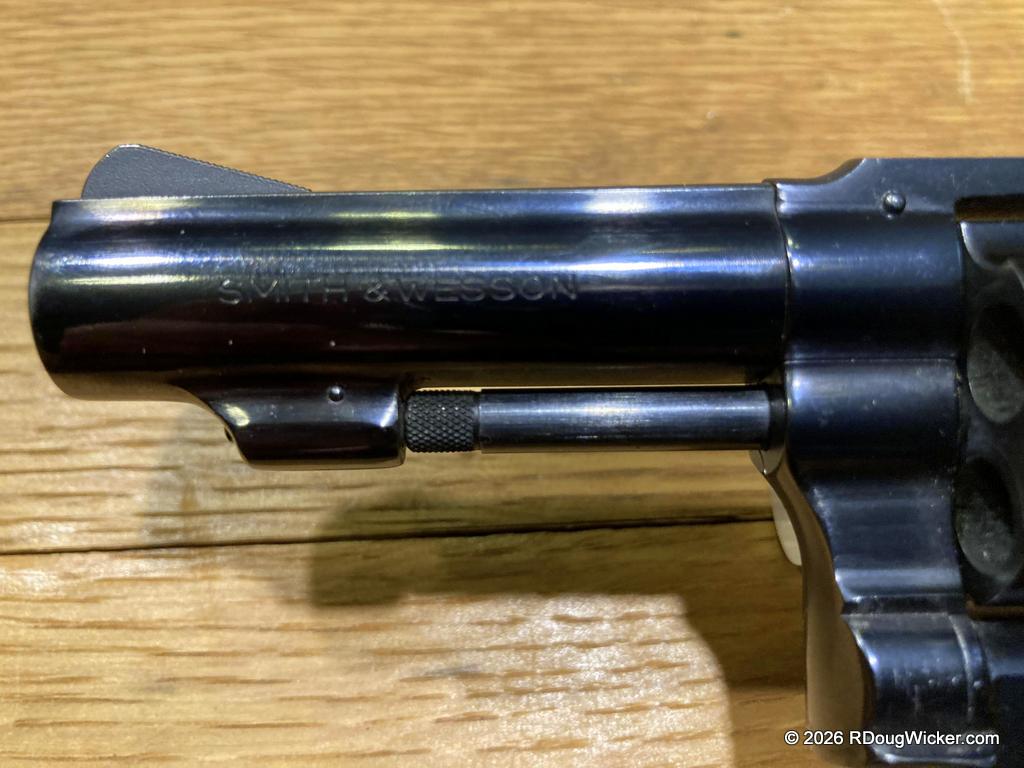
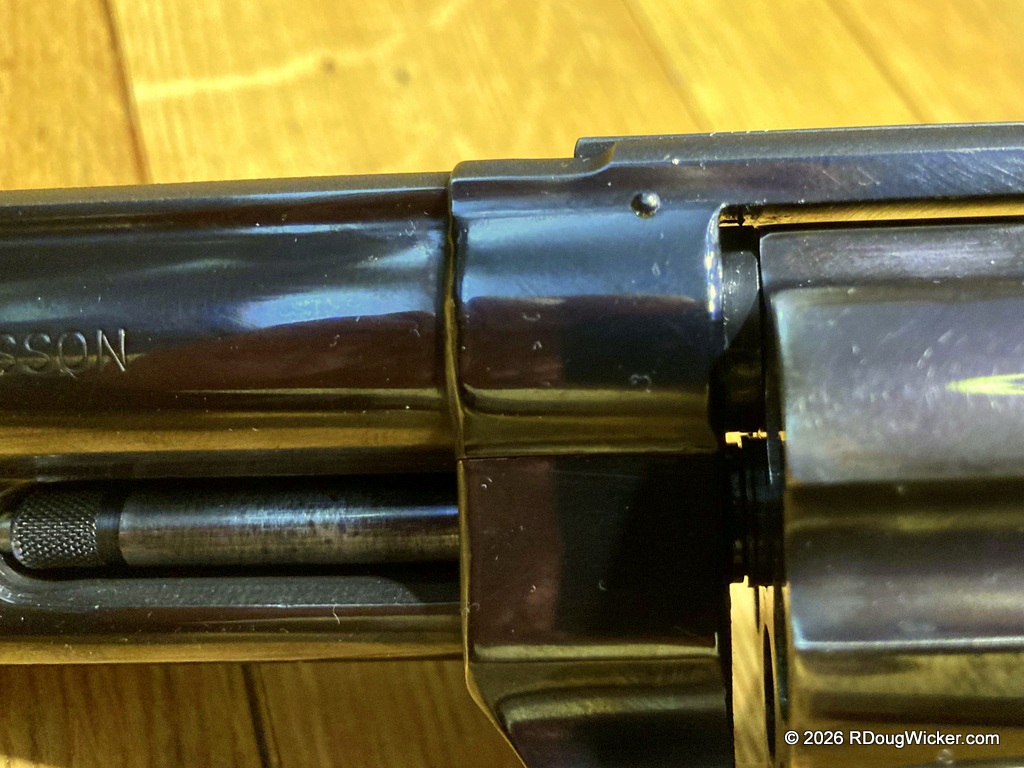
I mentioned above that Smith began transitioning away from their pinned barrels in 1982. Since this Model 36 dates to 1977, the barrel should be pinned, and it is:
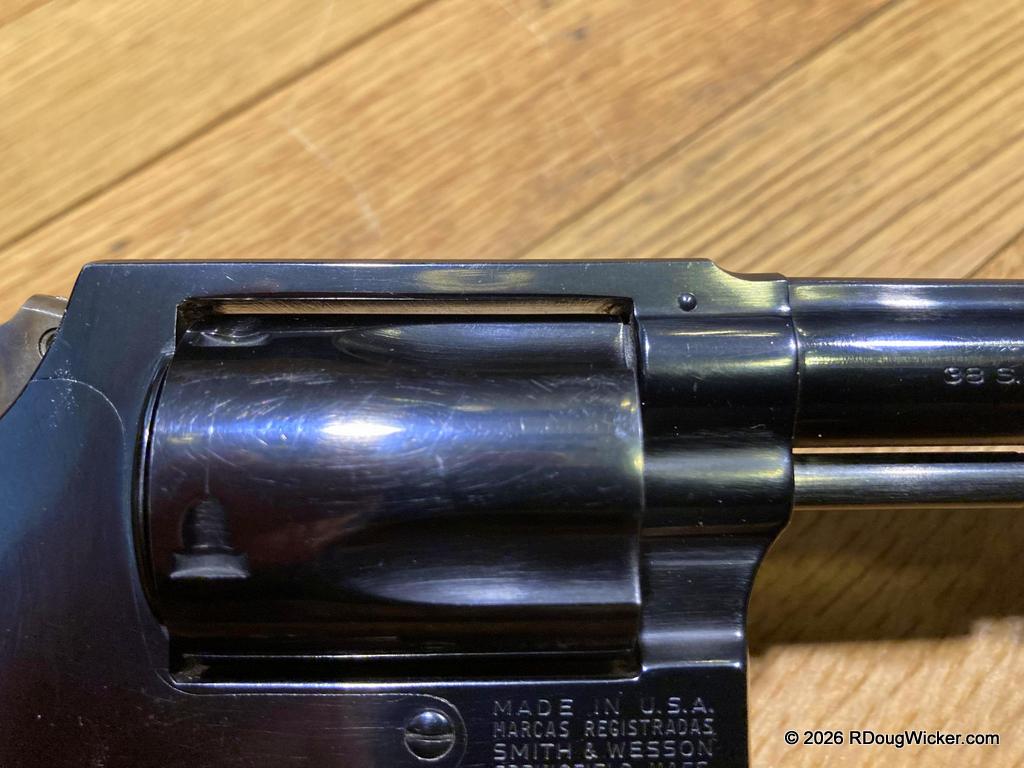
So, what did that pin do? And what makes a pinned S&W more valuable to collectors? On most revolvers the front sight is an integral part of the barrel, and the barrel is screwed into the frame. See the potential problem here? If the barrel is screwed in too much or too little, the front sight blade will be canted either left or right of center, which is impossible to compensate for if the revolver has a fixed rear sight. Smith solved this potential dilemma by machining a notch into the top rear of the barrel forward of the threads and drilled a hole through the upper frame. The barrel was threaded into the frame until the barrel notch aligned with the hole, at which point a pin was pressed through the hole and across the notch. Modern manufacturing processes and tolerances made this expensive added touch redundant, and it was eliminated along with Smith’s recessed cylinder chambers. But the mystique of “pinned and recessed” Smith and Wesson revolvers remains strong among collectors to this day.
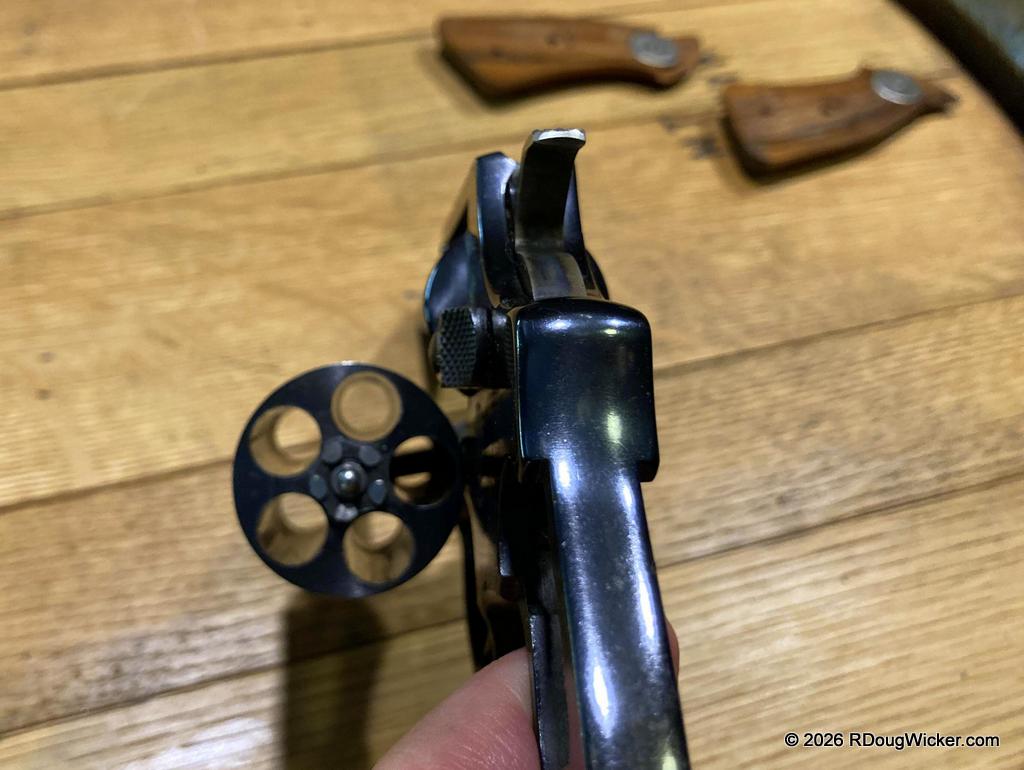
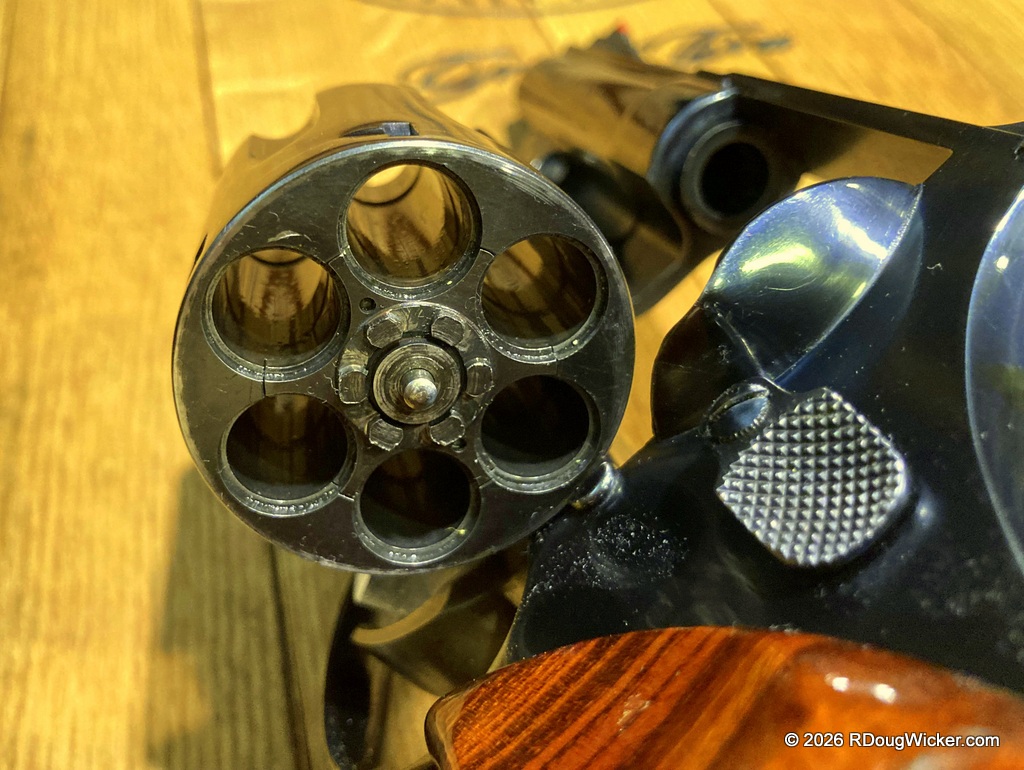
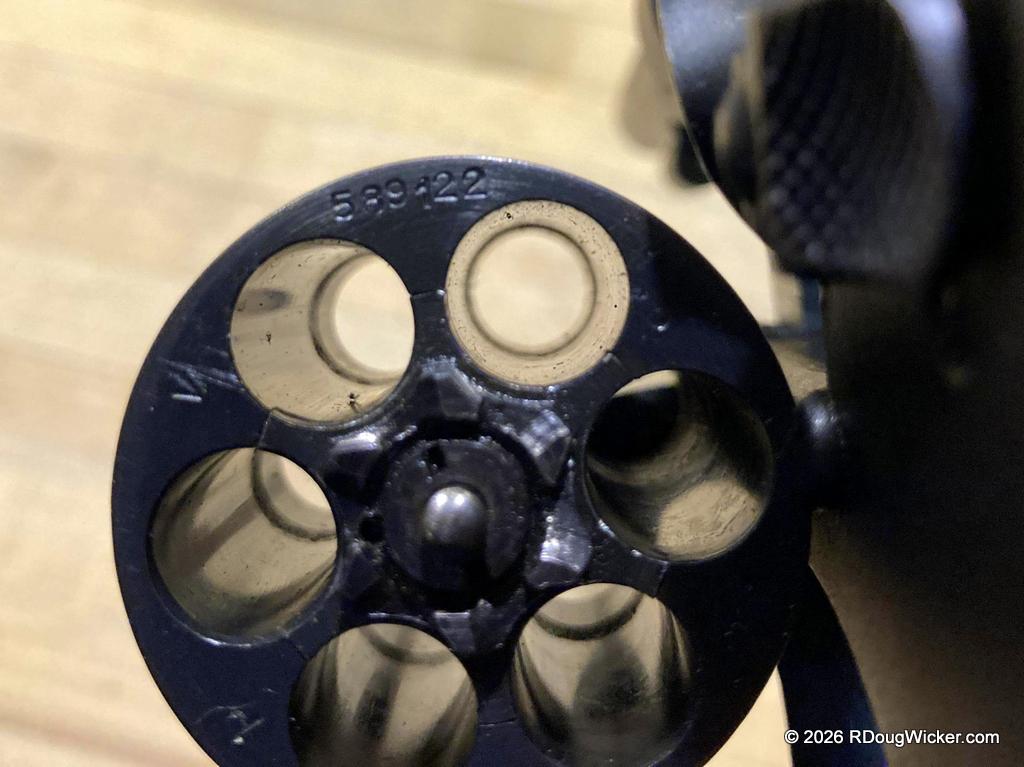
If you read my article on pinned and recessed Smiths, then you know not all S&W revolvers had recessed cylinders. That costly feature was reserved for Magnum chamberings (see Monday’s article on the S&W Model 57) and rimfire models (such as this prewar S&W K22 “Outdoorsman” made on 1 September 1938: Fun Firearm Friday — Collectible 1938 Smith & Wesson K-22 ‘Outdoorsman’. Since the Model 36 only came in .38 Special, which is a non-Magnum round, this gun shouldn’t have recessed chambers, and it doesn’t:
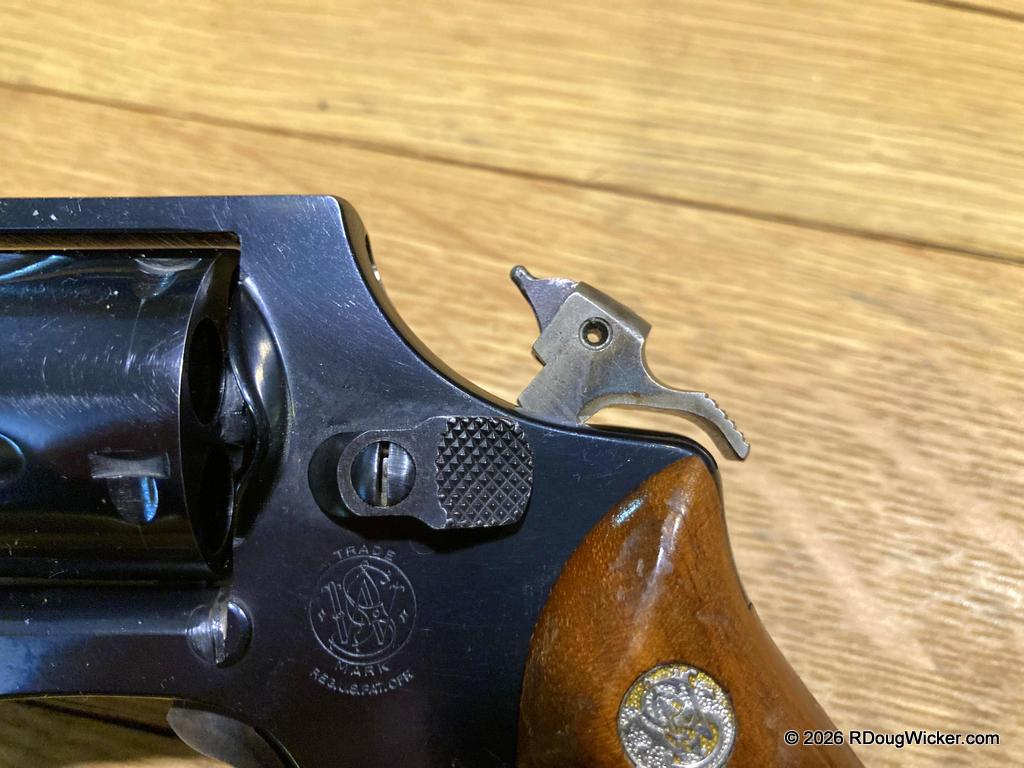
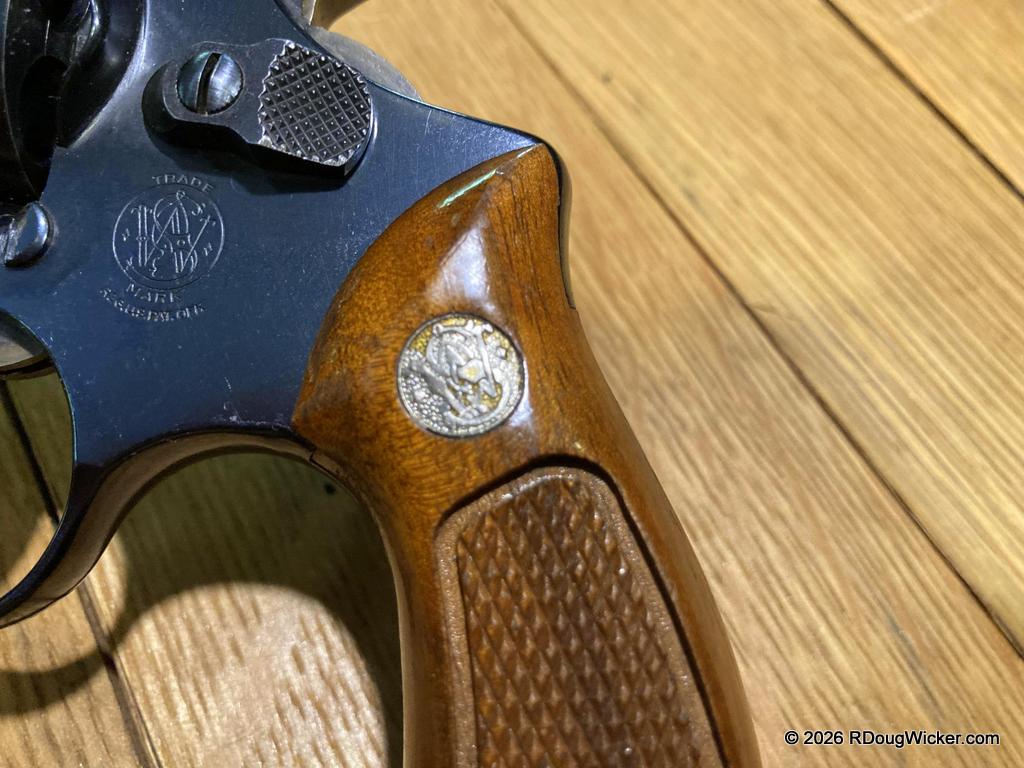
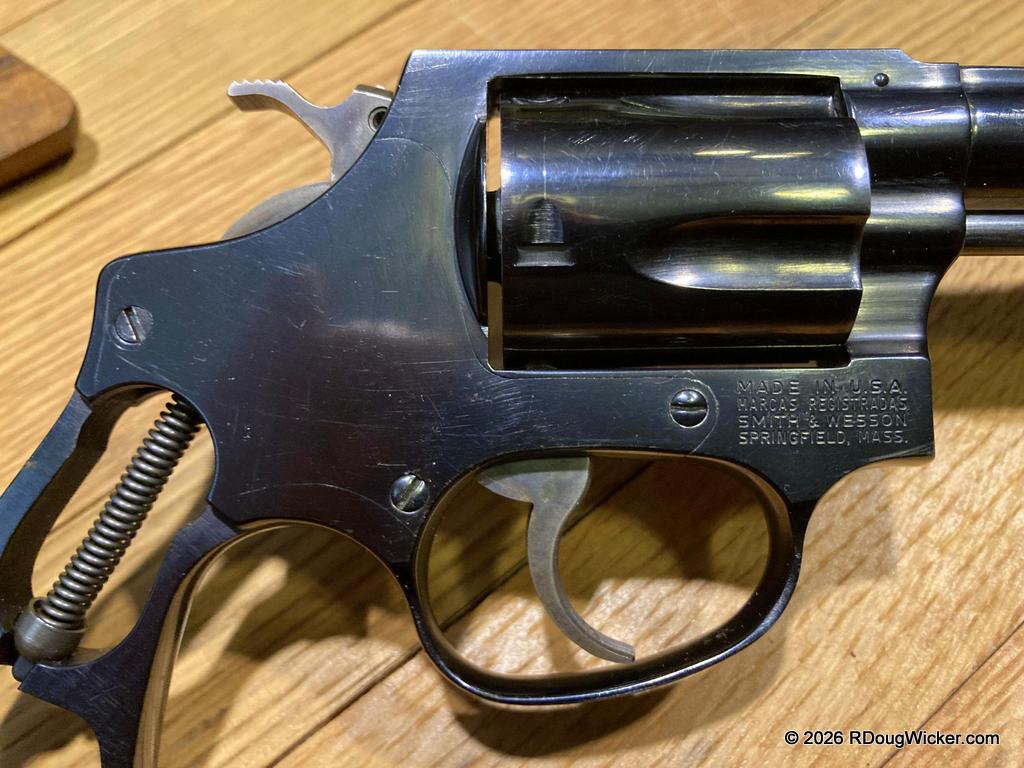
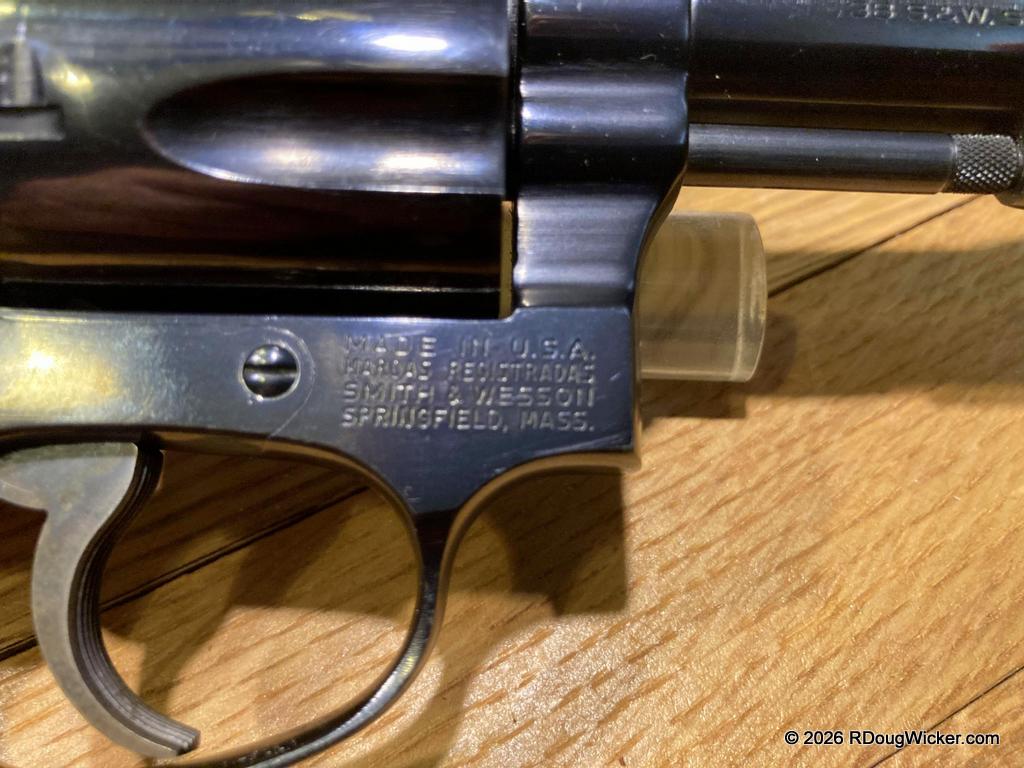
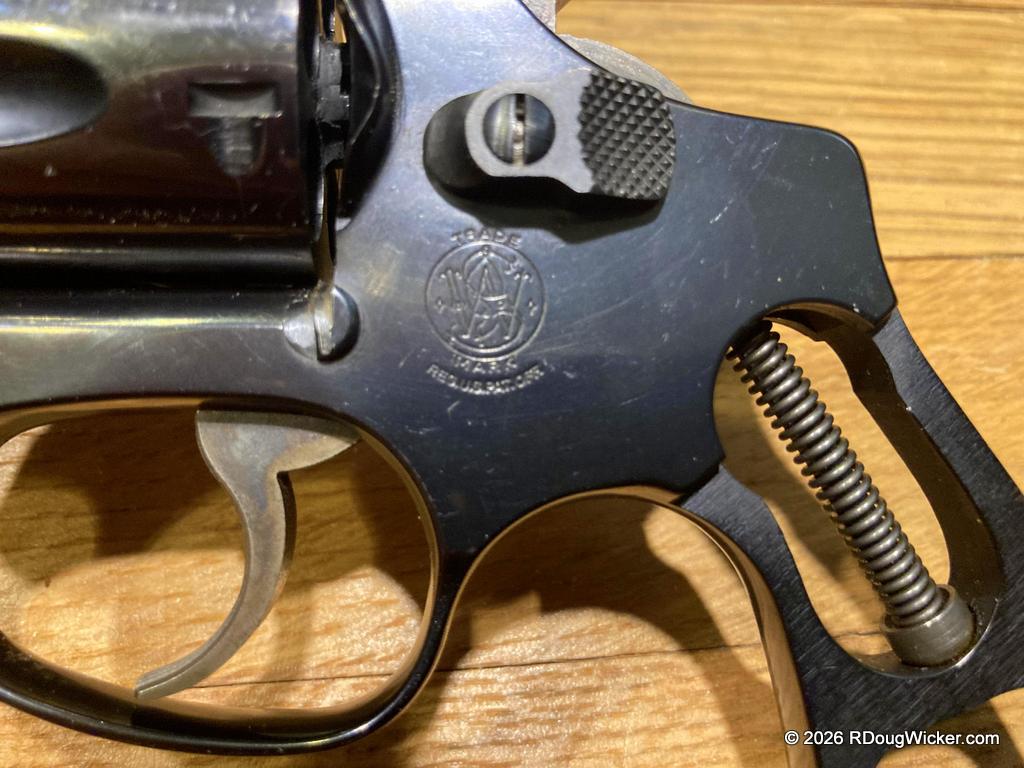
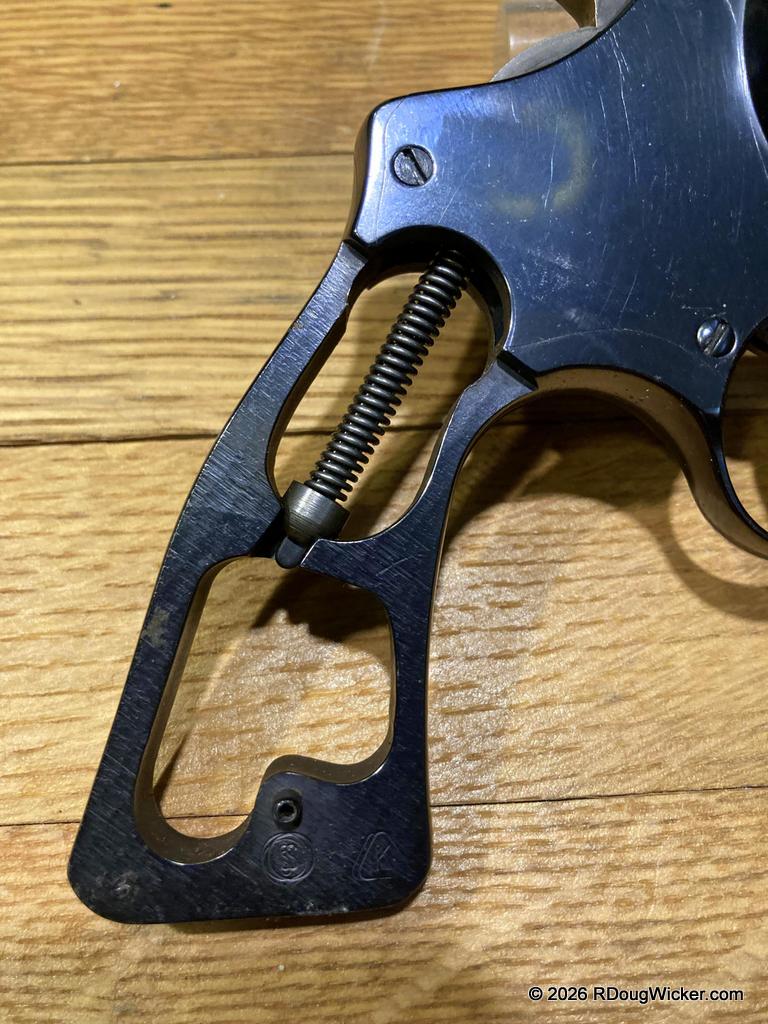
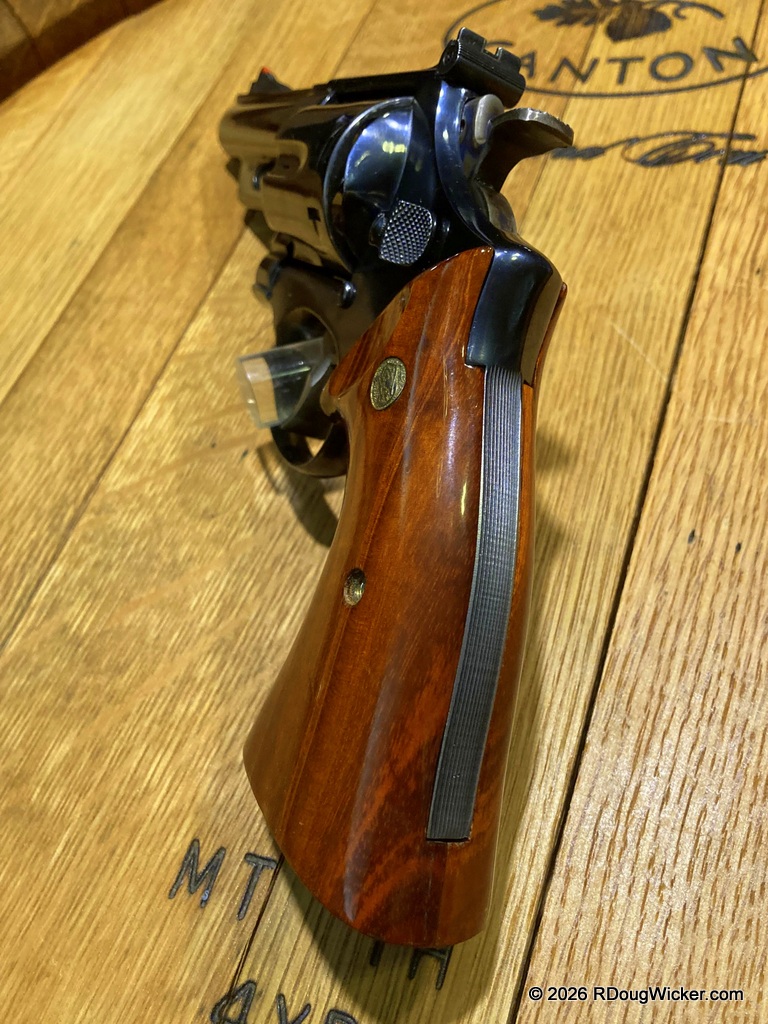
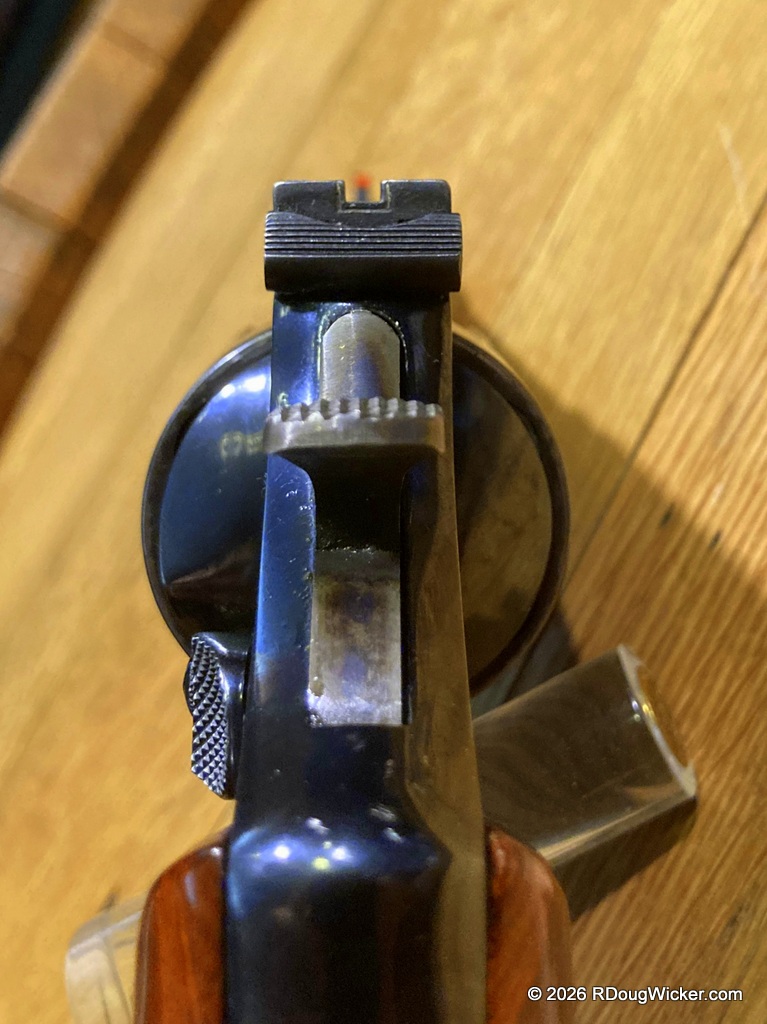
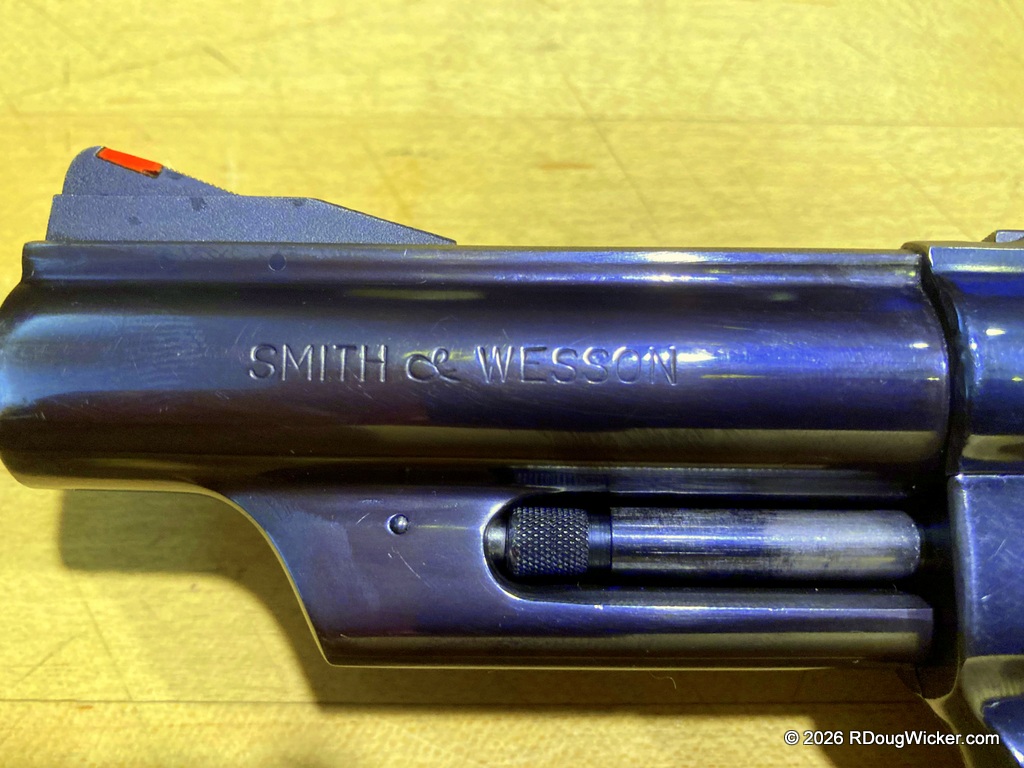
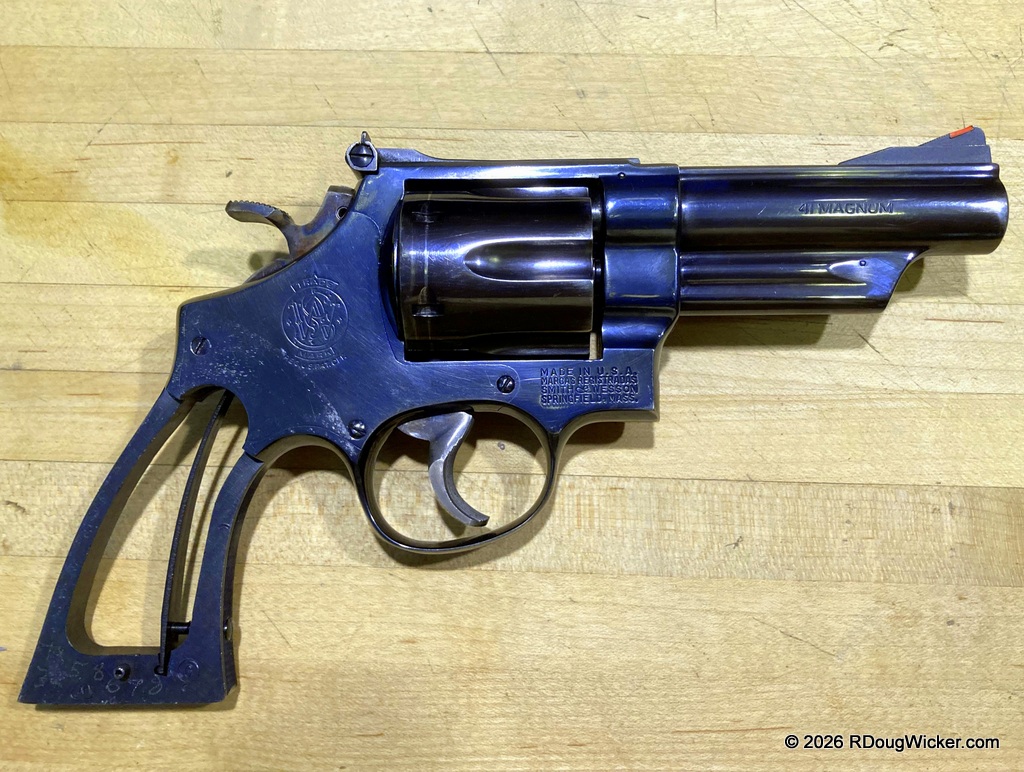
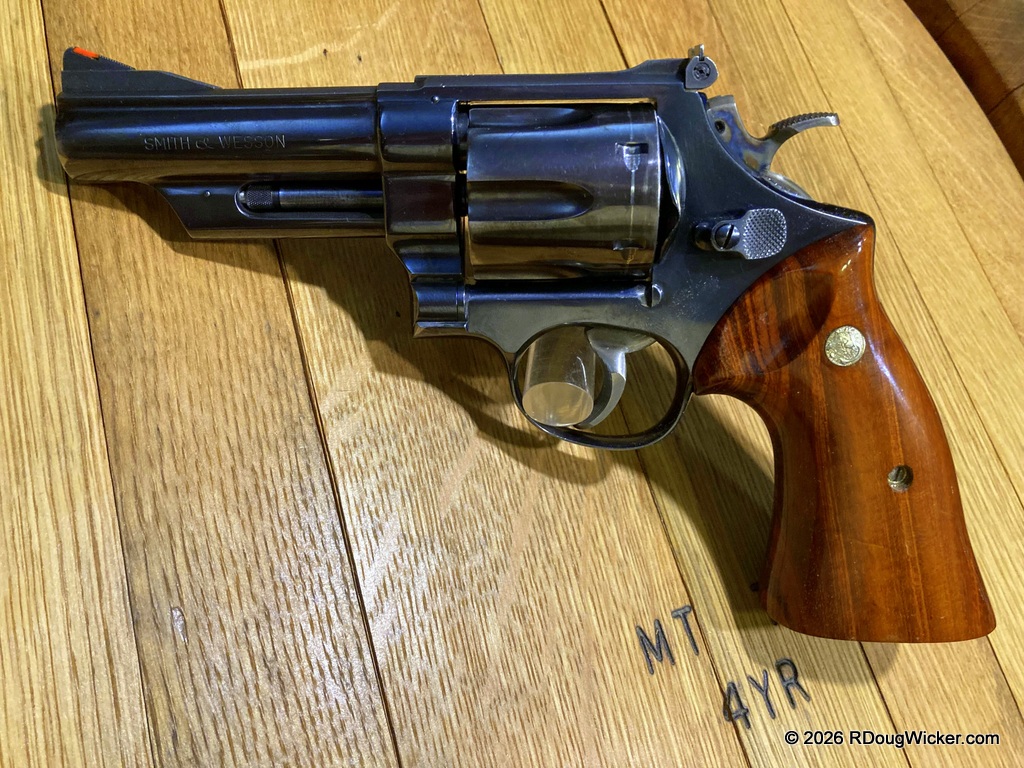
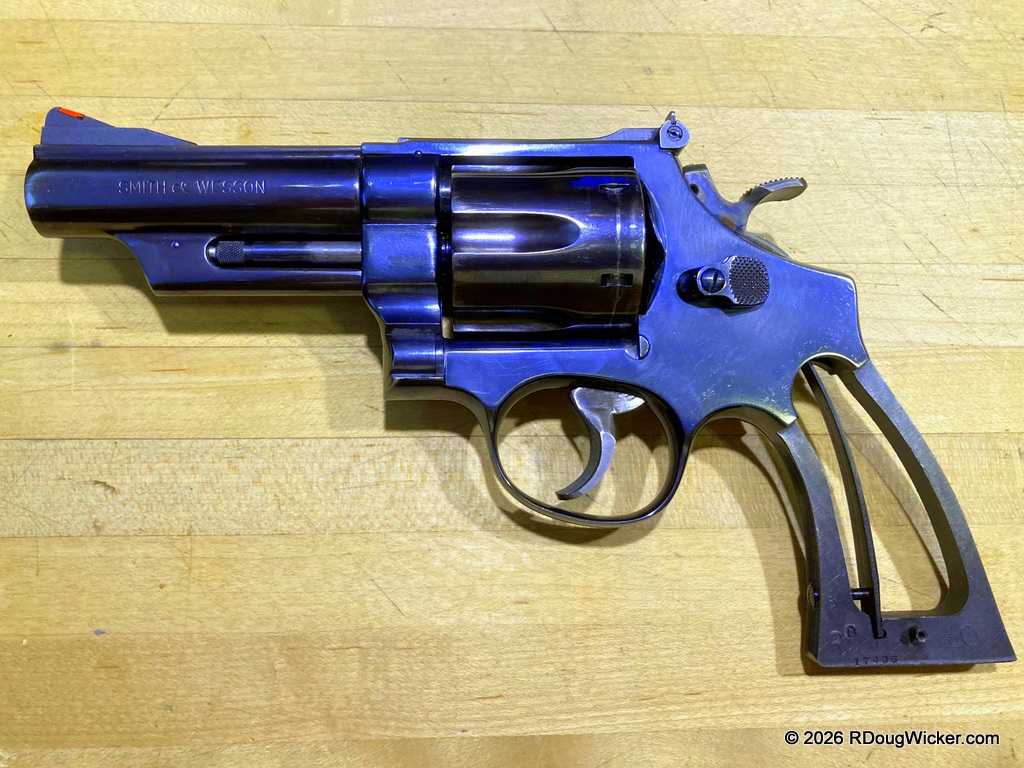
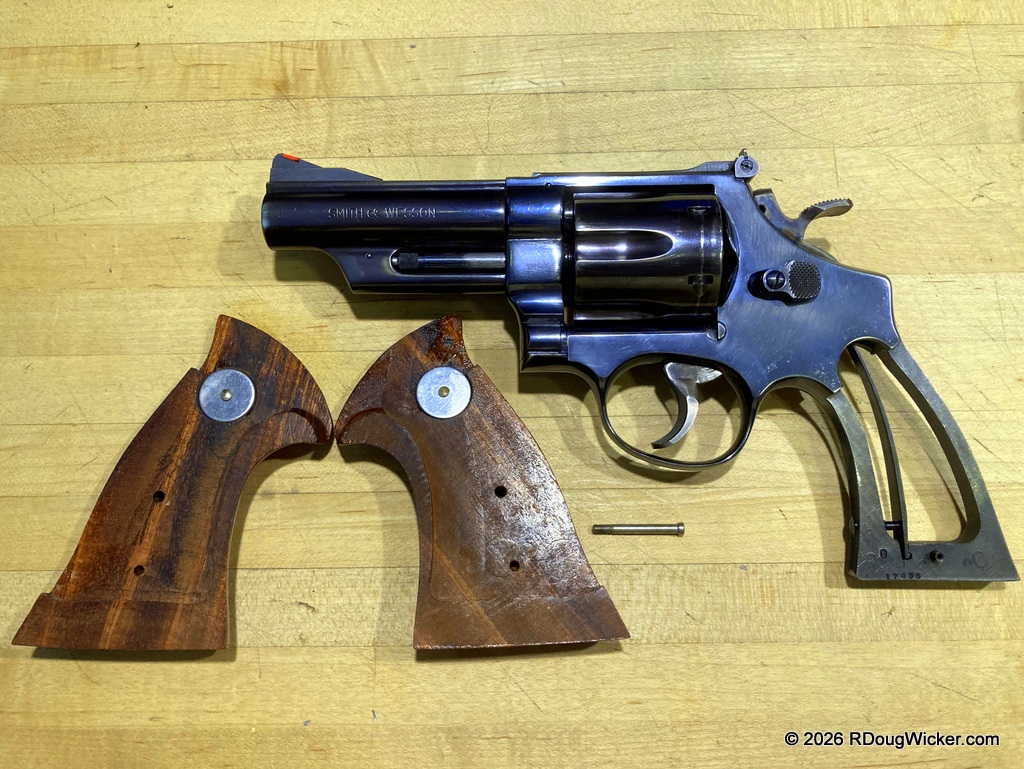
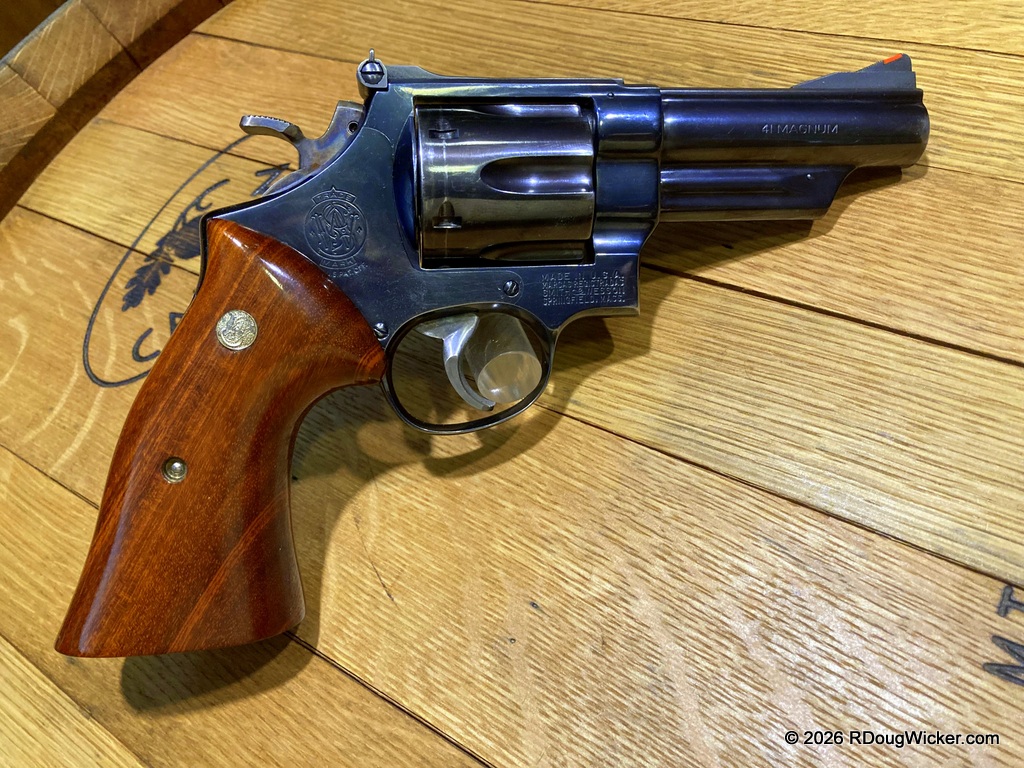
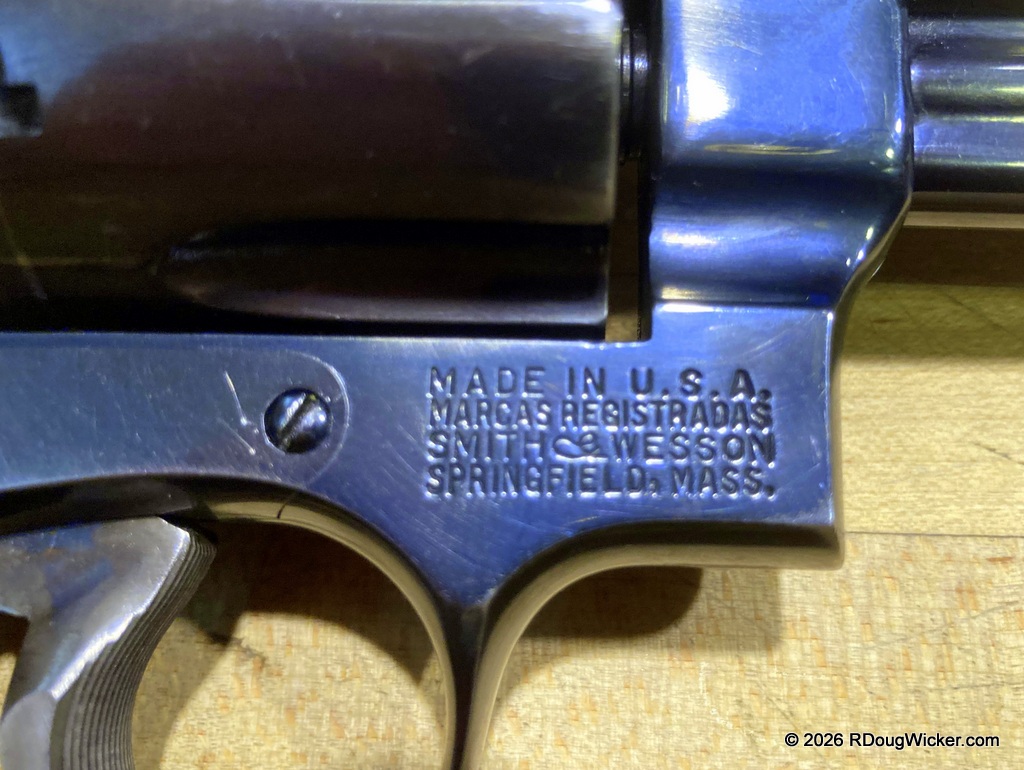
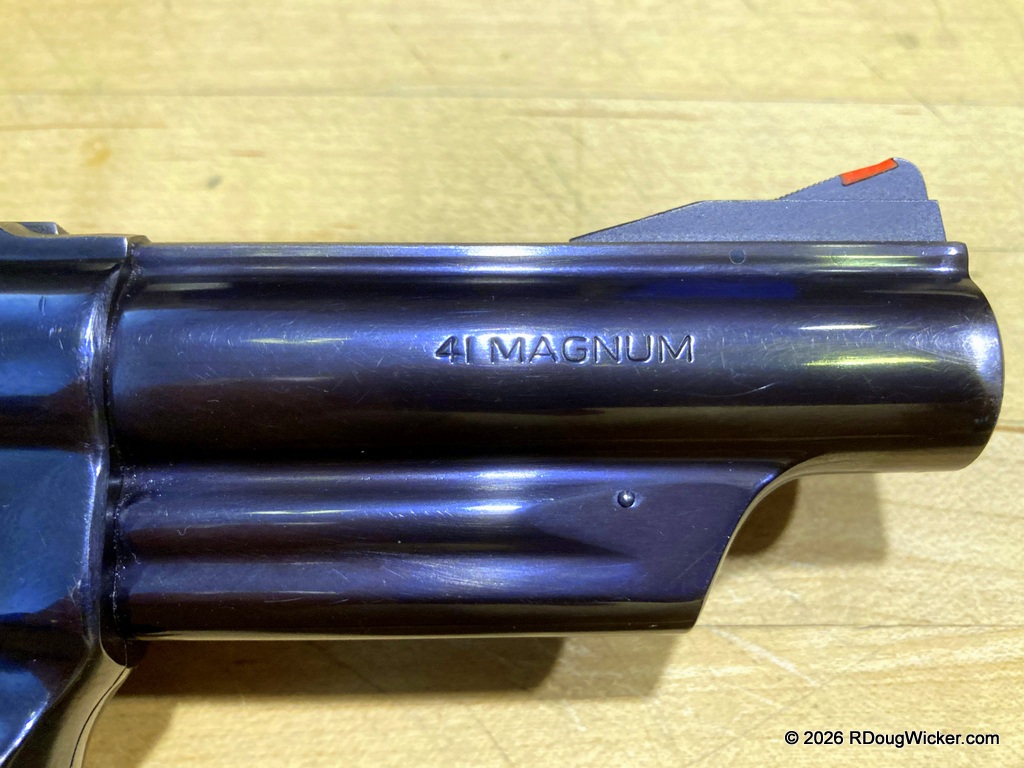
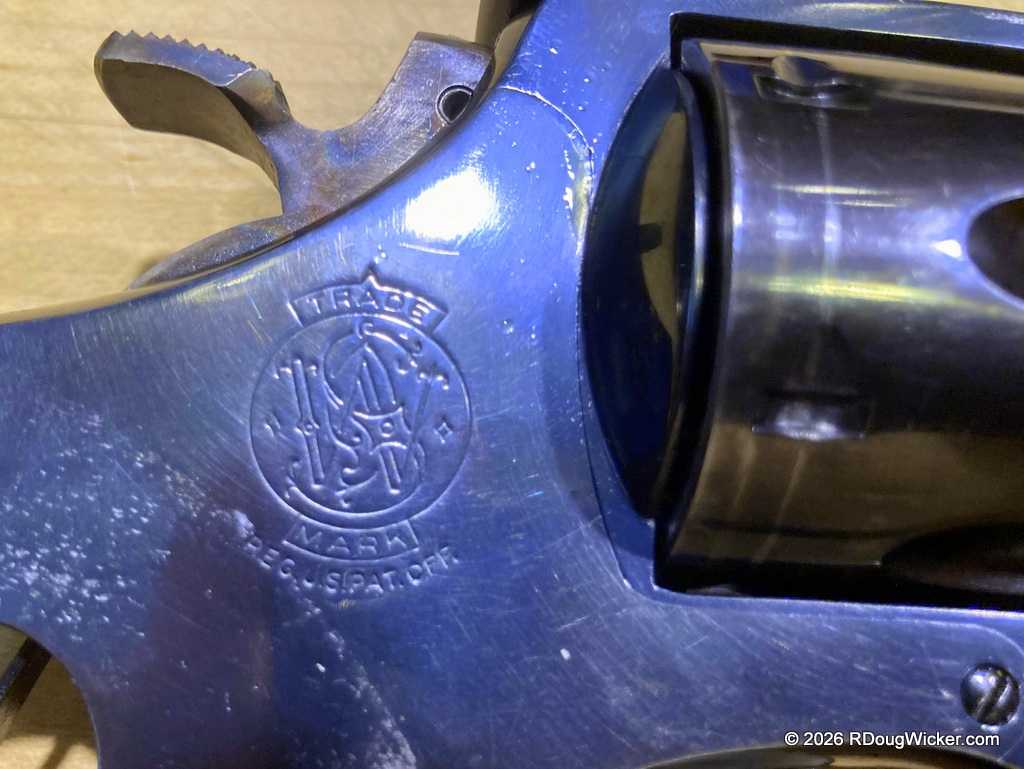
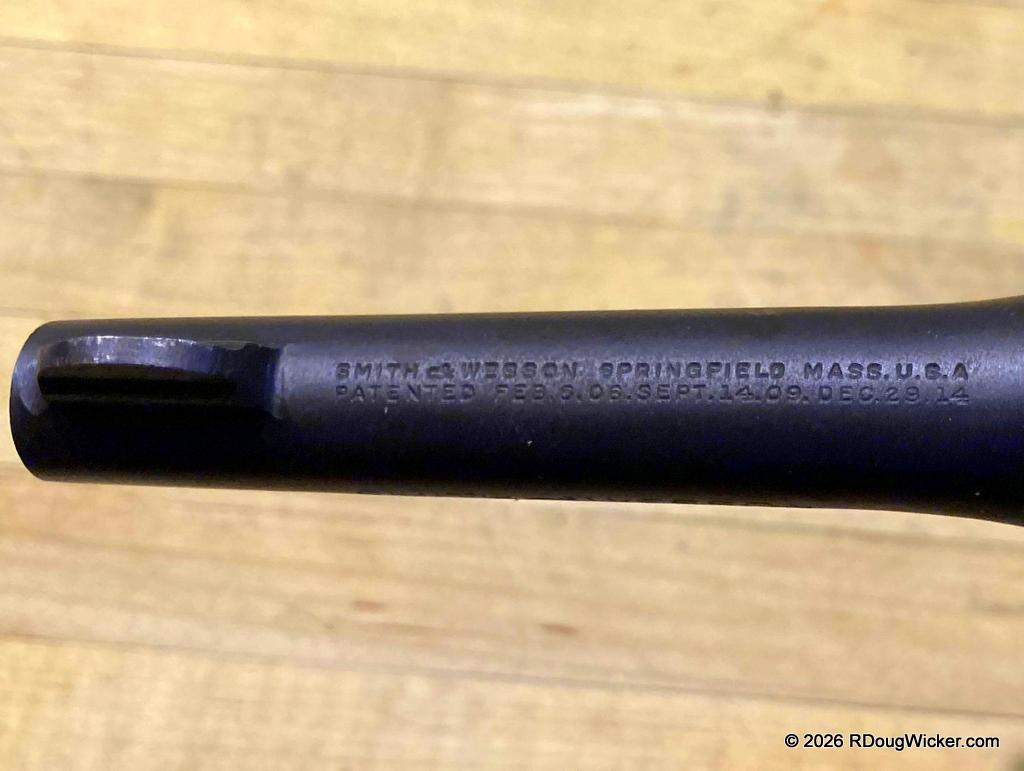
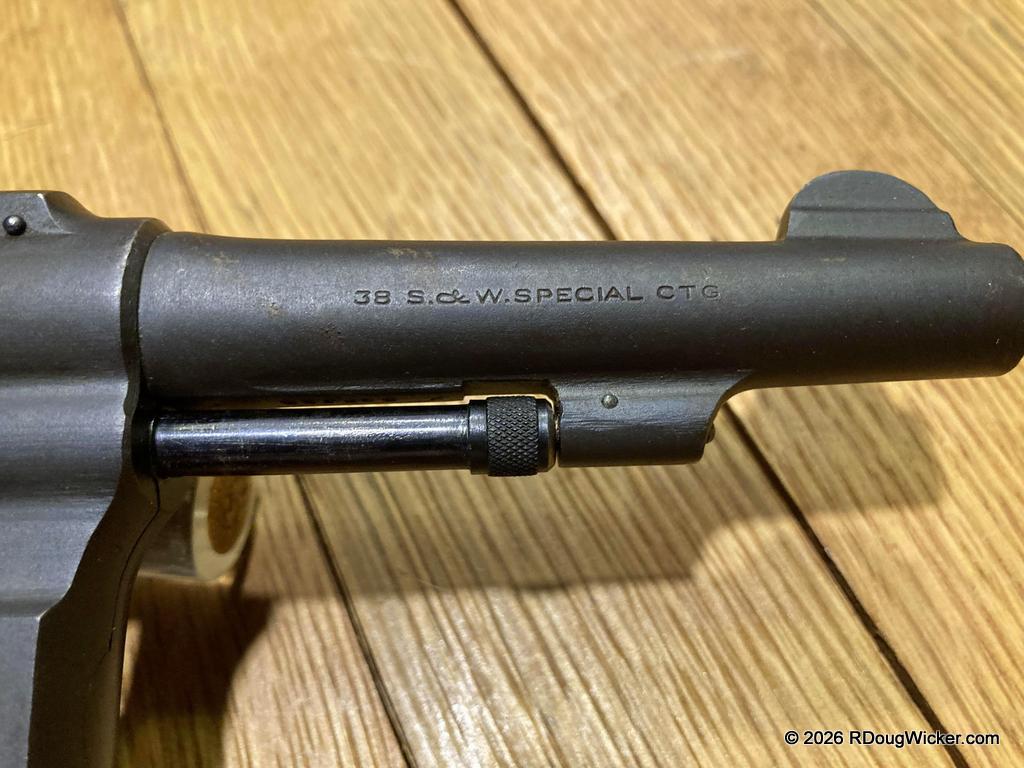
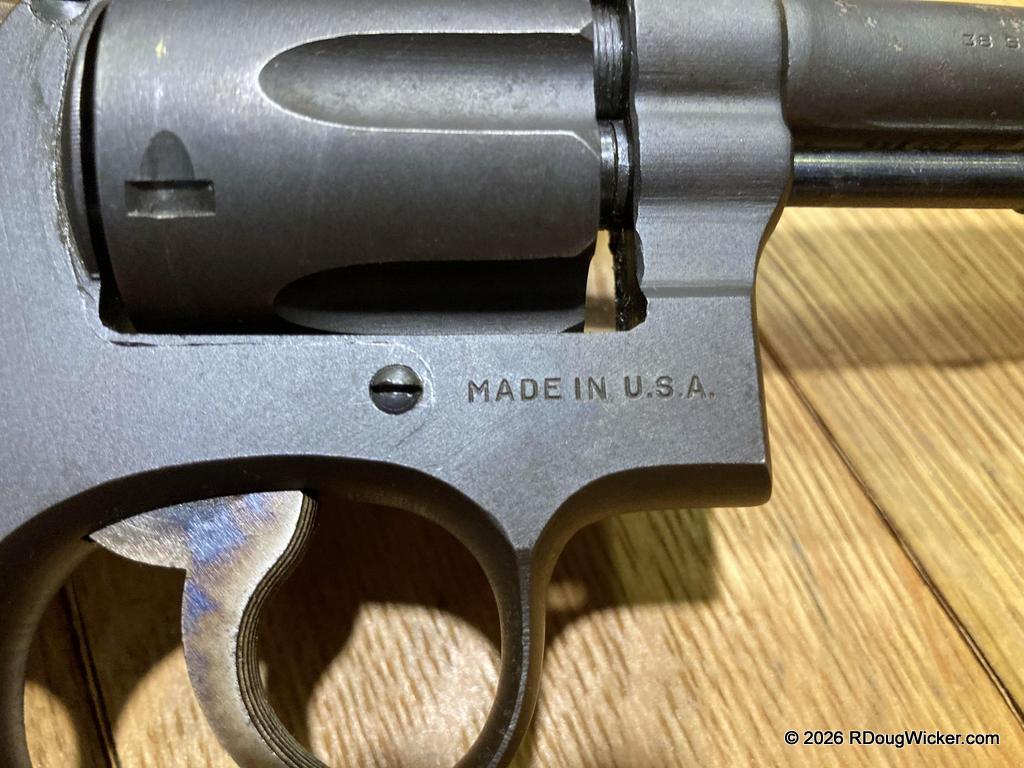
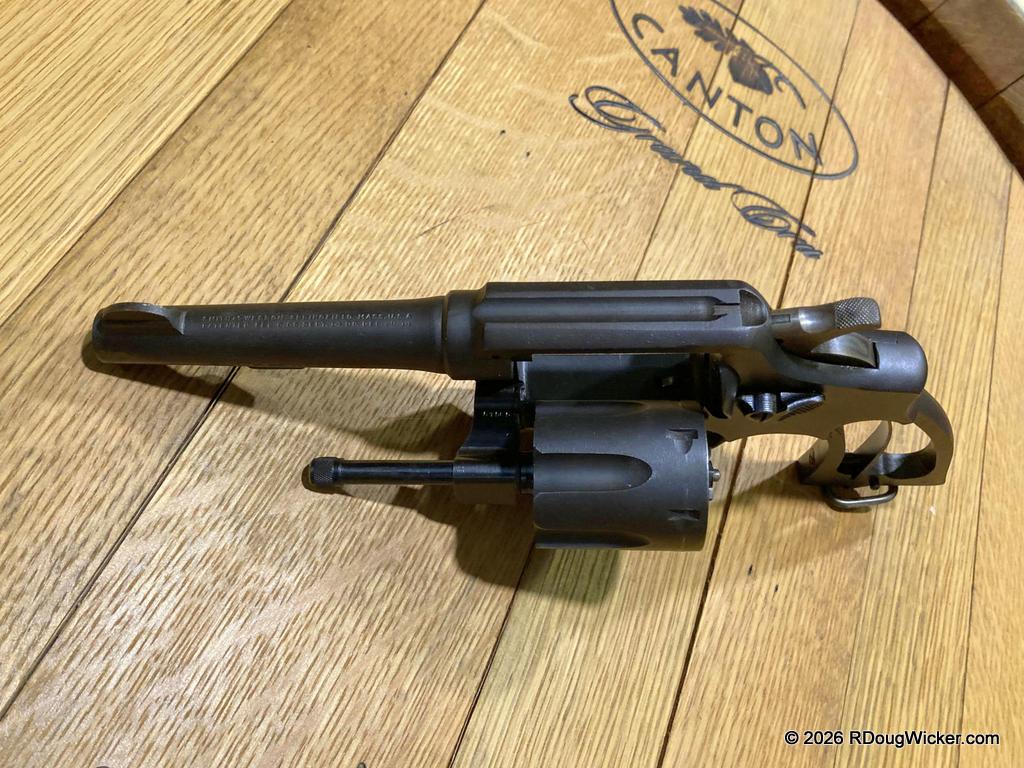
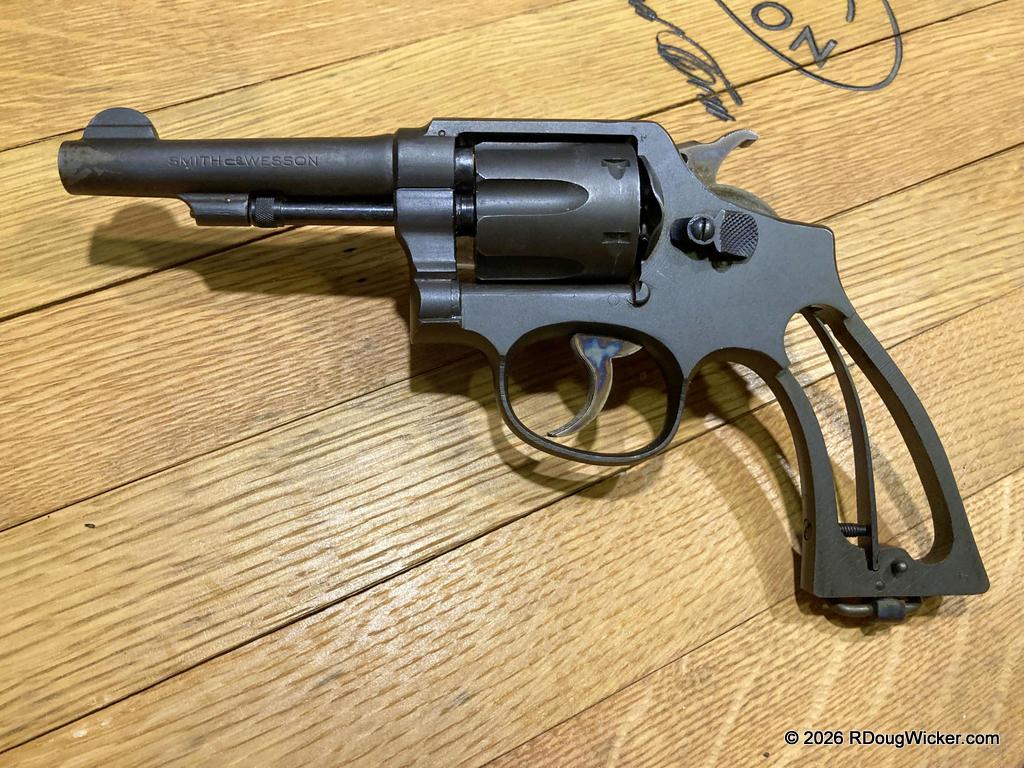
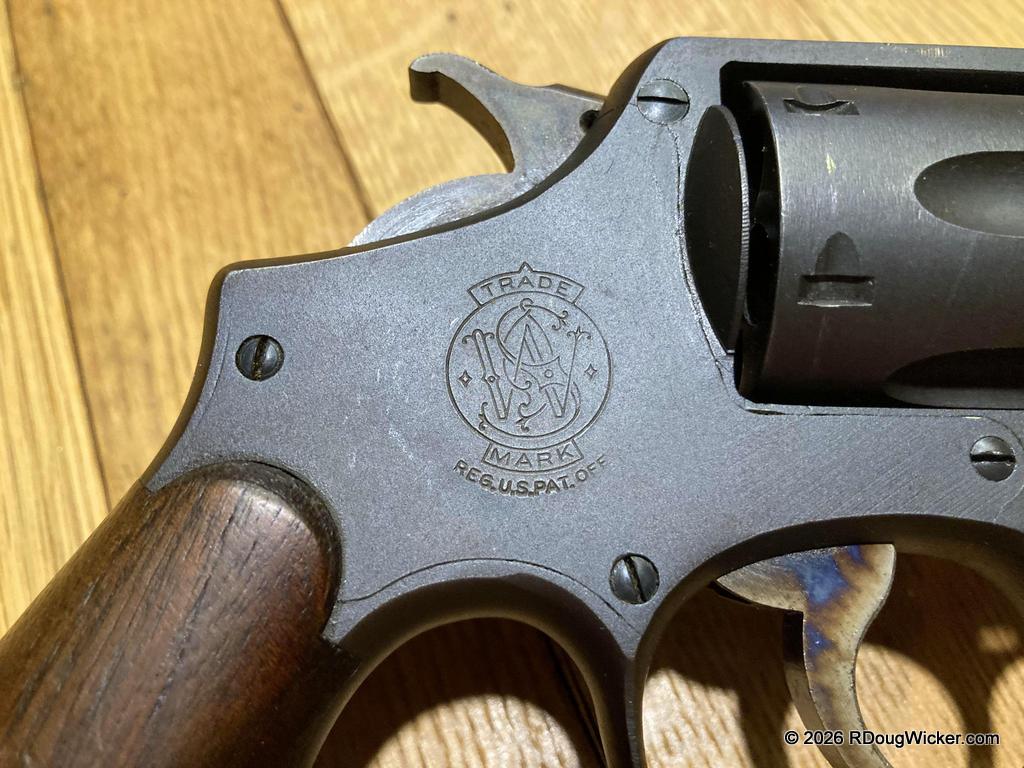
Next week brings a new travel series. As for today, I’ll conclude this Fun Firearm Friday with this little Model 36-1 photo gallery/slide show.
Слава Україні! (Slava Ukraini!)
 Decisions — Murder in Paradise
 The Globe — Murder in Luxury
