
Steaks, Dressed Potatoes, Garlic Green Beans, and California Zinfandel
If you’re European then you’re probably wondering how to make that classic American steak and potato. If you’re American, you’re probably doing it all wrong. You’ve been told to grill that steak, but most grills simply do not get hot enough for the task. For instance, many of you may have heard that the steak ovens used in the Ruth’s Chris chain of restaurants obtain temperatures of 1,800° Fahrenheit (over 980° Celsius). Think you can get your grill that hot without it melting? Additionally, many of you wrap your potato in foil, but that results in a steamed potato rather than a properly baked one.
Today you’ll find out the proper technique for both. As an added bonus I’m going to give you a tasty and easy to make vegetable side dish — green beans and garlic.
A properly baked potato takes time, so we’ll start with those. Thoroughly wash the potato, dry it, lightly coat with olive oil, and then sprinkle on a very liberal amount of course salt. Do not make the typical mistake of wrapping your potatoes in foil — you want them baked for a light and fluffy texture, not steamed into an insipid and mushy submission.

Baked Potatoes need Salt, Pepper, Butter, and Sour Cream
I like to place my potatoes onto a piece of foil to avoid oil dripping onto the bottom of the oven. Bake the potatoes at 375° (190° Celsius) in a convection oven or 400° (205° Celsius) in a conventional oven for at least one hour fifteen minutes. You can go a little over that time, but don’t go under. Indeed, for a very large potato you may need to do so.
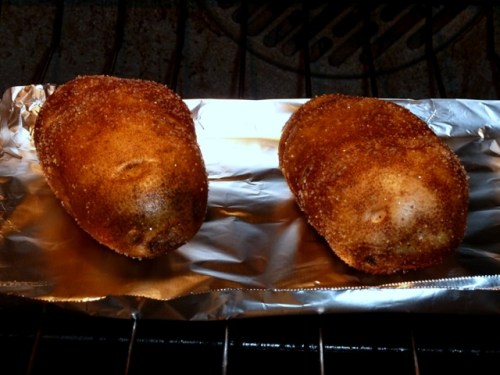
Russet Potatoes in the Oven
While the potatoes are baking, take out the steaks to bring them up to room temperature.

USDA Prime New York Strip
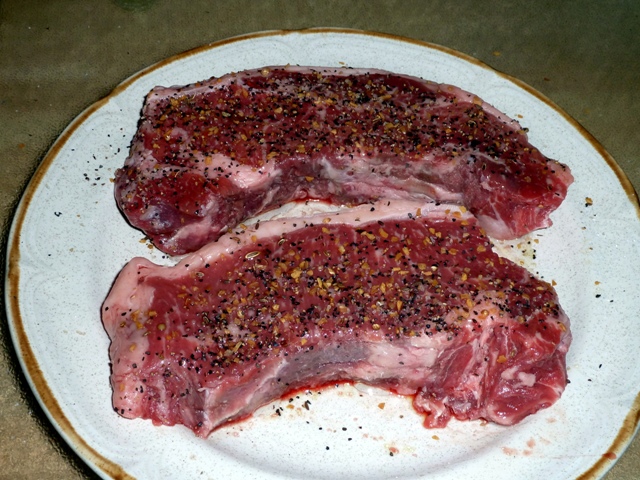
Coat the steaks in light olive oil (extra virgin will not survive the high temperatures later). When it comes to seasoning a steak, less is a lot more. You want to enhance the natural flavor rather than mask it (people who use steak sauce would be well advised to just switch to ground beef rather than ruin a perfectly good steak). Salt and pepper is all you need, but I’ve also found that Montreal Steak Seasoning imparts a delicious complimentary flavor without overpowering the steak. Set the steaks aside while you move on to the next dish.
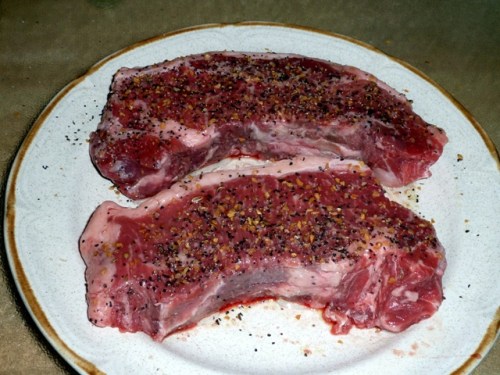
Well Seasoned with Montreal Steak Seasoning
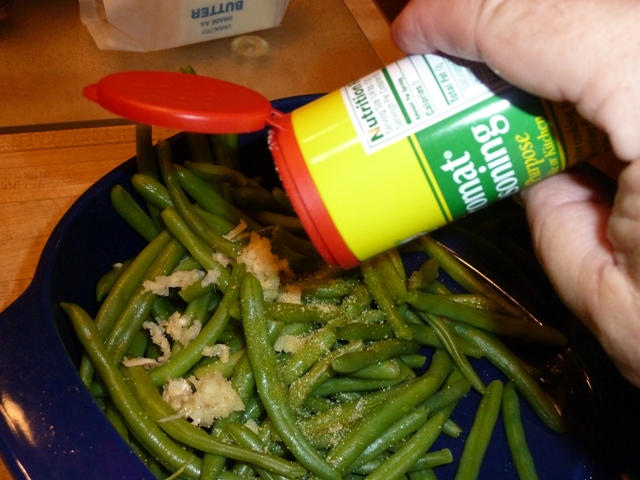
Next up is the green beans with garlic. The secret to a flavorful green bean is steaming rather than boiling or, worse, microwaving. You’ll need either fresh or frozen green beans, some freshly crushed garlic, either butter or extra virgin olive oil, and my favorite vegetable seasoning — Aromat by Knorr of Germany (and very popular in Switzerland as my Swiss wife Ursula can attest). If you’re sensitive to monosodium glutamate (MSG) you may want to forgo the Aromat in favor of just a touch of salt.

Garlic and Aromat
Put water in the bottom of your steam pot, but keep the level below the level of the steamer basket. Bring the water to a rolling boil, then place the green beans in the steamer basket and insert the basket into the pot and cover. Reduce the heat enough to maintain a steam-developing boil, but not high enough that your steamer goes dry through evaporation. Steam for ten (still crisp) to fifteen (more done) minutes. While you’re steaming those green beans start heating up that cast iron skillet on high heat.
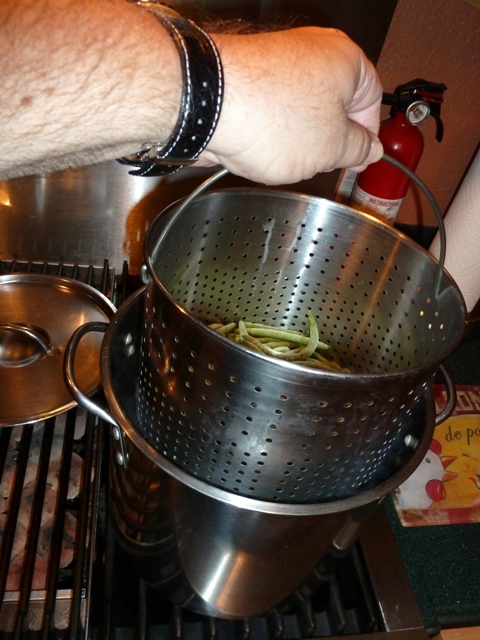
Steamer Basket for Vegetables — You Can’t Beat It
When the green beans are done to your taste, pour them into a container. Toss them with either butter or olive oil, then mix in the crushed garlic and Aromat (or salt). Set aside covered to keep warm.

Green Beans, Garlic, and Knorr Aromat Seasoning
Once your cast iron skillet is smoking hot (as in almost hot enough for Louisiana-style blackened dishes) you’re ready to start the steaks, but don’t let them hit the skillet until the potatoes are within ten minutes of finishing. Turn the heat down slightly (if you have a commercial grade stove, or keep on high otherwise). First on the agenda is to get some grease into that skillet, and that’s why your steak comes with a strip of fat on one side. Sear the steaks fat side down initially to render out some of the fat into the pan. Once the fat strip is nicely carmelized — about one to two minutes for a rare steak and round three for a medium rare — rotate the steaks along the remaining edges. For a rare steak keep the nonfat edges down to a minute or less; for medium rare go about two.
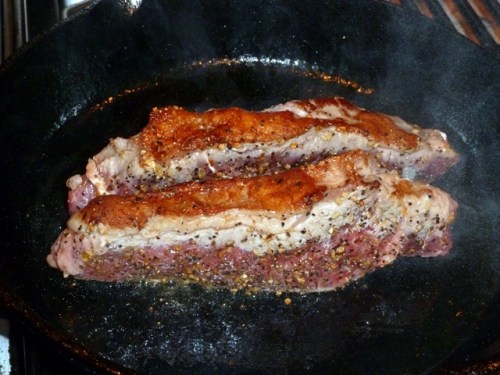
Sear the fat side first followed by the other edges
At this point set the rare steak off to the side for a moment and flip the medium rare steak onto one of its sides. A typical one-inch thick steak will need about three minutes per side (increase to four and a half minutes if you’re lucky enough to have a two-inch thick steak). Do not cover the pan — we’re doing this by direct heat to both sides rather than indirect.
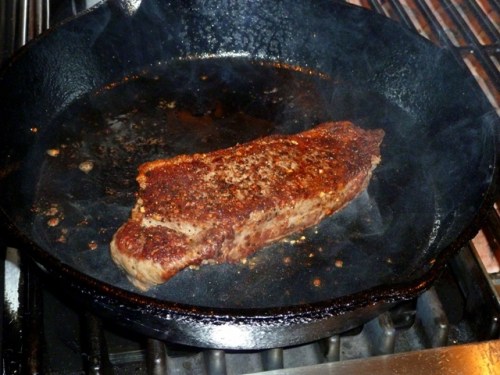
Searing the Medium Rare
When the first side is done and the steak flipped, add the rare steak to the skillet. Now you have three minutes to go on the medium rare, so time the flip of the rare steak at the one and half minute mark (increase time accordingly for thicker steaks). Both sides of the rare steak will be done in the time it takes to do the second side of the medium rare steak.
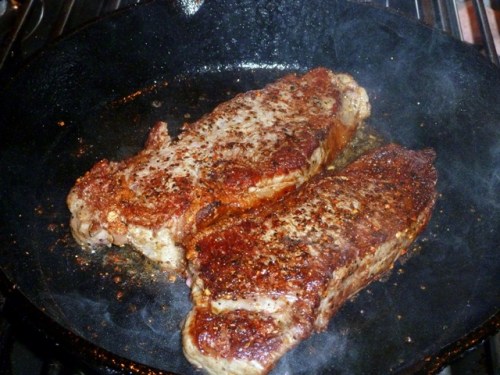
Timing the Rare with the Medium Rare
While the steaks are finishing up remove the potatoes from the oven. Make a series of diagonal slashes along the top of the potato followed by a deep length-wise cut. Spread the potato apart, season with salt and pepper, add a couple of pats of butter directly on top of the potato, and then bury the butter under a couple of dollops of good sour cream (I like low fat sour cream — gotta cut some of the saturated fat somewhere in this opulent feast).
Remove the steaks from the skillet and let them rest for about five minutes to finish cooking inside and to set the natural juices.
Put it altogether — steak, beans and potatoes, add a robust red wine (for this particular meal I used a 2004 California Zinfandel that I’d been storing for many years — properly, of course, at 57° Fahrenheit/14° Celsius) and you get the delightful results pictured at the top of this post.
Wine pairings for steak dinners are pretty much what you would expect. Beef protein and tannic reds were made for each other. Bordeaux-style red blends are the traditional tried-and-true pairing, but tannic Malbec or Petite Shirah will also complement your steak. Not quite as tannic but still a personal favorite for this particular pairing are the GSM-based wines such as Châteauneuf-du-Pape.
So, enjoy your perfectly prepared steak and potato dinner and expertly paired red wine selection, then come back here and leave a comment letting me know how it all turned out.













 Decisions — Murder in Paradise
 The Globe — Murder in Luxury
 R. Doug Wicker — Author