
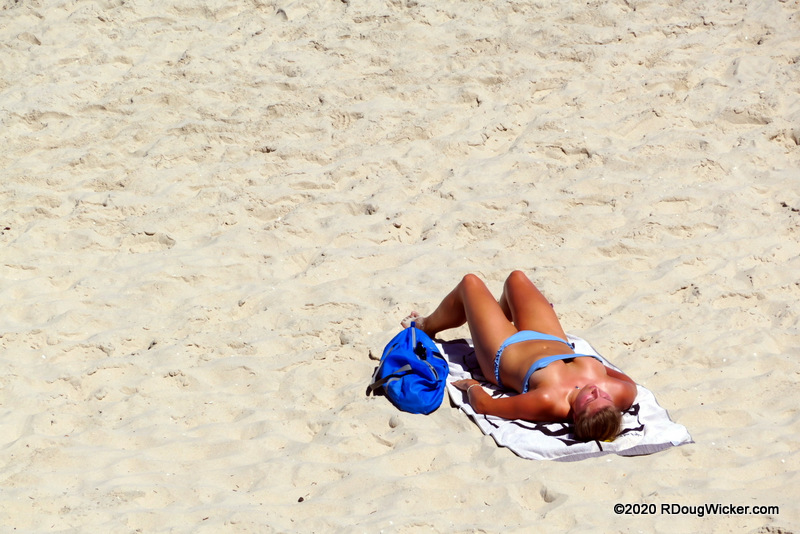
Sunbathing
Today’s Fun Photo Friday favorites of Fremantle and Kings Park:

Chillin’ on a Bench at the Beach

State War Memorial Cenotaph

Of Palms and Pines

Busy Bee
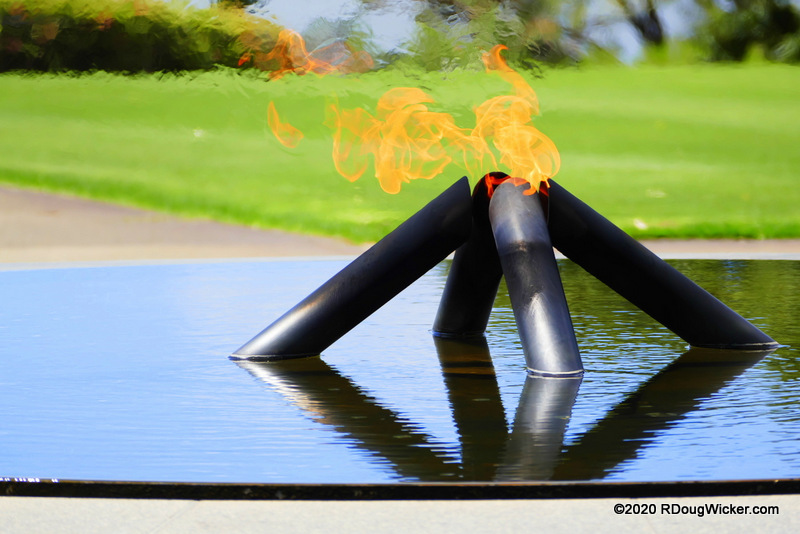
The Flame of Remembrance
Sunbathing
Today’s Fun Photo Friday favorites of Fremantle and Kings Park:
Chillin’ on a Bench at the Beach
State War Memorial Cenotaph
Of Palms and Pines
Busy Bee
The Flame of Remembrance
Filed under Fun Photo Friday, Photography, R. Doug Wicker, travel, vacation

Perth and Perth Water
Today we’re visiting a park just west southwest of Perth, called the ‘Pearl of Australia’. Unfortunately, we didn’t get into the city itself, but we did get some great views from an overlook:

View of Perth (Elizabeth Quay) from Kings Park
This scenic vantage point is quite the place to visit. It is the 900-acre/400.6 hectare Kings Park and Botanical Garden:

Kings Park and Botanical Garden
The skies this day were quite interesting, with parallel formations of cumulus forming like waves heading into shore:

Waves of clouds
We were greeted by some friendly fauna, as well:

Who, me?
The gardens here are quite impressive:

Kings Park and Botanical Garden
Nestled within the garden is a solitary memorial erected in 1920 honoring those of the Jewish faith who lost their lives during The Great War (World War I)

Another Kings Park “In Memoriam” for soldiers of the Jewish faith
There is however another memorial, much larger. This is the State War Memorial atop Mount Eliza, and it is from here that one enjoys the overlook of Perth and Perth Water (a portion of Swan River). At this site is a 59-foot/18-meter tall Cenotaph:

State War Memorial Cenotaph obelisk
Affixed to the Cenotaph is the ANZAC Bluff Commemorative Plaque dedicated to the, ” . . .2,500 men of the Australian and New Zealand Army Corps known as ANZAC, who lost their lives in the Gallipoli campaign of 1915″:

ANZAC Bluff Commemorative; State War Memorial, Kings Park
Here there is also a Pool of Reflection centered around a Flame of Remembrance:

Flame of Remembrance in the Pool of Reflection
I’ll leave you today with one more botanical image:
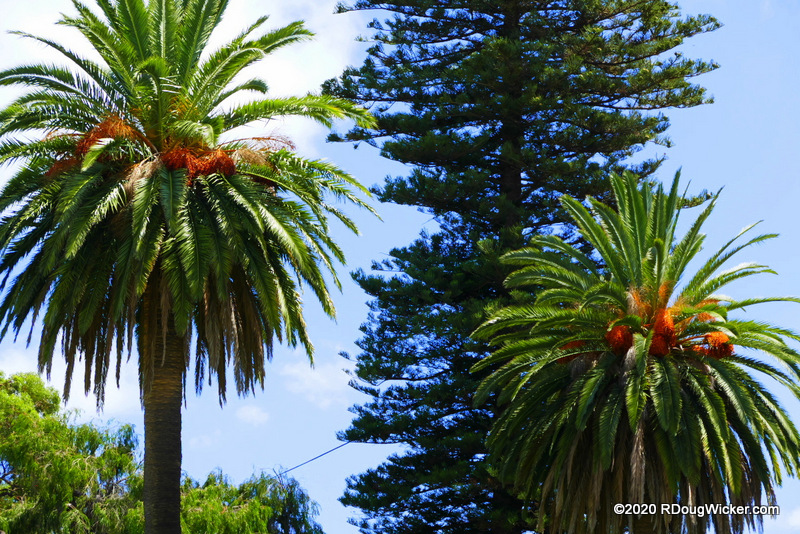
Kings Park and Botanical Garden
Comments Off on Circumnavigating Australia — Perth; Kings Park and Botanical Garden
Filed under Photography, R. Doug Wicker, travel, vacation
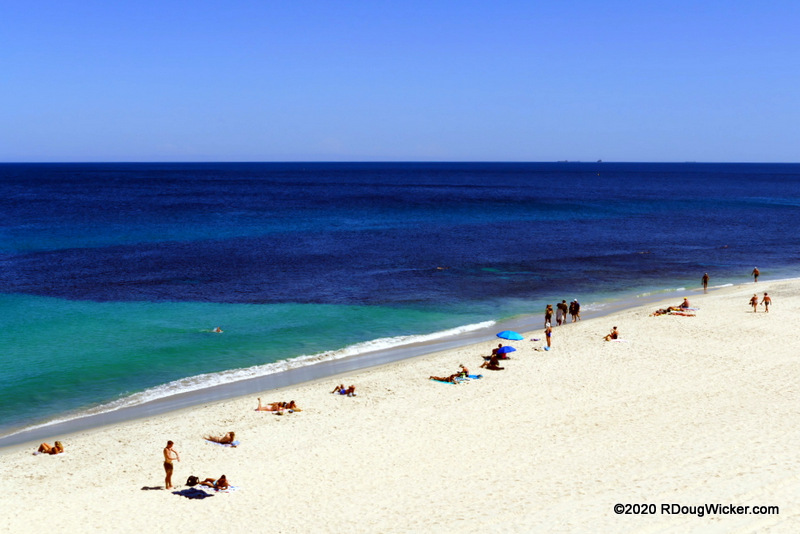
Cottesloe Beach
Beginning in North Fremantle and extending northward are a series of beautiful white sand beaches — Sand Tracks Beach, Coast Port Beach, Leighton Beach, Mosman Beach, an onward to today’s photo stop. Today we’re visiting Cottesloe Beach, in the Town of Cottesloe.

Cottesloe Beach
We were here on February 25. For those of us in the Northern Hemisphere that works out to late August climate-wise. Thus, you can see that the beach had many visitors on this late summer day:
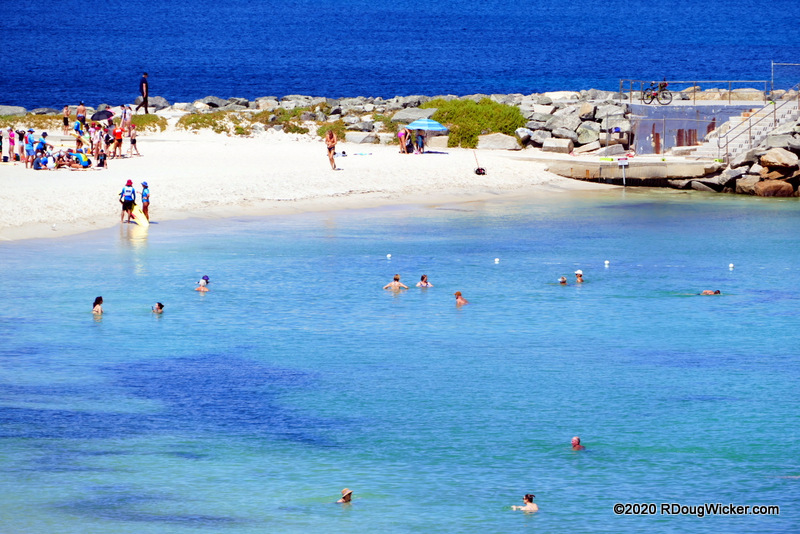
Cottesloe Beach
Our stop here was relatively brief on our excursion to Kings Park overlooking Perth, which is what I’ll be showing you on Wednesday. But for now it’s a day at the beach with a little sunbathing and scenery:

Cottesloe Beach
The water here is quite spectacular, with deep rich blues framed by white sand:

Cottesloe Beach

Cottesloe Beach
We alighted from the bus at the parking area next to the Cott Beach Kiosk. This is the view from the parking lot overlook:

Cottesloe Beach
And another from the footpath leading from the parking lot down to the beach:

Cottesloe Beach
We’ll take one last look at Cottesloe Beach with this panoramic view:

Cottesloe Beach panorama
Comments Off on Circumnavigating Australia — Beaches on the Road to Perth
Filed under Photography, R. Doug Wicker, travel, vacation
 Decisions — Murder in Paradise
Mystery novel available for Kindle
0
Decisions — Murder in Paradise
Mystery novel available for Kindle
0 The Globe — Murder in Luxury
Mystery novel available for Kindle
0
The Globe — Murder in Luxury
Mystery novel available for Kindle
0 R. Doug Wicker — Author