Tag Archives: firearm collecting

Western Wednesday — Collectible 1973 Ruger Super Bearcat Shooting Review


Ruger Super Bearcat with box, manual, warranty card

It’s time for a Western Wednesday firearm review, and today’s shooting review is on a gun that Ruger made for less than three years (June 1971-January 1974)! I’ve already discussed Ruger’s alloy framed 1st edition Bearcat (see: Interesting Collectables: “Old” 1st issue Ruger Bearcats), in which I presented a rare ‘Alpha Cat’ Bearcat and one of the very first Bearcats (624th off the line) produced with oiled walnut grips rather than the previous rosen-impregnated rosewood grips. Here is an image of those early Bearcats:

Rare 1960 “Alpha Cat” (top); very early (1964) Bearcat with oiled walnut grips

‘Unmodified’ means that both of those Bearcats were never sent back to Ruger for the transfer bar modification that would make safe the loading all six cylinders. That is why I’m referring to these pistols as Old West-style firearms, as they adhere closely to the design of the Colt 1873 Single-Action Army ‘Peacemaker. Below shows a comparison of a copy of the original Colt 1873 design along with an old issue three-screw Ruger Single Six (also unmodified) and an old issue Bearcat, all of which are only safe when the hammer rest over an unloaded cylinder chamber (more on that below):

USFA Single-Action Army; unmodified 3-screw Ruger Single Six; 1960 Ruger Bearcat

These classics may have been called ‘Six-shooters’, but disregard what you saw on television and in the movies. Nobody in their right mind would holster one of these guns with all six chambers loaded.

1973 Ruger Super Bearcat with Super Bearcat box

That means, unless you are physically at the range, on the firing line, and preparing to fire the weapon, the cylinder should be loaded so that the hammer rests upon an empty chamber. How do you do that? Here’s a recap from my previous article on the original (1958-1970) Ruger Bearcat:

Proper (safe) loading sequence for any Single-Action Army-type pistol or unmodified (no transfer bar) Ruger single-action revolver:

  1. Count out and place five (for a six-round weapon) bullets before you
  2. Five rounds only!
  3. Put the rest of the ammunition out of reach
  4. Thumb back the hammer two clicks, to the half-cock position; this frees the cylinder for rotation by hand
  5. Open the loading gate
  6. Visually inspect all cylinder chambers, making certain no bullets are loaded, by rotating the cylinder while peering down through the open loading gate
  7. After verifying all chambers are empty, place one round in the chamber exposed through the open loading gate (we’ll call this “Chamber 5”)
  8. Rotate the cylinder, bypassing the next empty chamber (Chamber 6) and proceeding to the second empty chamber (Chamber 1—why the skip will become evident in a moment); load one bullet into Chamber 1
  9. Continue loading the next three chambers in order (Chambers 2, 3, and 4)
  10. Close the loading gate
  11. Loaded Chamber 5 is next in line for the barrel, a.k.a., firing position
  12. Thumb back the hammer to the fully cocked position; doing this rotates loaded Chamber 5 away from the barrel
  13. Empty Chamber 6 is now in the firing position
  14. Holding the hammer back with your thumb, squeeze the trigger until the hammer releases
  15. Keeping the trigger pulled, gently lowering the hammer all the way to the frame with your thumb; failure to keep pulling the trigger will result in the hammer stopping at the half-cock loading position, which is not safe

You’re done. Your “six shooter” is now properly loaded with five bullets, and if you followed these directions the hammer is safely resting over an empty chamber and the weapon is safe to carry.

1973 Ruger Super Bearcat

Production of Ruger’s alloy-framed Bearcat was terminated in 1970 as the company retooled production in favor of an all-steel frame, and in June of 1971 the Super Bearcat was introduced. Initially, the Super Bearcat retained the anodized aluminum trigger guard, but even this was converted to steel after old stock was exhausted. Here you can see the Super Bearcat with steel frame and trigger guard beneath two previous Bearcats with alloy frames and anodized trigger guards:

Ruger “Alpha” Bearcat (top); Bearcat (middle); SuperBearcat (bottom)

During Ruger’s two-year seven-month run of the Super Bearcat, approximately 64,000 were produced. Of that number, the first 37,000 used the previous anodized trigger guard. Thus, beginning in early 1972, only the last 27,000 Super Bearcats produced had trigger guards of blued steel.

Super Bearcat with blued steel trigger guard

Ruger’s roll marks between the Bearcat and the Super Bearcat differed slightly, with addition to the latter of the weapon’s caliber and an ® indicating a registered trademark:
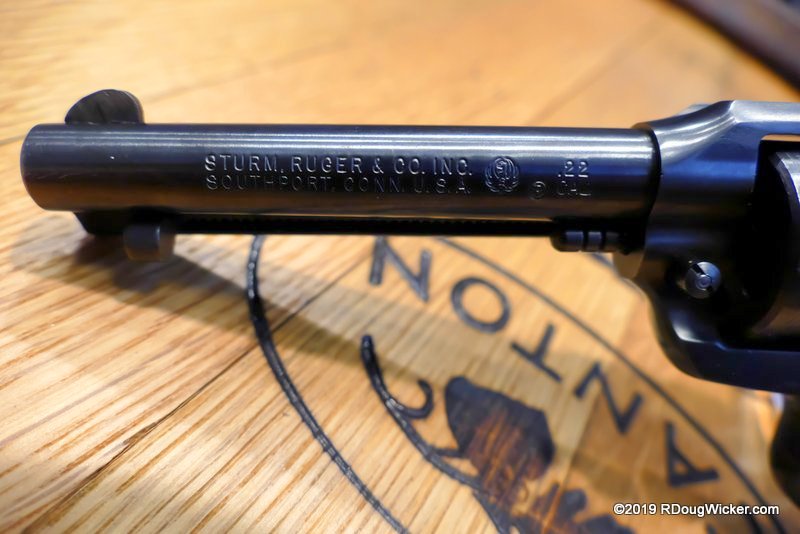
Ruger Super Bearcat roll mark

The Super Bearcat retained the lightly stamped Ruger eagle medallion and oiled grips that began with the previous Bearcat line beginning in 1964.
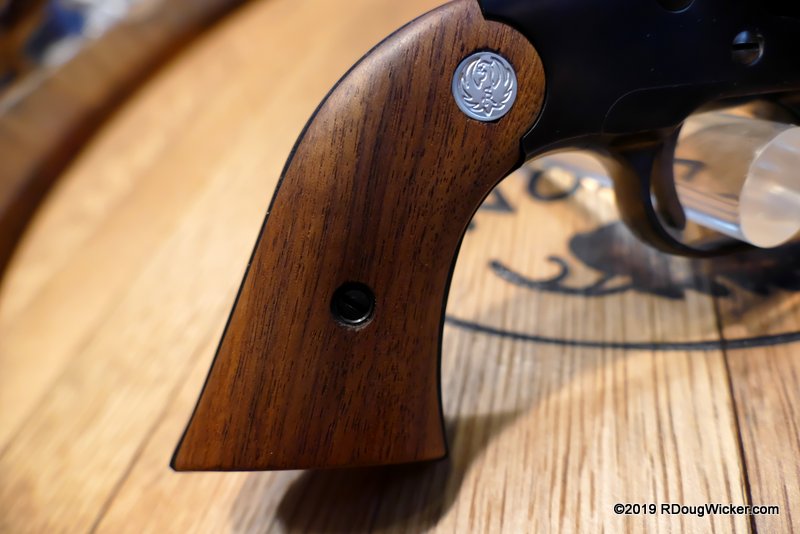
Super Bearcat oiled walnut grip with stamped medallion

And one touch that started with the original 1st edition Bearcats in 1958, continued through the 2nd edition Super Bearcat era ending in 1974, and carried on beginning with the reintroduction of the 3rd edition Bearcat in 1993 through today is an engraved cylinder:

Engraved cylinder common to all three Bearcat editions

So, how does this weapon shoot? The trigger is incredibly light, and initially the breaking of the trigger took me by surprise, but I soon got past that. I set at 10 yards/9.1 meters a target printed onto 8.5×11-inch/216x279mm standard letter-sized paper. I then loaded up and fired three full cylinders’ worth of Remington 36-grain .22 LR Plated Hollow Points, for a total of eighteen total shots. Here are the results:

Eighteen rounds at 10 yards/9.1 meters

For additional reading on both the 1st edition Ruger  Bearcat and 2nd edition Super Bearcat, I highly recommend the following great articles:

Unmodified 1973 Ruger Super Bearcat
3 Comments

Filed under Uncategorized

A Preview of Future Firearms Articles


1973 Ruger Super Bearcat

As many of you probably know, even though I concentrate on photography and travel, my most popular articles by far are on various firearms, especially those considered collectable. After my current transatlantic crossing series (the follow-on to the Baltic cruise series), I’ll be running a week of firearms articles before continuing on to another travel series.

Ruger Super Bearcat 7-20-2019 2-55-30 PM

Top to bottom: Rare “Alpha Cat” Bearcat (1960); One of the first Bearcats (1964) with oiled-walnut grips; Super Bearcat (1973)

One of these articles will feature a Ruger Super Bearcat. The Super Bearcat followed the original ‘1st Issue’ Bearcat line, and they were manufactured from late 1971 until around January 1974. The example you see here dates to 1973, and has increased rarity because it was never sent back to Ruger for the transfer bar modification (this link is to the Ruger PDF information).

1973 Ruger Super Bearcat with Super Bearcat box
During that four-year run Ruger produced 64,000 Super Bearcats. Of those 64,000, only the last 27,000 had the blued trigger guard seen in this example.

Ruger Super Bearcat with box, manual, warranty card

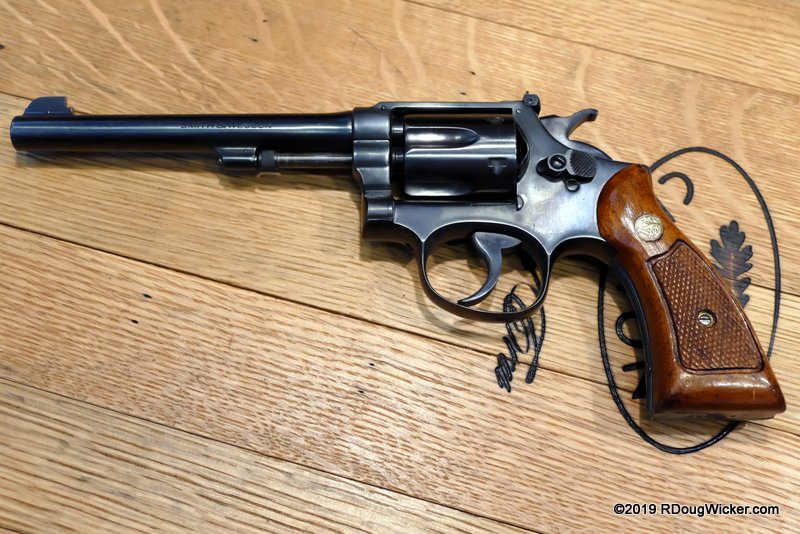
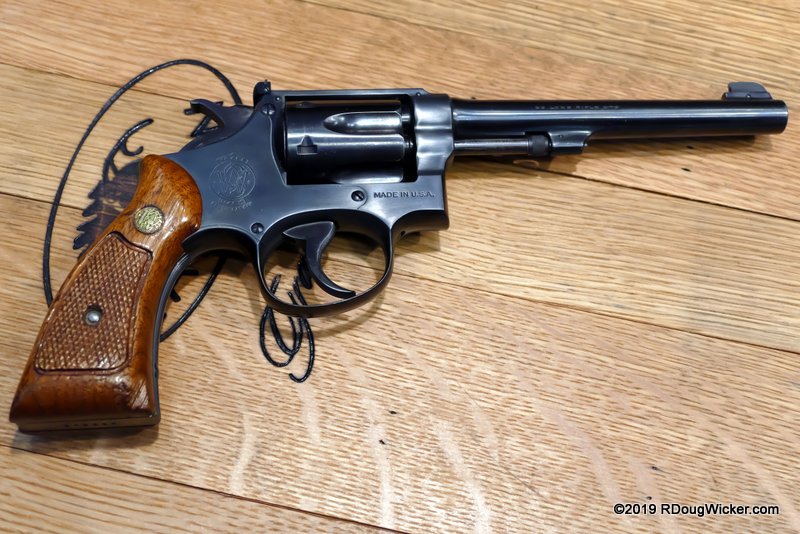
But the article I’m really excited about will be on this excellent example of a pre-war, 1938 or very early ’39 example of Smith & Wesson’s highly prized K-22.

Pre-war Smith & Wesson K-22 Outdoorsman

S&W made the K-22 from 1931 until late 1940, after which all manufacture was transitioned to support the war effort. From 1931 until 1939 the K-22 was known as the K-22 ‘Outdoorsman’, and 17,117 of these pistols were made. The 2nd issue of the K-22 saw 1,067 examples produced in 1940, and these were billed as the K-22 ‘Masterpiece’.

1938 or ’39 S&W K-22

I’ll know more about this K-22 Outdoorsman before writing that article, as by then I should have a history supplied by the Smith & Wesson historian on this particular example.

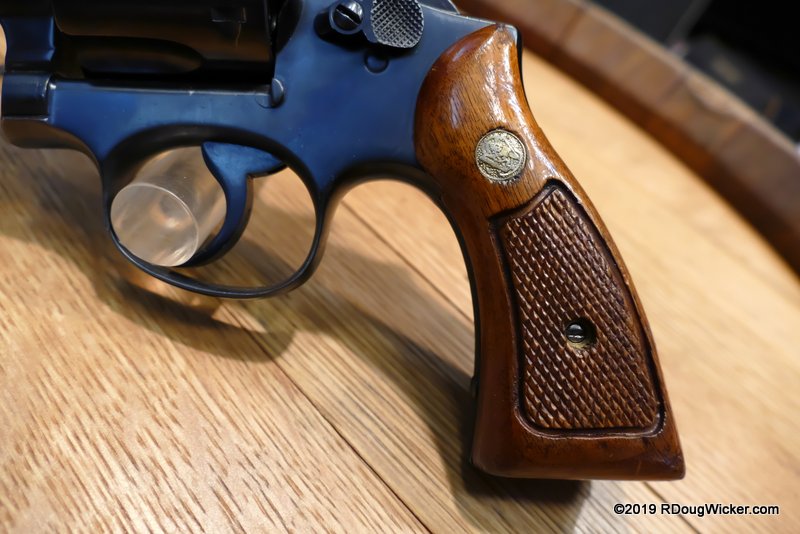
S&W K-22 with Magna grips (not original)

Until then, how did I manage to narrow down the date of manufacture to 1938-’39? By doing a search of the serial number, of course. When I get the history on this weapon, I’ll be able to see how close I got on my guestimate.

K-22 serial number places this toward the end of Outdoorsman production

So, that leaves you with a taste of two out of three of my upcoming firearms articles, probably coming in a couple of months. The remaining article will feature three Soviet-made, WWII-era Mosin-Nagants. Two of those will be M91/30 Izhevsk rifles made in 1938 and 1943. The last will be a special treat — an exquisite example of the Izhevsk-manufactured Mosin-Nagant M44 Carbine made in 1944.

Until then, tomorrow we’re back to Skagen, Sweden and a transatlantic adventure.

Comments Off on A Preview of Future Firearms Articles

Filed under Firearms, Photography, R. Doug Wicker, travel, vacation

Beretta 81FS Cheetah — And tips on gun collecting


Beretta 81FS Cheetah — The complete kit

We’ve looked at the Beretta 80 Series Cheetah before, but the Cheetah in today’s article is one you seldom see imported anymore. How seldom? The Beretta 81FS Cheetah is chambered in .32 ACP/7.65mm, and .32 ACP is frowned upon in the U.S. and mocked as a ‘mouse cartridge’ unworthy of use for defense (it most certainly is not, but that’s a discussion for a later date). As such, I’ve not seen a newly imported 81FS in any gun store ever. I know they’ve been imported in small batches over the past several decades; I’ve just never seen one before this. Today’s example was manufactured in 2016, and the distributor shipped it out to my favorite local gun store (Collector’s Gun Exchange) just nine months ago. That means this Cheetah probably sat out pretty much all of 2017 in a warehouse somewhere in Gardone Val Trompia, Italy.

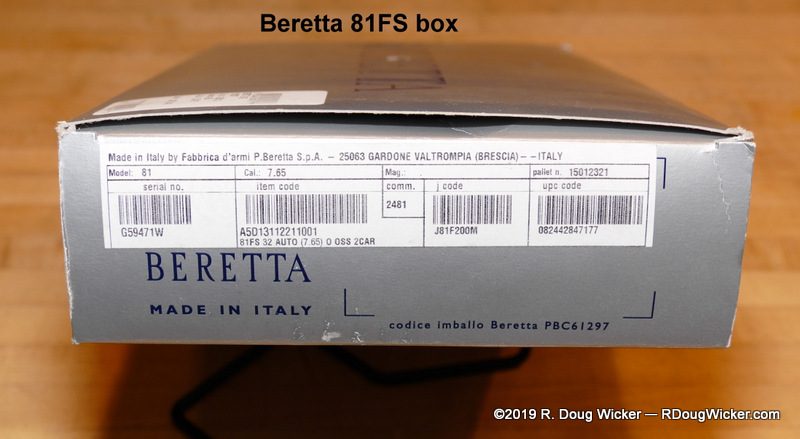
Beretta 81FS Cheetah box and label

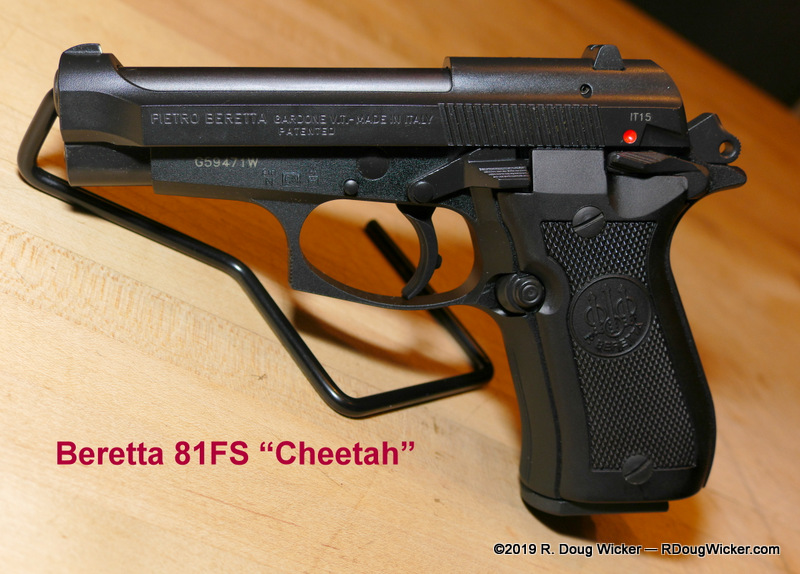
Beretta 81FS Cheetah

For a shooting review of the .380 ACP versions of Beretta’s Series 80 Cheetahs (the double-stack 84FS with 13+1 capacity, and the single-stack 85FS which hold 8+1 rounds) please see: Shooting a Pair of Cheetahs — Comparing the Beretta 84FS and 85FS.

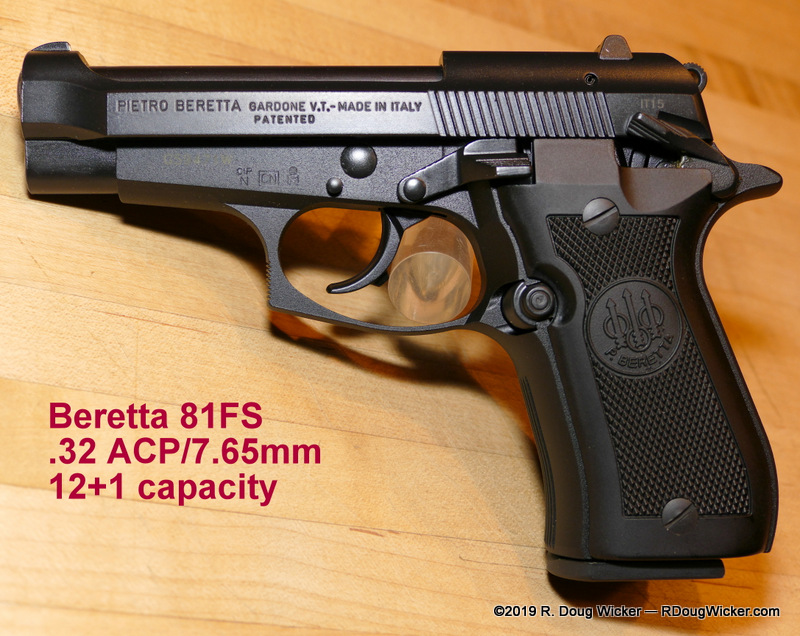
Beretta 81FS Cheetah 12+1 rounds of .32 ACP/7.65mm

First, the relevant statistics for the .32 ACP/7.65mm 81FS:

  • Length: 6.77 inches/172mm
  • Width: 1.37 inches/35mm
  • Width (at grip): 1.37 inches/35mm
  • Height: 4.8 inches/122mm
  • Weight (with empty magazine): 24.2 ounces/685 grams
  • Barrel: 3.82 inches/97mm
  • Capacity: 12+1

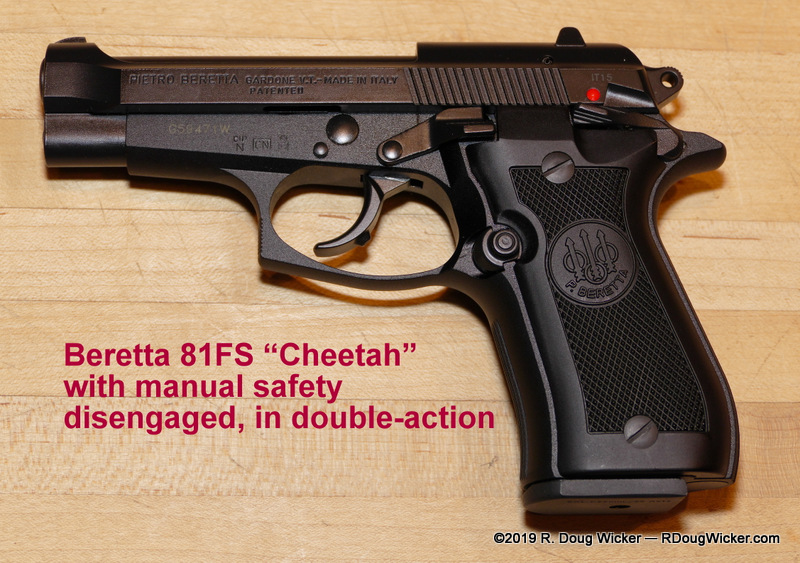
Beretta 81FS Cheetah — Double-action/Single-action

Interestingly, while the barrel length, total length, width, and height measurements match those of the .380 ACP/9mm kurz 84FS, the 81FS comes in weighing .9 ounce/25 grams more (probably from a thicker barrel padded out so as to use the same slide as the 84FS) and loses one round of capacity (which really makes no sense no matter how you slice it). Thrown up against the single-stack .380 ACP/9mm kurz 85FS, the weight disadvantage stretches to 2.3 ounces/65 grams. Ammunition advantage between the latter two, however, swings to the 81FS at 12+1 over the 8+1 capacity of the 85FS.

Beretta 81FS Cheetah

Fit and finish among these three recent Cheetahs (the 84FS and 85FS were manufactured in 2012 and 2016 respectively) is comparable, meaning excellent as usual for Italian-made Berettas. All three have Beretta’s superb, highly durable, and, in my view, very attractive semi-gloss Bruniton finish on both the steel slides/barrels and the alloy frames.

The double-action/single-action trigger is excellent. Double-action is smooth and consistent all the way to trigger trip. Single-action has a crisp break, but only after a longish take-up. The only disappointment, and I’m not a short-reset snob by any measure, is the seemingly endless third of an inch/8mm reset. That may not sound like much, but compared to most of my other handguns, such as the superlative Walther P99c AS, it feels ridiculous.

Beretta 81FS Cheetah — Rear sight

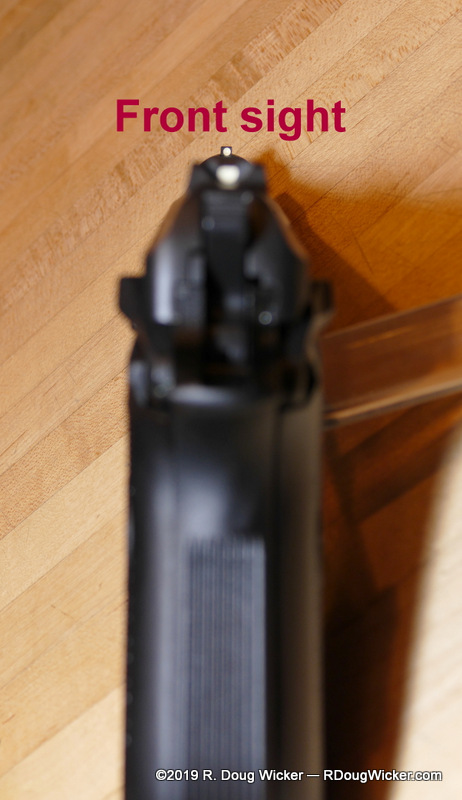
Beretta 81FS Cheetah — Front sight

I personally feel that the Beretta 80 Series Cheetahs are among the most attractive compact handguns in existence. True, they are large and a bit heavy for the calibers they handle, but they exude a certain panache simply not found in more current designs. They are natural pointers, almost on par with the Walther PP-series (my original concealed carry weapon being a PPK/S in .380 ACP/9mm kurz) in that regard, but they are not nearly as ammo finicky. The sights are certainly better than the Walthers, and unlike the PP-series the Cheetahs give you a slide stop release and an ambidextrous manual safety. The gun seems to soak up recoil much better, especially in the .380 ACP/9mm kurz round, which results in more control and faster follow-up shots.

Beretta 81FS Cheetah

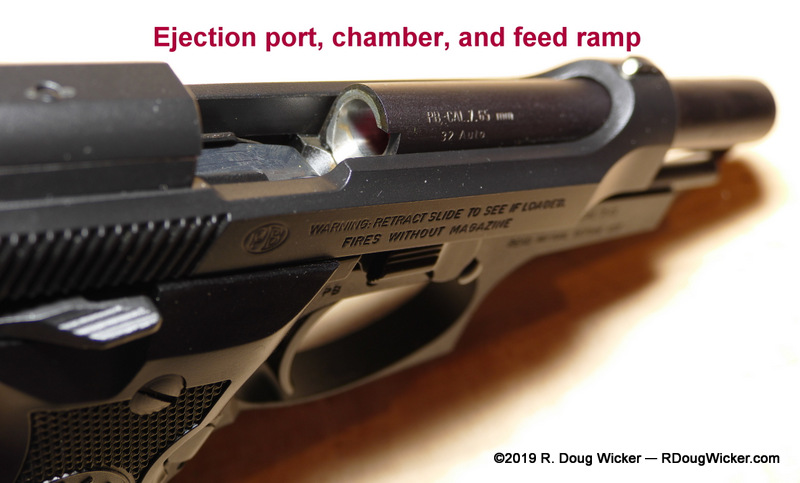
Beretta — Makers of the world’s largest ejection ports!

Gun Collecting Tips using this Beretta 81FS example:

Fortunately, I knew in advance that Collector’s had one of these 81FS rarities coming into the shop, as they gave me a call when it shipped from the distributor. Unfortunately, the Cheetah arrived the day after we departed for a month-long trip to Shanghai, China; various cities in Japan; Petropavlovsk, Russia; and several locations in Alaska. By the time we returned, that Beretta 81FS Cheetah was snagged on layaway, and Collector’s owner Paul Lee informed me that his distributor had already shipped out the last of his meager supply.

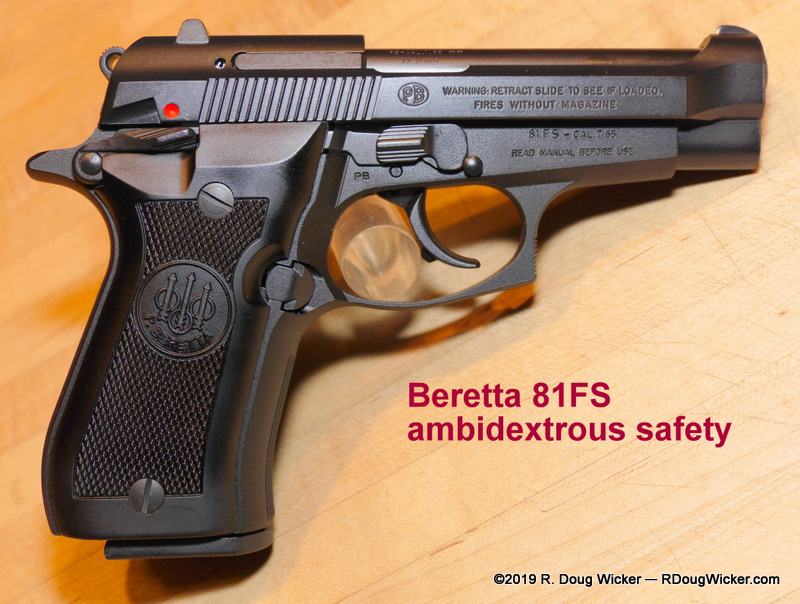
Ambidextrous manual safety

But then a funny thing happened on the way to disappointment. Two weeks later I got another call from Collector’s telling me that the person holding this rare, recently imported 81FS had found something in the shop that he liked even more. Unbelievably, he decided that he wanted a Ruger Mini-14 Paul had in stock more than the Cheetah. Knowing my disappointment for having initially lost the chance at the 81FS, Paul did nothing to dissuade the layaway swap, and two days later I was in luck.

Ambidextrous manual safety

Now, far be it from me to complain here, but this is where a little firearms knowledge comes in handy, especially if you’re just starting a collection. Mini-14 Ranch Rifles are very commonplace, and there is currently no danger that you’re going to miss out if you don’t take the first one you see. Or even the hundredth, for that matter. Not so on a newly manufactured, recently imported Beretta 81FS Cheetah. In my book, that’s a bit like passing on a bargain-priced, minty-condition stainless Colt Mustang Plus II (Friday’s subject) in favor of a current production Ruger SP101; or forgoing what appears to be a barely used original, first-year-of manufacture Ruger Police Carbine with a red dot sight included (Wednesday’s featured firearm) in order to snag a dime-a-dozen Mosin-Nagant 91/30 (a subject for a future article, I’m sure).

You’ll also notice that my established relationship with Paul Lee and the salespeople at Collector’s Gun Exchange, forged over many years, helped me in acquiring something Paul knew would interest me. By now, they know what I like, they call me when something is either coming or being shipped to them, and they give me a good break on the price. Same with Henry Bone over at Sportsman’s Elite. If you’re serious about collecting, it pays to establish a bond with the locally owned gun store rather than the big box operation (I’m looking at you and your ridiculous used gun prices, Cabella’s) that may occasionally undercut them in price on new firearms. It also doesn’t hurt to have that local store sell you a box or two of ammunition now and again, even if you might pay a fraction of that amount over at Walmart.

By the way, don’t bother going to the U.S. Beretta site to look for any Beretta Cheetah, not even the more popular .380 ACP 84FS and 85FS versions. They’re not listed there anymore (but they are on the Italian site), even though they’re still made in Italy and occasionally imported. So, if you see a new one, don’t pass on it if you even think you may be in the market for one at some point. You may not see it again. This is especially true of the 81FS, which isn’t even listed on the U.S. Beretta site for warranty registration; only the 84, 85, and 87 (.22 LR version) are listed as options, and the 87 isn’t even made anymore.

Comments Off on Beretta 81FS Cheetah — And tips on gun collecting

Filed under Firearms, R. Doug Wicker