Author Archives: RDoug

RDoug's avatar

About RDoug

Published author, amateur photographer, amateur astronomer, expert bridge player, gourmet cook and wine connoisseur, handguns, extensively traveled.

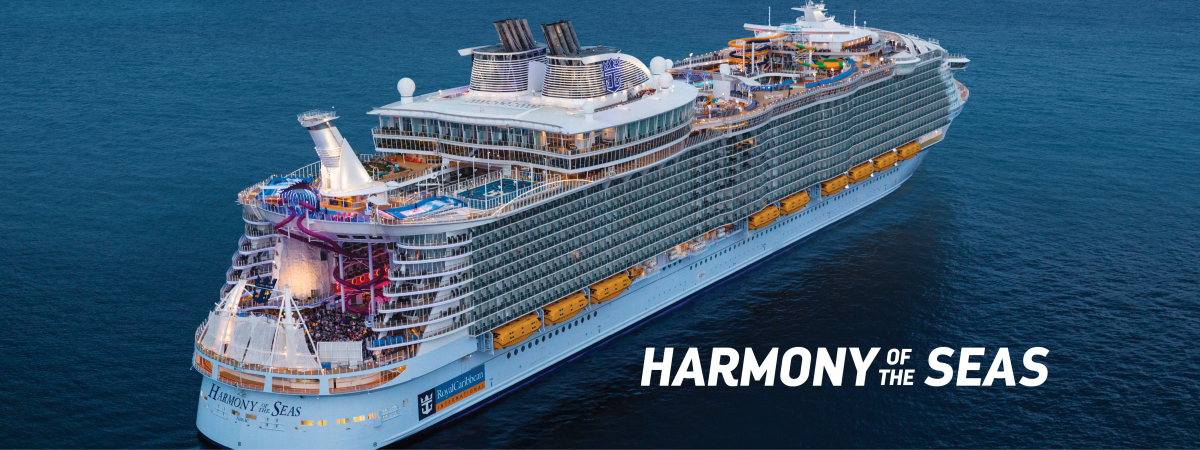
Harmony of the Seas Review — A Mega Ship Behemoth


Ursula and I recently returned from Barcelona, Spain. But we didn’t fly back to the U.S. As you would probably expect from my many travel articles, we cruised back. And what a cruise it was. We were aboard Royal Caribbean‘s ship Harmony of the Seas on its repositioning voyage this past November. This massive ship, with seven separate “neighborhood,” would take us from Barcelona to Port Canaveral, with stops in Málaga, Spain and Nassau, The Bahamas. As Harmony is by far the most impressive ship we’ve yet encountered in 60+ cruises, I thought she deserved a week-long blog treatment. So, Monday and Wednesday I will review Harmony, and this week’s Fun Photo Friday I will present some of my favorite shots of her.

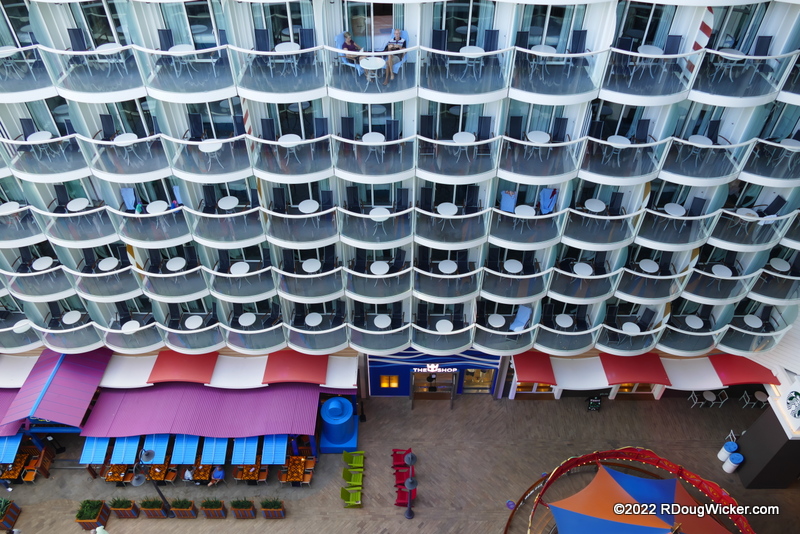
The Royal Promenade on Royal Caribbean’s Harmony of the Seas with suite windows above

A ship so large that it contains seven distinct neighborhoods, which we’ll discuss in a moment. But first, let’s look at the particulars of the second largest cruise ship in the world, surpassed only by her sister Oasis Class ship Symphony of the Seas. Here Harmony’s relevant stats:

⦁ Gross Tonnage: 228,081
⦁ Length: 1,184 ft. 5 in./361.011 meters
⦁ Beam: 155 ft. 8.0 in./47.448 meters (waterline)
   215 ft 6 in./66 meters (maximum beam)
⦁ Height 238 feet/72.5 meters
⦁ Decks: 18 (passenger decks: 16)
⦁ Capacity: 5,479 passengers (double occupancy)
   6,780 maximum
⦁ Crew: 2,300

One fun aspect of this journey are these numbers: You may notice that my photos of Harmony show remarkably few people. That’s on a ship with a maximum capacity of 2,300 crew and north of 6,700 passengers, for a total of around 9,000. There’s a reason for that apparent scarcity of fellow voyagers. We left Barcelona with just over 1,500 passengers and a reduced crew. When we hit Málaga, nearly 250 of those passengers disembarked, as they were travel agents on a familiarization cruise. Thus, we departed Málaga and went transatlantic with only 1,295 passengers served by a crew of 1,818. That works out to 1.4 crew for every passenger. In other words, this voyage is something neither Ursula nor I ever expect to again experience in terms of light crowds and no waits at the various venues and attractions. It was, quite frankly, Cruise Heaven. We felt as though we were being transported upon the most deluxe yacht to ever sail.
Harmony “Boardwalk” neighborhood, including a Merry-Go-‘Round (right) and Sabor’s Taqueria (left)

There are balconies galore on Harmony of the Seas. Balconies over the water. Balconies overlooking the Boardwalk neighborhood. And if you’d rather have a room with only a view, you can opt for a Royal Promenade View “interior” room. As for today, I’m going to show you our exterior balcony suite:
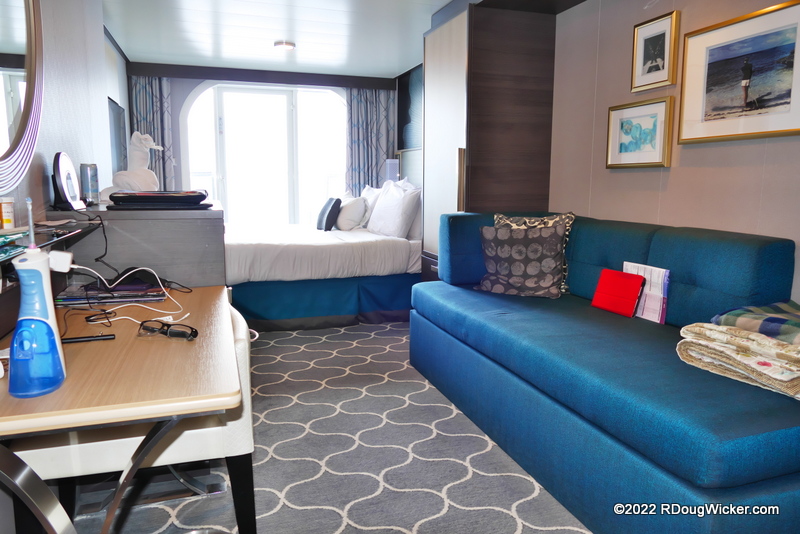

Roomy Harmony balcony suite
Ursula chillin’ on the balcony
The view from our Harmony balcony included an encounter with this lovely rainbow

We were fortunate that our balcony suite was located on Deck 8. I say fortunate because Deck 8 is also home to our favorite neighborhood — Central Park.

Deck 8 — Our cabin was located left of the red dot above

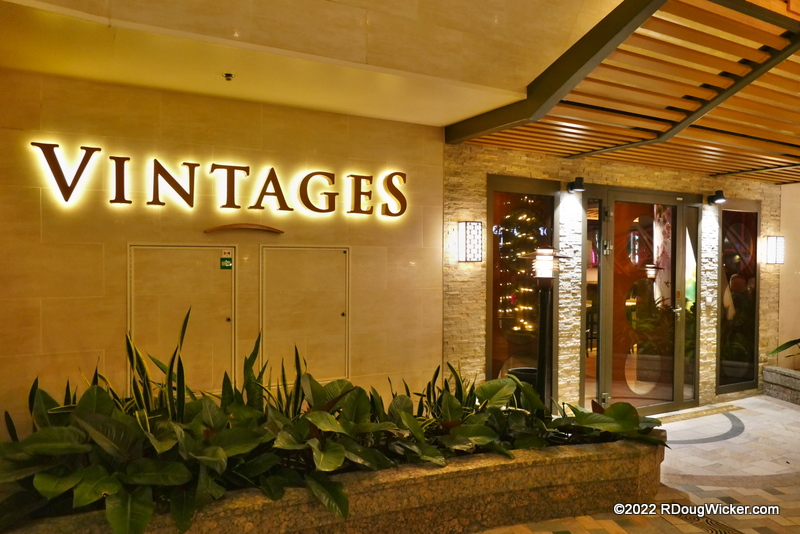
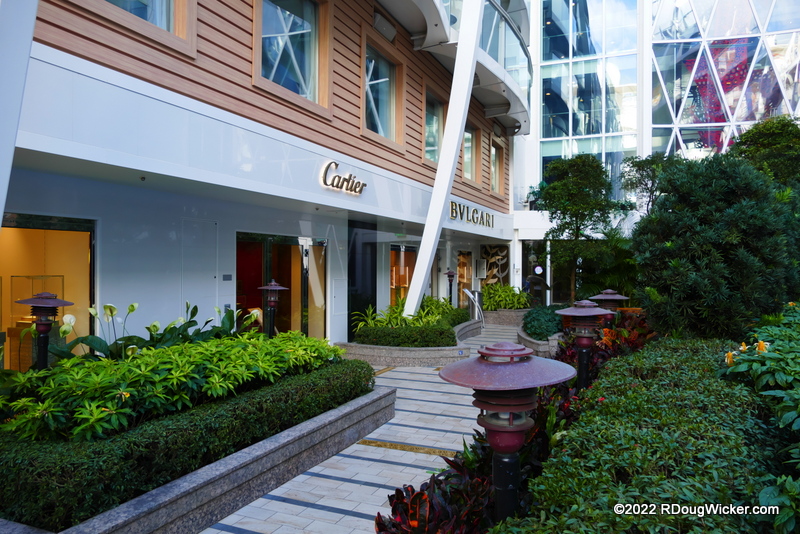
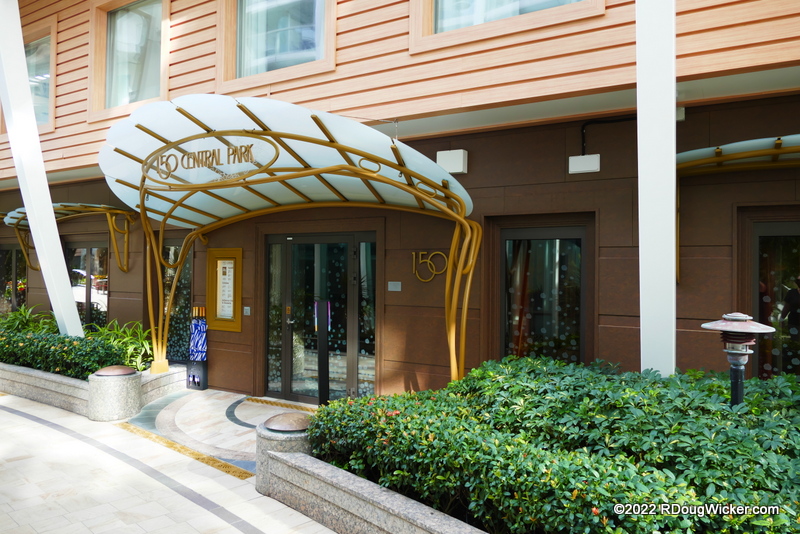
Central Park is aptly named, as it sports lush greenery, flowing walkways, high-end shops such as Cartier, Bulgari, and Hublot. It is also home to upscale restaurants, including Jamie’s Italian (as in Jamie Oliver), Chops Grille, and the exquisite 150 Central Park, where we had the best steak of our lives. Also in Central Park is Vintages wine bar and Park Café deli for a light bite in a park setting.
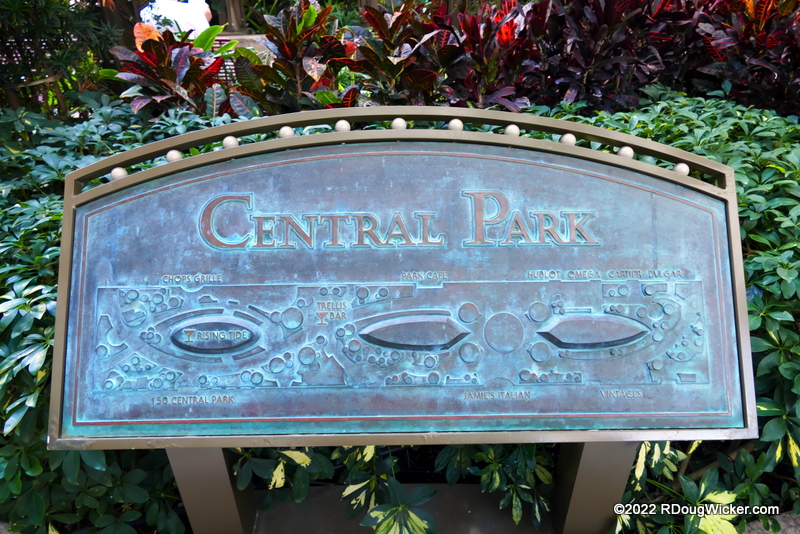
Park Café map

Here’s a montage of Central Park images:
There is another fun spot on Deck 8. Well, sort of. It alternates between Central Park on Deck 8 and the Royal Promenade down on Deck 5. Yep, it’s a venue that travels. Vertically. It’s the Rising Tide Bar:

A bar with a departure time? Rising Tide Bar Deck 8, soon to be on Deck 5
Rising Tide Bar in Central Park

And here’s the same Rising Tide Bar on Deck 5 in the Royal Promenade:

Rising Tide Bar in the Royal Promenade

Another place to find a quick bite to eat with some really great fries is on Deck 15, the Sports Deck. That would be Mini Bites:
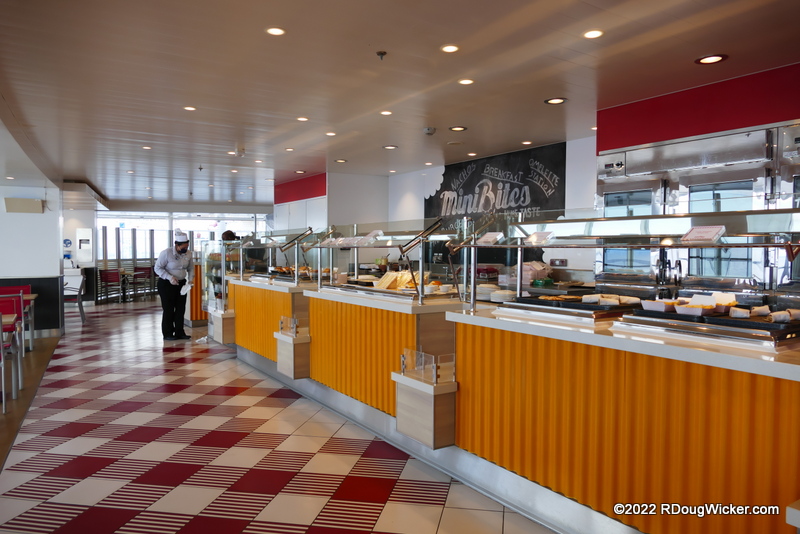
Mini Bites for burgers, hotdogs, fries, and more

Three decks up from 18 you’ll find the Perfect Storm waterslides, which hang over the Boardwalk ten stories below:
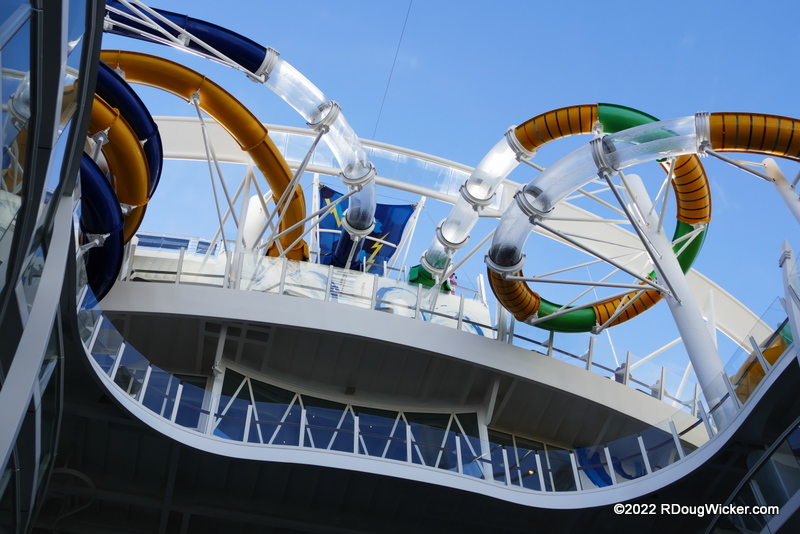
Perfect Storm waterslide 10 stories above the Boardwalk neighborhood

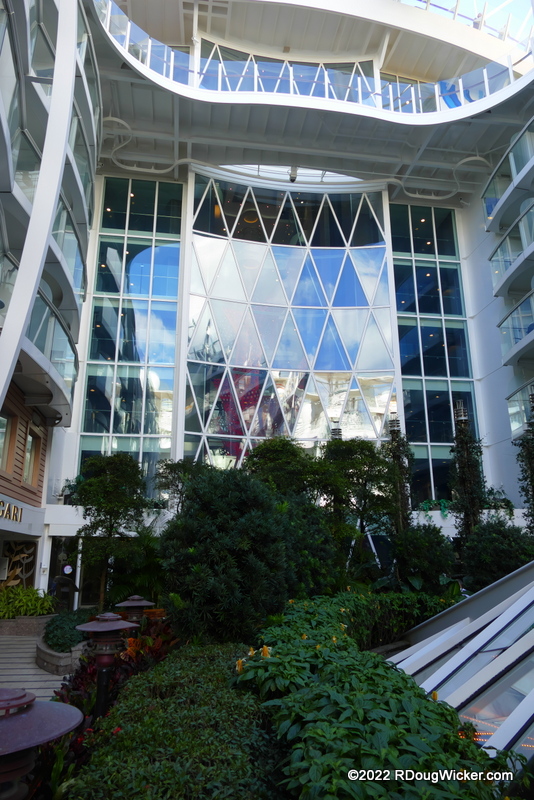
We’ll continue our review and tour of Royal Caribbean’s massive Harmony of the Seas on Wednesday. Until then I’ll leave you with this view of the Royal Promenade (Deck 5) and more venues on Deck 4:

Royal Promenade (Boleros Latin Club left) and Deck 4 below

Comments Off on Harmony of the Seas Review — A Mega Ship Behemoth

Filed under Photography, R. Doug Wicker, travel, vacation

Fun Firearm Friday — A Revolver Week Fraud!


WARNING:
Severe, exceedingly obscure, fascinatingly trivial, yet amazingly fun history lesson follows! Approach with extreme caution.

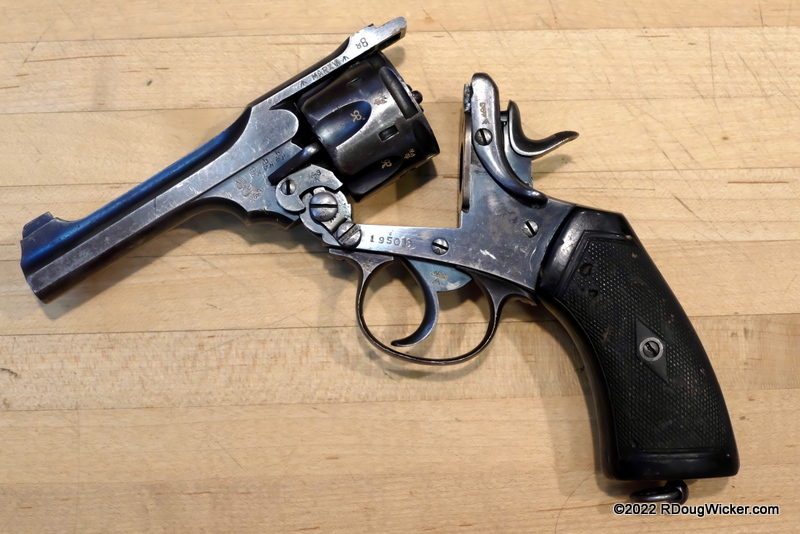
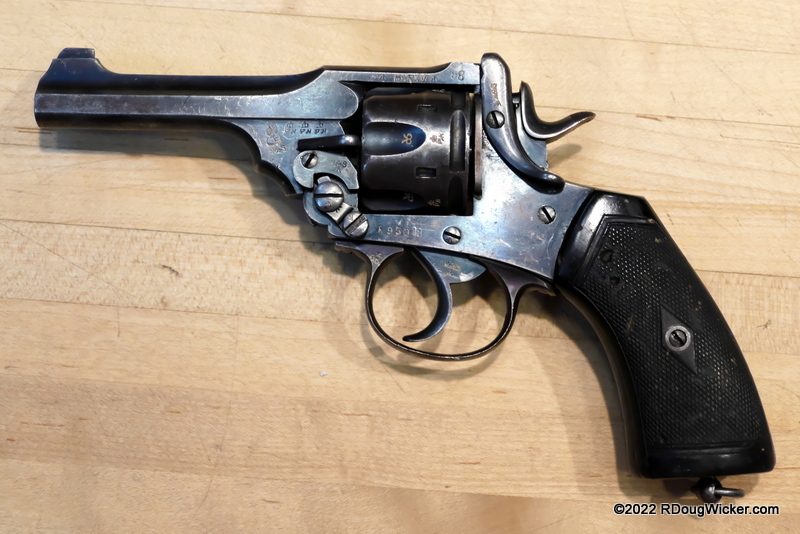
A Webley Mk VI… or is it?

Webleys are the iconic English military pistol. They’ve been around since 1887, and continued in Commonwealth and U.K. military service until withdrawal in 1970. The most famous of the Webley series was the Mk VI dating back to World War I, all of which were factory chambered in the oddball .455 Webley (most have since been rechambered for reduced pressure .45 ACP loadings). Worldwide there are probably tens of thousands of these things still being used in former colonies of the British Empire.

A Webley Mk VI… or is it?

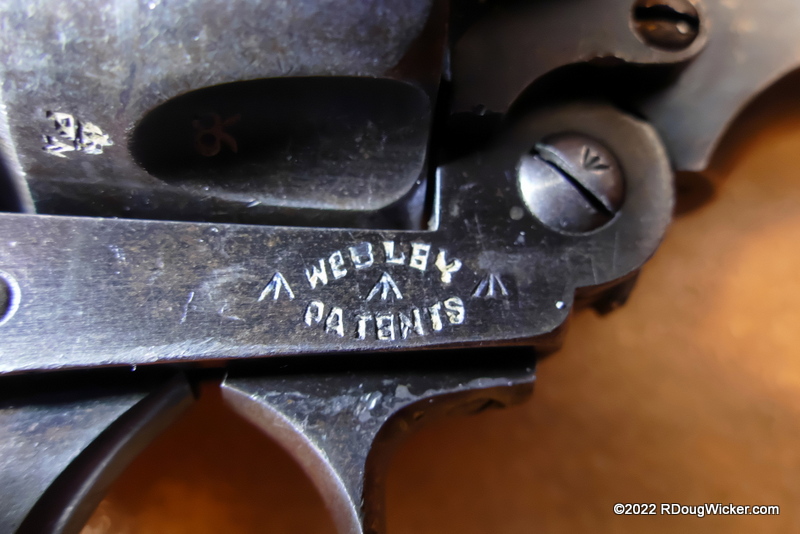
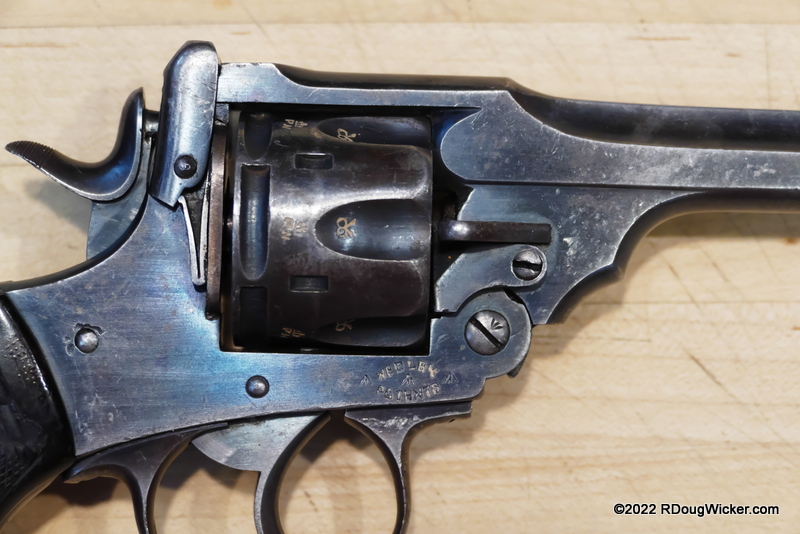
Well, this certainly looks like a Webley. And it’s even stamped “WEBLEY PATENTS” above the trigger guard:

“WEBLEY PATENTS” stamp

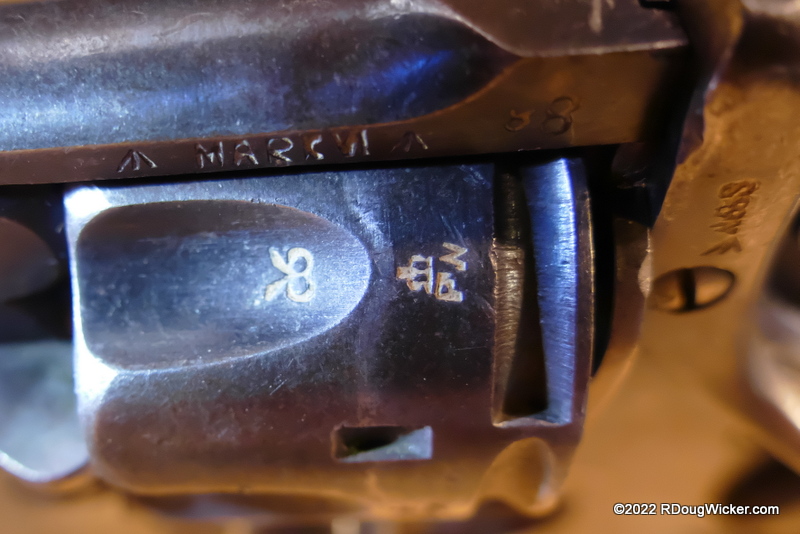
And it’s stamped as a “MARK VI” along the backstrap:

“MARK VI” stamp

The “broad arrow” stamps are a nice touch as well. The “broad arrow” was used as a British property stamp, and those “broad arrows” are all over this weapon. And I do mean all over it.

British “broad arrow” property stamp
I count five “broad arrows” on this image alone
Even on the trigger!

Indeed, this weapon even operates like a traditional top-breaking, self-extracting Webley revolver. You can see in the sequence below how this thing elegantly breaks open at the top. Then, as you continue to rotate the barrel-cylinder assembly away from the frame, the star extractor arm extends to eject cartridges from the cylinder. Finally, continue even farther and the extractor arm snaps back into its recessed position, ready for the user to reload the cylinder with fresh rounds.

Thumb the cylinder lock below the hammer to break open
Continue rotation to extend the star extractor arm (above the cylinder) to unload spent cartridges
Extend farther and the star extractor snaps back into the cylinder for reloading

I believe Smith & Wesson pioneered this break-top, self-extraction concept back in 1870 with their S&W Model 3. If there is an earlier version, I’d love to hear about it. And, yes, I am aware of the break-top 1858 French Divesme, but it used a manual extractor rod to push cartridges out from the front one at a time rather than an automatic self-extractor to pull out of them simultaneously from the rear. At any rate, this Smith & Wesson-style extractor is now more closely associated with Webley revolvers.

“Broad arrow” acceptance marks even on some of the screws

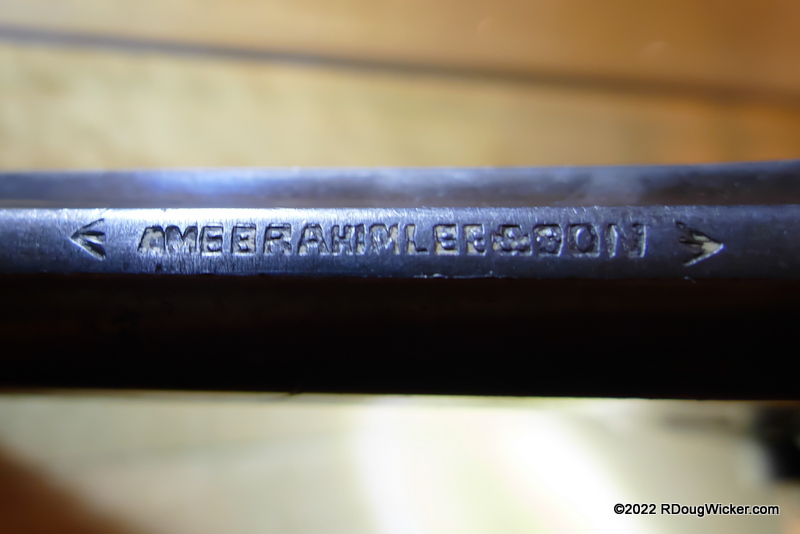
As you may have guessed by now, looking at all the bizarre “broad arrow” proof marks, there is something decidedly amiss with this “Webley.” But there are other clues, such as nonsensical “English” stamps:

“AMEBRAHIMLEE&SON”? Really? And bracketed by yet more broad arrows?
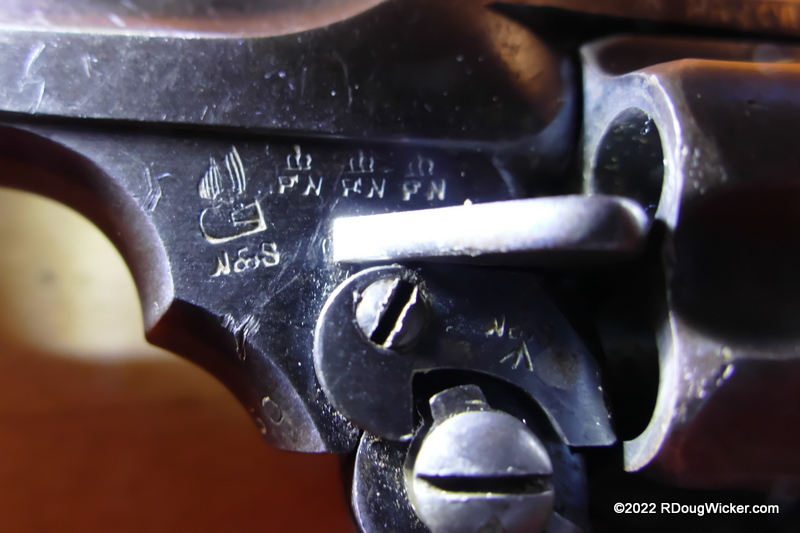
And don’t even ask me what these three cylinder stamps represent

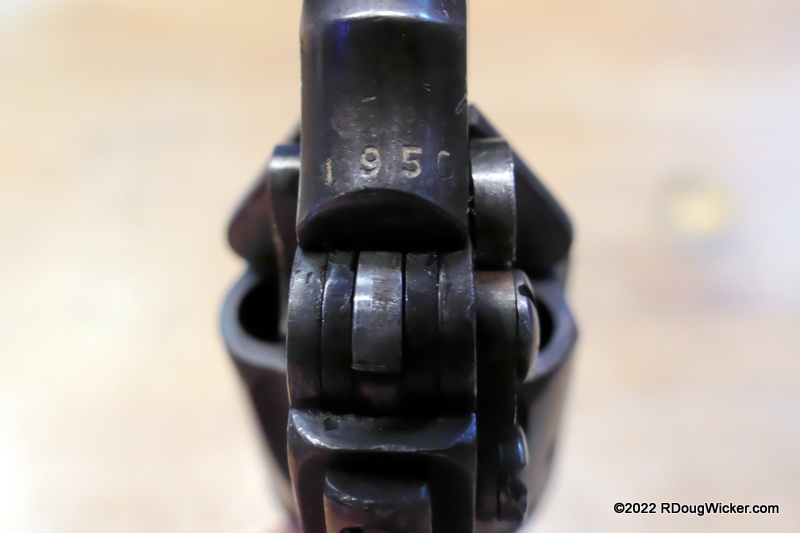
Well, let’s take look at the serial number for some additional clues:

Serial Number 1950

But, wait. What’s this stamped above the trigger guard?

195018

So, which is it? Is the serial number 1950, or 195018? Being on the cautious side, and noting that the frame usually bears the serial number, the gun store went with 195018 on the ATF Form 4473. Probably a good move, as I’m pretty sure that’s the number it would have been imported under. Although… there is no import stamp, so it’s very likely a G.I. bring-back from…. Any guesses yet? I’ll give you a clue. This had to have wound up in the duffle bag of someone returning from a recent combat zone which would in the past have been under the United Kingdom sphere of influence (hey, it is after all a WEBLEY, right?). And the logical suspect would be…

More nonsense, probably from a non-English speaking “manufacturer”

I’m sure some of you have probably guessed by now that this an infamous, and here in the U.S. a very rare and much sought, “Khyber Pass clone” from somewhere along the Pakistan-Afghanistan border. These clones are still made today by local gunsmiths operating their own metallurgic furnaces, casting and forging parts copied from abandoned relics of conflicts from long ago. In other words, this is a poor copy of a Webley revolver made at the hands of some backyard smithy. He then embellished his work of art with fake stamps meant to convey a place of origin on distant soil this gun never saw.

More gibberish and additional “broad arrows”

The only question remaining is which side of the Kyber Pass did this gun originate? Was it the Khyber Pakhtunkhwa region of Pakistan, or was it Afghanistan’s Nangarhar Province? My gut tells me Nangarhar, but who knows? It’s a mystery, and likely to remain as such.

Cylinder stamp

This particular example of a Khyber Pass clone is not something I’m ever going to test fire. The cylinder lockup is sloppy, and that’s an understatement. The metallurgy is suspect enough that I wouldn’t trust it to handle even the weak .38 S&W “Short for which it is supposedly chambered. Which, by the way, is a round for which the Mark VI was never chambered. Yet another clue that something is amiss.

Gibberish Galore!

I hope you enjoyed today’s Fun Firearm Friday, which closes out Revolver Week here at the blog. Next week we return to travel, with my first week-long ever review of a single cruise ship. And what a ship it is — 226,963 Gross Tonnage, 5,479 double-occupancy passenger capacity (6,780 maximum capacity), 2,300 crew, and seven distinct “neighborhoods” throughout this behemoth.

Meanwhile, if you found today’s article interesting and would like to know more about these Khyber Pass gunsmiths, here’s a nice, informative article for you to peruse:

The Gunmakers of the Khyber Pass

Comments Off on Fun Firearm Friday — A Revolver Week Fraud!

Filed under Firearms, Fun Firearm Friday, R. Doug Wicker

Revolver Week — Ladies’ Day with a S&W Model 60-7 “Lady Smith”


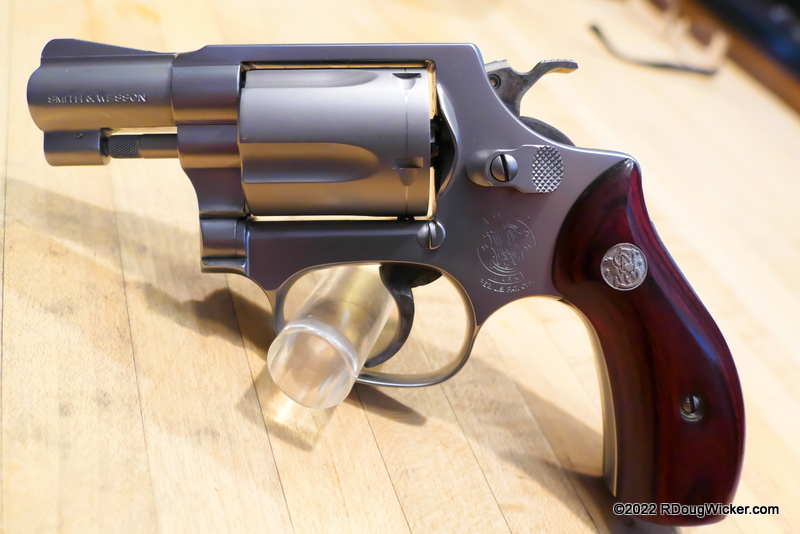
Smith & Wesson Model 60-7 “Lady Smith

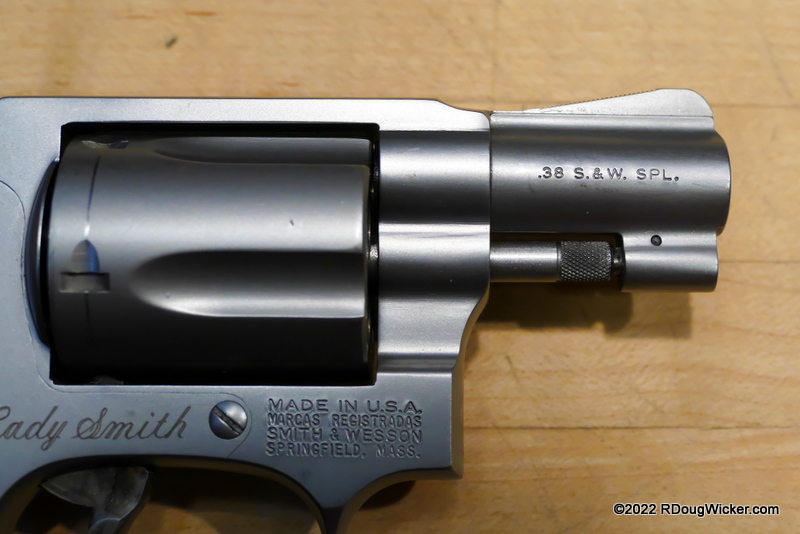
Okay, ladies, admit it. The miniscule revolver pictured above is just so darned cute! Today’s Revolver Week article is on a gun that Smith and Wesson specifically marketed toward women, the Lady Smith variant of a S&W Model 60, change 7. And there’s quite a history behind the Model 60, as it began life as a Model 36 “Chief’s Special” which, as you may have guessed by that name, was designed in 1950 as a small-framed concealable revolver suitable for plain clothes police duty.

S&W Model 36 “Chief’s Special” (image from S&W online catalog)

The first thing you’ll notice in observing the differences between the Model 36 shown above and Model 60 is that the former is blued and the latter is made of stainless. The Model 60 presented today was probably made in late 1994, which would place it near the middle-to-late range of 60-7 production (1990 to 1996). These were the last Model 60 revolvers made before Smith and Wesson changed the line to the J-Frame magnums, which were able to take the much hotter .357 Magnum load in addition to the milder .38 S&W Special (hereafter the .38 Spl).

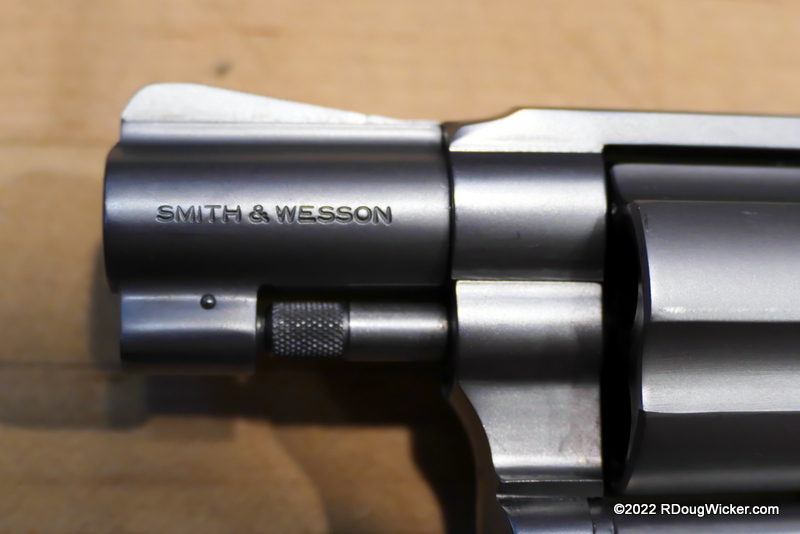
S&W Model 60-7 “Lady Smith

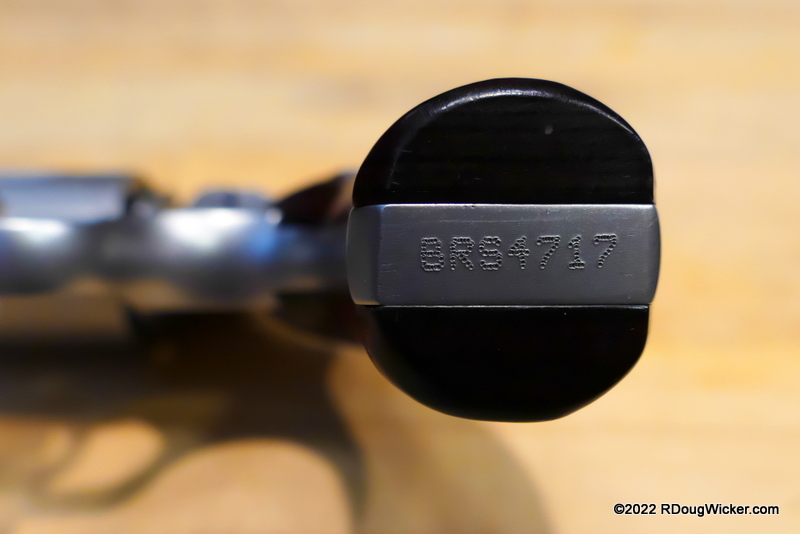
Once again, when dating any Smith & Wesson revolver, the serial number is the key. This example falls in the BRS range:

S&W revolver serial numbers are on the butt of the weapon

Change 7 is considered by many as the apex of the Model 60 design, so there is a demand for them. There are a couple of reasons for that. First, change 7 brought about a different heat treatment that strengthened the gun. Next, it was the last of the Model 60 revolvers to be chambered solely for .38 Spl. Why is that a factor? Because, let’s face it, does a .357 Magnum load in a compact, light, small-gripped, five-shot revolver really make sense to anyone? It doesn’t to me, especially when you’re throwing lead from a barrel that measures under two inches in length. So, why bother?

The five-shot S&W Model 60 sporting “Lady Smith” rosewood grips

Smith & Wesson Model 60-7 “Lady Smith“:

  • Length: 6.38 inches/162 mm
  • Barrel length: 1⅞ inches/47mm
  • Height: 4.41 inches/112 mm
  • Width (at cylinder): 1.30 inches/33 mm
  • Width (at grips): 1.22 inches/31 mm
  • Width (frame): .55 inches/14 mm
  • Weight (unloaded): 19.92 ounces/565 grams
  • Caliber: .38 S&W Special
  • Capacity: 5
  • Trigger pull (single-action, average of five pulls): 2 lbs. 10.4 ozs./1.2 kilograms
  • Trigger pull (double-action, estimated): 11 to 12 pounds/5 to 5.4 kg
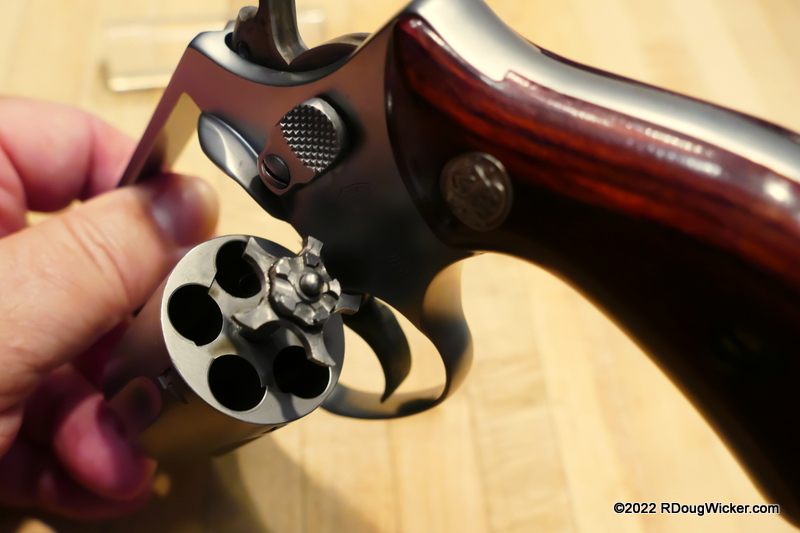
Five-round cylinder of the S&W Model 60

As you can see from the specifications above, handgun is small, light, and adequate. It’s easily concealable in either a holster or a purse, although I tend to steer people away from off-body carry. Purses can to snatched; guns in retention holster, not so much. The grip is a tad small for the .38 Spl. My pinky has minimal purchase when I hold the Model 60, and my fingers wrap completely around the gripto meet my palm just below the thumb. But Ursula’s fi9ngers seemed better positioned when I asked her to hold the “Lady Smith.” I’ve yet to fire this example, but I doubt either I or Ursula would have trouble controlling it. But if it were a later .357 Magnum variant loaded for bear… well, that would probably be pretty painful

S&W Model 60-7

And then there’s that superb Smith & Wesson double-action/single-action trigger which I described in Monday’s article on the S&W Model 10-5. The trigger on this smaller J-Frame is not much different. Indeed, the single-action pull is even lighter than what I measured on the larger K-Frame. But in double-action there is a slight difference. Whereas the Model 10 had no take-up upon initiating the pull, the Model 60 has an odd millimeter or so of travel followed by a barely audible “click” before the trigger engages. After that, the double-action pulls are nearly identical between the two revolvers — smooth all the way to hammer trip. This clicking may or may not be related to the hammer spring, as the Model 10 uses a leaf spring, and the Model 60 uses a more modern sprung strut:

Model 60 hammer strut
With the hammer cocked, this Model 60 is in single-action mode

By the way, ever wonder about the actual difference between a “medium” K-Frame and a “small” J-Frame? You’ll recall on Monday I wrote about a K-Frame S&W Model 10-5 in .38 Spl. Today we’re looking at a J-Frame S&W Model 60-7 in the same caliber. So, let us compare. Both being .38 Spl, it made since for this comparison to line up the back of the cylinders in the below image. Mentally subtract the barrel and disregard the grips and you’ll note that there really isn’t a whole lot of dimensional difference between the 6-round Model 10 and the 5-round Model 60. The difference in cylinder widths is noticeable, as one would expect — 1.46 inches/37 mm (K-Frame) vs 1.30 inches/33 mm (J-Frame). But the real difference shows up in the height of the weapons, which is most impacted by the grips. It’s on that measurement that the J-Frame wins the concealability race by .71 inches/18 mm.

J-Frame Model 60 above a K-Frame Model 10

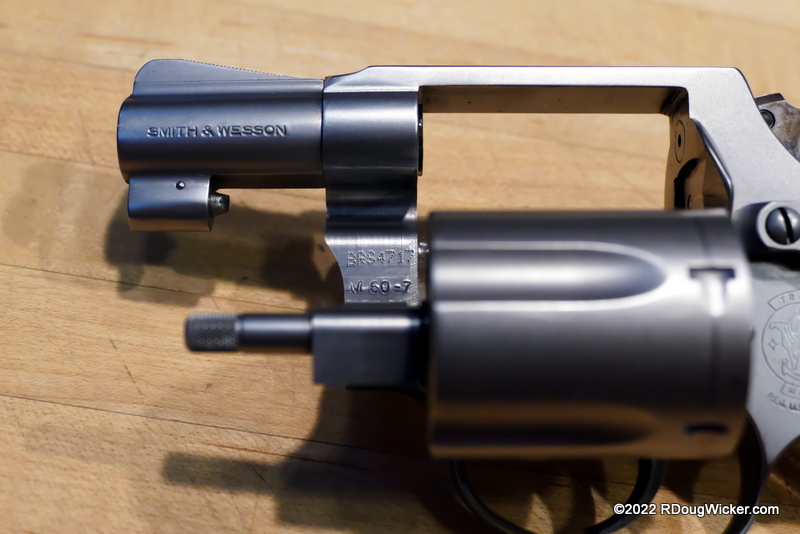
As I noted on Monday’s article, to check the Model and Change numbers on a Smith and Wesson revolver, just open the crane and check. Below you can see that this is a Model 60-7:

M 60-7; short for Model 60 Change 7

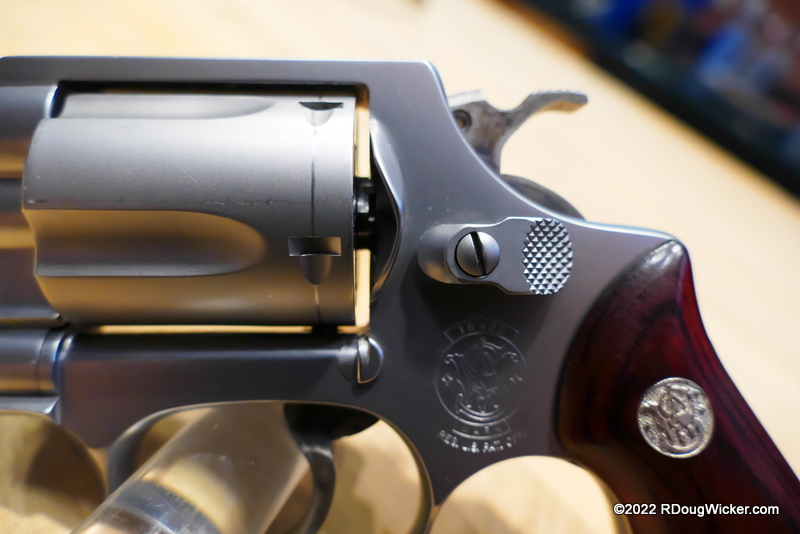
In the above photo of the Model 36 “Chief’s Special” you’ll see Smith and Wesson’s tradition checkered wood grips. The “Lady Smith” on the other hand sports smooth rosewoods in a deep, rich, reddish hue:

The stylish rosewood grips of the “Lady Smith” Model 60 variant

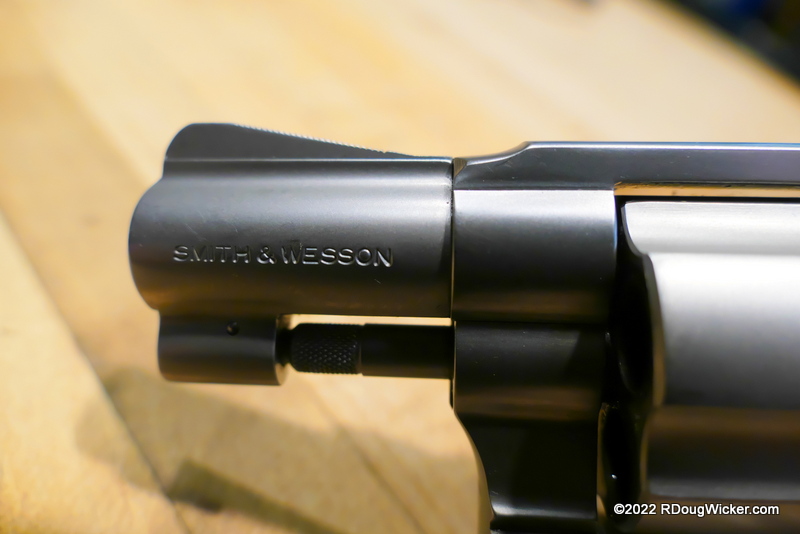
Gun sights are as you would expect for a weapon made for short range defense — fixed front paired with a channeled rear “sight” running along the top strap:

Model 60 fixed front sight
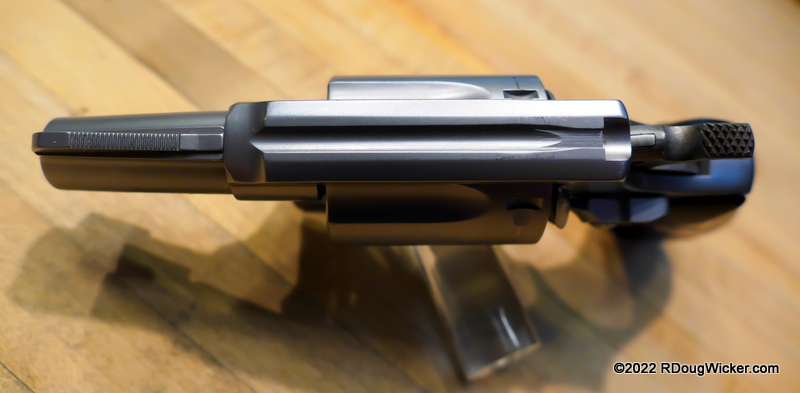
Groover rear “sight” of the Model 60

Put the two together and this is what you’ll see, which is probably adequate for ranges out to about ten to fifteen yards or so:

Model 60 rear sight view, but…
… when aiming a gun, focus on the front sight and place it on target

The “Lady Smith” variant of the Model 60 first appeared in the 60-6 in 1989. Indeed, all -6 revolvers where so marketed. It was only with the Model 60-7 that both “Chief’s Special” and “Lady Smith” variants were marketed under the same change number umbrella.

“Lady Smith” marketing stamp on this Model 60-7

I hope you enjoyed Ladies’ Day here on Revolver Weeks. Friday I’m going to present a fake. A fraud. An outright rip-off. But it’s a rip-off with a lot of history behind it, made by some of the most ingenious gunsmiths on the planet. Gunsmiths who operate furnaces in their backyards, manufacturing their own parts on a scale you simply will not believe. Until then, here’s today’s gallery of additional Model 60-7 “Lady Smith” images:

Comments Off on Revolver Week — Ladies’ Day with a S&W Model 60-7 “Lady Smith”

Filed under Firearms, R. Doug Wicker