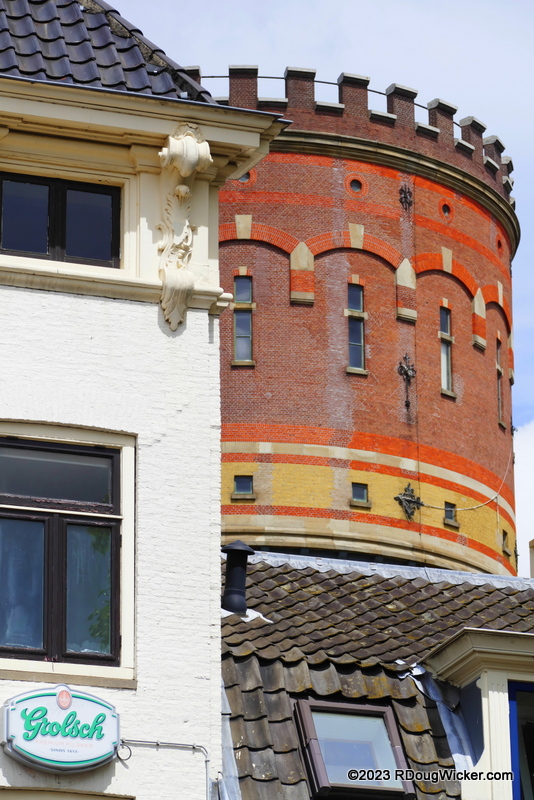
Lauwerhof Water Tower apartments; Utrecht, Netherlands
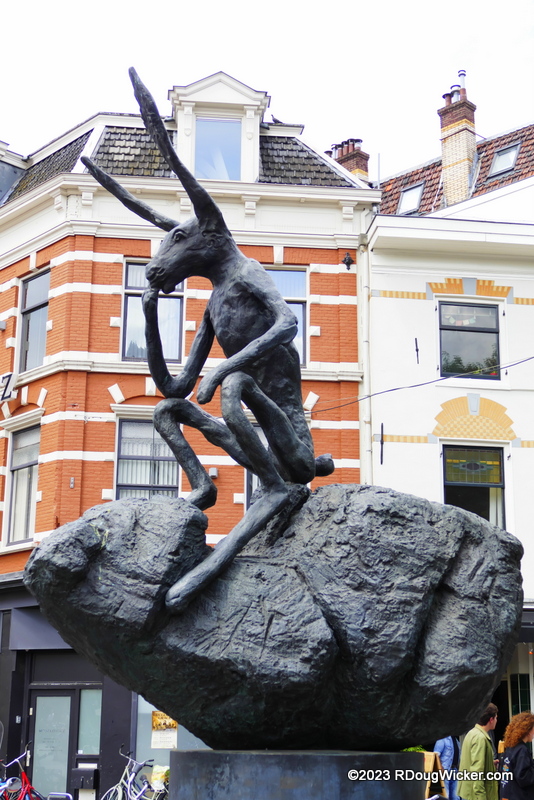
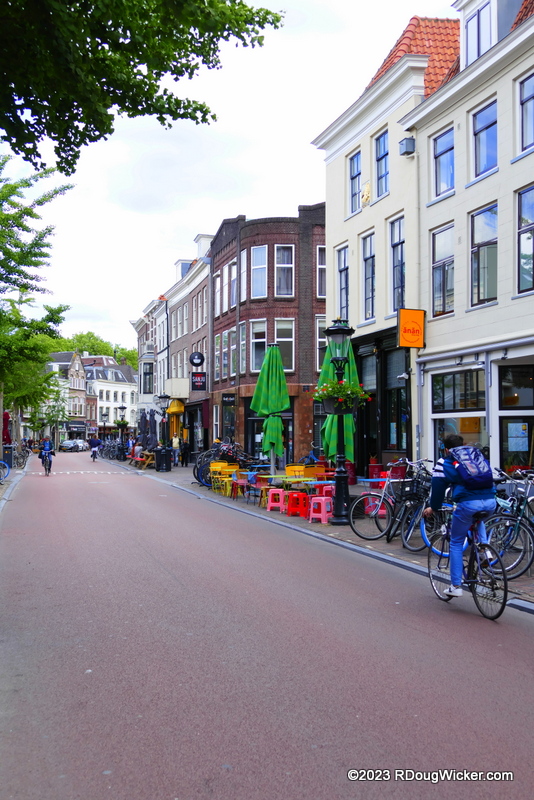
Today I will make good on my promise from Monday — less talk and more photos. And today’s pictorial offerings will concentrate on the historic city center and canals.
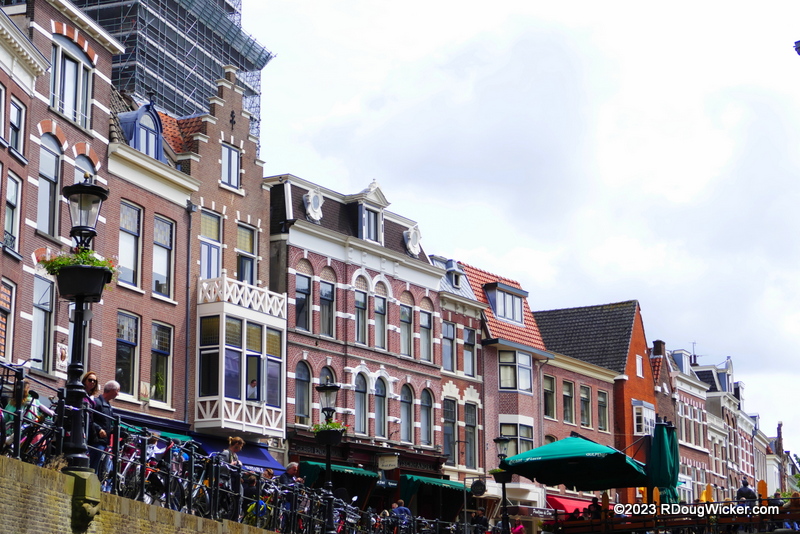
Voorstraat, Utrecht, Netherlands
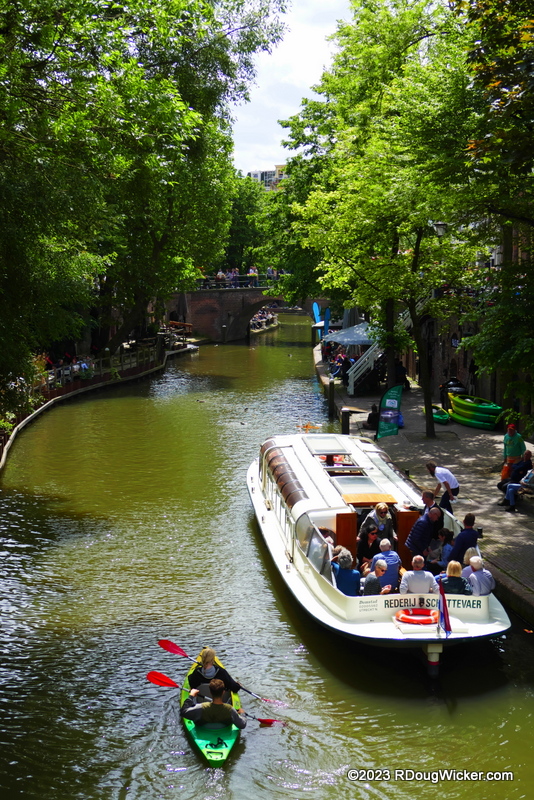
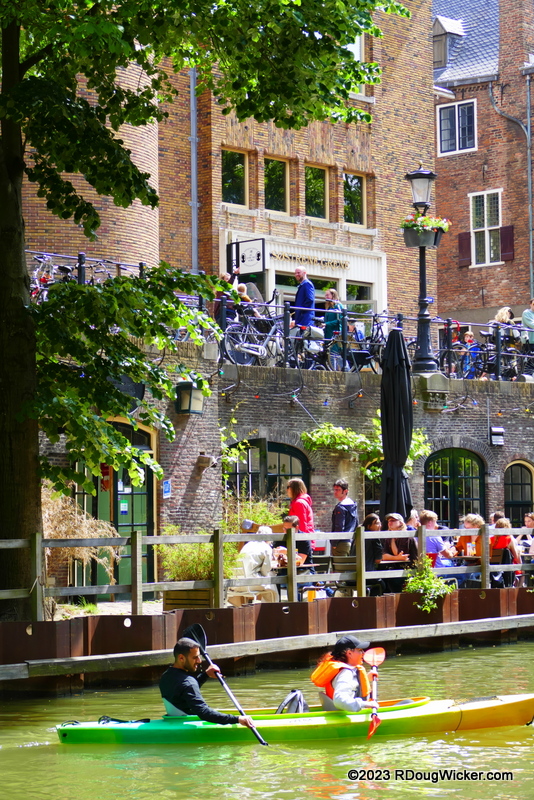
Large swathes for these 900-year-old canals were paved over back in 1979 for a highway, but in 2019 Utrecht tore up that section and restored the canal system. The result, I’m sure, is much more photogenic than looking at multiple lanes of concrete and vehicles:
Utrecht, Netherlands canals
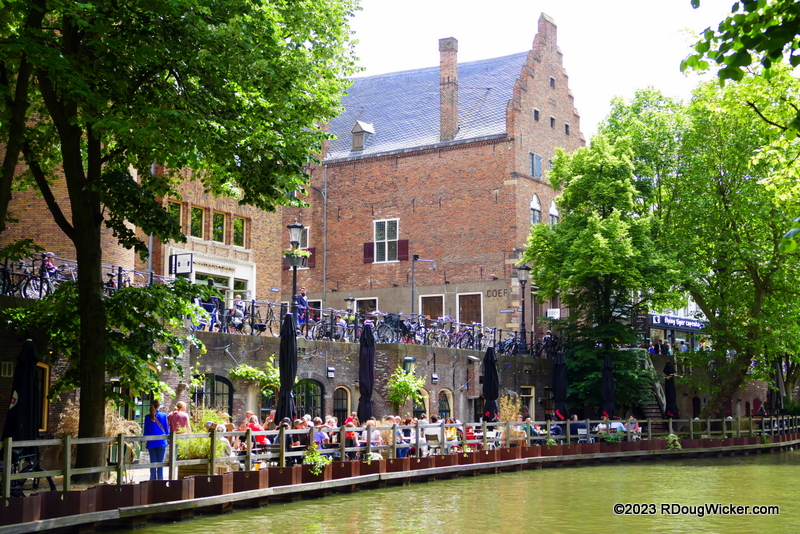
So, let’s spend the rest of today’s article just enjoying a relaxing stroll around the city center and canals. In the photo gallery and slide show below, you’ll find views at both canal-level and looking down at the canals from above:
I‘m going to try something a bit different over the next four weeks. I’m going to let my photos of Utrecht carry the burden while keep text to a minimum. I’m doing this for the following reasons:
There’s not much needed to describe this charming destination. The sights are centered around the canals, which is near where we stayed, and the photos speak for themselves.
As I write this, I’m pressed to pre-post a bunch of articles before we head to our next adventure, this time in the South Pacific.
Y’all are probably sick of reading my writings anyway. I’m giving you a break!
But don’t fret. I will give you at least some information.
As you may recall, Ursula and I began this journey in late April of last year, starting with a flight to Fort Lauderdale followed by a transatlantic crossing aboard Royal Caribbean’s Vision of the Seas. I began the series on this journey on 1 August 2022 with Transatlantic 2022 — Vision of the Seas to La Palma, Canary Islands. That transatlantic was followed by a back-to-back aboard Vision to uncommon destinations in Spain and France. After that we took a side journey to Germany and a visit to Limburg, which I finished up a couple of weeks ago. Next stop is the destination you see today, Utrecht, Netherlands, to which we arrived on 26 May 2022.
Our stay in Utrecht would last two nights because we had yet another ship to catch in nearby Amsterdam. This would be another in Royal Caribbean’s fleet, this time Jewel of the Seas, on which we would do three back-to-backs to various destinations. That series will begin after this four-week look at Utrecht.
Utrecht, Netherlands
So, if we have a ship to catch in Amsterdam, why are we in Utrecht? Well, Ursula and I wanted to try something different for a change, and Amsterdam is a short train hop away. Besides, we would hit Amsterdam four times — before the first cruise, between cruises one and two, between cruises two and three, and after disembarking for the flight home. But… I’ll tell you right now that given the choice between Utrecht and Amsterdam, I may never again set foot in the latter. I definitely will go to great lengths to avoid flying again out of Schipol. We were so disappointed in this once great city that I interrupted a series I was doing on the Caribbean and posted a special article on that disgusting visit and flight out the very next day upon returning to the U.S. See: Trashy Amsterdam and the Hellhole of Schipol
Utrecht, Netherlands
As charming as Amsterdam once was, Utrecht definitely makes up for what Amsterdam has become:
Lauwerhof Water Tower from 1895; now an apartment building
And, yes, Utrecht has that ubiquitous European fixture, the Gothic church. This one is called St. Martin’s Cathedral and Domkerk (Dom Church). Domkerk began life as a Catholic cathedral, but in 1580 the Utrecht city counsel transferred the church to the Calvinists. It’s been in Protestant hands ever since.
St. Martin’s Cathedral/Domkerk
See you Wednesday for the next Utrecht installment.
Walther’s superlative, innovative P99 AS and P99c AS
The Walther P99 AS died in 2021. Or was it 2022? Many sources site the former year, but I’ve recently seen one P99 AS with a CC date code, which translates to 2022. Or did the P99 AS die this year? In February, while Ursula and I were on our most recent travels, Walther announced the “Final Edition” of what is, in my view, the best striker-fired polymer-framed pistol ever devised. And that’s a real shame, but not unexpected. Walther has been one of the most innovative manufactures of firearms over the past century. Alas, incompetent marketing has always been Walther’s undoing. The P99 AS was no exception to this propensity to make great weapons, and then fail to follow up on actually selling the darned things. The double-action/single-action semiautomatic? Walther invented that entire genre with its PP in 1929, then let the design gather dust until it was too late to salvage it with the far superior PP Super that came out 43 years later. The dropping block locking system? Walther pioneered that concept in the P38, but when you think of the dropping block today it’s the Beretta 92 that comes to mind. A double-action/single-action striker-fired pistol? Others claim to make such a beast, but the P99 possesses the only true DA/SA system with two different trigger pulls… or is it three?
A Walther P99 AS (Anti-Stress trigger) made in 2017 (BH date code)
The AS (Anti-Stress) trigger developed for the P99 has a double-action mode that rates at 8.8 pounds/4 kilograms and a .55-inch/ 14mm trigger pull length, and a single-action mode measuring exactly half that amount — 4.4 pounds/2 kilograms — and a much shorter .31-inch/8mm trigger pull length. Channeling Ron Popeil, “But wait! There’s more!” There is in fact a third trigger mode, the Anti-Stress mode. That mode mates the single-action’s 4.4-pound trigger with the double-action’s longer .55-inch pull length. The intent of this design was to give police departments and military personnel a margin of safety in stressful situations should they opt to carry the P99 AS with a cocked striker.
Walther P99 AS trigger position for anti-stress or double-action modes
Walther P99 AS trigger in single-action position
A careful pull of the P99 AS will reset the trigger from anti-stress to single-action, although I don’t recommend staging the trigger unless you’re on target and ready to fire. You definitely don’t want to carry a P99 AS in that configuration. That’s just asking for trouble.
When you first chamber a round, the P99 AS defaults to the anti-stress trigger. So, how do you switch that to the even safer double-action? You depress the decock button atop the slide and within reach of your thumb if you’re a righthanded shooter.
P99 AS decocker for placing the trigger into double-action mode
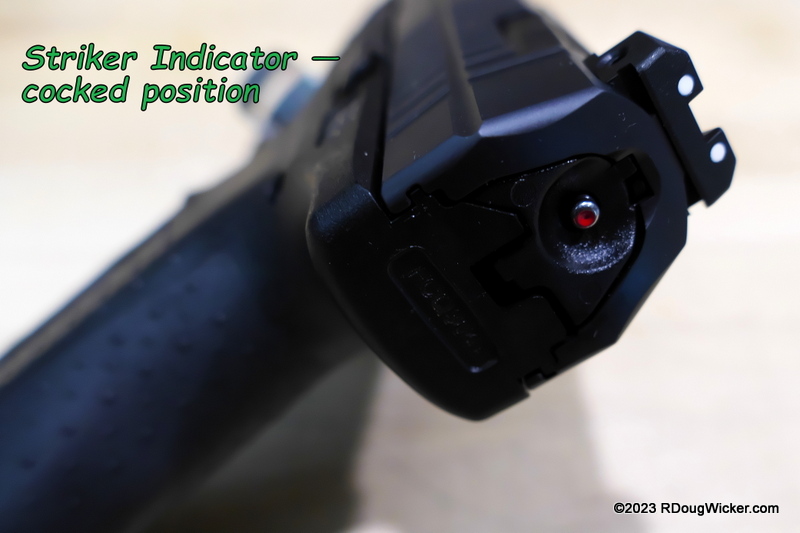
There’s even a nifty indicator on the P99 AS that tells you if the striker is cocked. It’s at the back of the pistol, and it looks like this:
P99 AS indicating a cocked striker (either single-action or anti-stress modes)
P99 AS — if you don’t see red, the striker is decocked and the weapon in double-action
An added benefit to the striker indicator is that as you are pulling the trigger in double-action, the indicator emerges to give you a visual indication that the sear is about to trip.
Walther P99 AS with an aftermarket threaded barrel
But what if you need to place an accurate shot at a distant target? There’s no hammer to thumb back, as you would on a traditional DA/SA pistol or revolver. So how do you transition the P99 AS from double-action to anti-stress without racking the slide and ejecting the round already chambered? It’s actually quite simple. You merely snick back the slide about a quarter of an inch. The striker cocks, the indicator protrudes from the rear, and the trigger remains at the double-action pull length. This is quite simply the most versatile and, in my opinion, the safest striker-fired system ever devised. I mean, other than a manual thumb safety, what’s safer than a stiff, long double-action first pull? Answer: Nothing! Even better is that the P99 came in a smaller 10+1 capacity compact version, predating the SIG P365’s 10-shot double-stack wonder by two full decades. Behold the P99c AS, in which the “c” stands for compact:
Walther P99c AS — my choice for concealed carry for a decade
That marvel weighs 20.8 ounces/590 grams (with an empty magazine). Other measurements are:
Capacity: 10+1 (9mm)/8+2 (10mm); will accept the full-size 15-round (12-rounds in 10mm) P99 magazine with a sleeve
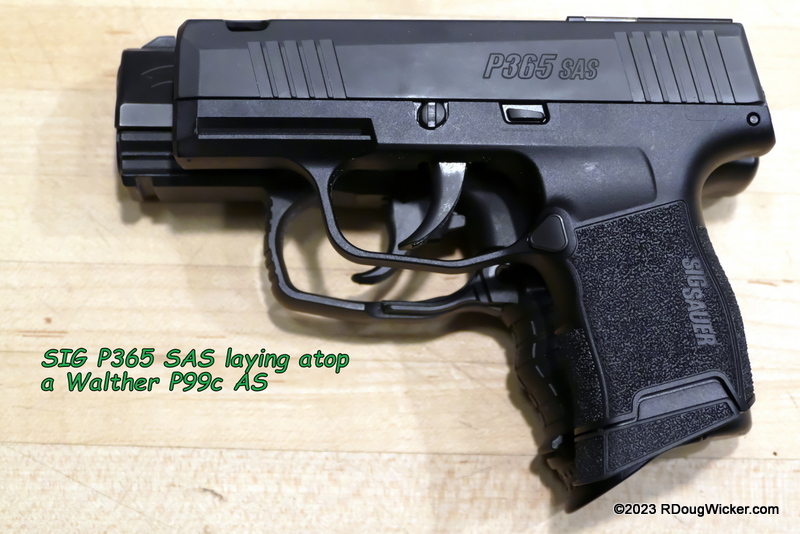
Compare that to the more recent SIG P365:
Weight: 17.8 ounces/504 grams
Lenth: 5.8 inches/147mm
Height: 4.3 inches/110mm
Width: 1.0 inch/25mm
Barrel: 3.1 inches/79mm
Capacity: 10+1 (9mm); 12 and 15-round magazines available
Twenty-six years may separate these two weapons, but not much else does. I say twenty-six, but that’s based upon when the P99 hit the market in 1997. Development actually began about four years earlier.
SIG P365 SAS over a Walther P99c AS
When the P99 first arrived on the scene there was no “AS” in the name. It only came with the AS trigger, so that would’ve been redundant. But here’s where Walther falls down on marketing. Not content with the marvelous and innovative Anti-Stress trigger, Walther began copying inferior striker-fired offerings from less innovative companies. There was the P99DOA (Double-Action Only) and the P99QA (Quick Action trigger with emulated the partially loaded striker of, shudder, the Glock). But why? The Walther P99 AS trigger was already at the apex of striker-fired weapons, and additional trigger configurations only managed to confuse the market and any potential customers. If some police department wants to buy a cheap Glock with an inferior trigger, one does not dumb down one’s superior product going after that market. You instead shoot (pun intended) for those departments that recognize quality, innovation, and safety, and are willing to pay a bit more for it.
Walther P99c AS dated 2014
And then things got even more confusing. Smith and Wesson entered the picture with the SW99 and SW99c (2000-2004) with frames made by Walther and most of barrels and slides made by Smith and Wesson. Smith and Wesson then proceeded to further add to the confusion by coming out with the SW99O (Double-Action only with no decocker), SW99 QA (Quick Action trigger comparable to the, shudder, Glock), and the SW99L (basically a rebranded SW99 QA minus the decocker). The only thing good to come out of the SW99/Walther collaboration was that a version of the P99 in .45 ACP became available, the SW99 .45:
Smith and Wesson SW99 .45 ACP with 9+1 capacity
At least Walther’s next collaboration led to an actual improvement, but unfortunately that didn’t last long because Magnum Research followed Walther’s lead and botched their marketing as well. Behold a beautiful long-slide variant of the P99 AS with a 4.5-inch/116mm barrel, the elegant and refined MR9 Eagle:
Long-slide version of the MR9 variant; frame by Walther, slide and barrel by Magnum Research
Magnum Research MR9 and its progenitor
Full-size P99 AS vs Magnum Research MR9 long slide
And if that Magnum Research version of the P99 was too big for you, the MR9 also came in the original 4-inch configuration. The MR9 was produced between 2011 and 2015. By the way, if you take a closer look at the MR9 and SW99 you’ll note that the ambidextrous magazine release levers are much shorter than the P99 pistols shown in this article. These are the magazine release levers that adorned the original Generation 1 P99. Also carried over from the Generation 1 is the “ski hump” inside the SW99 trigger guard.
Smith and Wesson SW99 alongside the Magnum Research MR9
SW99 and MR9
But enough about the collaborations. Let’s look at what comes with the typical full-size P99 AS right out of the case. As you can see below, Walther was yet again well ahead of the competition with modular backstraps to adjust the grip, front sights of various heights to adjust the point of aim, and an Allen wrench to install those sights:
Walther P99 AS and included accessories
There is one Walther P99 collaboration with Poland I’ve not yet covered. That would be Fabryka Broni Radom‘s double-action only P99 RAD. Yep. Another addition to the P99 confusion, and another example of why Walther is terrible at marketing.
And then there’s the unlicensed P99 AS clone from Canik of Türkiye (see also: Canik USA, importer Century Arms). It’s a remarkably close copy, right down to the decock button, striker indicator, and the operation of the three trigger modes, but the trigger on the Canik TP9DA is not nearly as refined as that on the P99. When I picked up a TP9DA and tried the trigger several years ago I gave the pistol a hard pass despite the much lower price. After Walther’s Final Edition runs out, however, the Canik may be your last shot (pun intended) at a new pistol with an Anti-Stress trigger. And, yes, Canik also cloned other P99/SW99 configurations as well: the TP9SA (single-action only with decocker) and TP9SF (single-action without the decocker).
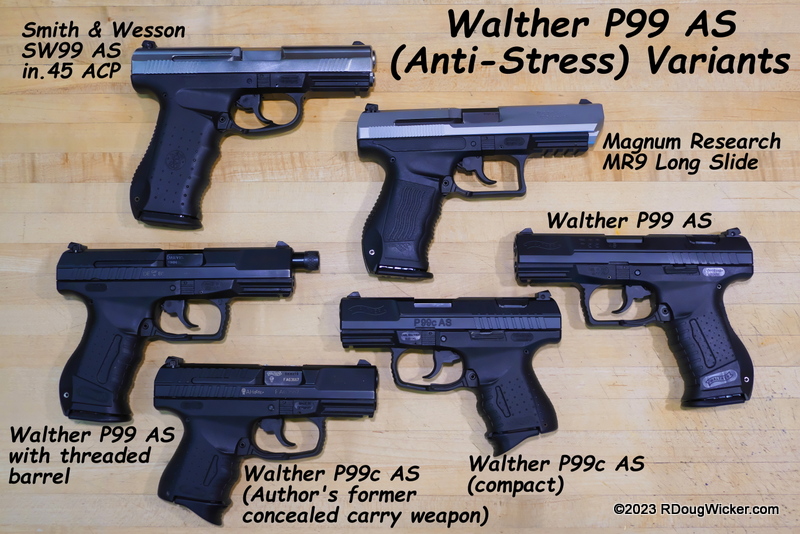
Anyway, let’s peruse this P99 AS Family Portrait:
Walther P99 AS Family Portrait, including cousins from S&W and MR
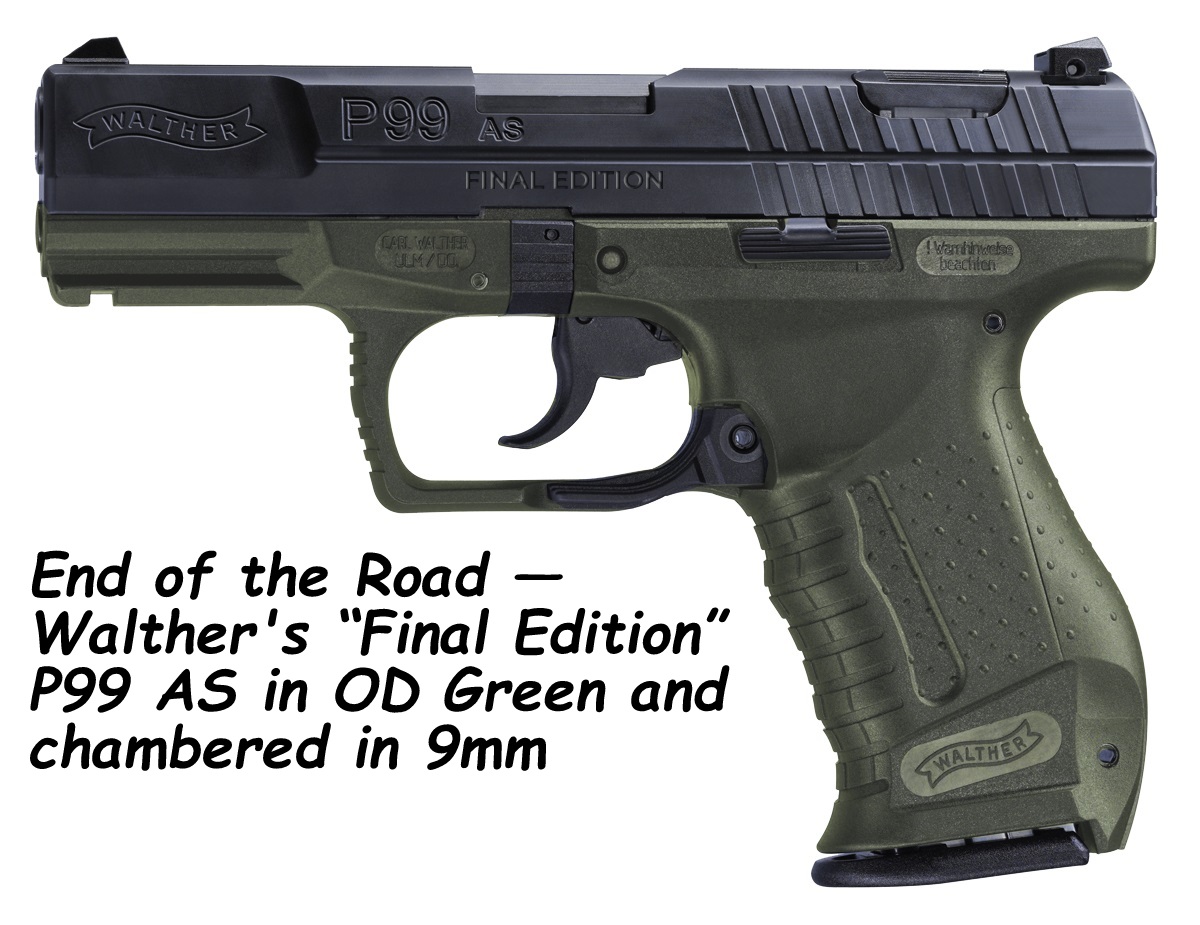
One last look, this time at theFinal Edition P99 AS currently being offered by Walther in a hideous OD Green:














 Decisions — Murder in Paradise
 The Globe — Murder in Luxury
 R. Doug Wicker — Author