
Balnuaran of Clava
On our bus tour out of Invergordon we made three more stops beyond Beauly Priory. The first was a site containing Bronze Age burial mounds known as Clava cairn. This particular Clava cairn is Balnuaran of Clava. And here is the largest of the cairns:
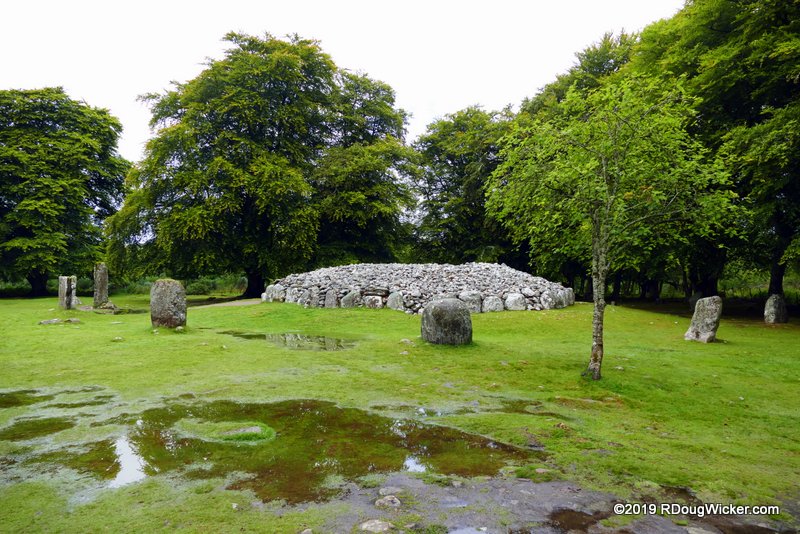
Balnauran of Clava
After that we moved on to the site of the famous Battle of Culloden, April 16, 1746.

Battle of Culloden
Culloden is a small town located about 3 miles/4.8 kilometers east of Inverness. The name derives from the Gaelic Cùl Lodain, which roughly translates to back of the small pond, or, in modern Gaelic, Cùil Lodair, which means marshy nook, and the area of the battlefield was at the time a boggy moor. As you can, there are hints of that type terrain today:

Culloden Battlefield
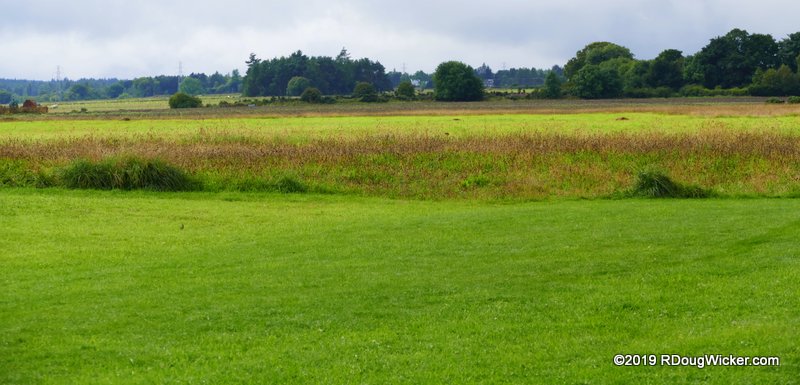
Culloden Battlefield
But for the most part the boggy features of this area is all but gone, although there are efforts to restore the terrain to its state during the battle:

Culloden Battlefield
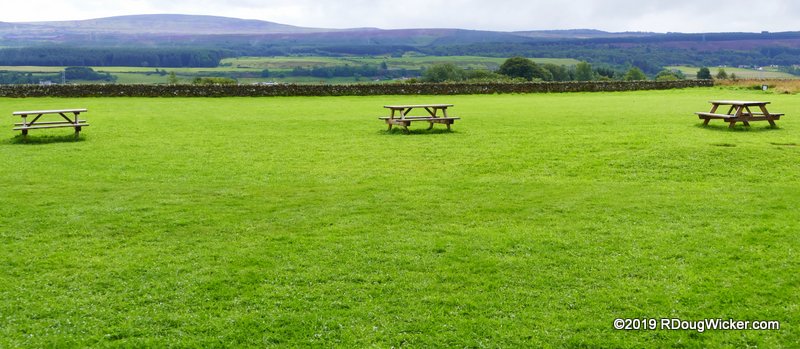
Culloden Battlefield
Next up was Loch Ness of Loch Ness Monster fame.
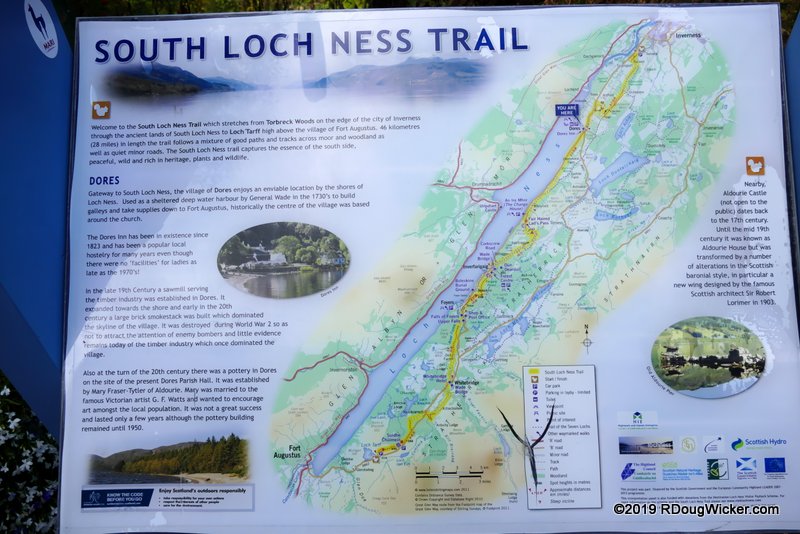
South Loch Ness
And while our first look at this area way back in around 2001 would result in no monster photos, I did manage on this tour to snap a quick, albeit slightly blurry, photo of something strange out there. You’ll see that photo on this week’s Fun Photo Friday. The photo of Loch Ness presented below were taken near the northeast end of the loch, about 5 miles/8 kilometers southwest of Inverness.

Loch Ness
Loch Ness is extremely narrow yet very deep. It is 23 miles/37 kilometers long, but only 1.7 miles/2.7 kilometers at its widest point. The depths plummet to 745 feet/227 meters, and just the average depth is an impressive 433 feet/132 meters!
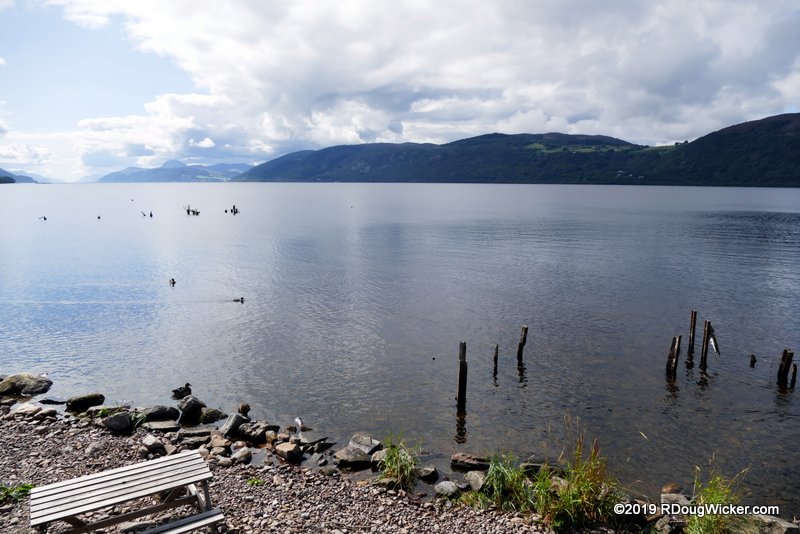
Loch Ness
If you look at a map of Scotland, you’ll see that the country is split in two by a series of lochs and rivers, with Loch Ness cutting diagonally across starting from near Inverness at Loch Dochfour, and continuing in a nearly straight-line slash across Scotland with Lochs Oich, Lochy, Eil, and Linnhe. If you think this sounds like a fault line, it is. And built between many of these lochs are 60 miles/97 kilometers of canal made up of 29 locks, or as I call them, loch locks. This is the Caledonan Canal, and it allows boat travel from Inverness on the east coast all the way to the Isle of Mull west of mainland Scotland.






 Decisions — Murder in Paradise
 The Globe — Murder in Luxury
 R. Doug Wicker — Author