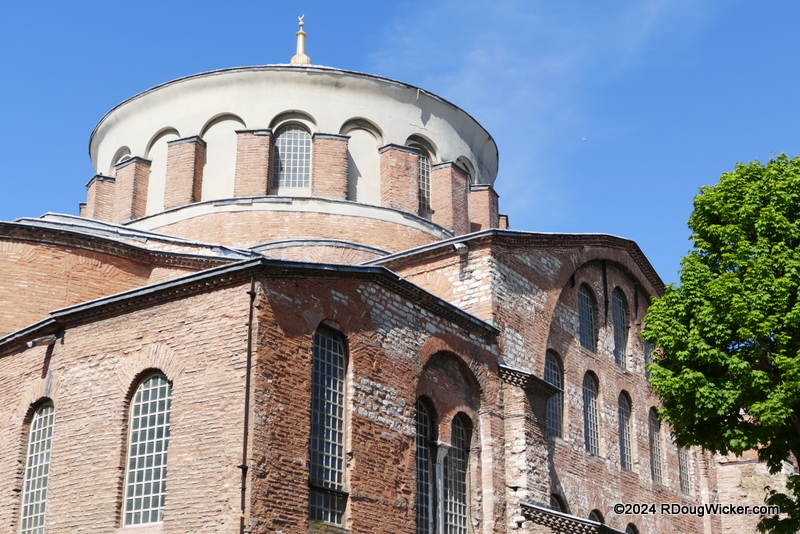
Hagia Irene — Eastern Orthodox church located on the Topkapi grounds
Welcome to another Fun Photo Friday, this time featuring favorites from Topkapi Palace. Above is Hagia Irene, an Eastern Orthodox church in the outer courtyard of the Topkapi Palace. Now on to today’s photo gallery/slide show:
Depiction of caligraphers creating copies of the Qur’an
Today we’re still in the Chamber of Sacred Relics in the Topkapi Palace, Istanbul, Türkiye (formerly Turkey). Whereas on Monday I concentrated on objects more closely associated with the Prophet Muhammad, today I’m going to get a bit more diverse starting with two items linked to David. But first, let’s look around at the impressive interior of what used to serve as the Privy Chamber before it became home to the Sacred Relics. Note the high domes, vaulted ceilings, and intricate and colorful tiles:
Chamber of the Sacred Relics
Chamber of the Sacred Relics
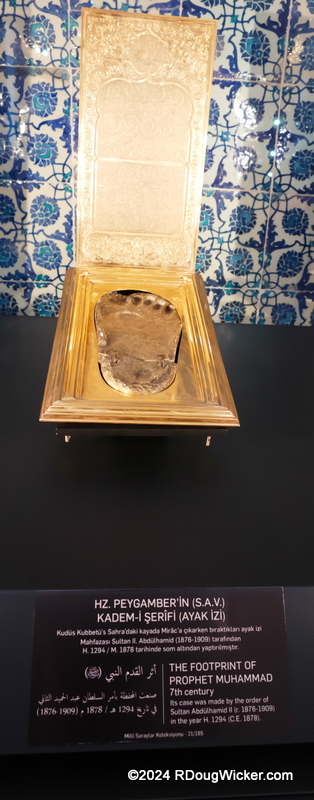
On Monday I presented to you images of several sandals associated with the Prophet Muhammad. Here’s an image depicting a cast of his footprint:
Footprint of the Prophet Muhammad
On Monday I also mentioned that relics here also included artifacts associated with Abraham, Joseph, and David. Below are images to two items linked to David. The first is claimed to have been his sword, and the second image is a copper inscription describing that sword:
David’s sword date 10th century BCE
Copper inscription for David’s sword from 1475
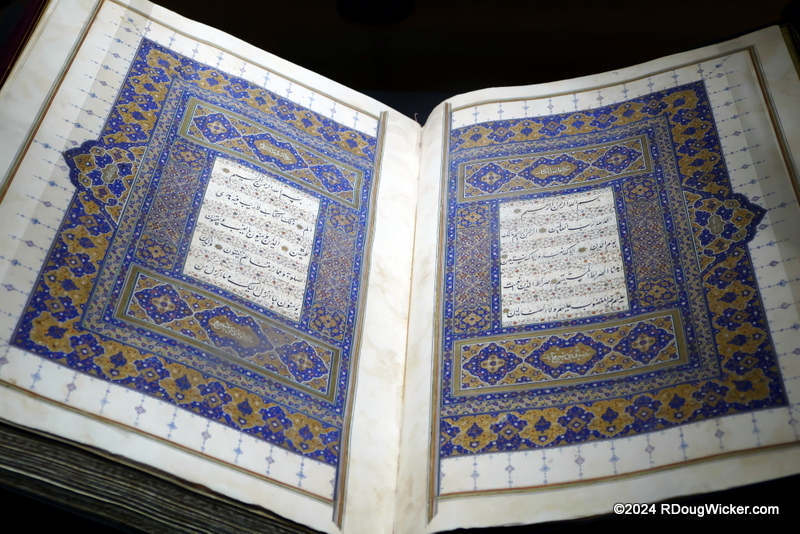
The chamber contains numerous beautiful, colorful, hand-printed Qur’ans and Islamic tapestry, which I’ll finish up today with this gallery/slide show:
A bow and two swords once belonging to the Prophet Muhammad (7th century)
There is a very special place within the Topkapi Palace which houses some of the most sacred relics of Islam and the Old Testament. This special place, located in the Third Courtyard, was once the Privy Chambers. Today it is known as the Chamber of the Sacred Relics. The relics contained within range from artifacts that purportedly once belonged to the Prophet Muhammad to items supposedly possessed by David, Joseph, and Abraham (all important figures in Islam as well as Judaism and Christianity; see: Abrahamic Religions). If you plan on passing through this special exhibit, be advised that there is a dress code: No visible knees or shoulders, so sleeveless tops, shorts, and short skirts and dresses are prohibited; additionally, women must wear a headscarf. There are signs admonishing against photography in certain areas as well, but I noticed that this prohibition was routinely ignored even by the Muslims present.
Chest holding the Blessed Mantle (left) and Qur’an on a stand (right)
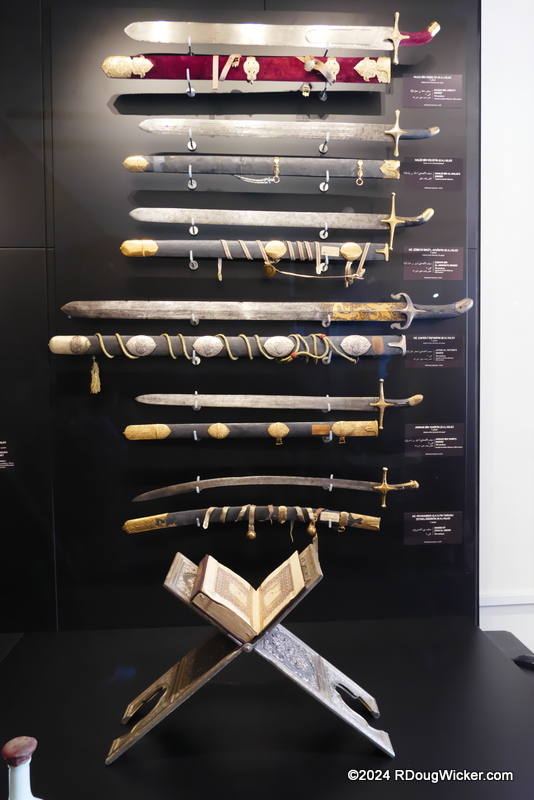
7th century swords belonging to Muhamad’s companions
There are several such displays of swords in the Chamber of the Sacred Relics:
Chamber of Sacred Relics swords
Chamber of Sacred Relics swords
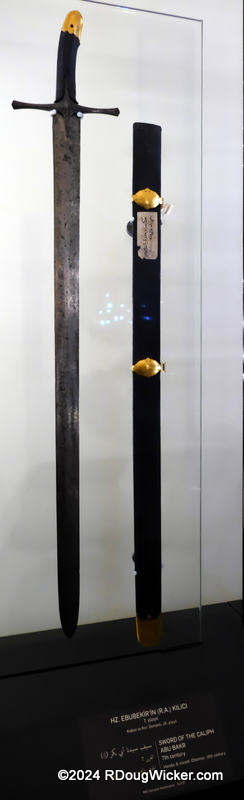
This next sword once belonged to the Caliph Abu Bakr, the first caliph following the passing of Muhammad.
Sword and scabbard of Caliph Abu Bakr
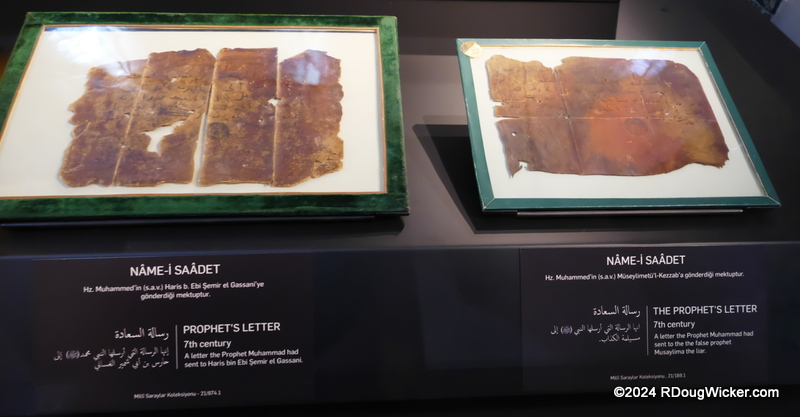
There are multiple items in the chamber associated with Muhammad, some of which I’ll run through here as I finish for today starting with this case holding the Prophet’s letters:
Case for the Prophet’s Letter
Letters of the Prophet:
The Prophet’s letters
More letters from the Prophet:
The Prophet’s letters
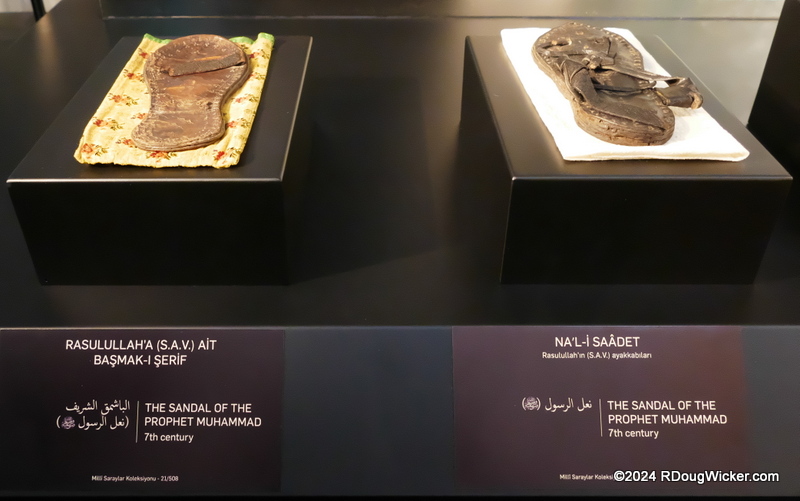
Two of the Prophet’s sandals:
Sandals of the Prophet
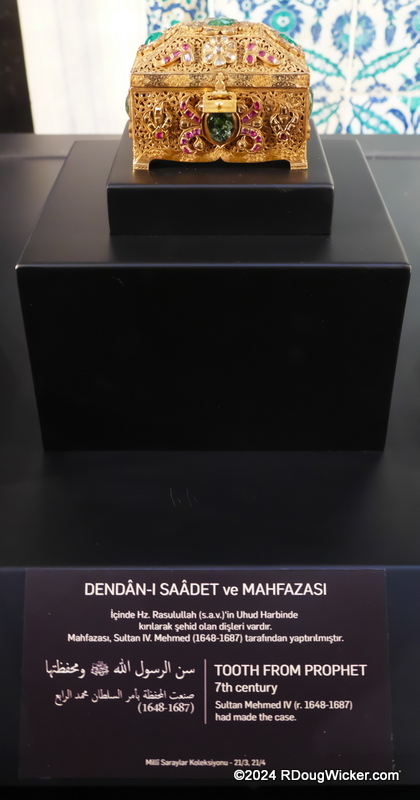
A box containing the Prophet’s tooth:
The Prophet”s tooth
And finally for today, two more of Muhammad’s sandals:
Muhammad’s sandals
On Wednesday I’ll show you some beautifully crafted Qur’ans and artifacts attributed to David.












 Decisions — Murder in Paradise
 The Globe — Murder in Luxury
 R. Doug Wicker — Author