Old Methodist Church (and former pub) on Westbourne Place
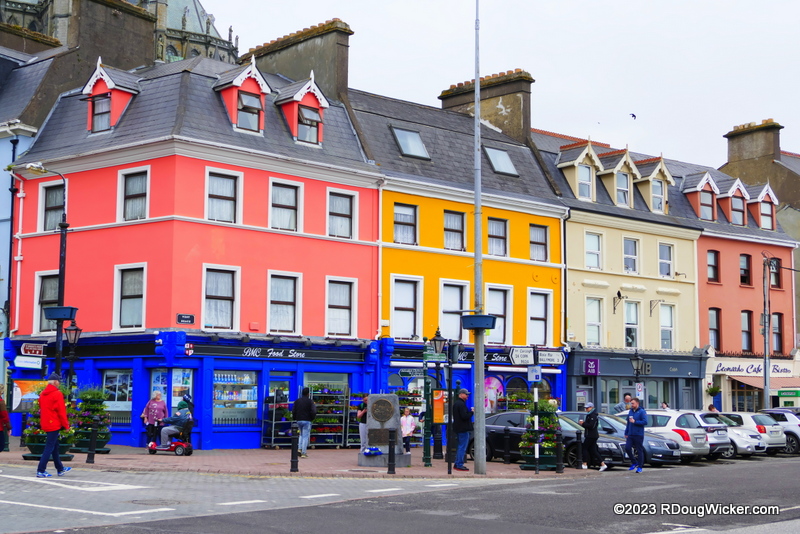
Today (actually, 6 June 2022) we’re off the ship and heading east along Westbourne Place. One of the things that in my view makes Cobh so fun to photograph are the myriad brightly colored buildings lining the main streets. This is especially true as you head along Westbourne Place toward Casement Square and continue along West Beach.
Westbourne Place (foreground) and West Beach (in the distance)
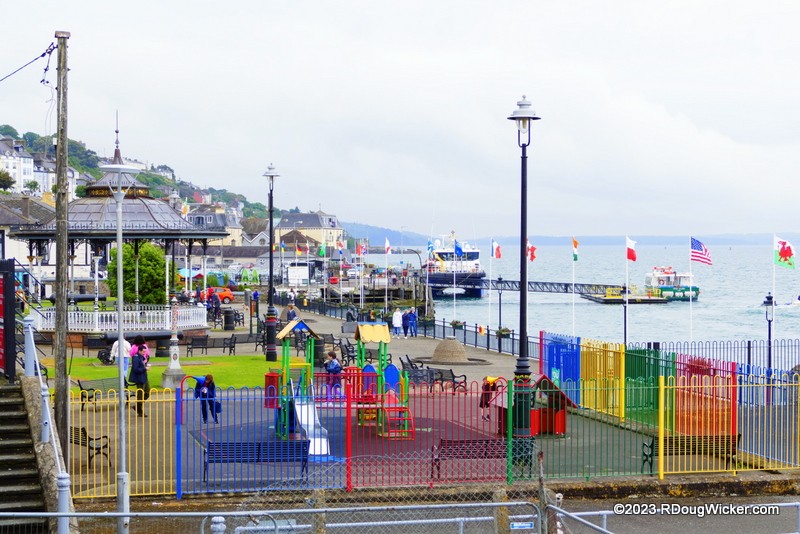
On the opposite side of Westbourne you’ll find John F. Kennedy Memorial Park, arriving first at the playground at the west end of the park:
John F. Kennedy Park Playground
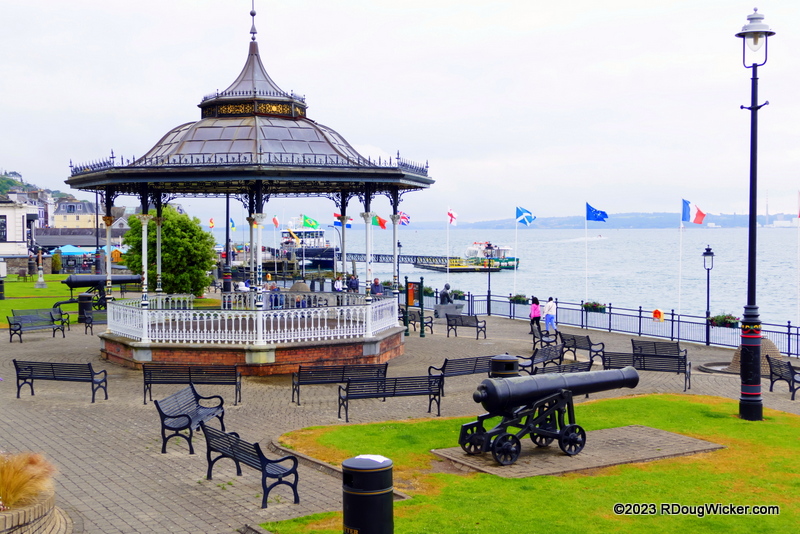
Beyond the playground is the park’s charming bandstand:
John F. Kennedy Memorial Park bandstand
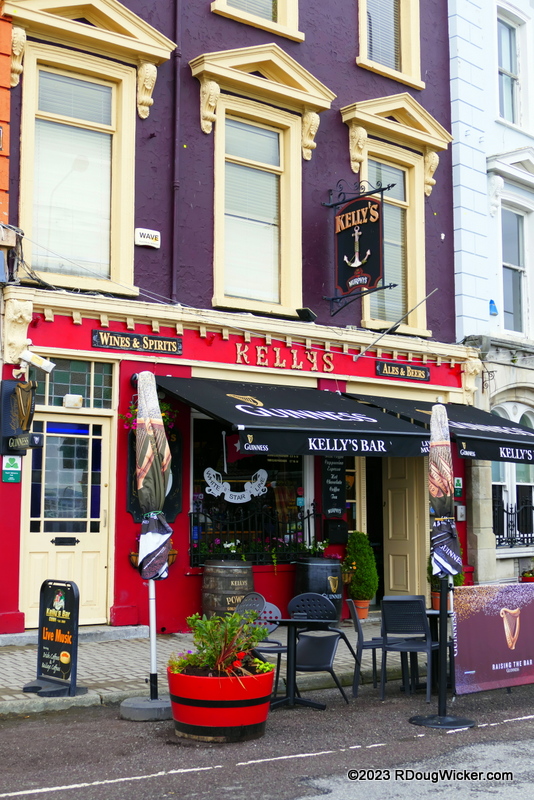
Across from the east end of the park is a picturesque bar with available outdoor seating:
Kelly’s Bar on Westbourne Place
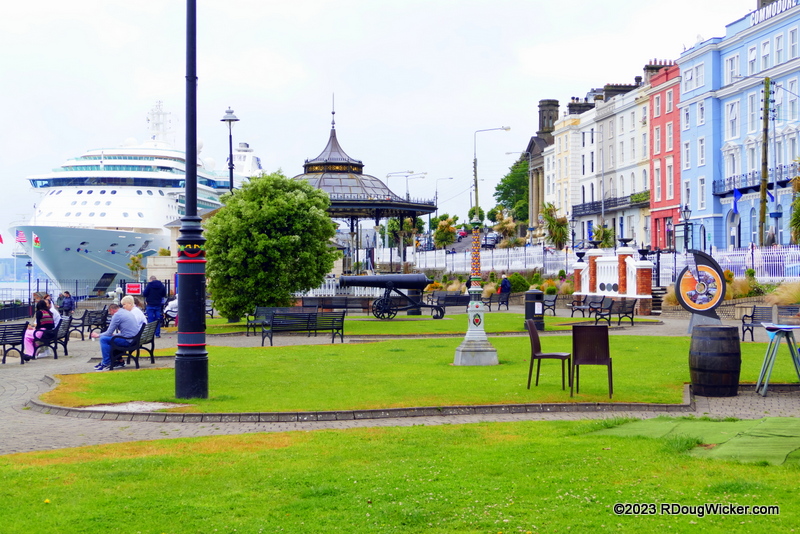
If you arrived by ship, slip down into the park and look back to the west to capture your floating hotel with this nifty scene:
John F. Kennedy Park, Jewel of the Seas, and Westbourne Place color all in one shot
Royal Caribbean’s Jewel of the Seas in Cobh, Ireland
After a brief break to honor Memorial Day and commemorate the 79th anniversary of the D-Day invasion of Normandy, today we’re back on articles involving the first of three back-to-back cruises aboard Royal Caribbean’s Jewel of the Seas. You may recall that these voyages took place from late May through the end of June 2022. Before my aforementioned break in this series, I showed you our earlier stops in Iceland and Belfast. Our visit to Jewel’s next destination took place two days after departing Belfast. So, today I begin the first of three weeks of articles on the quaint Irish port city of Cobh. But before we leave the Jewel, here is a view of the Jewel‘s atrium:
Jewel of the Seas atrium
Now that we’ve given some love to this magnificent ship, let’s head out onto the deck for our first views of Cobh (formerly Queenstown until it was renamed in 1920 during the Irish War for Independence). Even if you don’t leave the ship, you’ll still find much to zoom in on and photograph, such as the Cobh Museum, the repurposed Presbyterian Scots Church on High Road directly across from the cruise terminal and train station.
Cobh Museum — formerly Scots Church (1854-1965)
You might recall that I’ve shown you Cobh before, but only briefly as we were on tour that day. On this visit we spent the entire day here, which is why you’ll see much more of it this time around. Cobh’s most infamous claims to fame are probably that it was the last port of call for the RMS Titanic, and that survivors and recovered dead from RMS Lusitania were brought here. One hundred ninety-three Lusitania victims are interred at Old Church Cemetery about a mile to the north. At any rate, it’s Titanic that gets the most attention here, as evidence from this work alongside the port:
Titanic 100th Anniversary 1912-2012
Three quick views of Cobh as seen from the Jewel before we head out on foot:
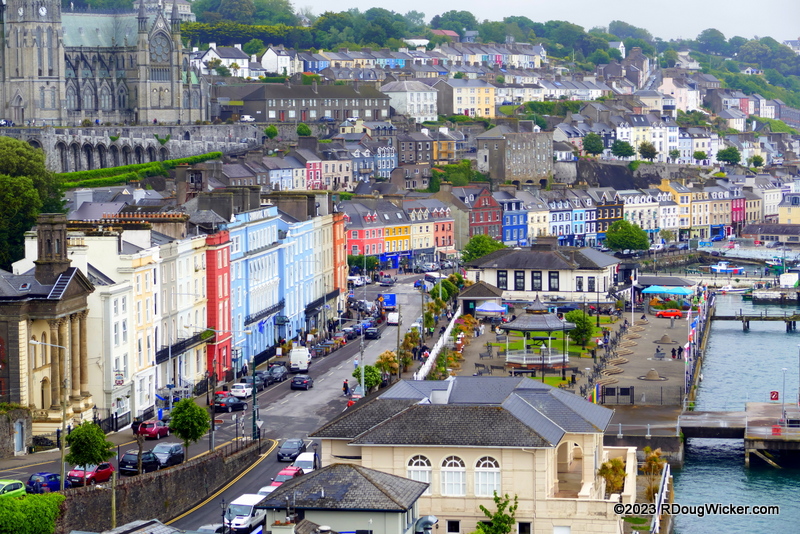
St. Colman’s Cathedral (left)
Westborne Pl. (lower left) and West Beach (center to right side)
Now here’s a fun one. See the old columned structure on the left below? That’s the Old Methodist Church, which at one point became a pub. I believe it’s for sale, if you’re interested in a fixer upper.
Old Methodist Church (left) and colorful buildings along Westbourne and West Beach
Now we exit Jewel. Cobh was the jumping off point for many Irish immigrants to the United States. Below is a statue dedicated to Annie Moore, who immigrated at age 17 along with her two younger brothers Anthony and Philip. Annie Moore has the distinction of being the first immigrant processed at Ellis Island, New York City.
Annie (age 17), Anthony (15), and Philip (12) Moore in 1892
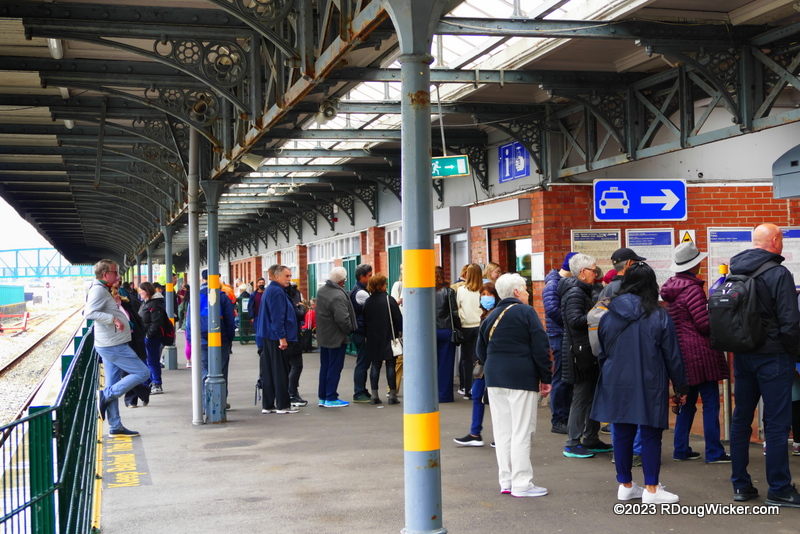
At the port you’ll find easy access to the train station, which also houses the Cobh Heritage Centre (more on that later in this series):
Cobh Train Station
Cobh Heritage Centre
On Wednesday we’ll continue this series with our walk into town.
All this week I’ll be rerunning my series on the D-Day Invasion of Normandy, France. Next week I’ll return you to our Iceland/Ireland trip and beyond. In the meantime, in commemoration of the 79th anniversary of Operation Neptune (the Normandy landings) and Operation Overlord (the Battle of Normandy) in the event we now collectively refer to as D-Day:
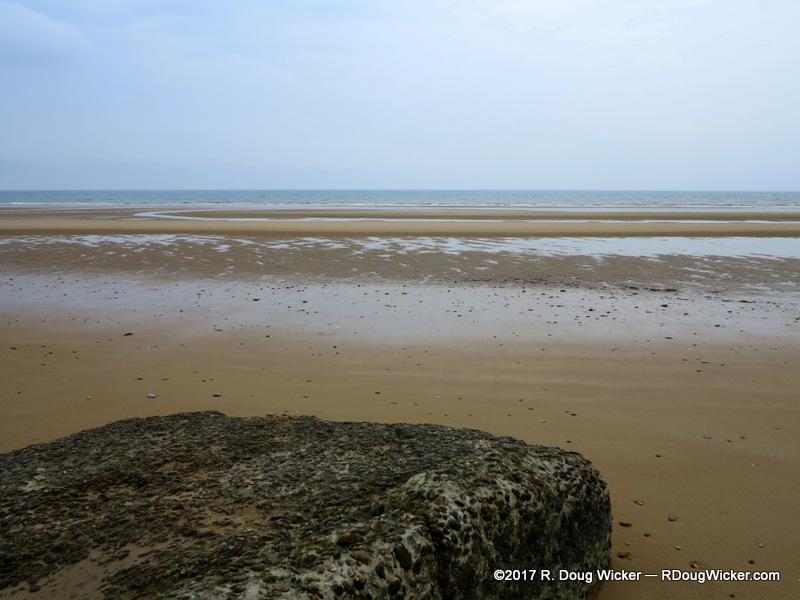
Omaha Beach
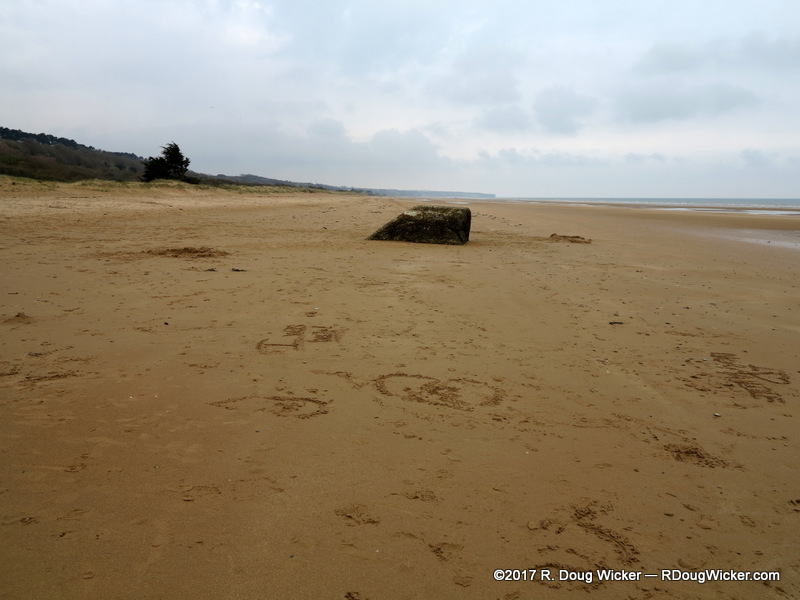
On D-Day, the 6th of June, 1944, Omaha Beach was bleak. U.S. V Corps under the direct command of Major General Leonard Gerow would sustain the most casualties by far of any of the five invasion beaches. Between 2,000 and 4,700 U.S. servicemen would lose their lives on the bloody sands of Omaha.
Omaha Beach
Had U.S. forces failed in taking Omaha, the entire invasion would have been a disaster, as Utah would have been completely cut off from Sword, Juno, and Gold. Fortunately, after a long and brutal battle with Army forces caught between the shoreline and the bluffs overlooking the beach, elements of V Corps led heroically by on-site Brigadier General Norman Cota (played by Robert Mitchum in the superlative film The Longest Day) were able to break through stiff German resistance and rush inland.












 Decisions — Murder in Paradise
 The Globe — Murder in Luxury
 R. Doug Wicker — Author