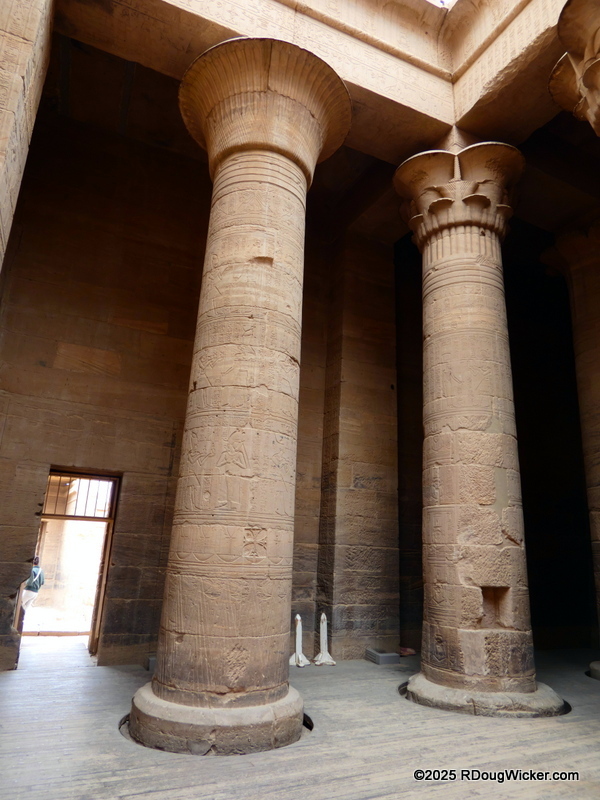
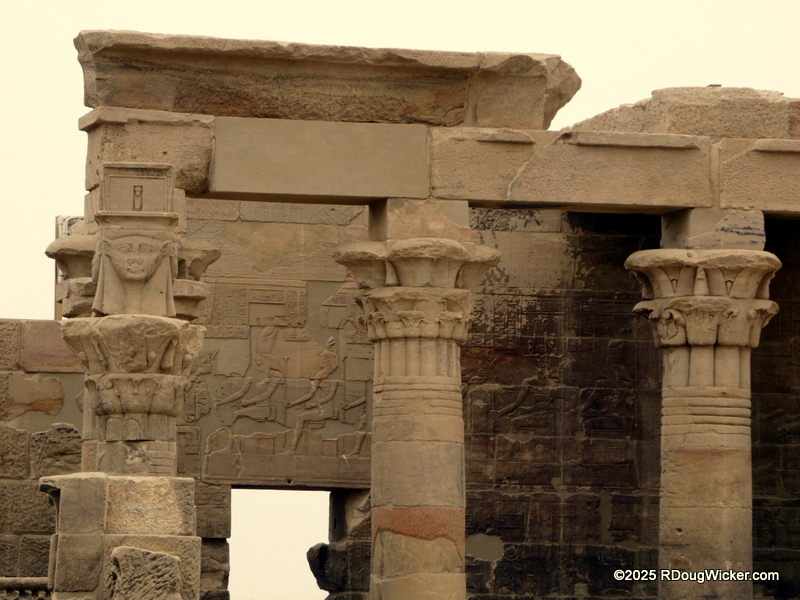
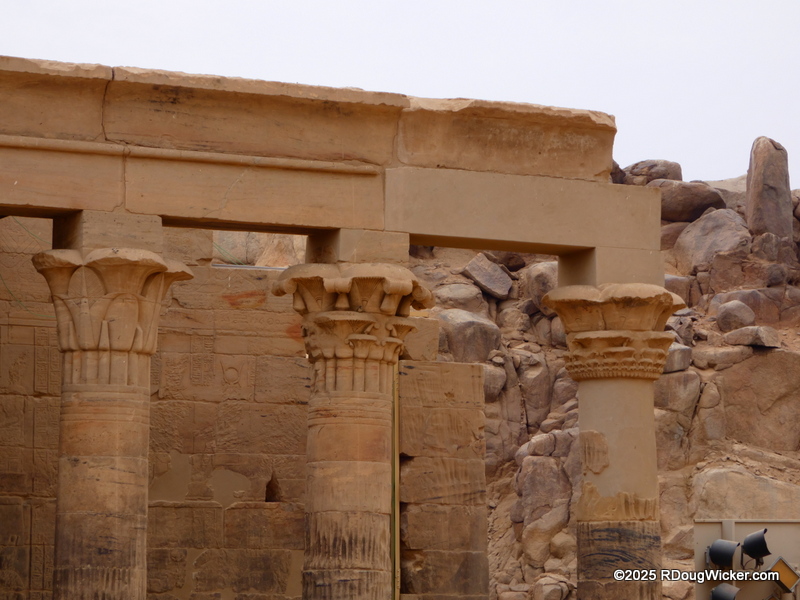
The columns pictured above feature the Egyptian goddess Hathor. Her likeness adorns the columns at the Mimmisi temple at Philae. This temple commemorates the birth of Harpocrates (the child interation of Horus). Now for today’s Fun Photo Friday of Philae favorites:
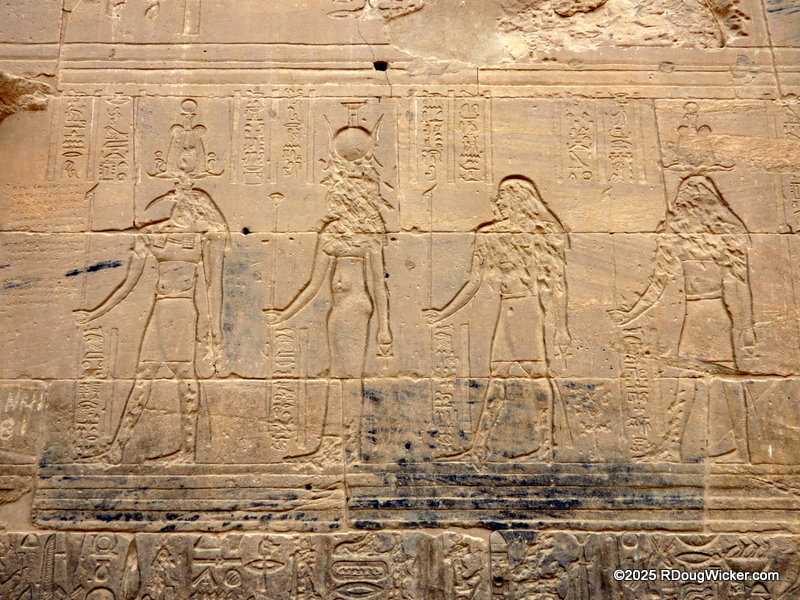
Stop me if you’ve heard this one before: So, these two ankhs and a Coptic cross walk into a temple in Egypt and…. Oh. You’ve heard it. Never mind. How about this one? A Knight Templar and a disfigured bas relief of the Egyptian godHorus walk into…. Oh. You’ve heard that one as well?
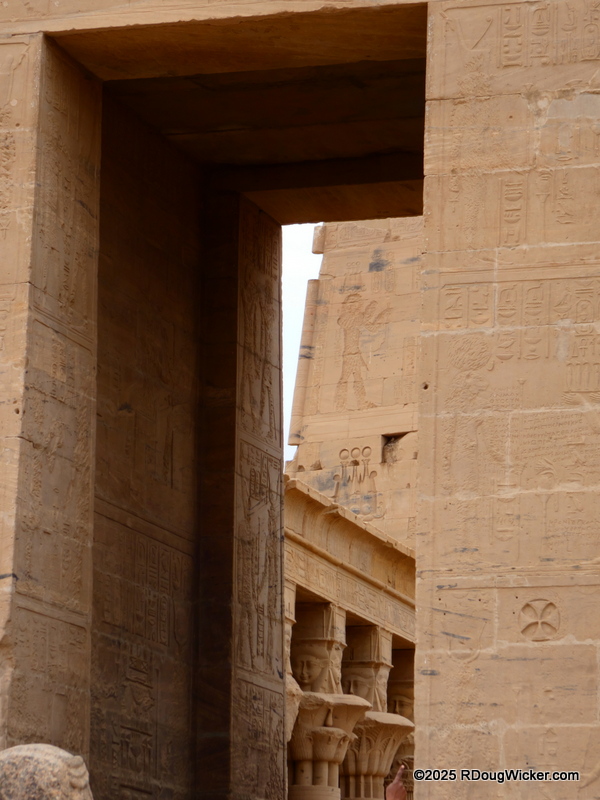
No. You’re not seeing things. And these symbols are not contemporaneous to the temples. Indeed, these particular symbols date back to the Crusader Invasions of Egypt in mid-12th century. It would be during this time that depictions of many Egyptian gods would be defaced as blasphemous by Christian invaders. But the Crusaders were not the only invaders of Egypt. Even well before then came the Romans, and before that the Greeks. Hence the term Ptolemaic Kingdom, in which Alexander the Great‘s favorite general, Ptolemy I Soter, proclaimed himself the Pharoah of Egypt and established the Ptolemaic Kingdon. His dynasty would be Ancient Egypt’s last, beginning in 305 BC and lasting until the death of the last Ptolemaic Pharoah, Cleopatra VII, in 30 BC. Didn’t know Cleopatra was Greek? Well, her full name was Cleopatra VII Thea Philopator, which translates from Greek to “Goddess Who Loves Her Father”.
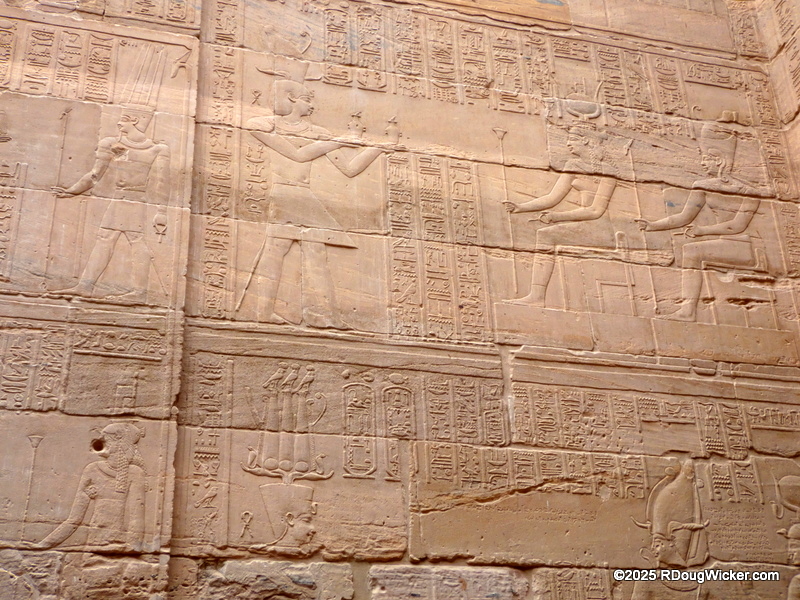
Temple hieroglyphics
Some of this history I alredy knew, particularly about the origins of the Ptolemaic Kingdom Cleopatra’s Greek ancestry, but a lot I did not. Did I mention that our guide Mohamad Salah was fantastic? This chap really knows his stuff. I will forever be grateful for having met him and for his guidance throughout this Nile cruise. Thank you, Luxor and Aswan Travel. You supplied us with a real gem when you consigned us to his care. Now for today’s photo gallery/slide show:
This past Friday I left you with a little mystery: When in Philae Island not Philae Island? The answer is this: When Philae Island is Agilkia Island. Although the island upon which the Philae Temple Complex currently sits is billed as Philae Island, the realPhilae Island became endangered following the construction of the Aswan Low Dam in 1902. And on that island sat the Philae Temple Complex. Philae Island flooded frequently, and that flooding was exacerbated by the completion of the Aswan High Dam in 1970. A cofferdam was built around the island until a permanent solution could be implemented.
Philae Temple Complex — Horus (left) and Isis
That solution was both simple and complex. The simple idea was to just relocate the temples to another island. The complex part was actually doing it . Thus was born the plan to disassemble the immense Philae structures into 40,000 very large pieces, relocating them to the nearby Agilkia Island, and then piecing the temples back together. I won’t bore you with all the fascinating details. I’ll let this artcle do that for me: Philae Temple Relocation Process. After you’ve pondered that article, take a look at this inscription:
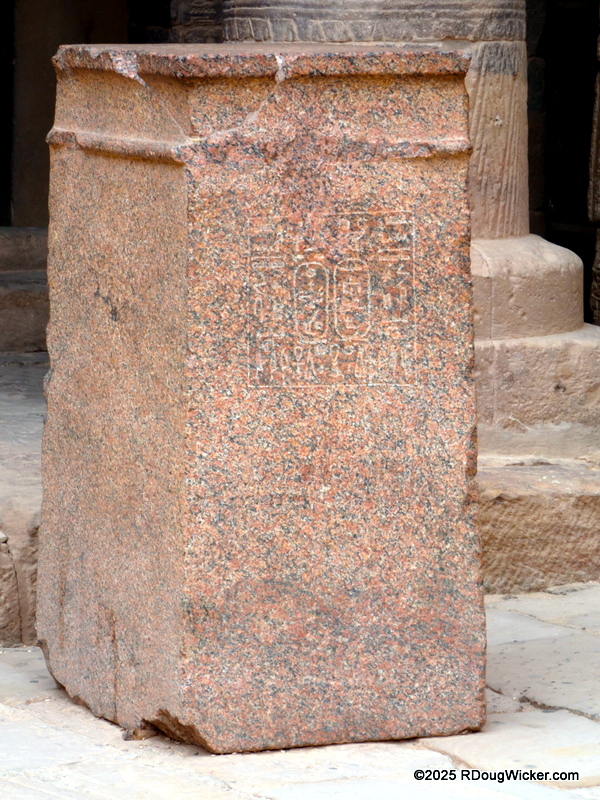
Philae Temple inscription
Greek? Nope. Roman? Guess again. Try French. It’s an inscription commemorating Napolean’s invasion of Egypt. Now for today’s photo gallery/slide show:











 Decisions — Murder in Paradise
 The Globe — Murder in Luxury
 R. Doug Wicker — Author