Remember M. Schwartz of Photo Clinic Fame? Well, M. has another request. This time M. wants to know how to take pictures requiring long exposure times without a tripod.
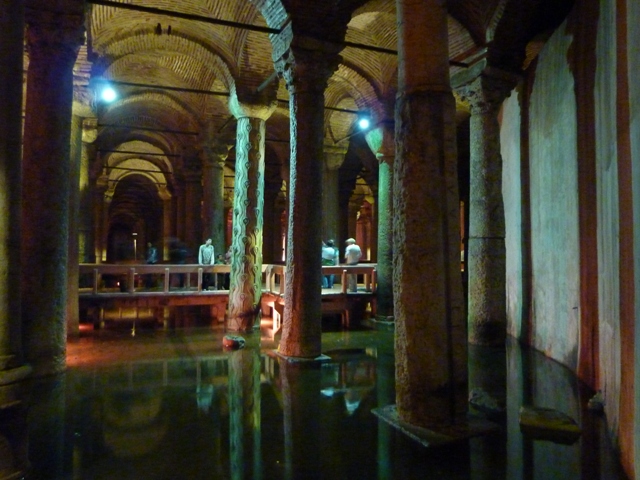
We’ve all been there, so you know what I’m talking about. You’re inside a dismally lighted medieval castle; a deep, underground cistern dating back to the Roman Empire; a cavernous cathedral illuminated only by the light streaming through stained glass; or a mosque with an intricate mosaic tile ceiling high above. Flash photography is not allowed and wouldn’t do you any good even if it were. You have no tripod available. Your only available camera is a travel zoom containing a small 1/2.33” sensor with a top useable ISO of maybe 400 . . . on a good day and then only if you’re really, really pushing it. What the heck do you do?
Well, believe it or not, that small sensor size can actually work to your advantage in creating some really stunning interior shots using only available light and while setting the ISO to 200, 100, or even lower for optimum noise reduction. That’s because that small sensor invariably comes packaged inside an equally small camera, and that small camera usually comes with two very flat surfaces—the bottom of the camera and, if properly designed with rear controls recessed, the back side where the LCD screen resides. And these little travel zooms also frequently come equipped with one very important feature that negates the need for a shutter release cable or a tripod—a two- to ten-second self-timer.
But first, a rule of thumb. I know your camera says that either the lens or the sensor is “stabilized,” and that the manufacturer claims a benefit of anywhere from 1 to 3 stops. Forget all that. Here’s the rule: If you’re at wide angle (less than a 50mm focal length in 35mm equivalent), don’t shoot hand held below 1/30th of a second. If you’re at normal to mildly telephoto focal lengths (say 50 to 135mm), you should increase your shutter speed to at least 1/60th of a second. At longer focal lengths, start looking for something to stabilize the camera if the shutter speeds falls below the reciprocal of the focal length. Now, I know, that last one was confusing as heck. In simpler terms, if you’ve zoomed in on a subject at the 35mm equivalent of a 200mm lens, your camera had better be telling you that the selected shutter speed is at least 1/200th of a second or faster. At 300mm it should be at least 1/300th of a second, and so forth. If you’re really confident with the manufacturer’s claim of, say, a 2-stop advantage with your particular camera then you can halve those times, but don’t get too pushy on it or you’ll get blurred results.
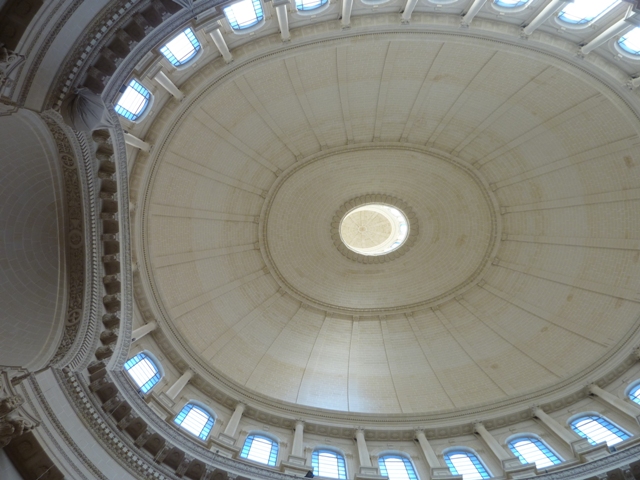
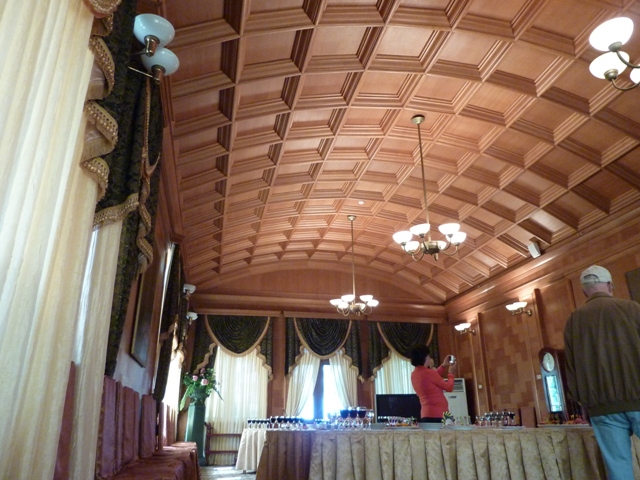
Tip One, The Ceiling: Wow. Look overhead. Isn’t that tiled mosque ceiling stupendous? Now, how do I get the shot? Set the camera’s self-timer to two seconds, the white balance to automatic, and the ISO to 100 or even lower. Position the camera, properly zoomed, on the floor directly beneath the subject of your adoration. Crouching low and offsetting to the side, out of line-of-sight of the lens, depress the shutter release button half way for a brief moment to allow the camera to focus and determine exposures settings, then depress fully. Back away as the camera begins its countdown. Wait a couple of seconds after you hear the shutter click, then retrieve the camera and check the shot. It should be rock solid clear with no noticeable digital noise. But just to make sure, you can zoom in on the details and see if they maintain their sharp crispness.
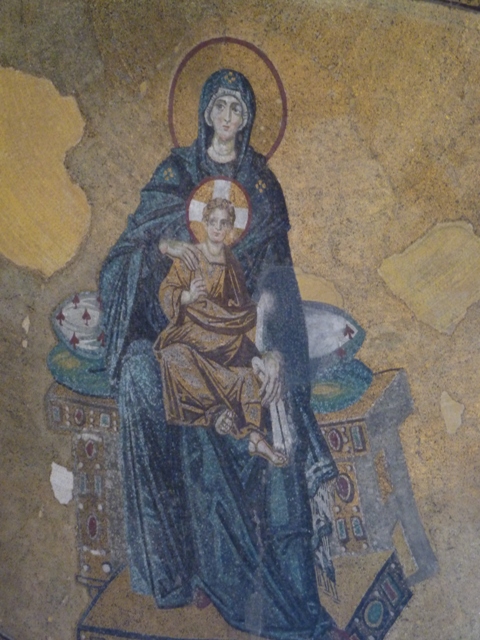
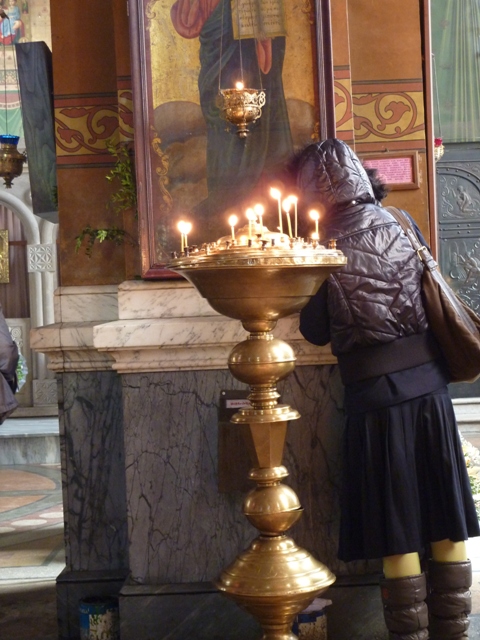
Tip Two, That Piece of Art on the Wall: Whether it’s a religious statue, mosaic, or perhaps even an action shot of a woman kissing a religious artifact, chances are that lighting conditions will not be conducive to a hand held shot. If there’s something nearby upon which you can balance your camera, then great. Set the camera as in Tip One, including the self-timer. Compose the shot from where you’ll be placing the camera. Press the shutter release as described before and get out of the way for a few seconds while the camera does its thing. Voilà. Another perfect shot. This is getting easy, isn’t it? You’re really starting to look like a pro.
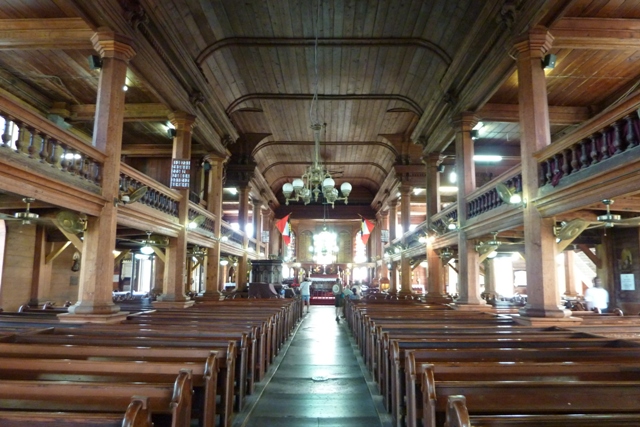
Tip Three, That Cavernous Cathedral: I don’t care what your pastor says, this is the real reason God made pews. Trust me. They’re great for this next tip. Perch the camera onto the back of the pew in front of you. Compose and snap the shot, bracing the camera perfectly still. If the back pew rail angles the lens too high or too low, try compensating by placing something (such as the camera’s own carry strap for instance) in a position below the camera that helps achieve the proper lens angle.
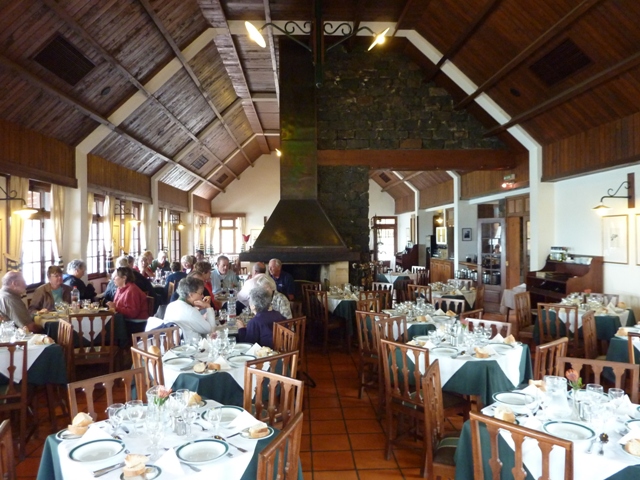
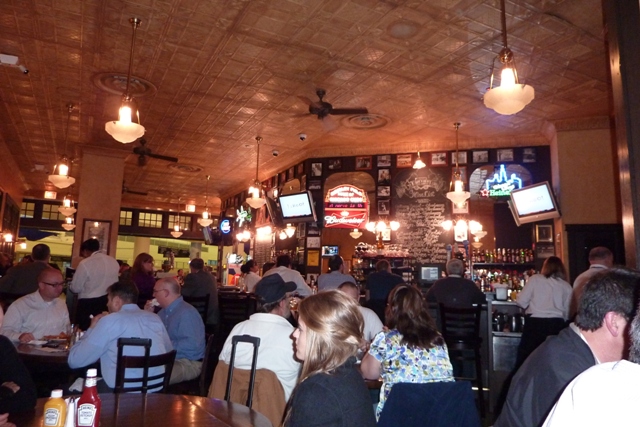
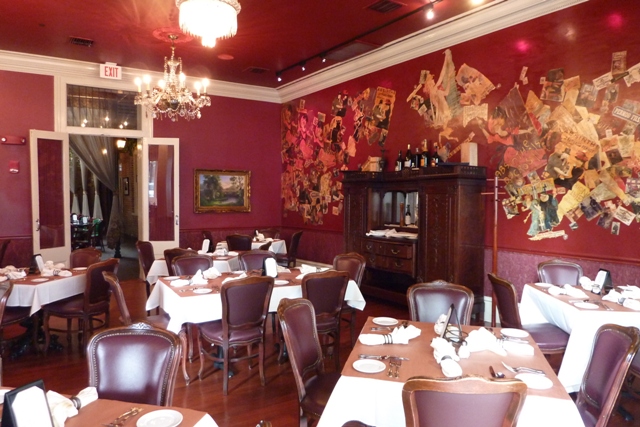
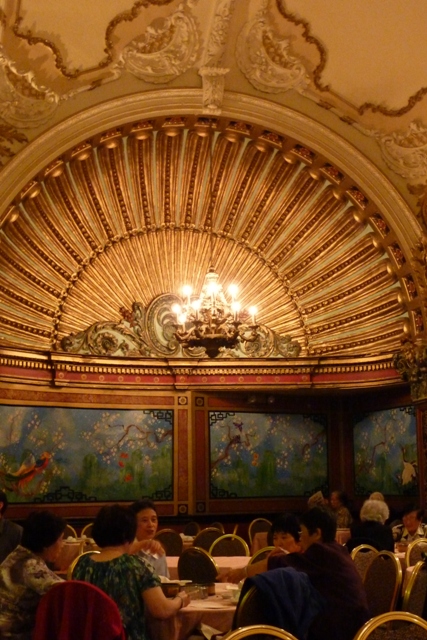
Tip Four, The Restaurant: Restaurants are big. Even if you have a flash, chances are anything beyond ten feet is going to render as a dark, ghostly shadow in your photograph. Worse, the table top is too low and the seat backs block the view from the lens. Okay, now what are you going to do? HMMmmm. Let’s look around. What’s that I see? Oh, yeah, the waiter brought me a glass of water. How convenient. Set the camera up as previously described, including the two-second self-timer delay. Perch the camera carefully atop the glass, making sure neither end is in danger of tipping into the glass (water and most digital cameras are loathe to mix; bad things usually happen when they do). Compose the shot. Use that two-stage shutter release trick from before and let go of the camera once the self-timer has activated. Check your perfect, non-flash, available-light restaurant shot and try it again if something is amiss.
Tip Five, When All Else Fails: No church pews. Nothing on which to balance even a small camera. In fact, there are so many people meandering about that they’d block your shot anyway. My goodness. This is a toughie. Actually, it isn’t, but don’t let the institution curator catch you doing this or they’ll go ballistic. Stand with your back to a wall or column and hold the camera high above your head. Now, push back until the camera’s backside is firmly braced against the wall or column. Do that two-stage shutter release and hold the button down while you count off three or four seconds. If you had the camera firmly braced and didn’t move any, your shot will be just as blur free as with the previous tips.
But by blur free, I’m not referring to moving objects. Just because your camera is rock-stable doesn’t mean that your subject is. People moving about the scene can and will blur, but that’s not necessarily a bad thing. It can add an artistic feel and a really great contrast to the intricate details lying beyond them. You’ll need to decide for yourself on a shot-by-shot basis when this occurs. Just don’t automatically delete a photograph because something moved and blurred in the foreground. You might actually have a winner despite that perceived “flaw.”
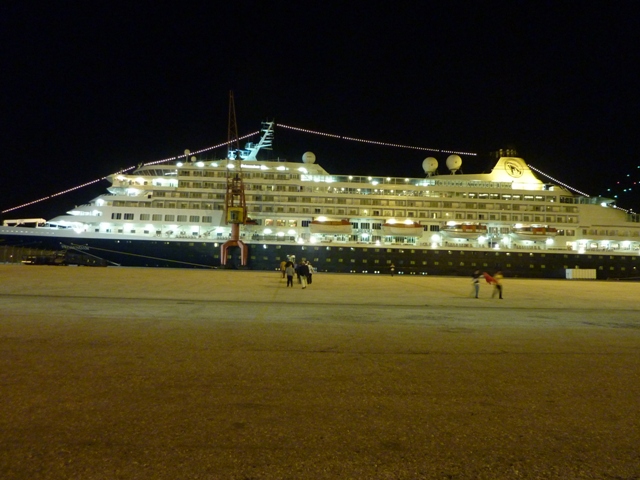
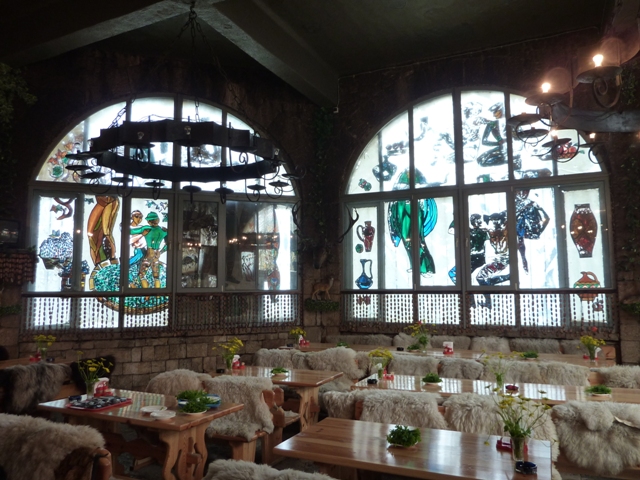
Below are photographs that were all taken using the aforementioned techniques. None have been post processed in any way, not even for straightening which is a common fix often needed whenever you have to resort to this type of shooting. They are all displayed here as they came straight out of the camera just to show you what to expect.








 Decisions — Murder in Paradise
 The Globe — Murder in Luxury

