Category Archives: R. Doug Wicker

The Williams Tour Part 1 — Old Mesilla


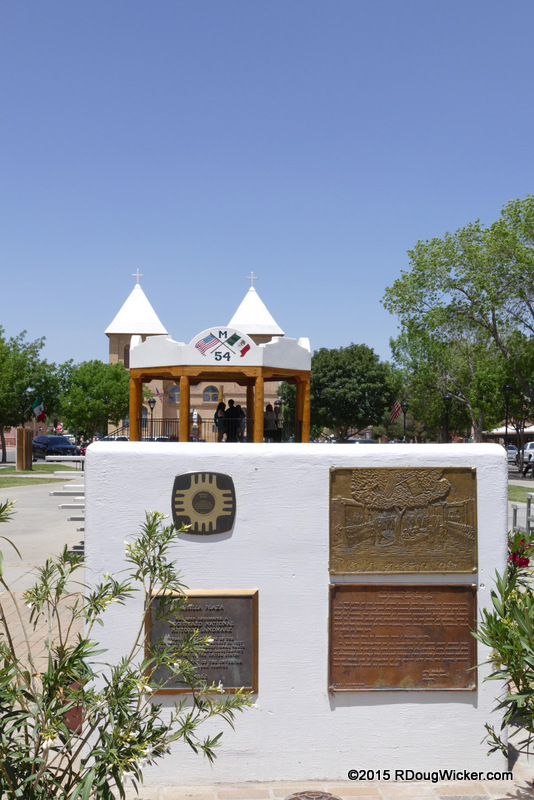
Old Mesilla Plaza

Old Mesilla Plaza

My very good friend from college, and best man at our wedding, decided to pay us a visit out here in the Wild and Wooly West.  His name is David Williams, he attended Clemson University, and he loves the Great Desert Southwest.  So when he comes out this way, we like to clear our schedule and give him a tour of the surrounding area.  This time it would be Old Mesilla, White Sands National Monument, the Franklin Mountains here in El Paso, Cloudcroft, Mission Valley, and a place I cannot believe it’s taken me almost thirty-five years to visit — Hueco Tanks State Park.  Over the next six weeks I’ll be showing you the grand tour as we showed David, with two solid weeks devoted to Hueco Tanks alone.

In Prayer

In Prayer

Today we begin with a tour of Old Mesilla, New Mexico.  Neither Ursula nor I ever tire of visiting this magical place seemingly stuck in the 1880s, and we go there frequently — usually via this mighty steed:

A streak of light, a cloud of dust, and a hearty, “Hi-yo, Burnt Sienna! Away!”

Alas, with three of us that ain’t gonna happen.  Time to roll out the ol’ sedan.
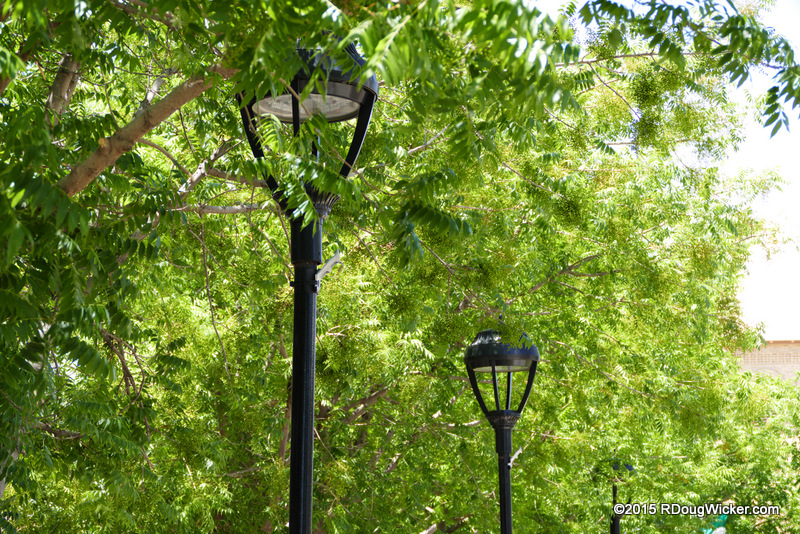
Lights and Leaves

Lights and Leaves

The preserved sights and wonderful look of old adobe buildings dating back to the 19th Century aren’t the only reason for making this trek.  The dining venues are an equal draw and the shops are incredibly quaint and in some cases pretty kitschy.

Henry McCarthy, William Bonney, Billie the Kid — Take your pick

Henry McCarthy, William Bonney, Billie the Kid — Take your pick

The big draw on Sundays, however, has to be the Basilica of San Albino.

San Albino Basilica

San Albino Basilica

And then there are all those other little photo opportunities:

Competing Spires

Competing Spires

By the way, if you’re reading this and other material authored by me on The Destinary website, this post was not “Posted on (fill in the date) | By destinary” as they’ve been erroneously claiming; this material was in fact reposted.  The Destinary have also been claiming the right to do so, without links back to the original and without full attribution (“by RDoug” and a nonworking link is not proper attribution) with a rather bizarre interpretation of U.S. copyright law in which they claim I’m responsible for changing my RSS feed settings so that they cannot skim my material for commercial purposes.  That would make reading my blog less convenient for you, which I’m not willing to do.  As such, I’ll be running this little diatribe on all travel related posts until they cease and desist, along with this:

© 2015 R. Doug Wicker (RDougWicker.com)
All right reserved — that includes you, Destinary

Final note:  Considering The Destinary is a site listed as owned by Sonia Bosquez-Platt of Indianapolis Tour & Travel, you may want to rethink doing business with her or her company.
4 Comments

Filed under Photography, R. Doug Wicker, travel, vacation

Holiday Repeat — How to Photograph July 4th Fireworks


Fireworks

Fireworks

It’s that time of year again, and here’s that perennial favorite on how to photograph July 4th fireworks:

I more and more frequently find myself using a simple point-and-shoot for much of my photographic needs, but occasionally I simply have to get out the more sophisticated equipment to get the most out of certain subjects.  For these shots I used my trusty, tried-and-true  Canon EOS 5D.  The great thing about the 5D is that it was the first “affordable” digital single lens reflex (DSLR) on the market using a 35mm-equivalent sensor.  That means that not only would all my older Canon 35mm lenses work with the EOS 5D, but they would also have the same magnification factor as they did with my 35mm film cameras of the past.

Fireworks

Fireworks

The glass I chose for this outing was my only L-series, professional grade Canon lens—my Canon 24-105mm f/4 L IS (Image Stabilized) zoom.  This is my favorite lens, and the one that fills the requirements for the vast majority of my shooting situations.  It’s just that versatile, and the f/4 aperture in conjunction with the EOS 5D’s exceptional low noise performance at high ISO settings make it a true godsend in low light situations.

Fireworks

Fireworks

Also included in my kit that night was a tripod and, of course, a remote switch.  In the old days, our “remote switches” were cable releases that screwed into a small hole atop the shutter release button.  In the digital age, they’re now electronic switches that plug into the side of the camera to allow operation of the shutter without the need to touch the camera, thus reducing the likelihood of camera shake or vibration ruining the shot.  My choice of remote switch is the Canon RS-80N3.  For tips on how to photograph in low available light without a tripod or remote switch see: Available Light Photography Without a Tripod.

Fireworks

Fireworks

Now, the important stuff—camera settings:  I set the ISO to 100 to minimize noise.  I also have Custom Function 02 (C.Fn-02) on my EOS 5D set to option 2.  But you don’t care about that.  You just want to know what it does:  This setting applies additional in-camera noise-reduction processing for all exposures over one second.  Pictures were taken in Canon raw format to allow for the most leeway in post-processing, but I believe I could have obtained pretty much the same quality if I’d set the camera to shoot in JPEG format.  White balance was manually set to “tungsten” to give a more pleasing “warmth” to the colors.  I used Canon’s “Standard” picture style to obtain the highest preset color saturation because, let’s face it, with fireworks it’s all about the colors.  The lens was zoomed to approximately 40mm to obtain a sufficient amount of width to capture the action, yet still narrow the range enough to bring out detail from the bursts.  Exposure times were mostly in the one- to four-second range using the aforementioned remote switch, but some of the photographs were exposed for up to eight seconds with no visible degradation in quality or increase in detectable noise levels.  The lens aperture was stopped down to f9.0.  This was an arbitrary decision on my part, and it turned out to be almost exactly what I needed.  The aperture was wide enough to capture even the smaller sparkles, yet not so wide as to blow out detail in the brighter areas.  Indeed, in post processing I found that I could comfortably increase highlights without fear of blowing out details and colors.

Fireworks

Fireworks

The camera was placed in portrait orientation atop the tripod to take full advantage of the vertical travel of the rockets.

Fireworks

Fireworks

Post processing was kept to a minimum.  Indeed, after conversion to JPEG, the only post processing I did were minor tweaks in saturation, bumping up the highlights, and some creative cropping to increase the visual impact of the shots.  Conversion from raw was performed using Canon’s Digital Photo Professional, which I also used to correct lens aberration prior to conversion.  Post processing was done with Google’s Picasa photo editing software, which is available as a free download.

Fireworks

Fireworks

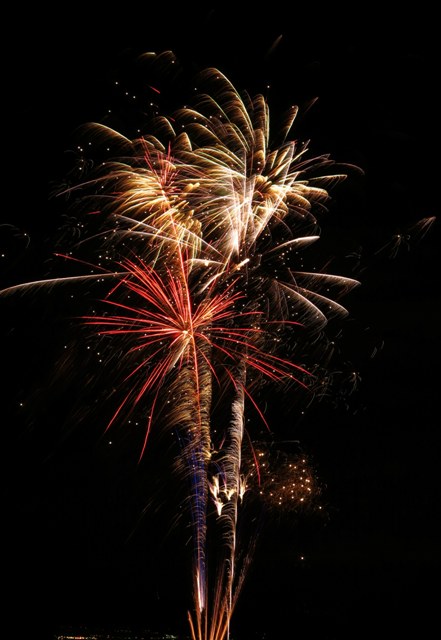
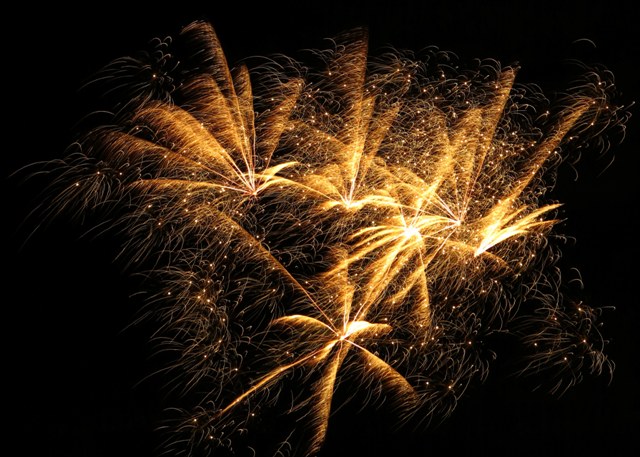
And here are the results:


1 Comment

Filed under Photography, R. Doug Wicker

Fun Photo Friday — Take Me Out to the Ball Game


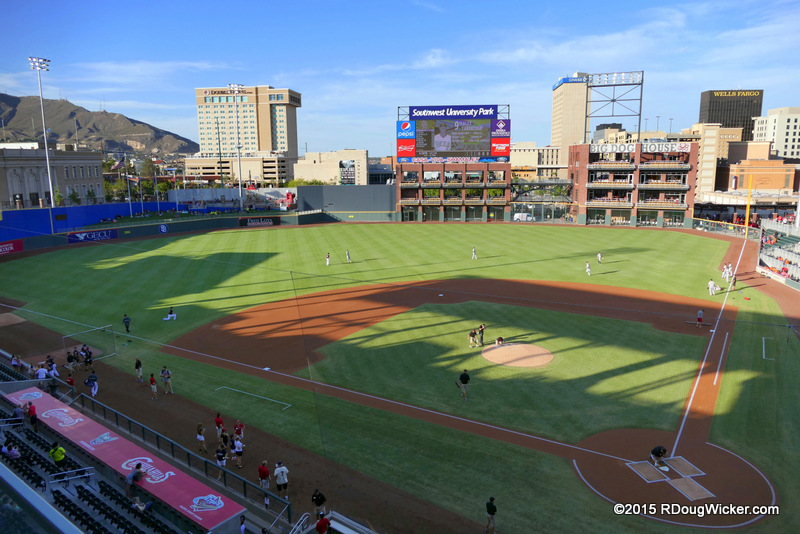
Daytime photograph is easy, but . . .

Daytime photograph is easy, but . . .

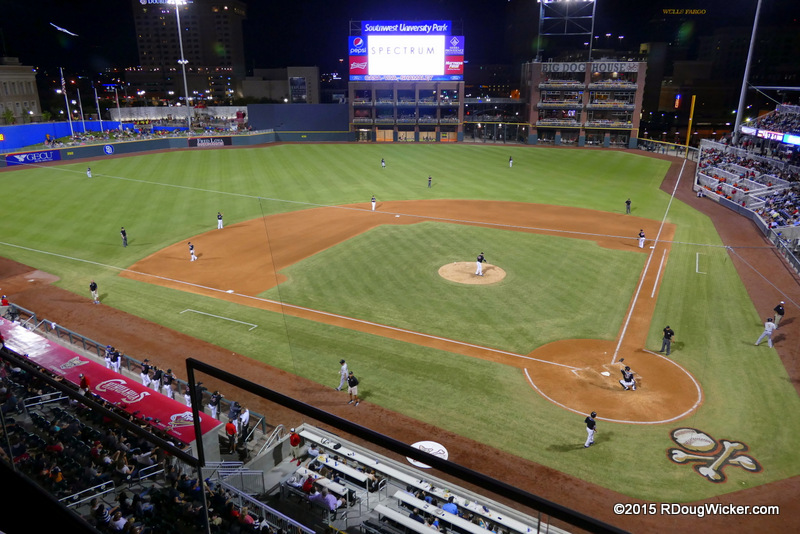
There are some tricks to capturing a sporting event, and it gets really iffy in nighttime, artificial lighting situations.

. . . nighttime?  Not so much.

. . . nighttime? Not so much.

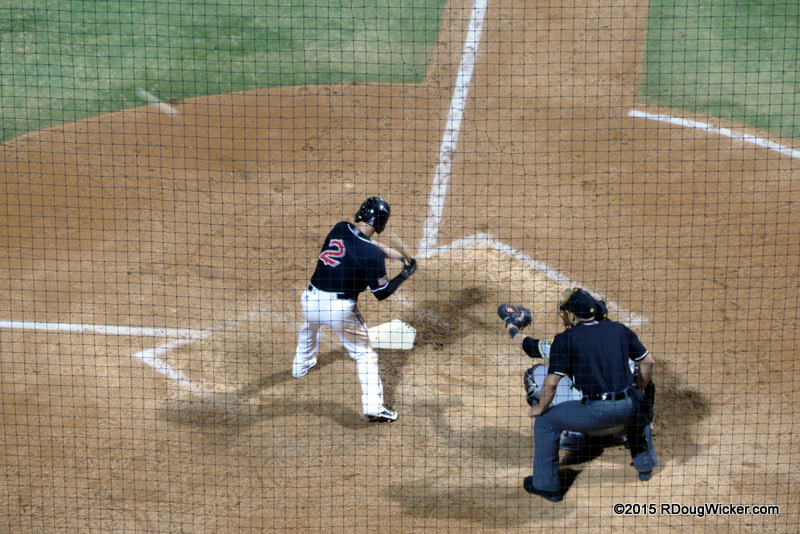
You have to balance your camera’s sensor limitations against the need to freeze the action.  Remember, the smaller the sensor the noisier the image at higher ISO settings.  This night I was using a Panasonic FZ1000 with a 1″ sensor because I needed the longer telephoto reach over my 1.5″ Canon G1 X, but that meant I was going to be limited to around ISO 800.  That in turn meant I was not going to be able to freeze the action.  Most of the shots you see here were taken at 1/80th of a second.  You have to make choices, and I chose image sharpness over freezing the action.

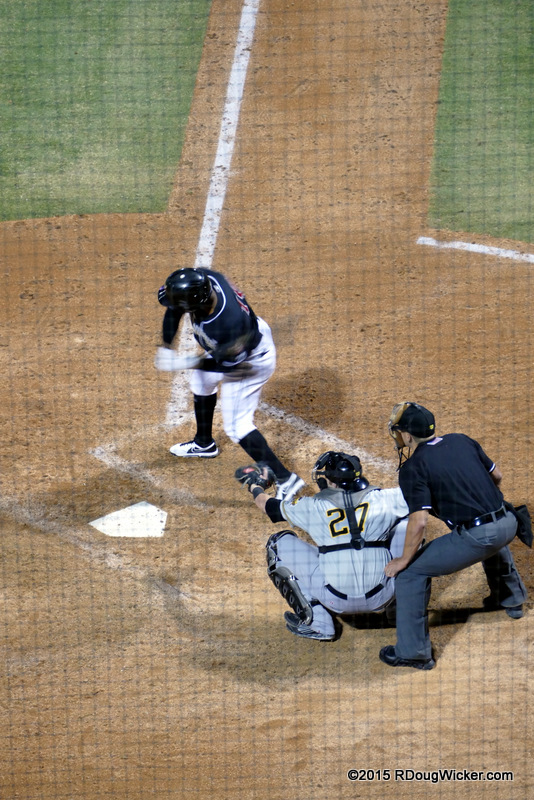
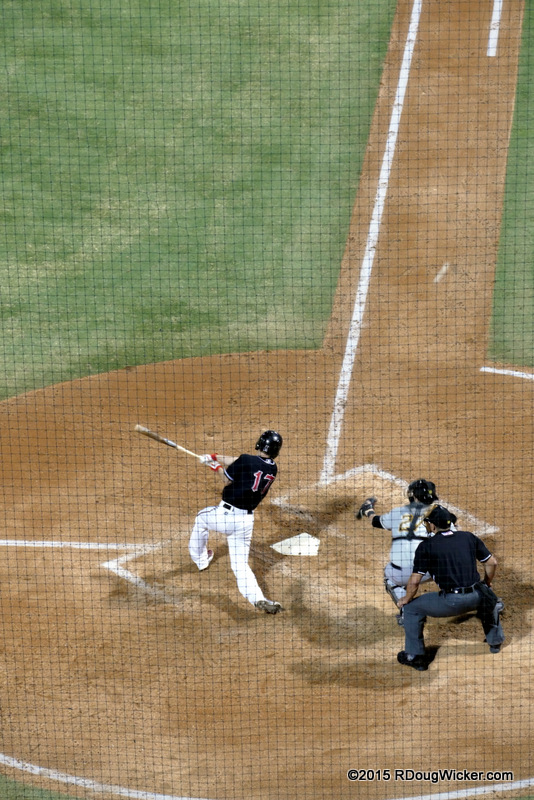
Stiii—RIKE ! ! !  And the bat disappears in a blur

Stiii—RIKE ! ! ! And the bat disappears in a blur

My location also placed a severe limitation on me.  I was behind the safety netting, and auto-focus tends to focus on the nearest object.  So this night I found the players and field were softened at telephoto distances, but that the netting was distractingly sharp.  This is the time you simply must switch to manual focus if your camera has that capability.  Fortunately, the FZ1000 does.

Manual focus through the safety netting

Manual focus through the safety netting

In action photography it’s easy to guess when to press the shutter release if you’re panned back to see the entire scene.

This type shot can easily be timed completely through the viewfinder

This type shot can easily be timed completely through the viewfinder — the foul ball is the blurred white streak midway between the pitcher and batter

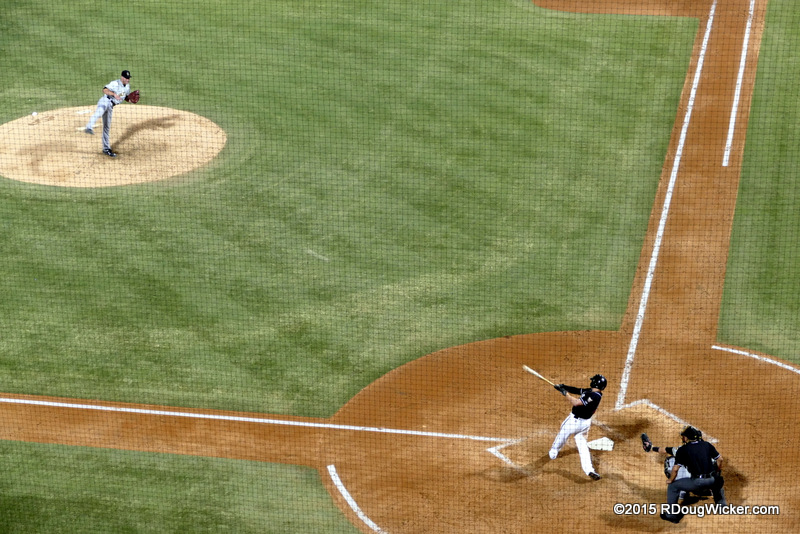
But what if you’re zoomed in on the batter and can’t see when the pitcher is releasing the ball?  In this case you have get creative using both eyes.  Glue one eye to the viewfinder or LCD screen (viewfinder is better when manually focusing, obviously) while keeping the other eye open and watching the pitcher.  This is also a skill you want to acquire in firearms shooting, so it has other applications.  Do the both-eyes-open thing and you can get this kind of perfectly timed shot (the ball is the white streak to the upper left and the bat is mildly blurred at the start of the swing):

Keep one eye in the viewfinder and the other on the pitcher

Keep one eye in the viewfinder and the other on the pitcher

Here’s another example from Wednesday’s post using this technique:

Incoming!

Incoming!

And another:

Foul ball

Foul ball

Now for some favorite shots from this enchanting evening courtesy of our wonderful neighbors Randi and Jim Brewer:

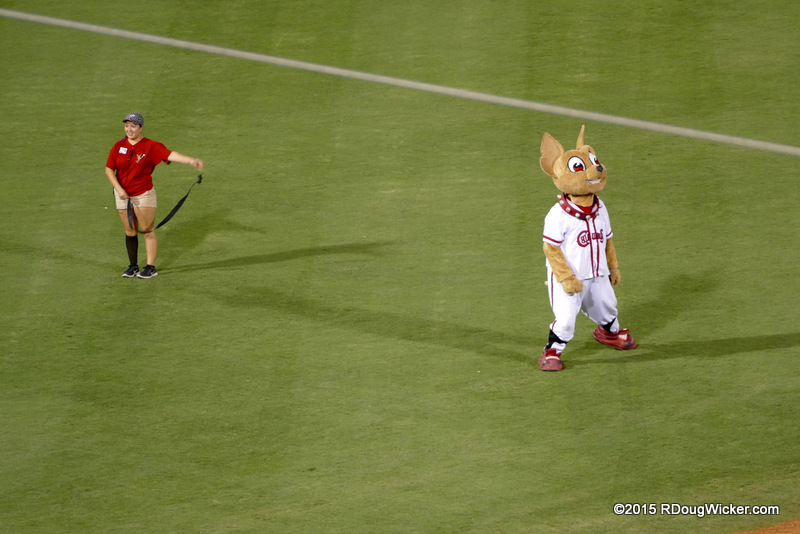
Off his leash

Off his leash

A happy fellow

A happy fellow

El Paso skyline

El Paso skyline

1 Comment

Filed under Photography, R. Doug Wicker