While the feluccas and riverboats might be fascinating to watch, and the mosques fun to photograph, just the River Nile shoreline held some interest for me as well. There is much agriculture along the riverbanks, including date palm orchards:
Date palm orchard
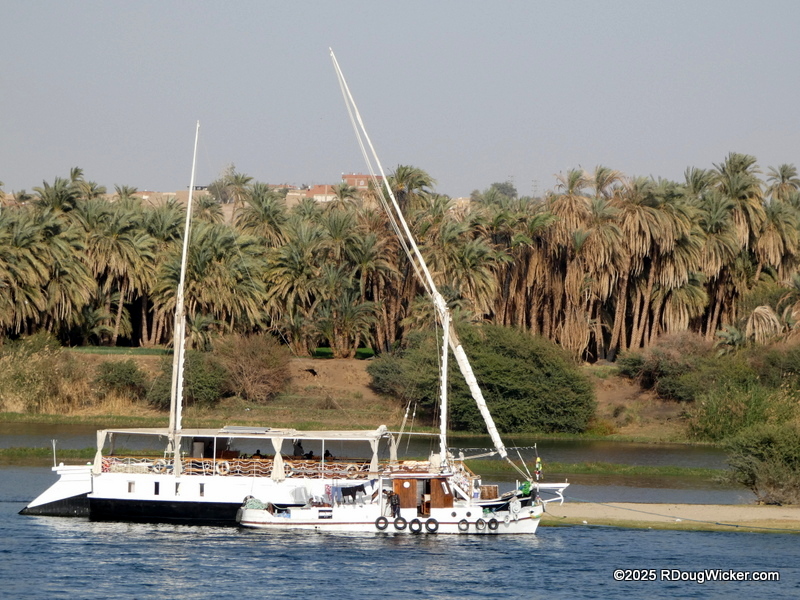
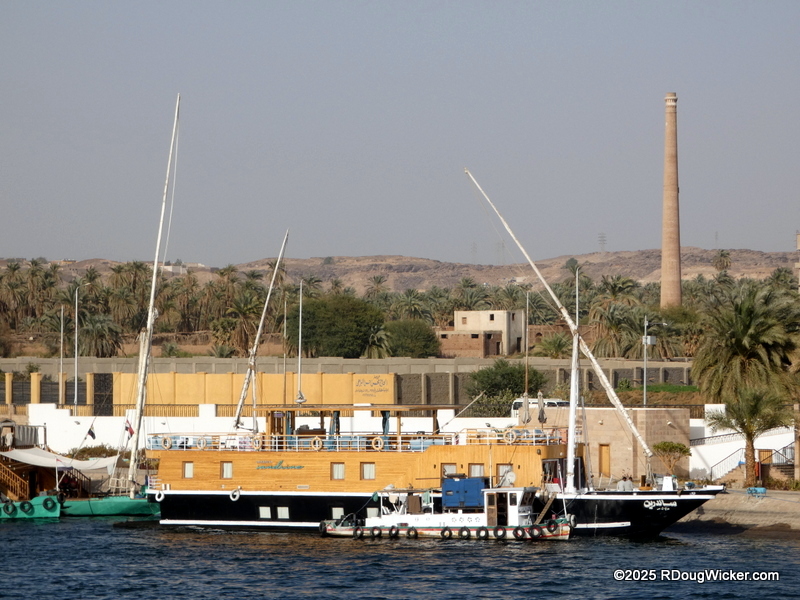
There are even felucca-inspired riverboats plying these waters:
A riverboat cruiser sporting two lateen sails
I don’t know how hight that riverboats rates, but I do know that Jaz Cruises and the Jaz Celebrity are highly rated. Ursula and I certainly had no complaints.
Jaz Celebrity awaits our return
Jaz Celebrity atrium stained dome
Next week, following this week’sFun Photo Friday, I’ll be taking you on a visual journey of our visit to Kom Ombo and Edfu. Until then, here’s some more River Nile cruise images:
After overnighting in Aswan and visiting Abu Simbel, we made it back to Jaz Cruises‘ riverboat Jaz Celebrity to begin our Nile cruise to Luxor on 27 February in the afternoon. The pictures you’ll see today and Wednesday weren’t all taken on that day, but were spread out over the course of the cruise. I did this to give you the flavor of this segment of the River Nile, so I hope you won’t mind the jumping around. And much of that flavor comes from the traditional Nile sailboat, the felucca. The most distinctive and recognizable feature of the feluca would, of course, be the triangular lateen sail. You’ll find some Nile feluccas may have two of them, but most often you’ll see feluccas sporting only a single lateen:
Single lateen felucca
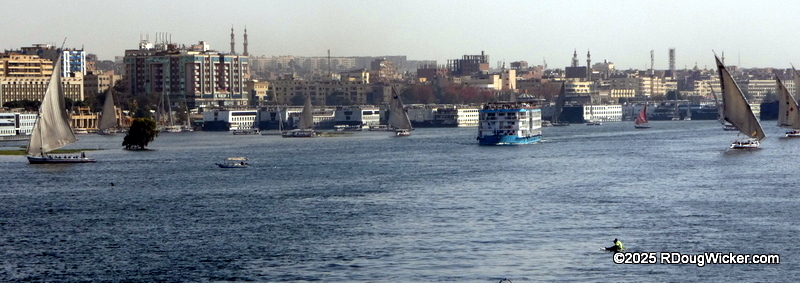
Feluccas everywhere
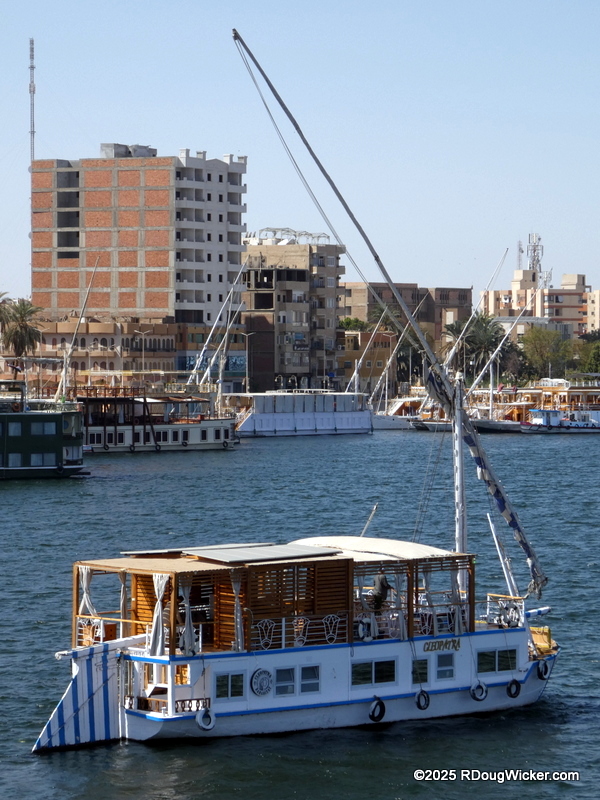
You’ll also see a lot of riverboats plying the River Nile. Indeed, these boats are probably the second most common vessels you’ll see after the feluccas.
Riverboat Mania
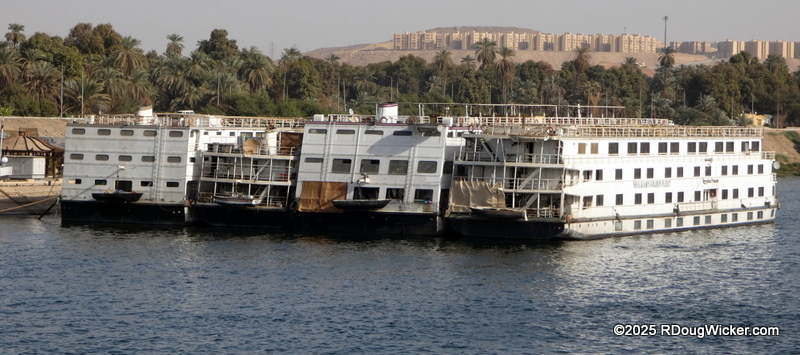
By the way, if you’ve never traveled by riverboat, you may be wondering how these things dock along the banks considering the limited number of mooring points available. And how do you get load passengers onto three or four boats when there’s only one moor? Well, you do it by boarding the boat alongside the shore, then passing through it and each subsequent boat until you arrive at your temporary home. Look at this next image. If you’re traveling on the boat on the right, you enter the boat on the far left and traverse through the two boats in the middle to gain access:
Pass-through boarding
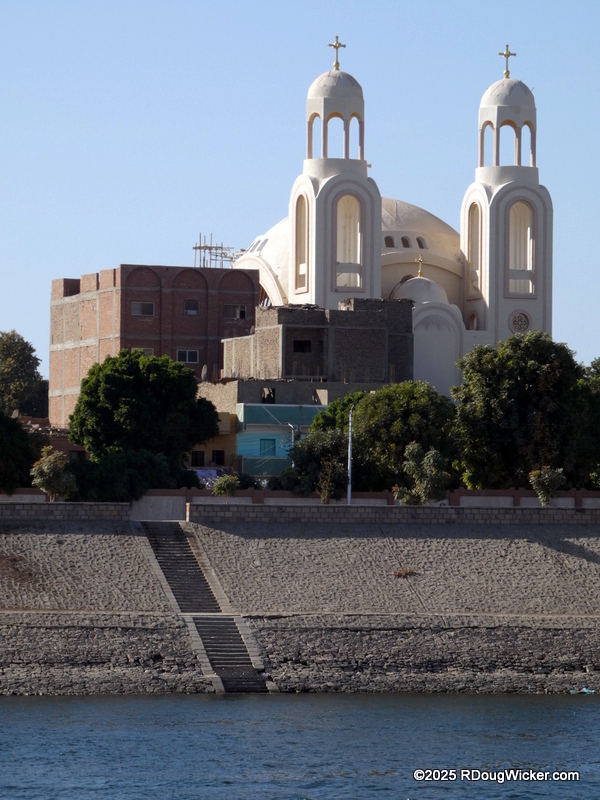
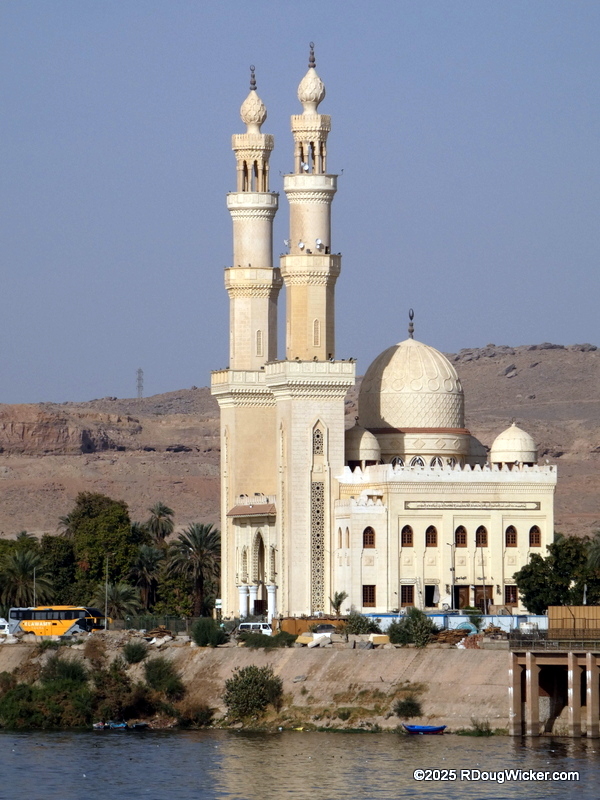
But feluccas and riverboats are not the only things to see and admire. You’ll find many a spendid mosque:
A mosque just north of Aswan
Are you wondering how a riverboat appears while under way? Wonder no more:
Statues of Ramses II, a.k.a., Ramesses the Great; Abu Simbel
One thing about Abu Simbel I neglected to mention Monday or Wednesday is an interesting factoid, but first I have a little riddle for you. Are you ready? Well, then, here goes:
Question: How do you hide a couple of massive temples this enormous in size?
Answer: No need. The Egyptian desert will hide them for you.
What do I mean by that? I’ll explain in a moment, after today’s photo gallery/slide show:
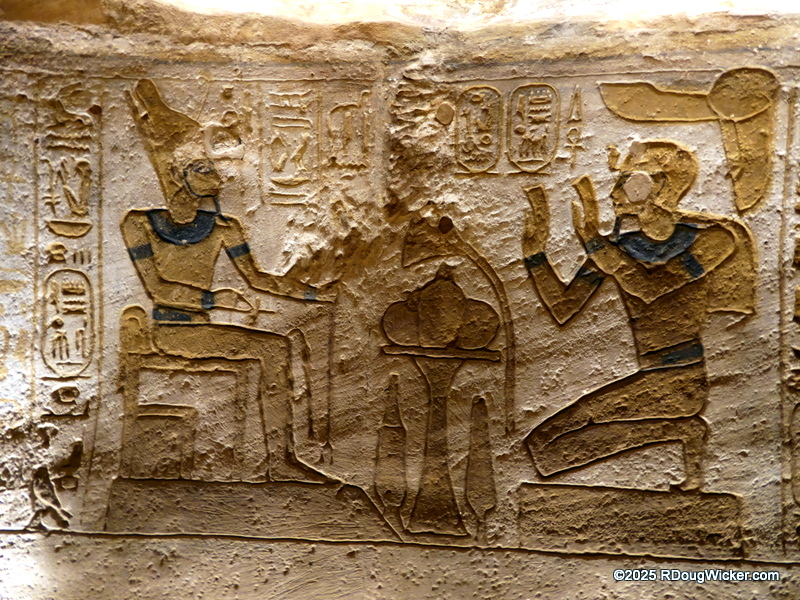
Now for an amazing fact: Abu Simbel eventually completely disappeared beneath a massive sand dune. Indeed by the 6th century BC., sand had already buried the gigantic statues of Ramses the II up to their knees, and the whole comlex became lost to the “sands” of time and the collective European memory. It was not until March 1813 that Swiss geographer Johann Ludwig Burckhardt came across a portion of the Small Temple and the frieze at the top of the Great Temple, thus “rediscovering” Abu Simbel.









 Decisions — Murder in Paradise
 The Globe — Murder in Luxury
 R. Doug Wicker — Author