
Spring is just around the corner, so you don’t have a whole lot of time left to sample this absolutely delectable cool-weather dish. Not that étouffée can’t be eaten any time of year, it’s just that étouffée seems especially up to the task of taking the chill out of your bones while at the same time providing you a hearty yet undeniably healthy meal that doesn’t taste healthy in the slightest.
Étouffée may sound French, but it’s probably the quintessential example of Louisiana cooking at its finest. The word itself is indeed French, and roughly translates to ‘smothered,’ which in Louisiana-speak means to cook something in liquid until it’s reduced to a thickened gravy or stew-like consistency.
What you’ll need:
The Roux Stuff:
5 Tbsp unsalted butter
5 Tbsp all-purpose flour
The Disgustingly Healthy Stuff:
1 large or two small yellow onions—skinned, trimmed, and quartered
2 large green bell peppers—cored, seeded, and quartered
3 to four celery stalks with leaves—cut into two-inch pieces
1 large bunch of parsley—roughly chopped with stems (trim just the very end of the stems and discard)
1 to two bunches of green onion—roughly chopped, including most of the long, green parts
4 or more (up to half a head) cloves of garlic
The Liquid Stuff:
1 16oz can of crushed tomato
1 cup dry white wine (examples: pinot grigio, sauvignon blanc)
1 to 1¼ cups chicken, turkey, or beef broth
The Tasty Stuff:
2 12oz packages of crawfish tails or an equal amount of deveined shrimp
The Super-Secret Spice Blend Stuff:
Sorry—it’s a super-secret
Just kidding
1 Tbsp whole thyme leaves
1½ Tbsp Tabasco
1 Tbsp Worcestershire
1 tsp whole basil leaves
1 tsp freshly ground black pepper
1 tsp salt
2 tsp cumin
¼ cayenne pepper
2 bay leaves
In a large Dutch oven, toast the flour in the melted butter, stirring frequently.

You'll roux the day
While the flour is toasting, put batches of The Healthy Stuff and chop in a food processor. Don’t overdo this, and process each vegetable separately to avoid overcrowding the processor. Use the pulse feature, and stop when the vegetables are still course and in discernible chunks, except for the parsley and garlic. For these, the finer the chop the better.
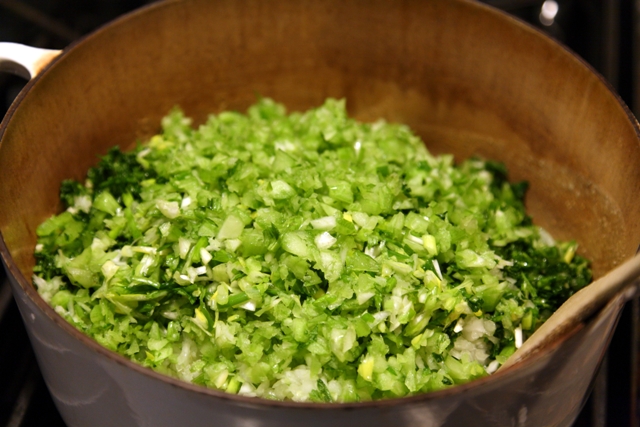
It may look healthy, but wait until you taste it
Still stirring that butter/flour roux mixture, I hope. Is it tan, almost a peanut butter brown, yet? Good. Time to throw in the vegetables and cook them until they’re nicely softened and thoroughly coated in the roux.
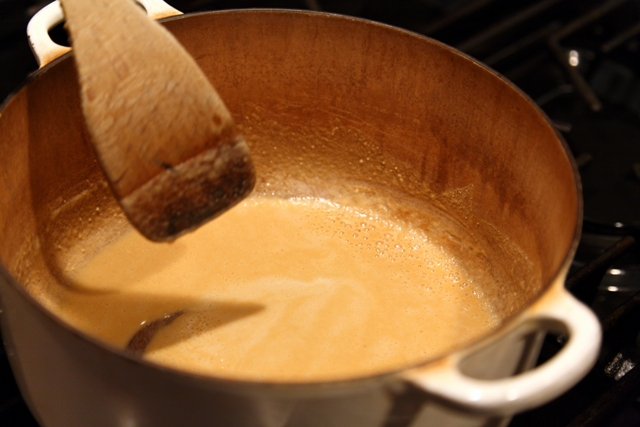
No, it's not peanut butter

It's still green . . . but not for long
Slowly stir in the broth, white wine, and the crushed tomatoes.

The green is going away

Don't whine—here's the wine
Once the liquids are blended into the mixture, add the Super-Secret Spice Blend. Bring to a simmer and cover. Simmer, stirring occasionally to prevent scorching, for forty-five minutes.

The Super-Secret Spices—Yummy
While this is going on, make your rice. I use parboiled long grain white (such as Uncle Ben’s) and melt in some butter after the rice is cooked.

You Know it's Done when it Looks Like Mud
Add your crawfish tails and simmer for another twenty minutes. Or, if you’re using shrimp, let them simmer for around ten. Shrimp get a bit tough if they’re overdone.

Now for the Tasty Stuff

Can You Smell It?
Serve on oven-warmed plates (about 200°) over a bed of rice accompanied by a nice glass of sauvignon blanc or pinot grigio.
Hint: Make the base étouffée, sans shellfish, the day before and refrigerate. The spices meld and better permeate the vegetables if left overnight. About forty-five minutes before the guests arrive, start getting the étouffée back up to a simmer and add your shellfish just as the guests are arriving. Serve as above ten to twenty minutes later, depending on whether you used shrimp or crawfish.


 Decisions — Murder in Paradise
 The Globe — Murder in Luxury

