Category Archives: Firearms

Ruger Mini-14 300 AAC Blackout First Impressions — A Shooting Review


Ruger Mini-14 300 AAC Blackout

Ruger Mini-14 300 AAC Blackout

In the past several weeks Ruger has released the latest version of their venerable, reliable Mini-14. No, it’s not another variation of the classic Ranch Rifle. It’s also not an addition to Ruger’s highly accurate Target models. Instead, there’s a new entry into the Mini-14 Tactical line, and this addition has me very excited because Ruger has never before offered a Mini-14 in this caliber — the incredibly versatile, suppressor-friendly 300 AAC Blackout.

Ruger Mini-14 300 AAC Blackout

Ruger Mini-14 300 AAC Blackout

What is 300 AAC Blackout ammunition? First, a little history. In 1962 the U.S. Army began deploying as their primary weapon the M16 chambered in NATO 5.56x45mm, which is for all practical purposes an extremely hyped-up .22 caliber round (.223 to be exact) that packs a lot of punch out of the M16’s original 20-inch/508mm barrel. When the Army found that most engagements were inside of 100 yards/92 meters, and many modern battlefield engagements are in an urban setting, the Army opted to reduce the M16’s barrel length to something more suitable to what they were encountering. The result is the M4, a descendant of the M16 with a shorter 14.5inch/370mm barrel.

Problem is that loss of 5.5 inches/128mm adversely impacts the effectiveness of the 5.56 round. Not a lot, but enough. Then there’s the inability to properly suppress a supersonic round, which is something our Special Forces like to do on occasion.

This limitation and others led Advanced Armament Corporation to look at the existing M4 and see if they could come up with something a bit better. What AAC came up with is probably the most versatile round ever produced — the 300 AAC Blackout. The 300 BLK, as it is more commonly known, comes in everything from a 110-grain/7.13-gram supersonic round to a 220-grain/14.26-gram subsonic round with perhaps dozens of intermediate loads available in between these two extremes.

But the advantages don’t stop there. The 300 BLK can use the existing M16/M4 lower and M16/M4 magazines with only a simple swap out of the upper. Additionally, the 300 BLK offers better performance out of a 9-inch/229mm barrel than the 5.56 can achieve out of the M4’s 14.5-inch/370mm barrel.

How does all this translate to the civilian world? It means you have a weapon that is suitable for everything from medium game hunting, to plinking, to serious target practice at intermediate distances, to home defense with suppressor capability all in one convenient package. That’s pretty versatile indeed.

All this versatility also means that U.S. forces can switch from longer-range supersonic rounds to suppressed subsonic rounds merely by attaching a suppressor to the end of the barrel and swapping out the ammunition in their magazines.

Threaded Barrel and Flash Suppressor

Threaded Barrel and Flash Suppressor

Beyond military applications and up until the release of this new Mini-14 the 300 AAC Blackout has been mostly aimed at the existing civilian AR market (civilian semiautomatic versions of the M16/M4 platform). Not anymore. Now for the first time it can be used in the proven and arguably more reliable Garand-style action of the Mini-14. But if you’re looking for reliability, read on for my review of the worst ammunition I have ever encountered — Remington’s UMC 120-gr OTFB (Open-Tip, Flat-Based) 300 AAC Blackout supersonic ammunition.

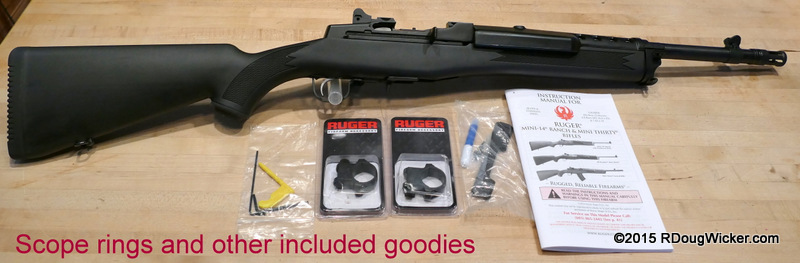
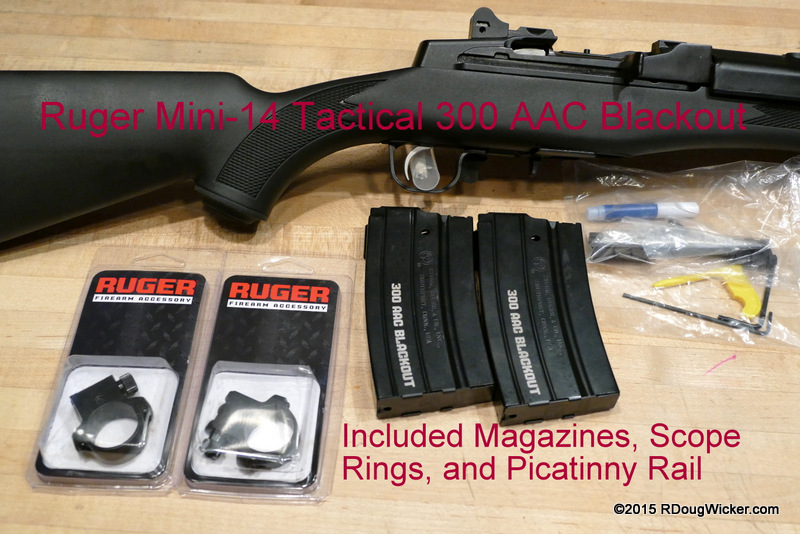
Just some of what’s in the box:

  • Two 20-round 300 AAC BLK magazines (Unlike the AR market, Ruger has chosen to make their Mini-14 300 AAC BLK incompatible with existing Ruger .223/5.56mm magazines to prevent potentially catastrophic cross-loading of ammunition) (UPDATE:  Thanks to the guys over at RugerForum.com, and contrary to information posted on the ShopRuger website, I’ve since discovered that this is incorrect.  The magazines are indeed compatible.  Apparently Ruger claim otherwise in order to preclude customers from loading wrong caliber ammunition between differently chambered Mini-14s.)
  • Scope rings
  • Picatinny rail
  • Suppressor-ready threaded barrel with flash suppressor installed
  • Hex wench for iron sight adjustments
  • Lubricant
  • Safety lock
What's in the Box

What’s in the Box

Close-up of Accessories

Close-up of Accessories

How does it shoot? When the ammunition works, pretty darned good. Out of the box and with no adjustment of the sights. I was able to score fairly tight groupings within around six to eight inches of the intended point of impact at an estimated range of about 60 feet/18 meters. (UPDATE:  Bear in mind that I was testing here for function rather than accuracy.  This grouping was done with the included iron sights, straight from the box, rather than a scope.  Additionally, the rifle was not benched for accuracy.  In my future in-depth review, I suspect groupings should fall well within two-inches at 100 yards, but this has not yet been confirmed.)  Recoil is surprisingly light. Recovery and reacquisition of the target was quick and effortless. The trigger is good, but somewhat shy of great. The trigger is definitely better than on a Beretta CX4 9mm carbine, but this is a longer range weapon so that should be a given. The manual safety is easy to reach and to manipulate with the trigger finger, but deactivation does require insertion of the trigger finger into the trigger guard — make certain the weapon is pointed in a safe direction and on target before deactivating it. The installed iron sights have protective ears for both the front blade and the rear aperture. Sight adjustments are available for both windage and elevation using the included hex wrench.
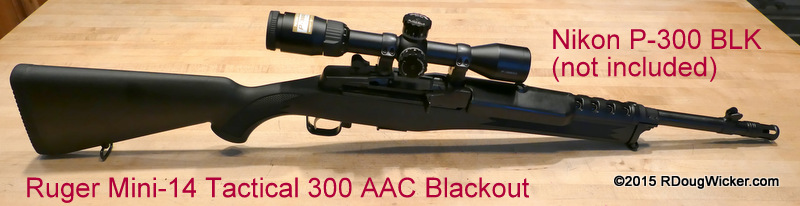
Ruger Mini-14 300 AAC Blackout with Nikon P300 BLK

Ruger Mini-14 300 AAC Blackout with Nikon P300 BLK

Disassembly, cleaning, and reassembly is fairly straightforward.  It’s certainly much simpler than, say, an M1911A1, but not as simple as most modern handguns.  All you need is a ¼-inch punch to break down the rifle, and Ruger has put up videos on YouTube to walk you through it all.
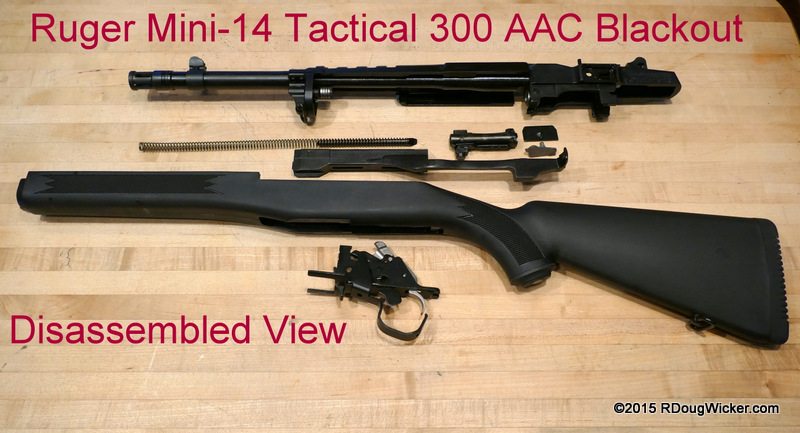
Ruger Mini-14 300 AAC Blackout disassembled
Ruger Mini-14 300 AAC Blackout disassembled

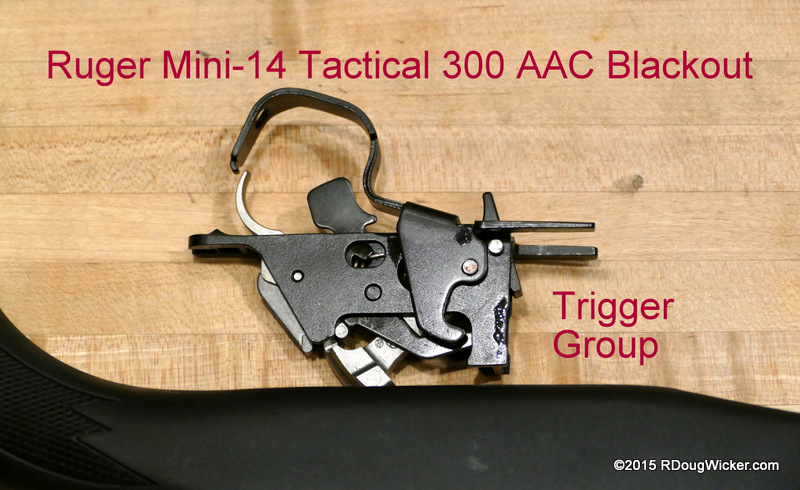
Mini-14 Trigger Group
Mini-14 Trigger Group

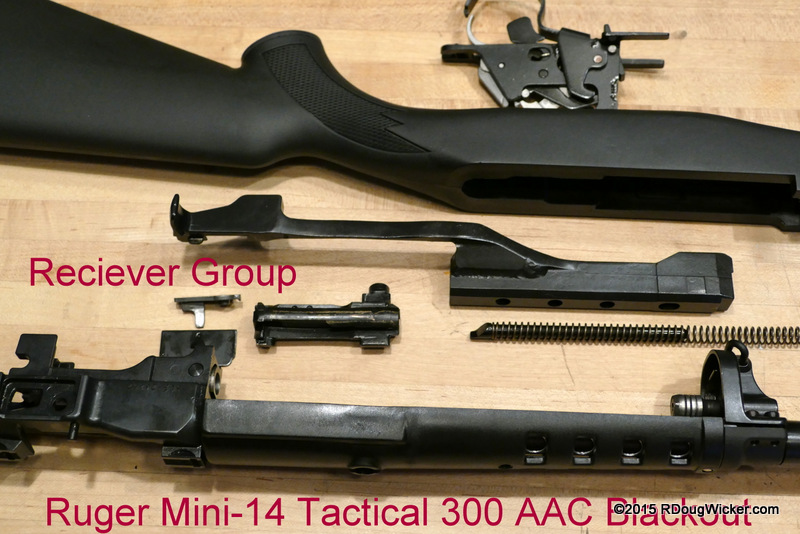
Mini-14 Receiver Group

Mini-14 Receiver Group

A quick word about the Garand-style gas operating system of the Ruger Mini-14 300 AAC Blackout: This system has been carefully tuned at the factory to handle unsuppressed supersonic loads and suppressed subsonic loads. Further adjustments not possible at home, and unnecessary at any rate as long as you remember to run suppressed with subsonic ammunition or unsuppressed with supersonic loads. Failure to follow this basic advice may result in unreliable ammunition feeds into the rifle. As I don’t (yet) have a suppressor, I cannot validate for you the reliability of the Mini-14 300 AAC Blackout using subsonic loads.

Rotating Bolt
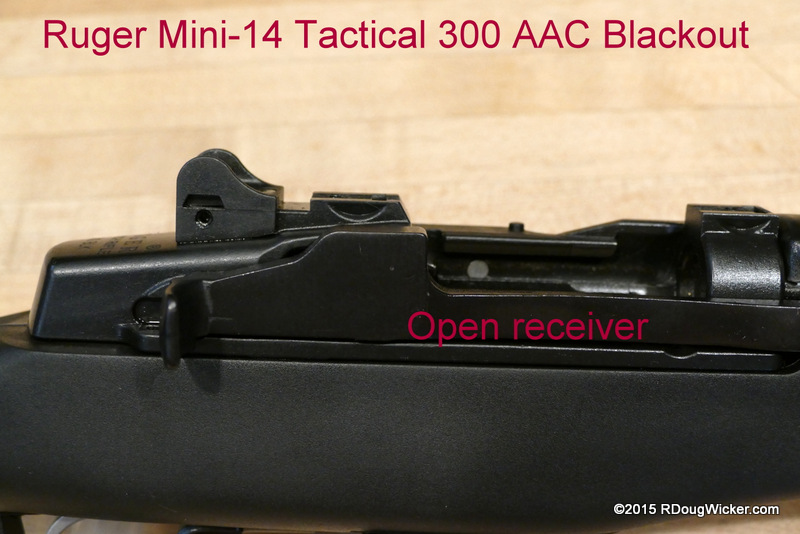
Rotating Bolt

Ruger Mini-14 300 AAC Blackout

Ruger Mini-14 300 AAC Blackout

Now for the ammunition. The first box of supersonic Remington UMC 120-gr OTFB 300 AAC Blackout ran without drama when inserted ten rounds at a time into one of the included 20-round magazines. After my good friend David Williams and I fired ten rounds each I then loaded up the same magazine with a full twenty rounds.

Result: Repeated blown primers resulting in jamming of the weapon. Never in my entire shooting life have I ever had so much as even one blown primer, so it took me a while to realize what was going on, but in twenty rounds I had somewhere in the vicinity of five primers blow out of their respective casings. Later disassembly of the rifle for cleaning and inspection revealed no damage to the rotating block and firing pin, but Remington definitely got an earful on their ammunition and the remaining two boxes will be returned for evaluation. The lot number, for anyone interested, was A333-7 0360-1, but from my experience I’m not going to trust any Remington 300 AAC Blackout ammunition regardless of lot number.  (UPDATE:  Remington claim that their ammunition was not at fault here, and instructed me that the blown primers indicated a problem with the rifle.  I will report back on this in a future in-depth review, but right now I’m more inclined to suspect bad ammunition rather than the rifle, as I can find no reports of similar incidents with other Mini-14 Blackouts.)

Unfortunately my Nikon P-300 BLK rifle scope did not arrive in time to make this first outing. This is a 2-7x32mm scope with a BDC (Bullet Drop Compensating) reticle optimized for both supersonic and subsonic BLK 300 rounds. Nikon supplies online a nifty Spot-On Ballistics Match Technology that allows you to select the scope magnification (2x to 7x for the P-300) ammunition brand and load, and then supply you with the bullet drop compensation figures for each point contained in the scope reticle. Once you’ve established these parameters, you can then make a print-out to take with you into the field. Here’s the reticle sighting data for Remington 125-gr Premier Match OTM 300 AAC Blackout ammunition at a range of 25 yards, zero-in range of 75 yards, with the P-300 set to 7x (you’ll note that 450 yards is entirely within range of this load, and 600 yards is not out of the question):
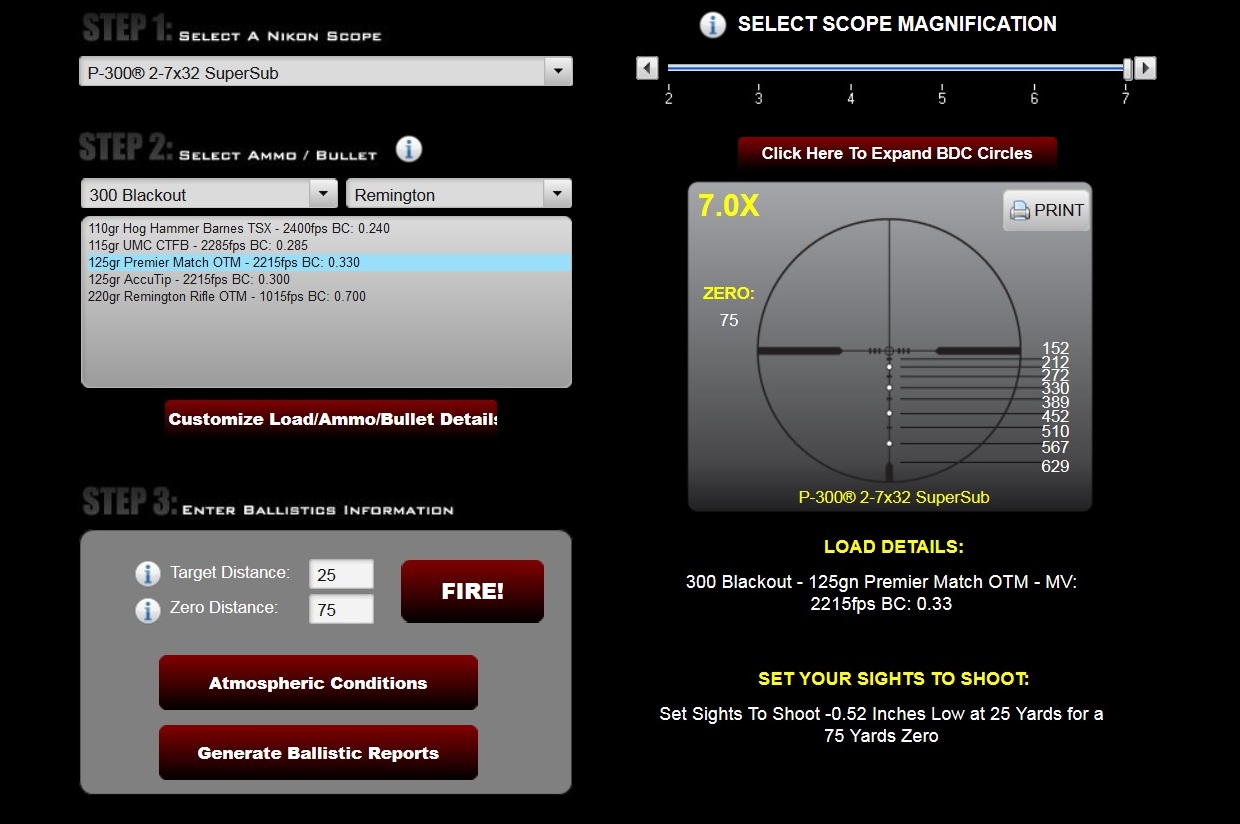
Nikon Spot-On BDC Technology

Nikon Spot-On BDC Technology

Installation of the P-300 BLK using the scope rings included with the Mini-14 was fairly simple and straight forward. I did figure out one nifty trick, however. First attach only the front scope ring to the P-300, but don’t tighten the top of the ring just yet. Next place the scope ring on a flat surface. Use a small level and check for level by placing it horizontally across the windage adjustment turret, turn the scope until level is achieved, and tighten down the top ring. Now install the rear scope ring onto the Mini-14, then position the front ring/scope assembly. Place the rear top scope ring in place and tighten down. This was much easier than following the Ruger instructions for scope mounting, and it assured that the reticle would be perfectly level once the scope was installed.
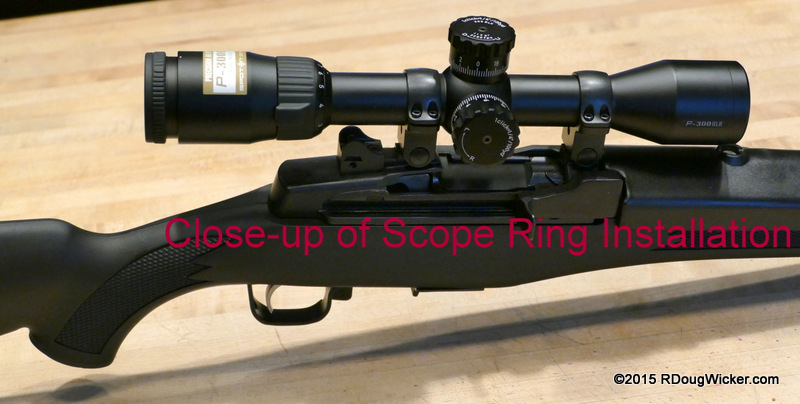
Nikon P300 BLK

Nikon P300 BLK

Nikon P300 BLK

Nikon P300 BLK

I will evaluate this Mini-14/Nikon P-300 combination at some point in the future, probably after I’ve found a good ammunition for the rifle. Until then, I hope you enjoyed this first look at the Mini-14 300 AAC Blackout.

Addition:  I was unable to get decent video on the above firing outing of the Mini-14 300 AAC Blackout in action.  I’ll do that in my future in-depth review now that I’ve acquired some SIG 124-grain Supersonic 300 Blackout Elite Performance ammunition.  Until then I’m linking below to a brief video supplied by the gentlemen over at Tactical Life, who are preparing their own review of the Mini-14 300 AAC Blackout.  Enjoy.
4 Comments

Filed under Firearms, R. Doug Wicker

Outrageously Funny Video — “Glock Engineer Interview”


Readers of my firearms posts may have discerned by now my less than enthusiastic response to all things Glock.  So, when I stumbled across this “Interview” video with a “Glock Engineer” concerning the “Glock 43,” I just couldn’t help but laugh out loud.  It is, of course, one of those bogus “Translation” videos, this time from Spanish and which in reality has absolutely nothing to do with Glocks.  There’s another on the Glock 43 using that often-used Hitler Rant scene from the movie Der Untergang (The Downfall), but the language in that is pretty graphic.

I

Comments Off on Outrageously Funny Video — “Glock Engineer Interview”

Filed under Firearms, Humor, Social Networking

Firearms — Television Westerns from the 1950s


Model 1892 Pistol (Wanted: Dead or Alive) and Model 1892 Rifle (The Rifleman)

American television in the 1950s were rife with thirty-minute black-and-white Westerns.  Among the more famous and enduring: The Lone Ranger, Have Gun — Will Travel, The Deputy, and Gunsmoke (yep, originally only 30 minutes for the first six seasons).  And that’s just some of the more successful ones.  There were many, many more because they were cheap to produce, fun to watch, and in demand.  Two of the more successful such series were The Rifleman and Wanted: Dead or Alive, the latter catapulting relatively unknown actor Steve McQueen to fame.  What do these last two have in common?  The main character in both shows (Lucas McCain, The Rifleman; Josh Randall, Wanted: Dead or Alive) used unique variations of the Winchester Model 1892 rifle, although Josh Randall’s version is more accurately a “pistol”).  To see more on Winchester lever-action rifles check out Winchester Rifles — Part 1 and Winchester Rifles — Part 2:

Matched, consecutively numbered pair of Centennial Edition Winchester Model 1894 Rifles in .30-30 and .44 Magnum

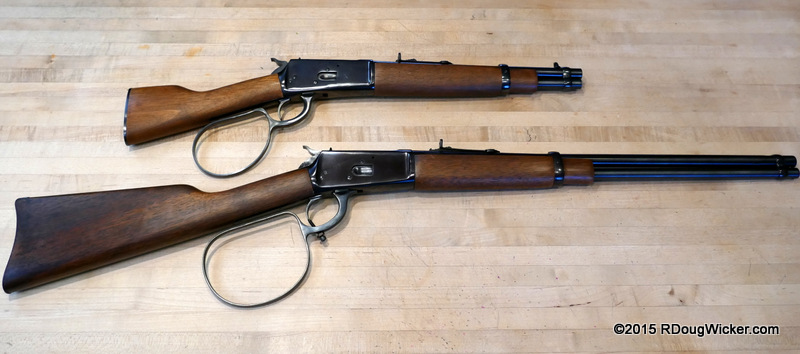
The first two firearms featured above are the Rossi Ranch Hand pistol and a highly customized Rossi R92 rifle, both equipped with loop levers, and both modeled after the famed Winchester Model 1892 pistol-caliber rifle.  The two examples here are both chambered for the .38 Special/.357 Magnum, and are thus not historically correct in that regard.  The original Model 1892 was chambered for black powder pistol cartridges, such as the .44-40 and .38-40, which were in wide-spread use at the end of the 19th Century.

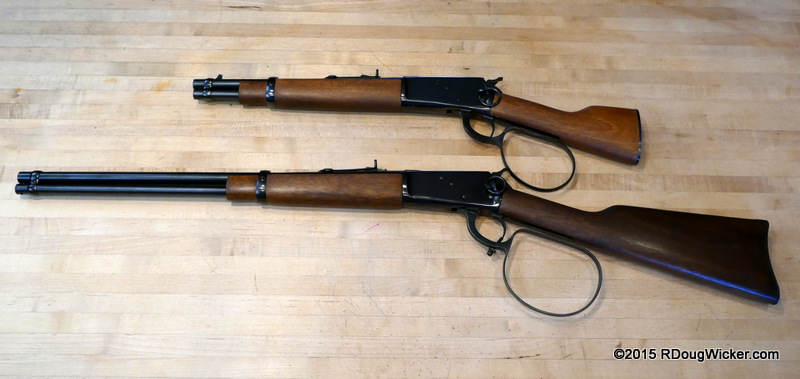
Upper — Rossi Ranch Hand in .38 Special/.357 Magnum; Lower — Rossi R92 by Mike DiMuzio in .38 Special/.357 Magnum

Upper — Rossi Ranch Hand in .38 Special/.357 Magnum; Lower — Rossi R92 by Mike DiMuzio in .38 Special/.357 Magnum

The Rossi Ranch Hand is not a true scale replica of the “Josh Randall Special” — also knows as a “Mare’s Leg — used in Wanted: Dead or Alive.  Both the barrel and stock are slightly longer than the one used by Steve McQueen’s character in that show.  The Rossi is also not the only Mare’s Leg on the market.  The Henry Repeating Arms company also makes a version which they sell as the Mare’s Leg Lever Action Pistol:

marenew

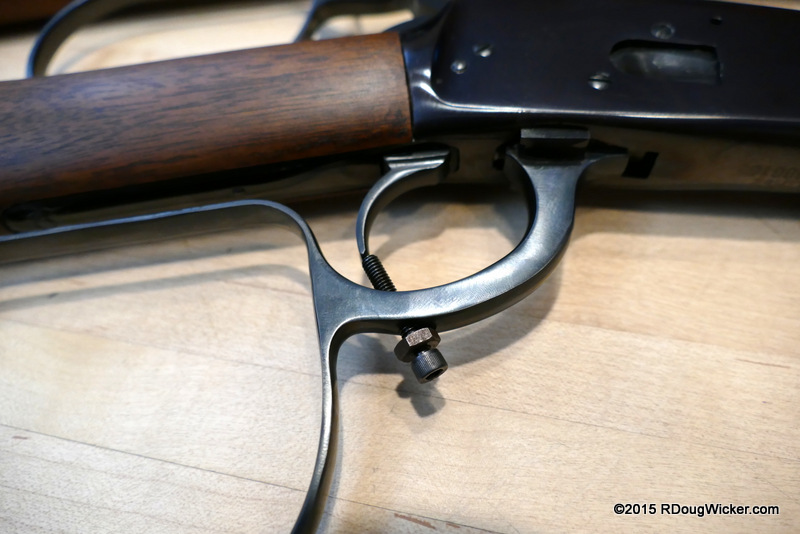
So what about that intriguing “Lucas McCain Special” pictured beneath the Rossi Ranch Hand; how close a replica is it?  Pretty darned close, as it turns out.  This particular weapon — also known as “The Flip Special” — was custom-made by Mike DiMuzio of North Carolina.  And if the Rossi R92 basis isn’t accurate enough for you, he’ll even customize a true, antique Winchester Model 1892 chambered in the historically accurate .44-40 cartridge depicted in The Rifleman.  He even installs that special trigger tripping set screw in the loop for rapid firing.

Rifleman trigger trip — Conversion by Mike DiMuzio at www.riflemansrifle.com

Rifleman trigger trip — Conversion by Mike DiMuzio at http://www.riflemansrifle.com

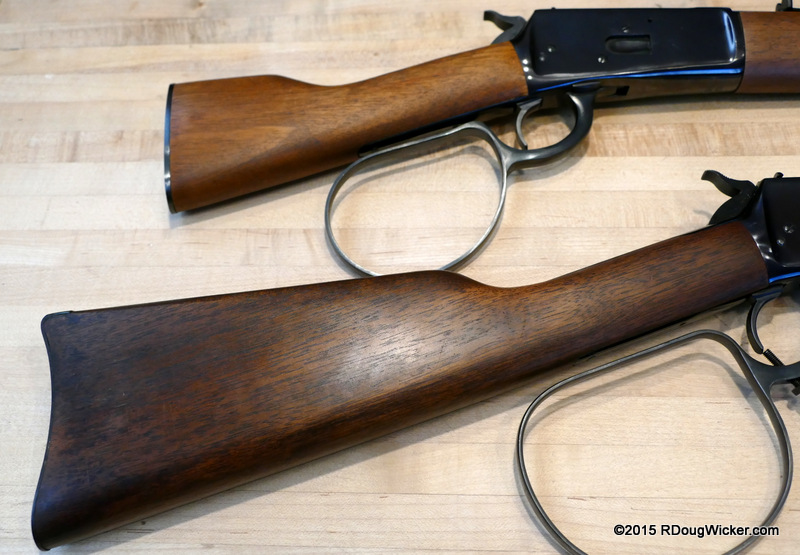
If you’re interested in owning such a weapon then visit Mike’s website and then give him a call at 704-915-2325: Mike does a good job not only reproducing the loop lever and trigger trip of the Winchester Model 1892 used in The Rifleman, he’ll also upon request add the saddle ring (additional charge) and darken the stock to match Winchesters of the era.  And if you’re really hungry for that authentic look he’ll even age the rifle to make it appear a century old.  Take a look at the stock he darkened compared to the original finish that came on the Ranch Hand:

"Rifleman" conversion includes upon request darker staining to match era Winchesters

“Rifleman” conversion includes upon request darker staining to match era Winchesters

Now all this may sound like nostalgia at the cost of practicality, and in a sense it is.  I mean, after all, no one can spin cock a Winchester rifle with a 20-inch/51-centimeter barrel unless you’re 6-foot 5½ inches/197 centimeters tall like Chuck Connors, right?  Well, not quite.  I’ll demonstrate what I mean in a short video below.  But spin cocking a Model 1892 is impractical nevertheless.  Using snap caps (don’t even think of trying this highly dangerous maneuver with live ammunition; as the grownups in the classic movie A Christmas Story told Ralphie, “Kid, you’ll shoot your eye out”) I proved to myself what I’d always heard.  If you spin cock an 1892 the cartridge will be flung clear of the ejection port well before it can be chambered.  Your “bullet” then goes skittering either across your living room floor or winds up burying itself into the dusty streets of North Fork, New Mexico (fictional town of The Rifleman)

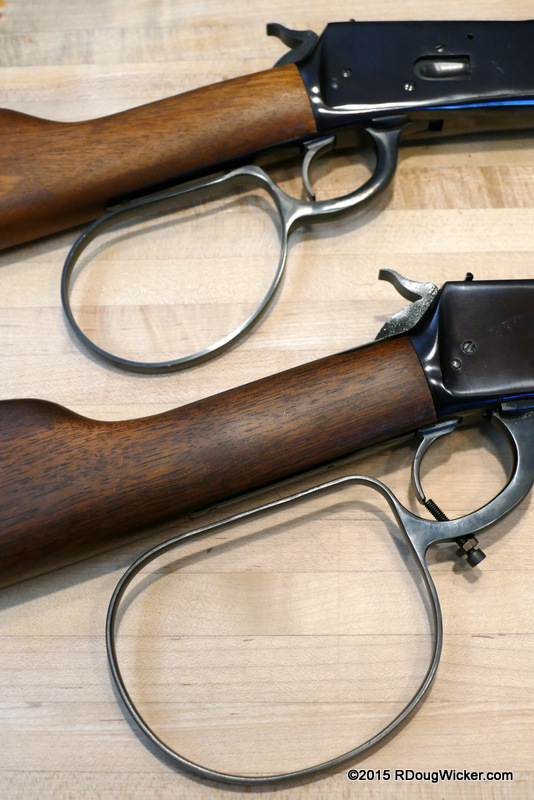
Loop comparison — Ranch Hand "small" loop vs. Rifleman large loop

Loop comparison — Ranch Hand “small” loop vs. Rifleman large loop

On the practical side, that trigger trip does work.  But you must be careful in setting the depth of the set screw and then in locking it into place with the nut.  If the trip is set too far back it won’t reach the trigger.  If it contacts the trigger too soon the hammer will trip while the rifle is still out of battery, meaning that the chamber will not be completely closed and the bullet casing fully encased.  If the hammer contacts the firing pin and the firing pin reaches the bullet primer while the rifle is out of battery there’s a potential for a burst cartridge with resulting damage to both firearm and shooter.  So, be careful!  To fire the rifle normally, just back the screw out and lock it into position with the lock nut.

"Lucas McCain Special" Loop-levered M1892 rifle with trigger trip

“Lucas McCain Special” Loop-levered M1892 rifle with trigger trip

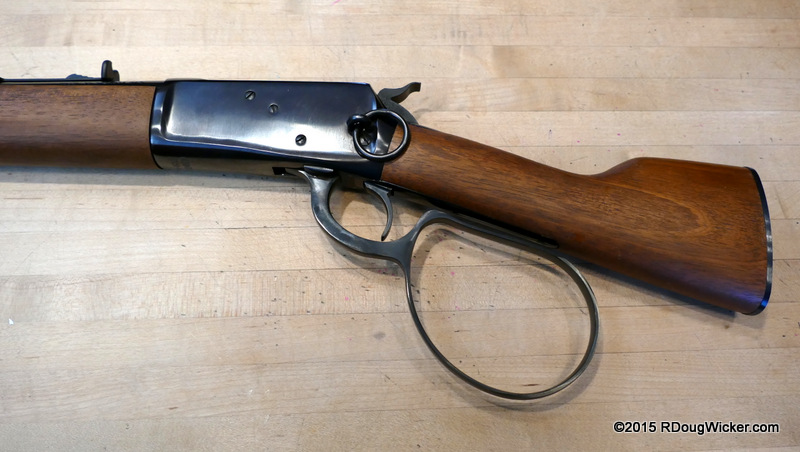
Now let’s look at the “smaller” Ranch Hand loop:

"Josh Randall Special" — Loop-levered M1892 "pistol"

“Josh Randall Special” — Loop-levered M1892 “pistol”

The loop is still large enough to perform the spin cock maneuver made famous by Chuck Connors, although I can find no reference that Steve McQueen ever attempted this in Wanted: Dead or Alive.  Probably because it takes practice and is not an easy thing to do, especially as the front-heavy Mare’s Leg configuration throws the whole contraption terribly out of balance.  It can be done (as I’ll demonstrate later), but a dozen repetitions or so will make your bicep feel as though you just finished up with some serious weight training.  Consequently I’m trying to learn this left-handed for some upper body strength training.  No, seriously.  It’s fun exercise, or “Rifle Therapy,” as Mike DiMuzio refers to it.

Loop comparison — Ranch Hand "small" loop vs. Rifleman large loop

Loop comparison — Ranch Hand “small” loop vs. Rifleman large loop

Still, if you think twirling the Ranch Hand is fun, wait until you try a full size rifle with a 20-inch barrel.  Just don’t let your face get in the way like John Wayne purportedly did.  John Wayne was the first film actor to spin cock a Winchester.  He did it in a movie in Stagecoach way back in 1939.  He repeated that stunt in at least two other films — El Dorado (1966) and True Grit (1969).  But take a look at the rifles he’s spinning in those films.  In each case that large loop rifle has a short 16-inch/41-centimeter barrel.  Wonder why the 6-foot, 4-inch/193-centimeter actor would only spin a shortened rifle?  Reportedly it’s because when he first attempted the stunt with a full-size rifle back in 1939 the barrel struck him squarely in the jaw, knocking him out cold.

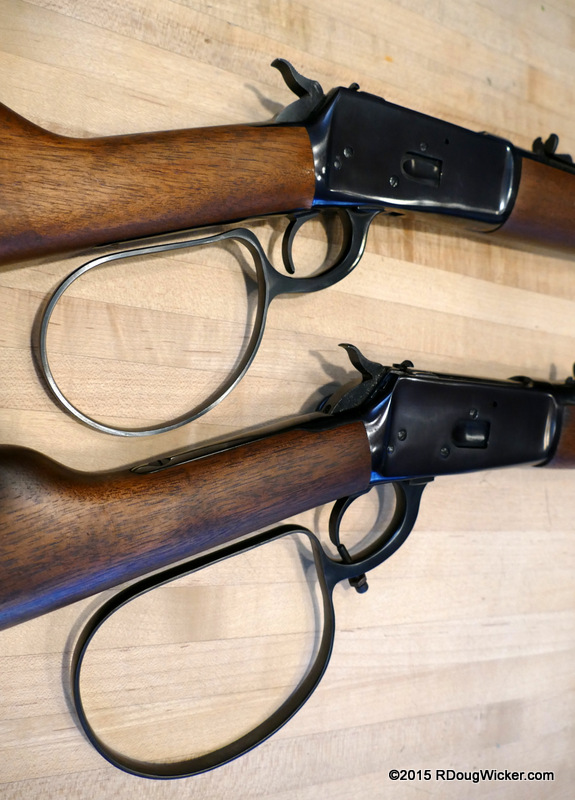
Loop comparison — Stock Ranch Hand vs. DiMuzio conversion

Loop comparison — Stock Ranch Hand vs. DiMuzio conversion

Well, heck, I’m only 5’9″ (175 centimeters).  If The Duke can’t do it with a full size rifle, then what chance have I?  Not much, right?  Well, Mike DiMuzio does it with two rifles at once, and he tells me that he’s not even my height.  So let’s see what I can do after first perfecting the maneuver with that much smaller Rossi Ranch Hand and its the 12-inch/30.5-centimeter barrel.  Oh, and while we’re at it, let’s see that trigger trip in action as well:

So, what’s the trick?  Well, it isn’t easy, but it’s also not impossibly difficult.  On the upside the full size rifle is much better balanced than the Rossi Ranch Hand pistol, as the longer butt stock helps offset the fore stock and barrel despite the barrel’s longer length.  But, still, twenty-inches of cold, hard steel swinging back toward your head?  At a pretty good clip with a lot of inertia?  This is where full arm extension becomes an absolute must.  You’ll note very little bend in my elbow — just enough to snap down the loop lever and start the rifle along it’s arc, at which point the elbow is straightened out even further to increase distance.  Even so, the tip of the barrel clears me by somewhere around an inch or so.  Yes, I hit myself in the chest a couple of times, but not the face!  Take that, Duke.  By the way, if that long barrel scares you then Mike will make your replica using a shorter 16-inch/41-centimeter barrel.

At some point I’ll be firing both these firearms and offering up an actual shooting review.  Until then, I can still say that the Mike’s Rifleman’s Rifle conversion makes the Rossi M92 the most fun weapon in my collection even though I’ve yet to fire it.

How can that be?  Simple.  I’ve been practicing the art of spin cocking both the Ranch Hand and the Rossi M92, and I spin-cock the M92 nearly every day.

Hope you enjoyed this post, as it was an absolute blast producing it as well as producing for it my first blog video clip.  I’ve created my own YouTube channel just to create video links such as the one in today’s post, so watch for more video’s in the future.  Meanwhile, I’m going to leave you with two more video links, neither of which I made.  The first is Mike DiMuzio demonstrating his prowess with his own creations, performing two simultaneous spin cocks and two simultaneous swing cocks as well as demonstrating rapid fire marksmanship.  The second is a brief history of Hollywood-style spin cocking in both the movies as well as television, including the king of spin cocking Chuck Connors.

9 Comments

Filed under Firearms, R. Doug Wicker, Television