
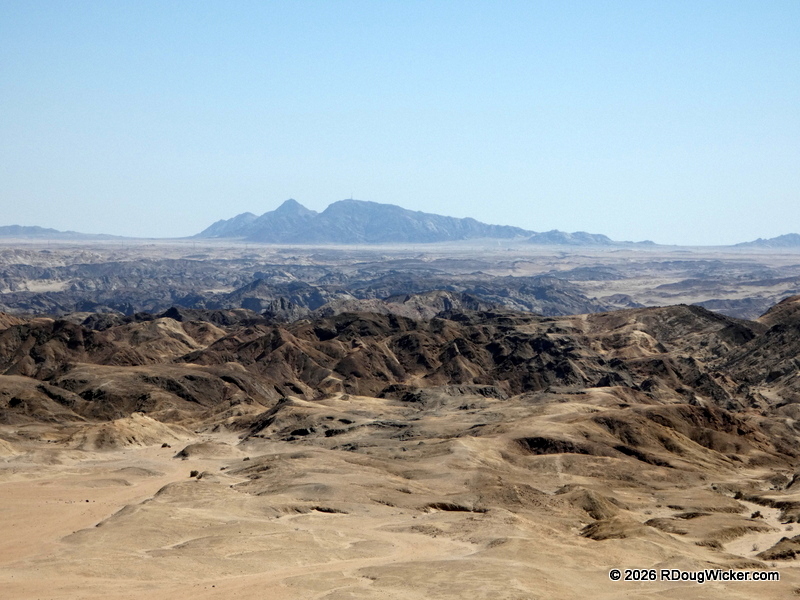
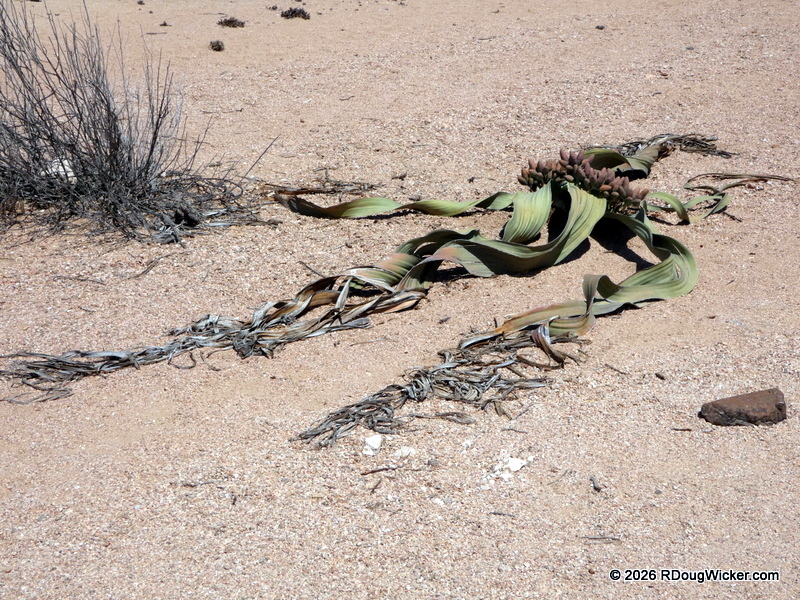
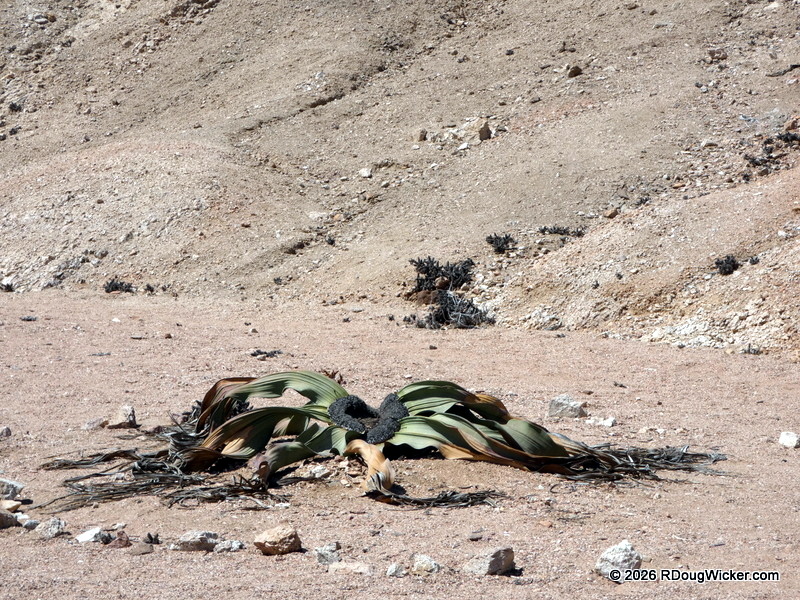
Our next tour stop after Dorob National Park was Namib-Naukluft National Park. This area receives on average 106mm/4.2 inches of rain a year, and most of that falls between February and April. One would think that with that little amount of moisture, plants would be rare. Well, think again. There are several plant species here, but the rarest is probably the Welwitschia, which is native to only Namibia and Angola in the Namib Desert.
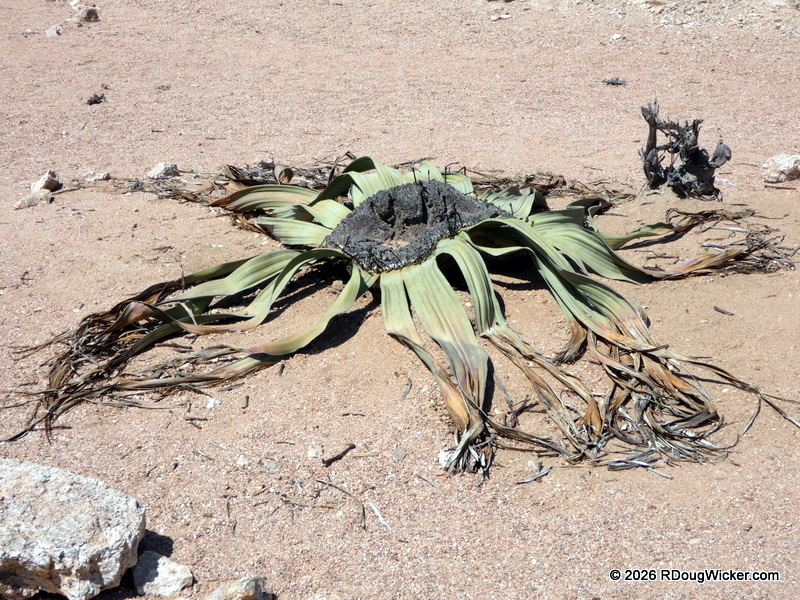
The welsitschia is a bizarre living fossil. These things live for hundreds of years, with some perhaps up to 2,000 years. It also only grows two leaves. If it appears there are more, that’s because over time the leaves shred and twist in the hot, arid Namib Desert climate. The plant is also dioecious, meaning it comprises separate male and female members.
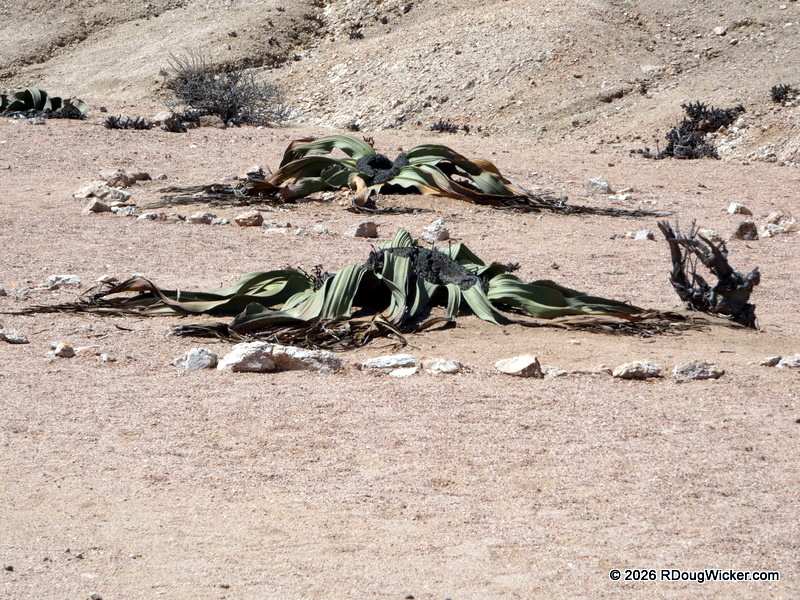
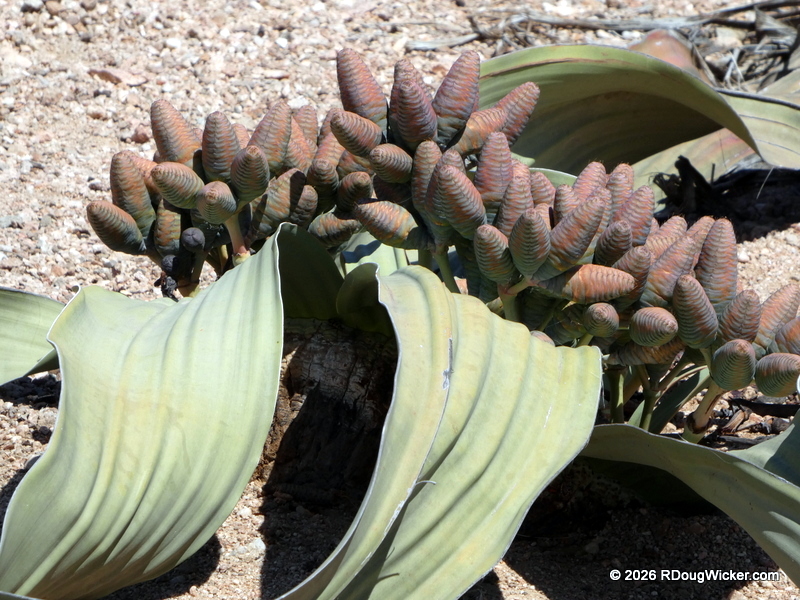
Both male and female welwitschia develop reproductive cones that produce insect-enticing nectar to facilitate pollination.
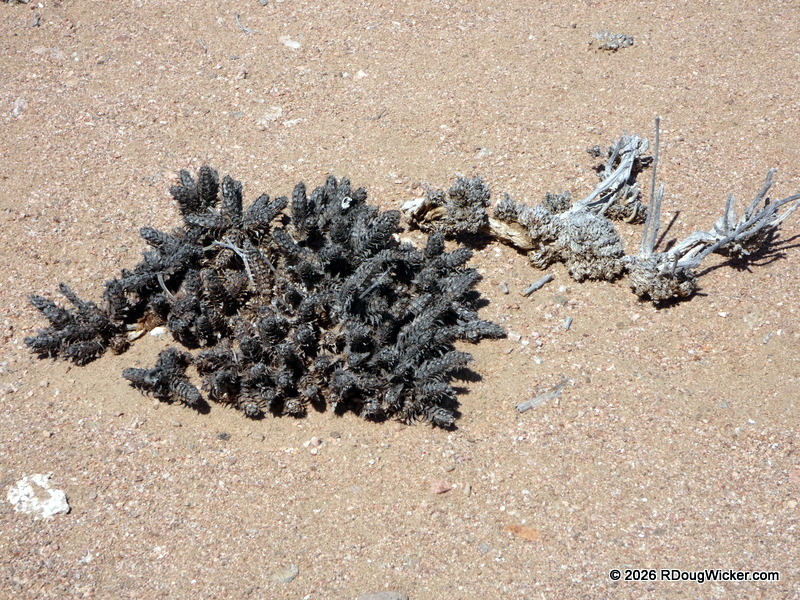
Welwitschia isn’t the only plant species growing here. There’s also this little guy, which I believe may be an aroena (Quaqua mammillaris):
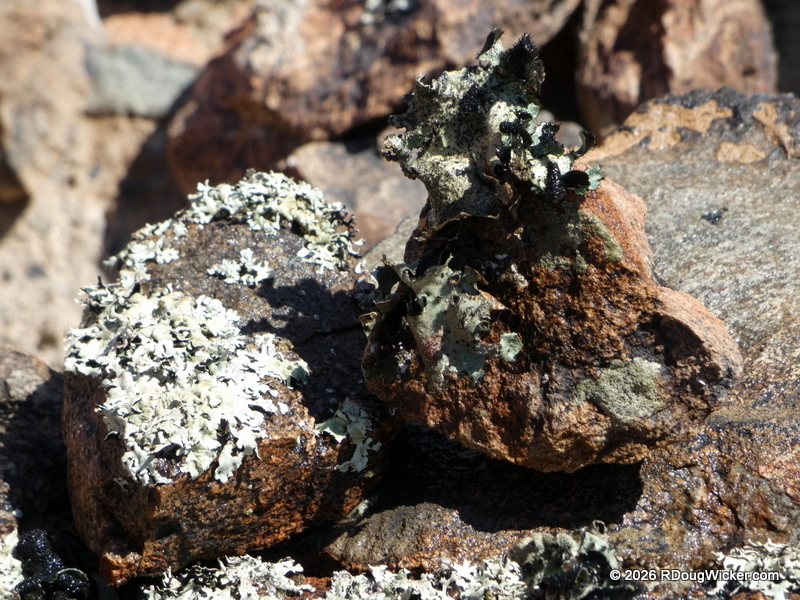
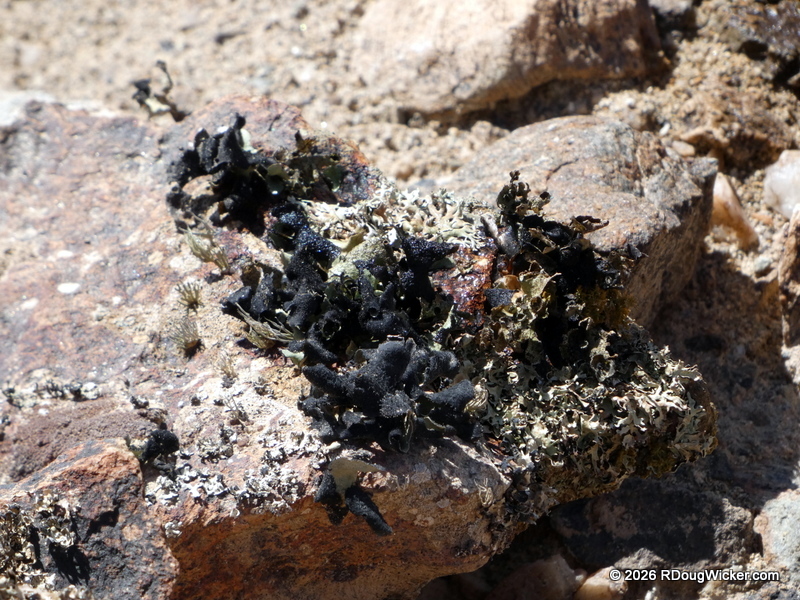
And Namib Desert lichens that obtain moisture from the occasional fog rolling in from the nearby sea:
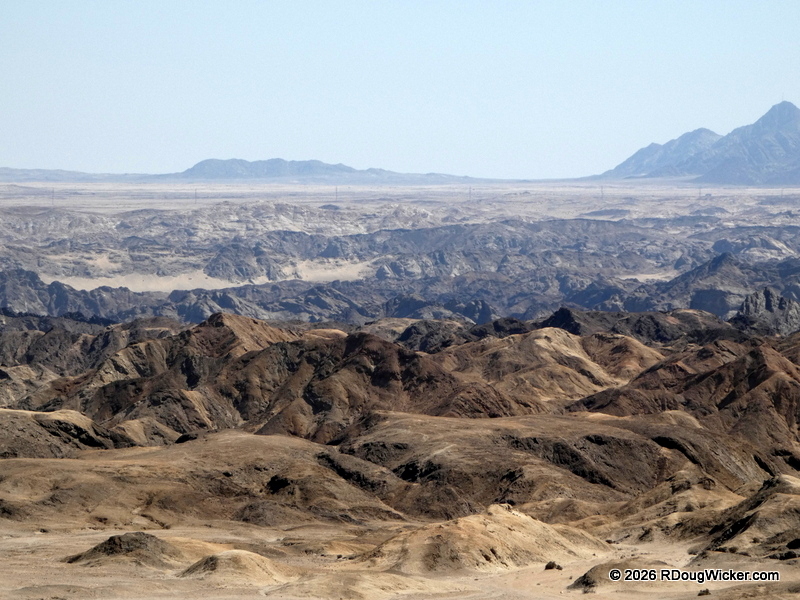
I finish today with the following Namib-Naukluft National Park images:
Слава Україні! (Slava Ukraini!)
 Decisions — Murder in Paradise
 The Globe — Murder in Luxury
 R. Doug Wicker — Author