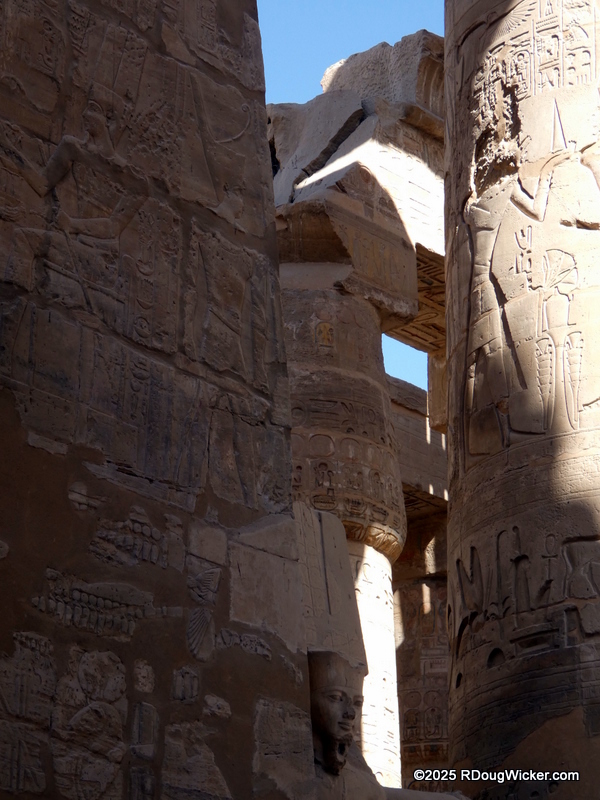
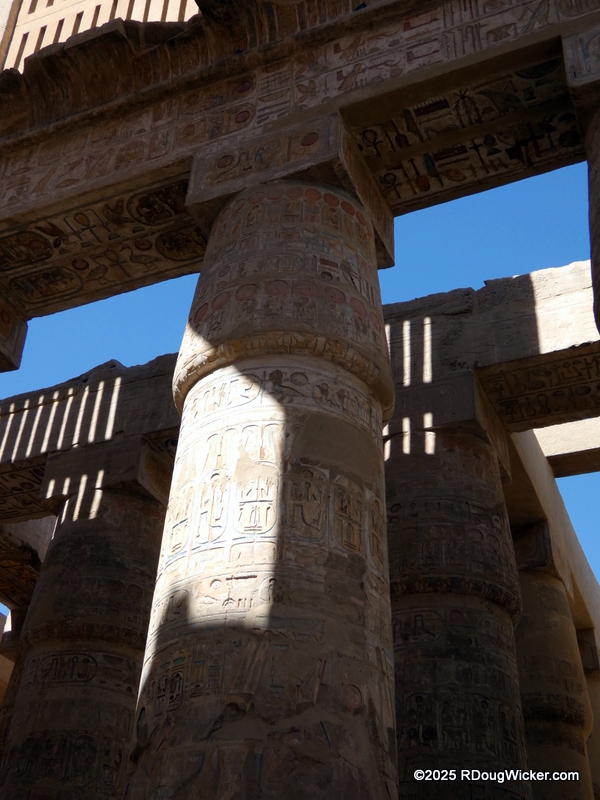
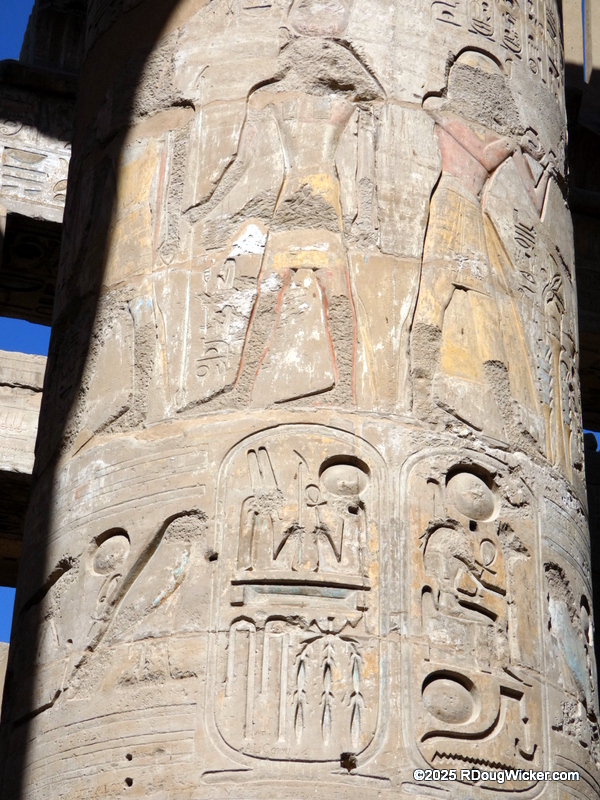
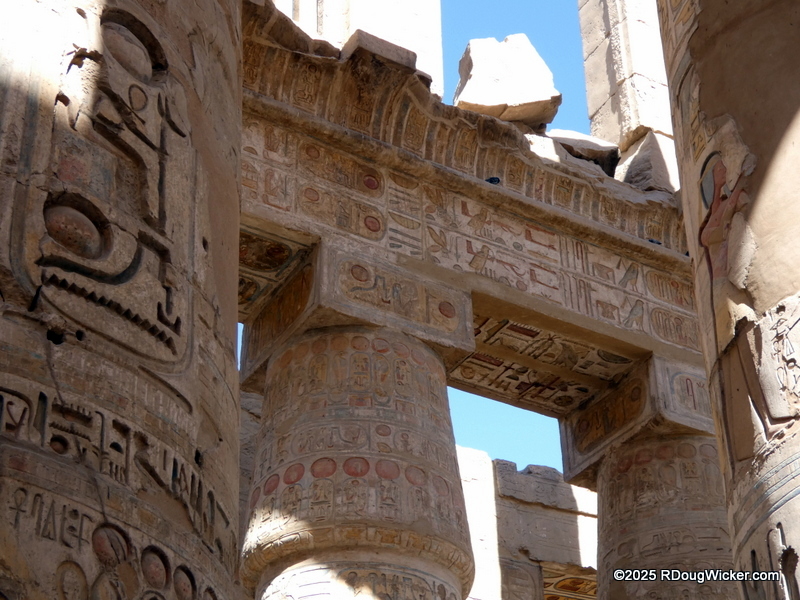
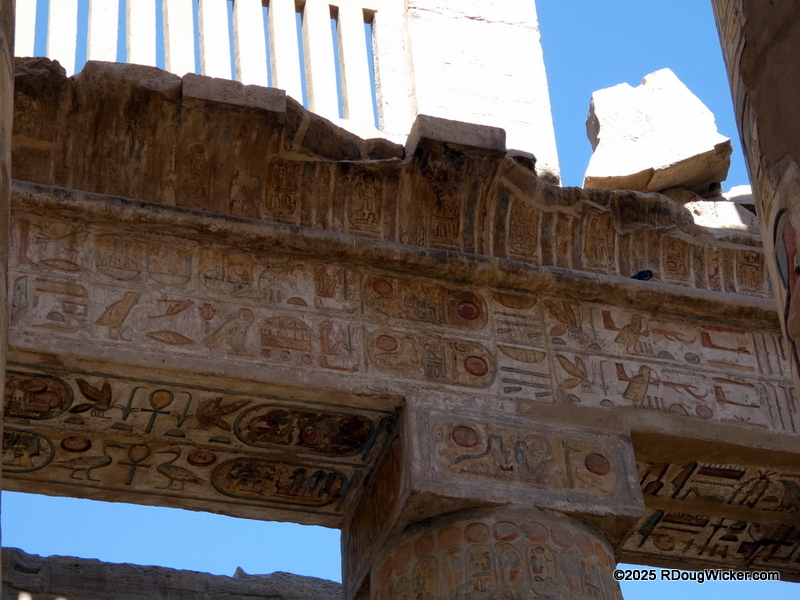
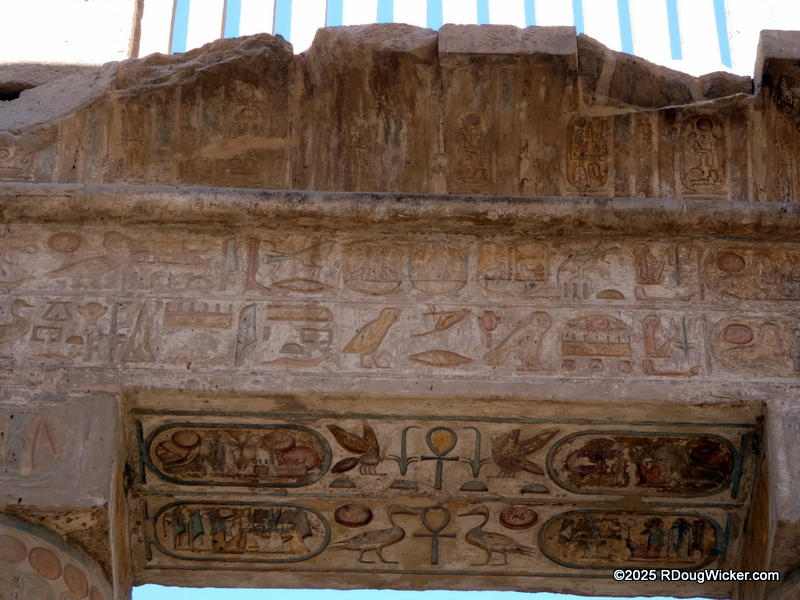
One of the things I most enjoyed about photographing Karnak was the way light and shadow played across the numerous columns, highlighting hieroglyphics and bas reliefs. Indeed, I anticipate that many of these photographs will convert very nicely into black & white, especially with some judicial use of color filtering before the conversion. And in case you’re wondering what I mean by that, here are some articles I wrote on the subject: Black & White Photography—It’s All in the Color!, Black & White Filtering After the Picture is Taken (and with FREE Software!) (alas, that “free software” is no longer supported by Google, but I’m sure you can find a substitute), and Color Filtering in Black & White Revisited. But enough with the photo tips for today. Let’s get back to Karnak.
I recently mentioned that among all the other sights here, there are also some obelisks, but so far I’ve not shown you any. Today I correct that. Remember our visit to the Mortuary Temple of Hatshepsut? Well, that’s not the only construction project for which she was responsible. Two of the obelisks here at Karnak were constructed for her. And being that Hatshepsut was one of the few female pharaohs, it’s perhaps fitting that she selected pink granite. The second of her two obelisks has since toppled, so the smaller obelisk you see below belonged to Thutmose I. Hatshepsut’s obelisk stands 97 feet/29.5 meters tall and weighs about 323 tons. The obelisk for Thutmose I is 71 feet/21.7 meters tall and comes in at around 143 tons.
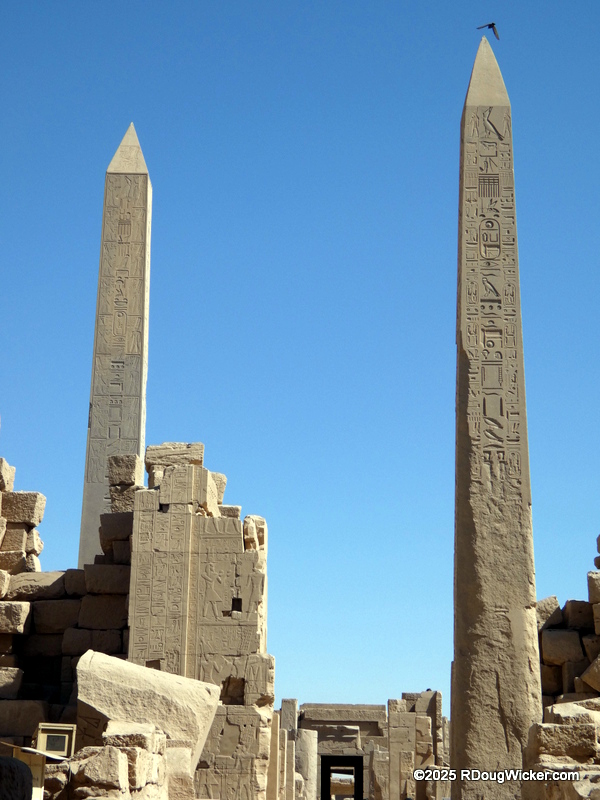
What’s it like to stand beneath one of these behemoth? When you remember that you’re in an earthquake-prone area, it’s rather sobering.
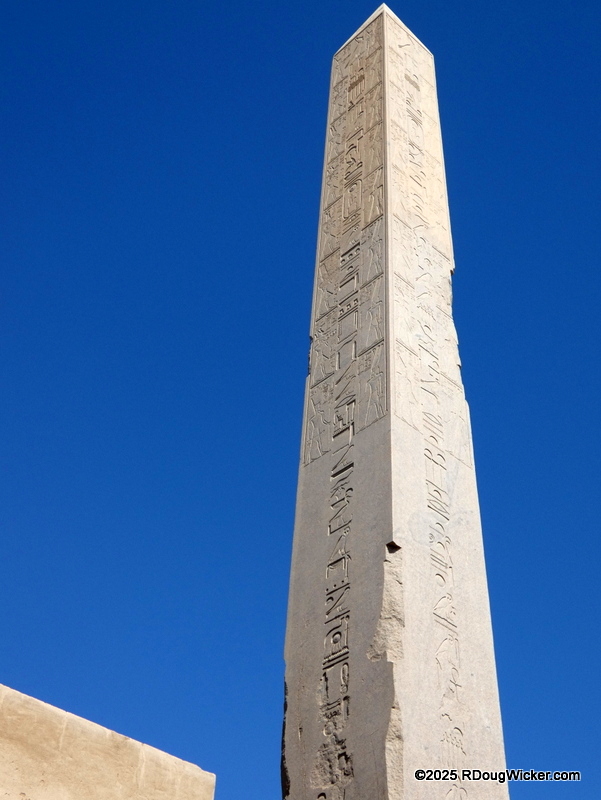
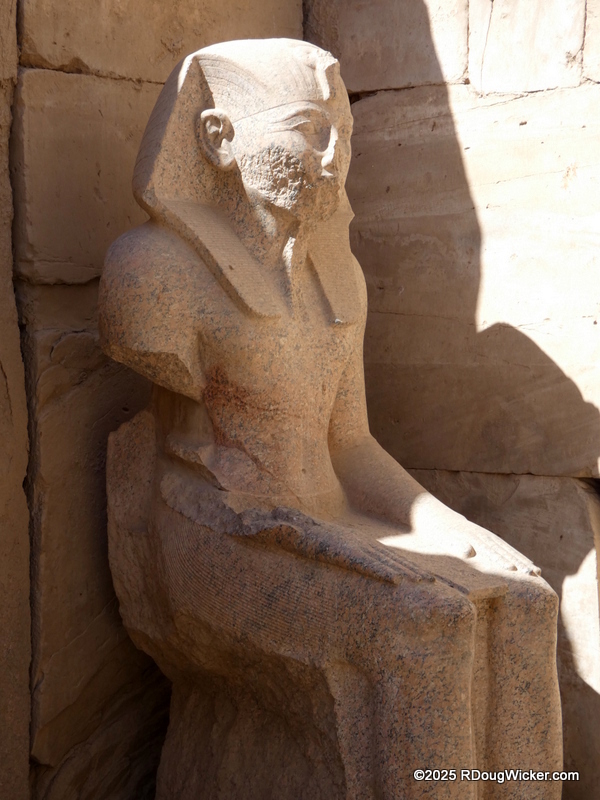
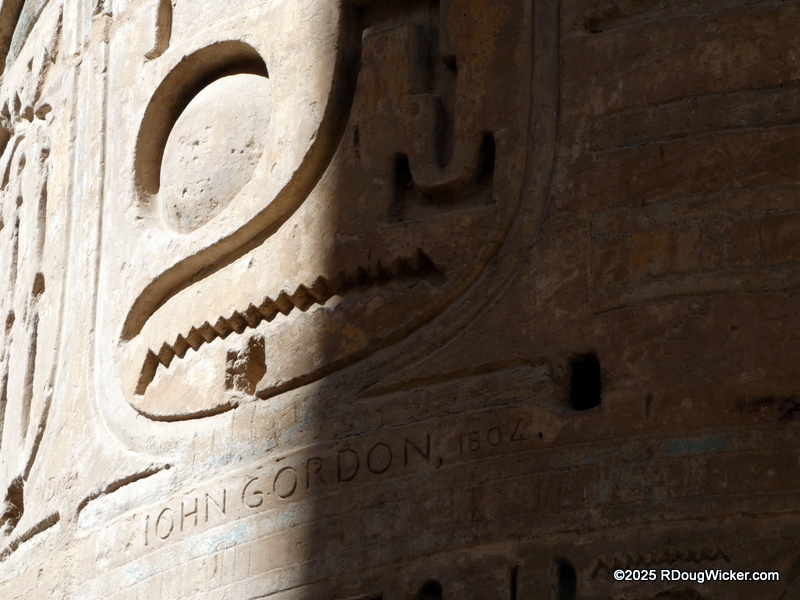
Now for today’s Karnak photo gallery/slide show, including some graffiti left by John Gordon in 1802:
Слава Україні! (Slava Ukraini!)
 Decisions — Murder in Paradise
 The Globe — Murder in Luxury
 R. Doug Wicker — Author