American Western Arms “Peacekeeper”
I’ve done a couple of articles on clones of the 1873 Colt ‘Single Action Army’/’Peacemaker’ line of guns:
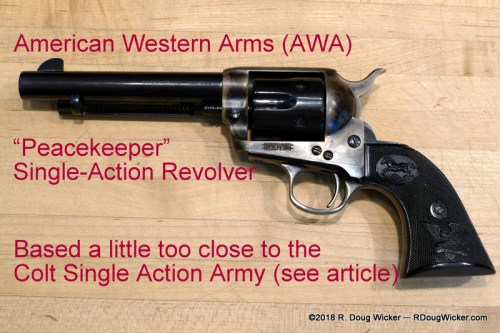
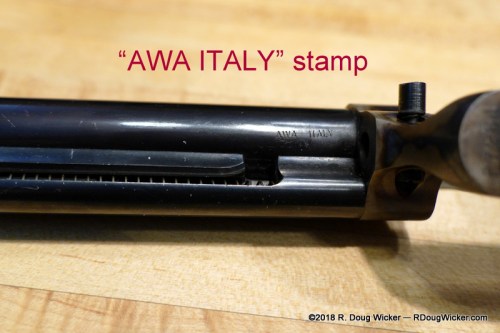
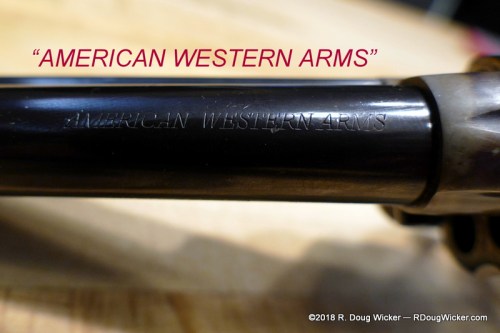
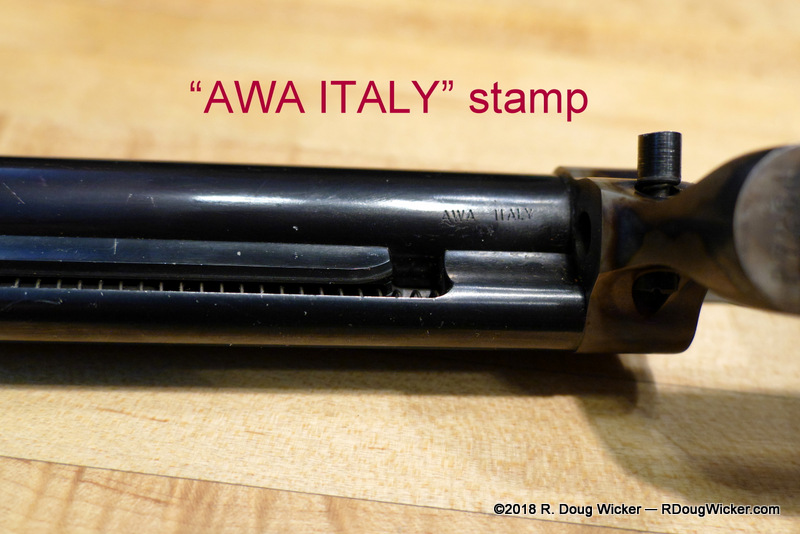
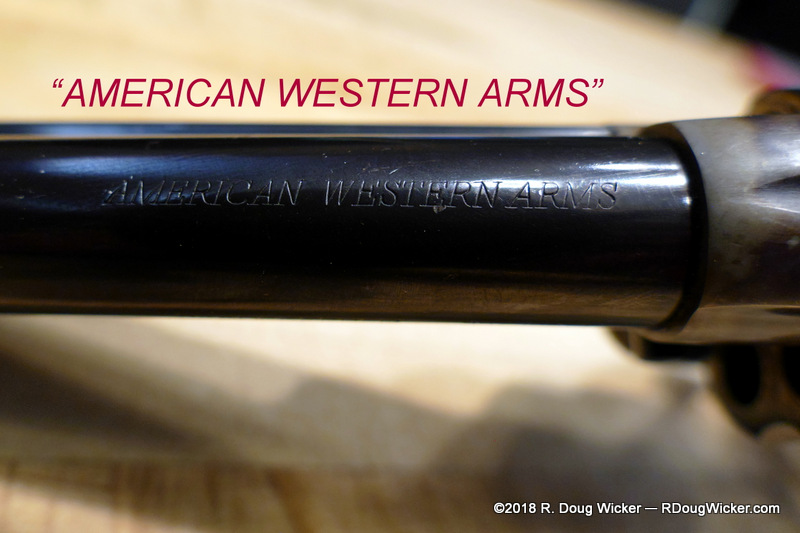
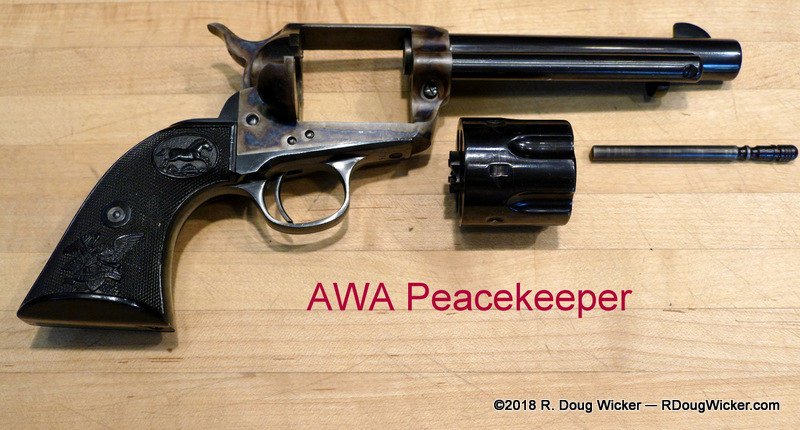
But today I’m going to present something even more rare than the USFA listed above. The original American Western Arms (AWA) began importing single-action pistol parts from Italy around 1998-1999. They then finished assembly in the U.S. with rich blueing on the barrel and cylinder, case hardening on the frame, and a highly tuned trigger.
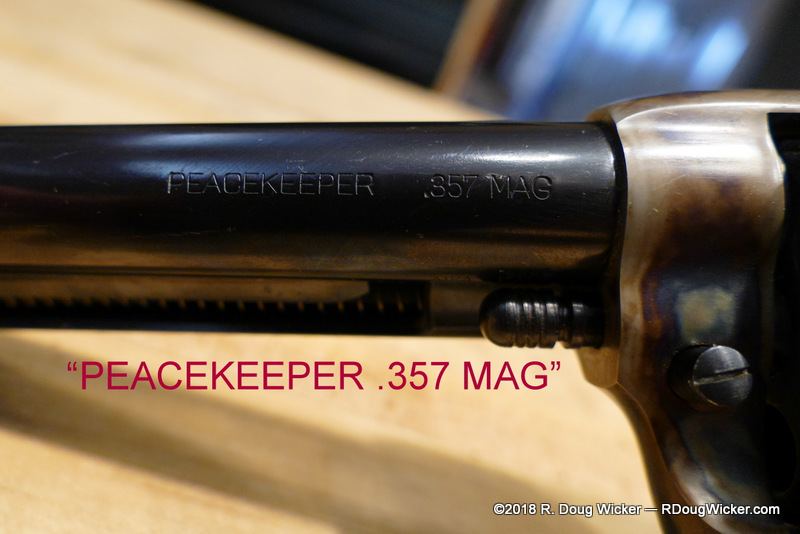
American Western Arms “Peacekeeper”
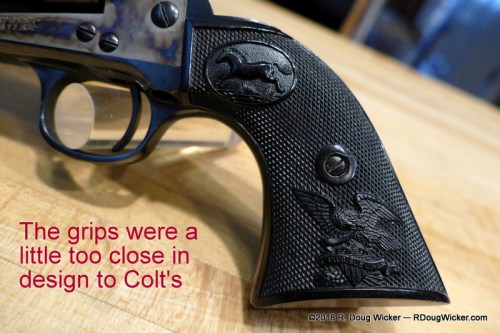
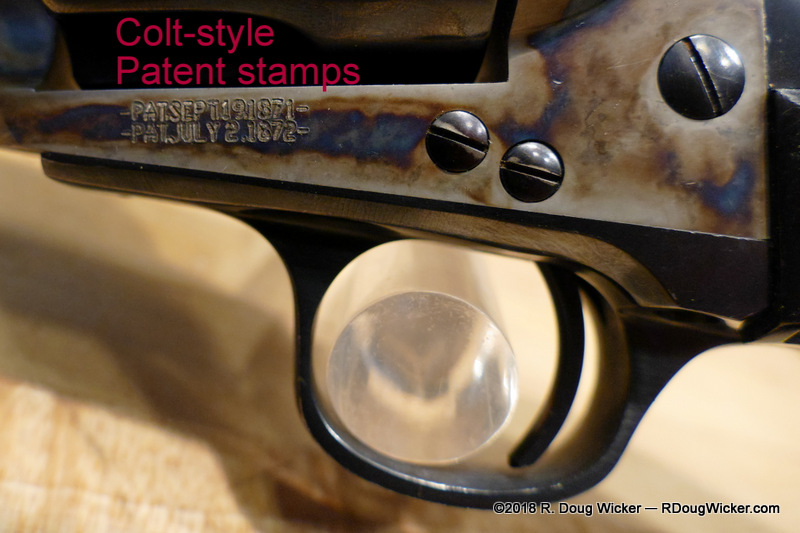
So, Peacemaker vs. Peacekeeper. Starting to see a problem here? Colt did, because at the time Colt was also make a double-action/single-action revolver called the ‘Peacekeeper’. But if that wasn’t enough to get Colt’s legal department moving, these grips were:
American Western Arms “Peacekeeper”
They’re almost indistinguishable from a pair Colt used on a version of their Peacemaker, except on their grips the Colt is rearing, and the ‘E Pluribus Unum’ banner rides higher on the eagle. Even cocking the hammer is very reminiscent of the Colt; the four clicks are much more pronounced than on the Uberti El Patrón Competition or the USFA Rodeo.
American Western Arms “Peacekeeper”
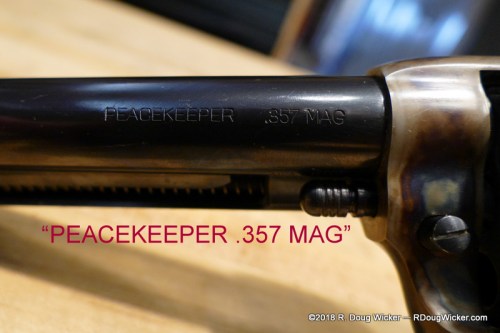
American Western Arms “Peacekeeper”
Colt were not amused, and their legal department sued on a point of trademark law called ‘Trade Dress,’ in which the copy is deemed too close in appearance to another company’s offering to the point that the aggrieved party can claim that the copy intentionally misleads the buying public or trades off the good name of the plaintiff.
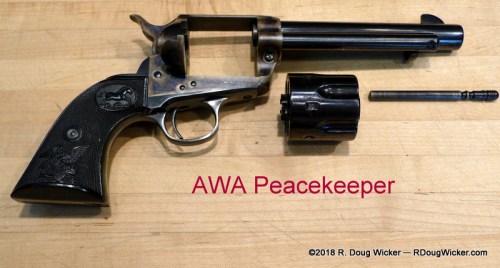
American Western Arms “Peacekeeper”
The AWA Peacekeeper was in production for only a few years, around 2003 or so, before Colt put a stop to it. Total production of this fine reproduction was about 2,000 copies, and many of those copies were abused in Cowboy Action Shooting (CAS) and Single Action Shooting Society (SASS). Finding one of these in the condition shown here is not easy.
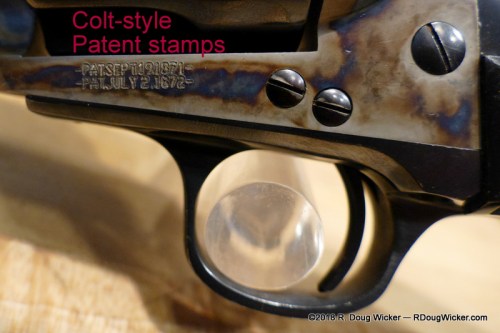
American Western Arms “Peacekeeper”
The owner of my favorite local gun store, Paul Lee of Collector’s Gun Exchange, is an avid CAS participant, and he knows a good Colt replica when he sees it. When this particular weapon was placed with him on consignment, he decided to try it out. His verdict was that the AWA Peacekeeper is the most accurate 1873 he’s ever fired, and he’s fired a lot of them. Paul put three bullets into a target placed 20 yards/18 meters downrange. Two bullets went through the same hole, and the third was touching! Note: Paul is a lot better shooter than I’ll ever be.
American Western Arms “Peacekeeper”
In my previous article on the USFA Rodeo, I called it the premier “Colt” Model 1873 Single Action, and it is when compared directly to Colt, I’m told. But, apparently, the AWA Peacekeeper has both beat in the accuracy arena.
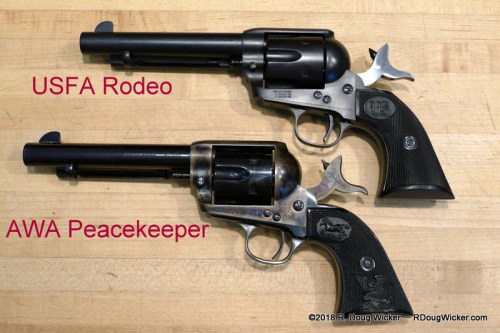
USFA Rodeo (top); AWA Peacekeeper
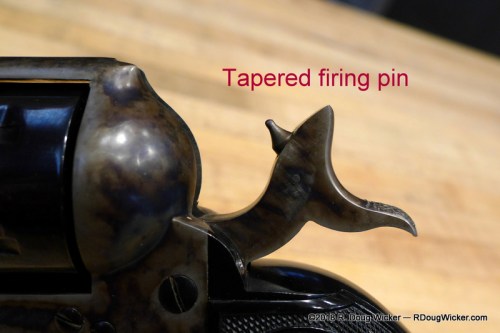
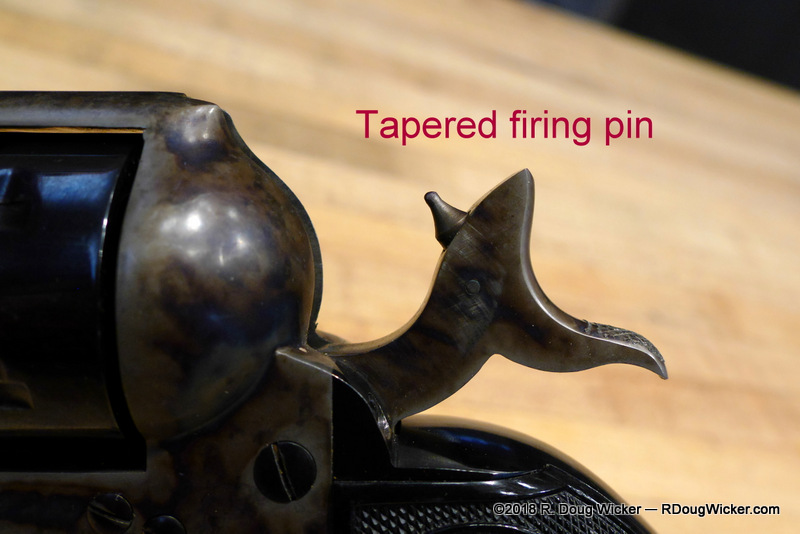
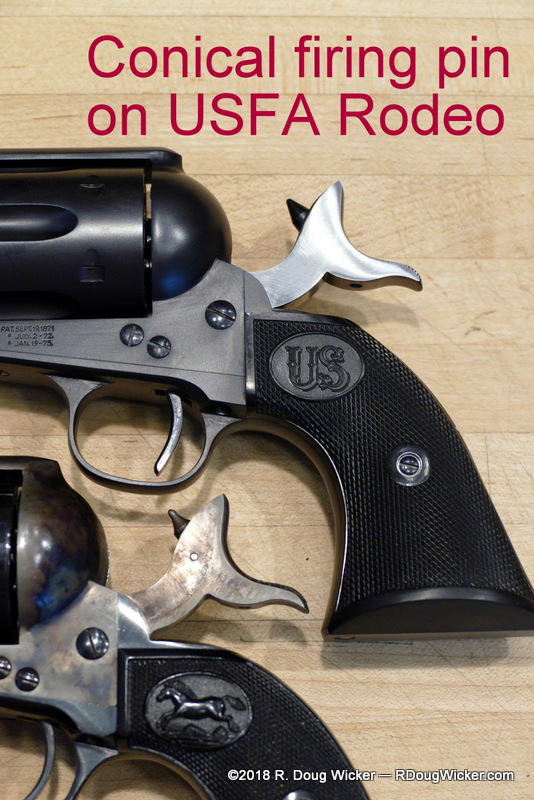
Here’s a comparison of the Rodeo’s more correct conical firing pin and the Peacekeeper’s tapered version:

USFA Rodeo (top); AWA Peacekeeper
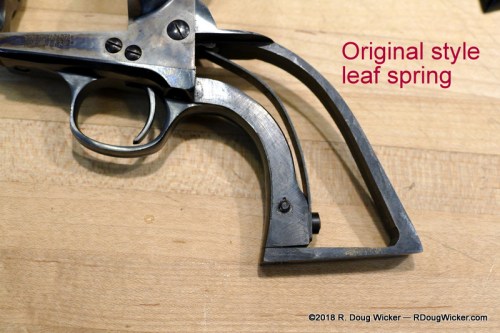
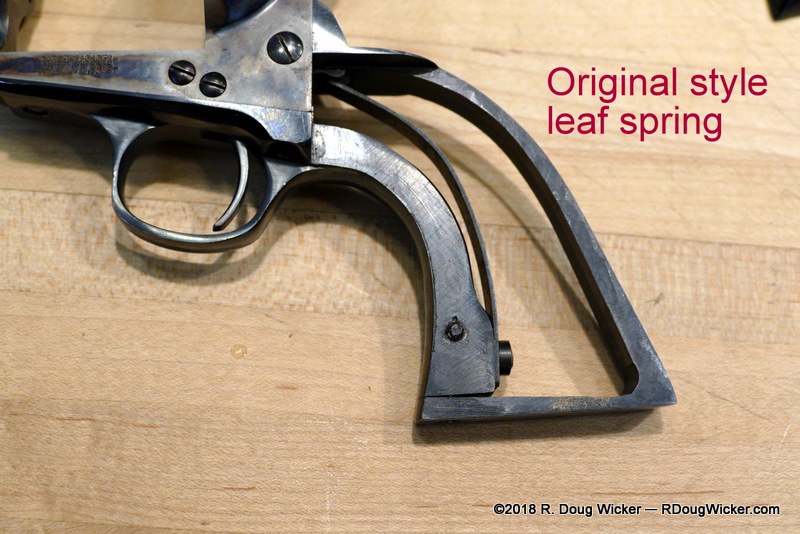
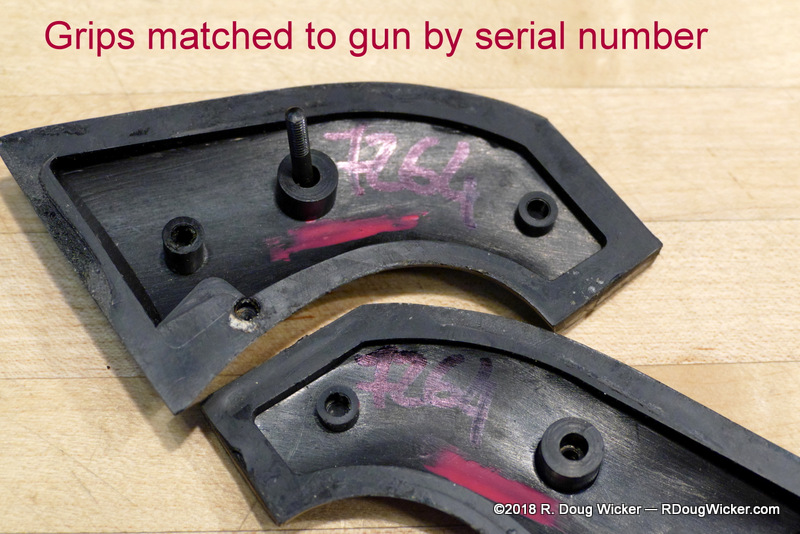
Removing the grips on the Peacekeeper reveals that the hammer is powered by the traditional leaf spring. Also, note that the grips are serially matched to the weapon.
American Western Arms “Peacekeeper”

American Western Arms “Peacekeeper”
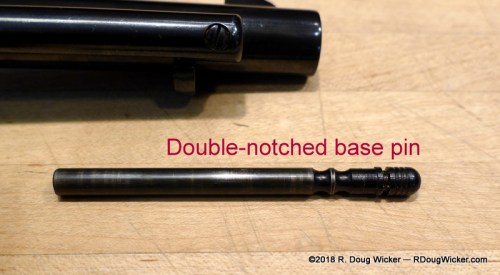
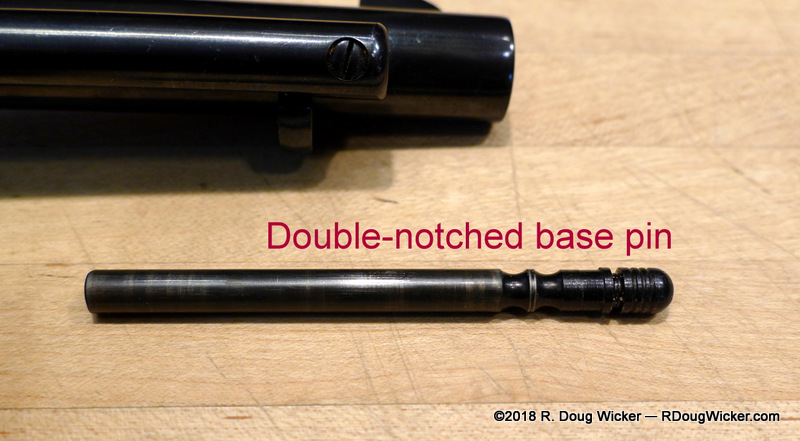
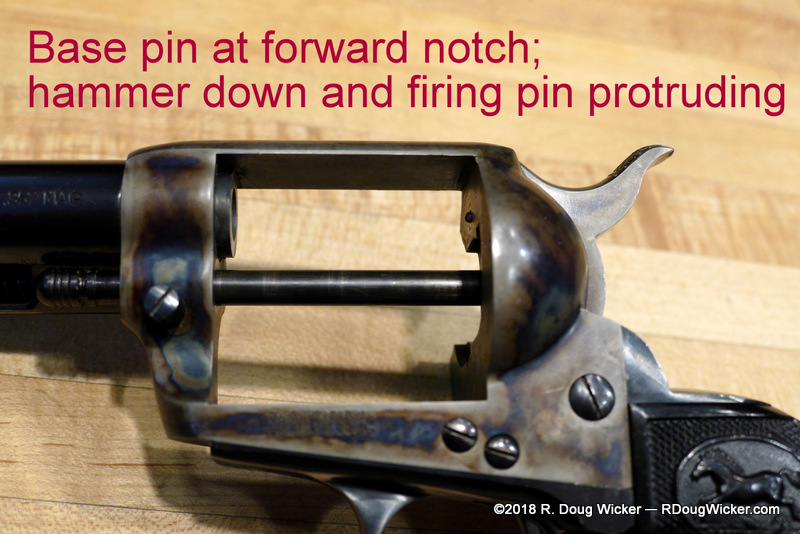
One feature that sets the Peacekeeper apart from either the original Colt design or the Rodeo is a two-notch cylinder base pin. I’ve seen this feature before in Italian copies of the 1873, particularly the Uberti El Patrón, so it’s not surprising to see it on another gun that was partially manufactured in Italy.
American Western Arms “Peacekeeper”
This acts as a safety. Regardless of what you see in westerns, where the good guy peels off six shots (or more if the continuity editor isn’t doing his or her job), the 1873 is only loaded with five rounds. The hammer and firing pin are then placed over an empty cylinder chamber, as this is the only way to safely carry a single-action six-shooter unless it incorporates a modern transfer bar system, such as on the Ruger Vaquero.
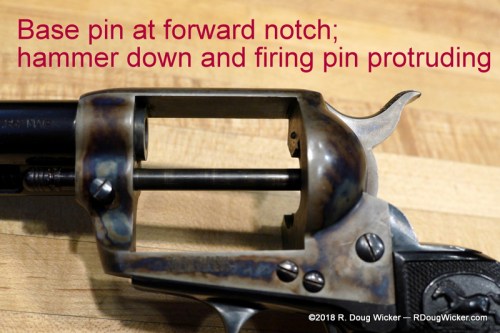
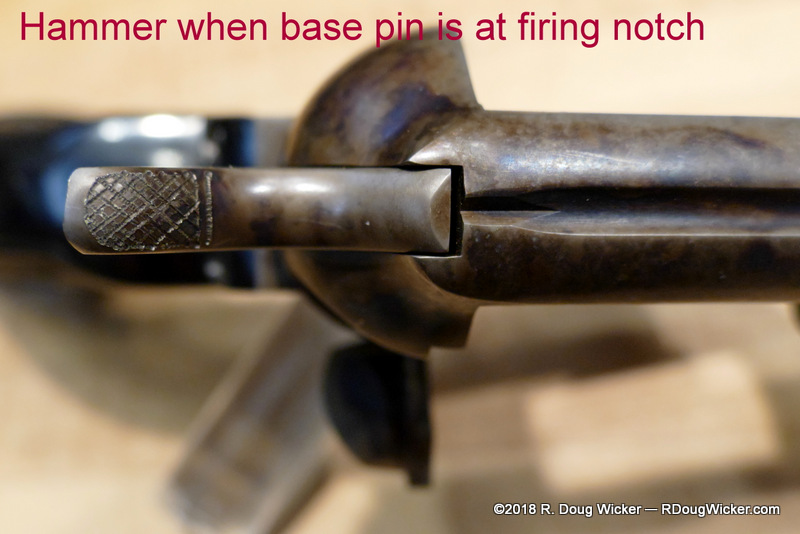
If the cylinder base pin is inserted to the first notch, the gun can be fired.
American Western Arms “Peacekeeper”
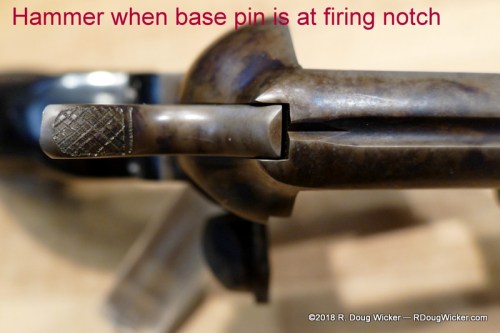
American Western Arms “Peacekeeper”
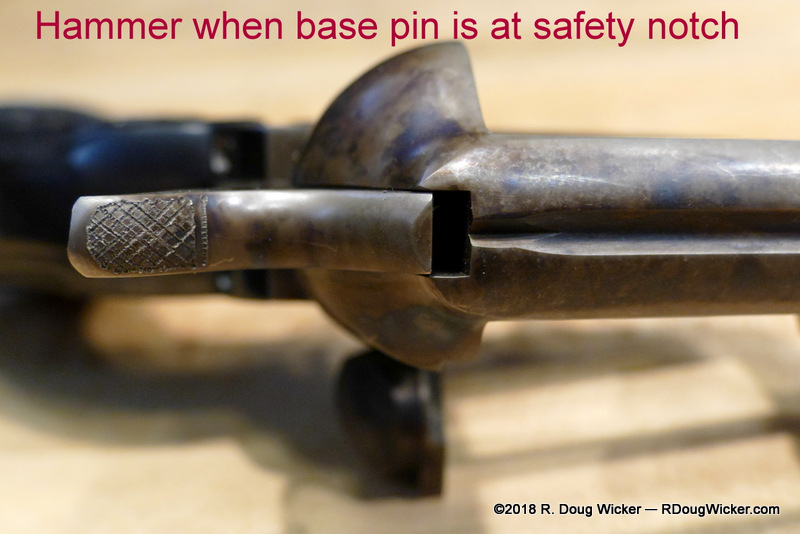
But if the base pin is pressed farther into the weapon, locking in at the second notch, the end of the base pin will protrude out the back of the frame. This keeps the hammer/firing pin from contacting the cylinder, thus making the weapon safe from unintentional discharge even with all six cylinders loaded.
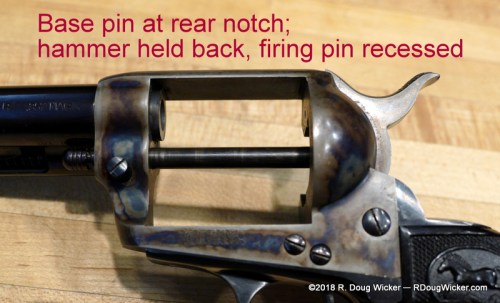
American Western Arms “Peacekeeper”

American Western Arms “Peacekeeper”
It’s an interesting idea, but not very practical in my view. It’s not very intuitive to activate, and even less so to deactivate. Better to just do it the way Paladin would have loaded his 7½-inch barreled Cavalry-model 1873 Colt — load one, skip one, load four, drop the hammer.
I hope you enjoyed today’s bit of western nostalgia. Tune in later this week for a really Fun Firearm Friday.










 Decisions — Murder in Paradise
 The Globe — Murder in Luxury
 R. Doug Wicker — Author