

The Pisco Awaits
Today we’re inside Fundo Los Nichos’ pisco aging cellars. As you can see, it’s quite the charming place to be.
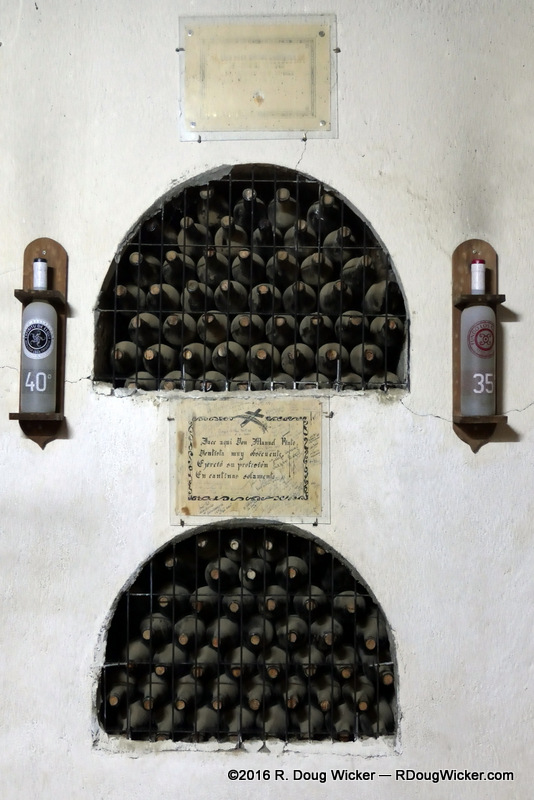
Aging Bottles of Pisco
Our little tour group has gathered here for a sampling of Los Nichos’ wares:
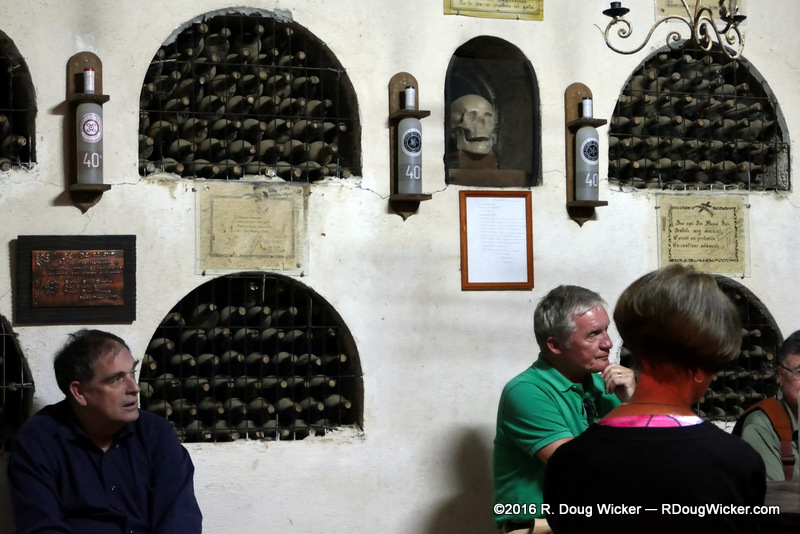
We’re WAITING!
But before we partake, let’s wander around a bit:
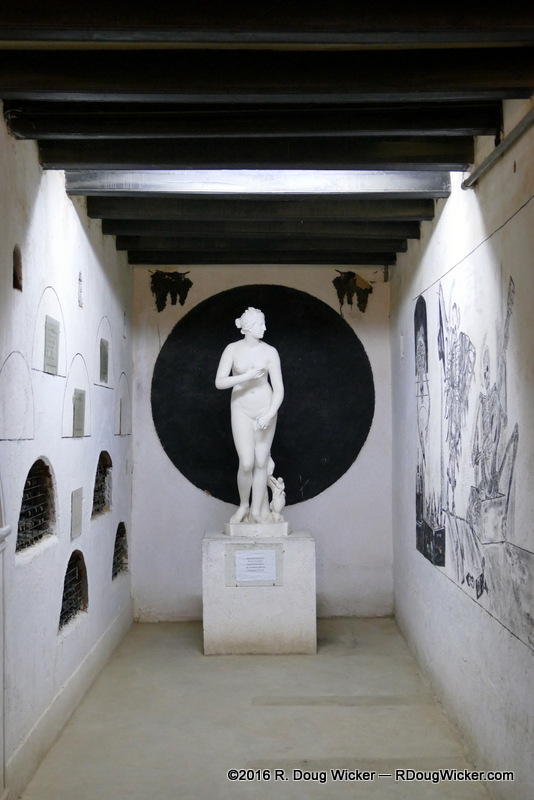
Stoned at the pisco distillery
There is quite a lot of art here, and not just the statuary above:

How one feels after too much pisco
I absolutely loved the storing niches built into the cellar walls:

Somebody forgot to dust the bottles!
So, how does pisco taste? Let’s begin with what pisco is. It’s made from fermented grapes (a.k.a., wine), then distilled. That is the classic definition of brandy. Chilean pisco, is traditionally made from the Moscato, Pedro Jiminez, or Torontel varietals. Thus, pisco is similar to traditional brandy, but has a slightly sweeter taste with a stronger hint of grape. As with traditional brandy, Chilean pisco can also be aged in oak casks which if done will give this brandy an amber color and a slight hint of vanilla. Peruvian pisco differs here in that the Peruvian version must be aged in a container that will not alter either the flavor or color of the pisco — stainless steel tanks or glass containers, for instance. The scent is fragrant and slightly floral in nature.

Contemplating Another
 Decisions — Murder in Paradise
 The Globe — Murder in Luxury
 R. Doug Wicker — Author
Reblogged this on Concierge Librarian.