Tag Archives: photography

Seafood Diabla and El Santuario de Chimayo


It’s Spicy Food Week at RDougWicker.com.  Monday was étouffée.  Wednesday we snacked on cheese crisps.  Today, it’s seafood diabla (pictured made with shrimp, but also delicious made with fish).

What you’ll need:

2 pounds of shrimp or an equal amount of white fish (cod, catfish, tilapia, etc.) filets

5 or 6 slices of bacon—coarsely chopped
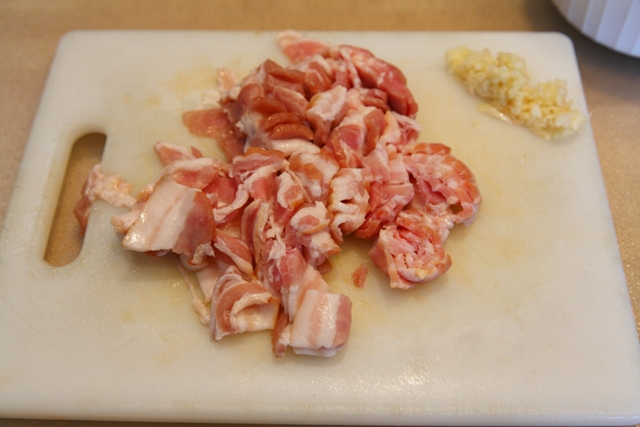
Chopped bacon and crushed garlic

4 or 5 cloves of garlic—crushed

1 fresh jalapeño—stem removed, thinly slice with seeds and ribs (optional)

2 bell peppers—cut into bite-sized pieces
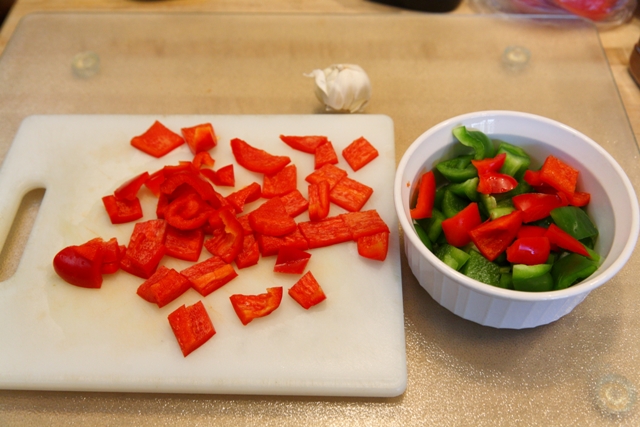
Bell pepper in bite-sized pieces

½ Tbsp. (or less) good quality chipotle powder (more on this in a moment)
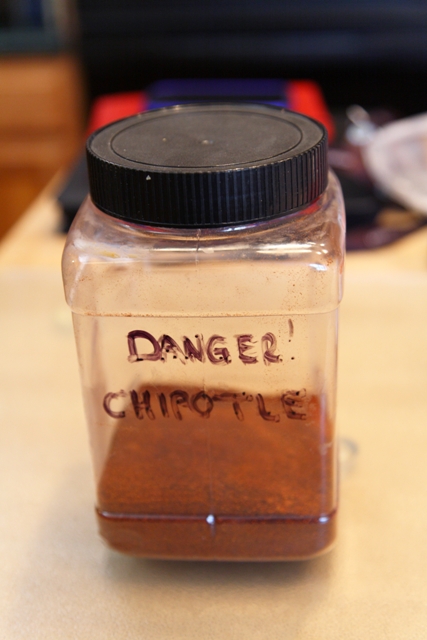
Dangerous Stuff—Use With Caution


Place the bacon in a medium-hot skillet and brown.
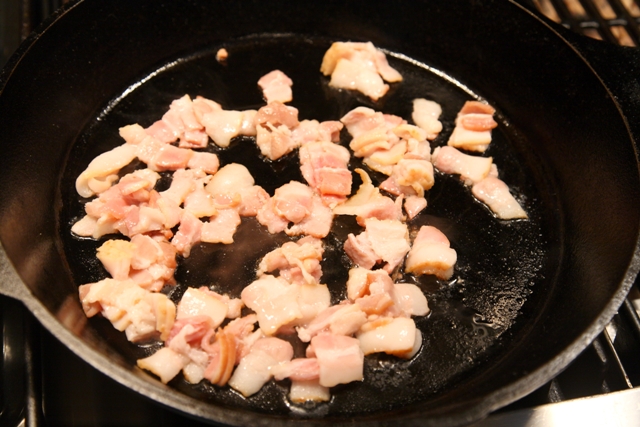
Makin' Bacon

Just before the bacon is done, drain off most of the oil and toss in the crushed garlic.
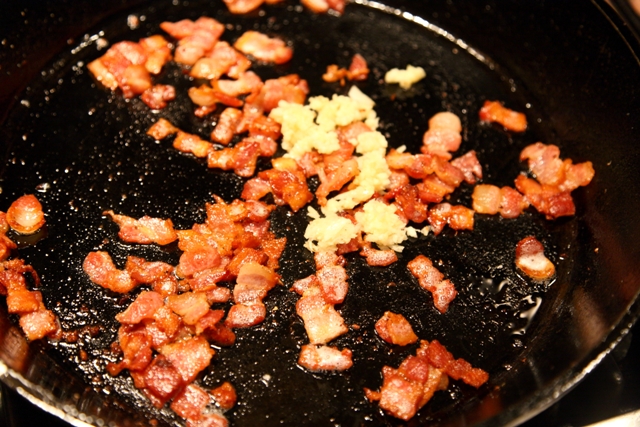
Crushed Garlic and Bacon

Place bacon/garlic mixture on a paper towel to absorb excess saturated fat.
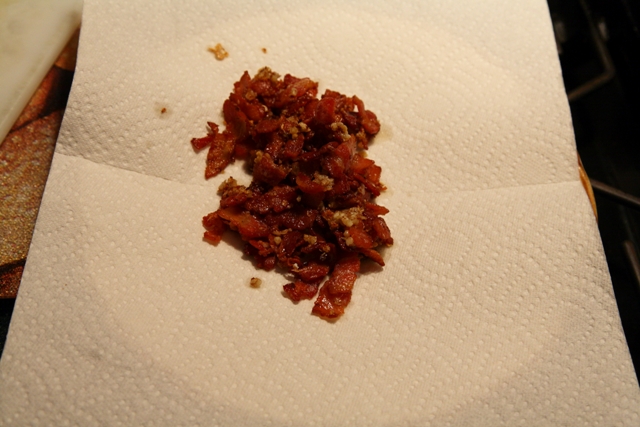
Bacon and Garlic Mixture

Sauté bell pepper until slightly browned and tender/crisp.  Remove from pan.
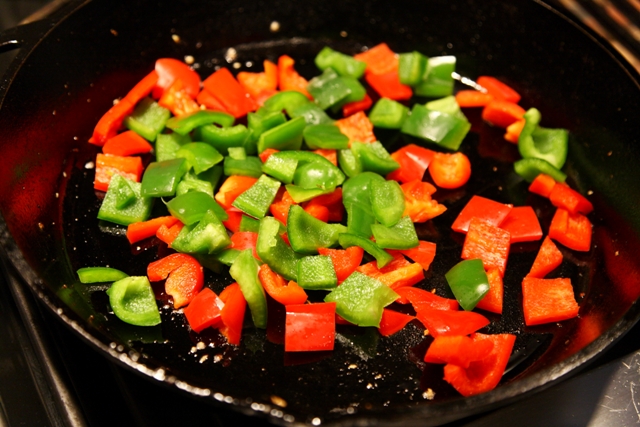
Add the Bell Peppers . . .
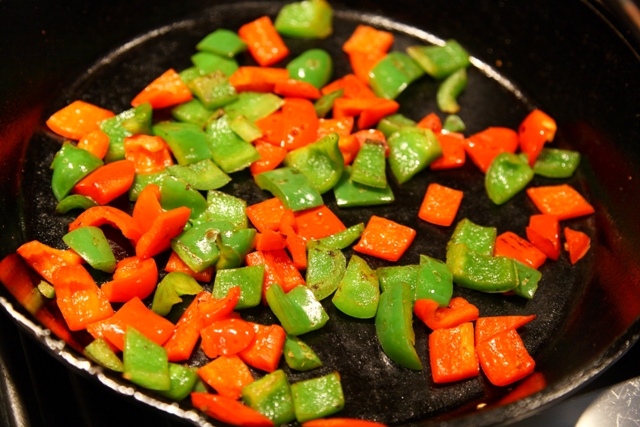
. . . but Don't Overcook Them

In small batches, sauté shrimps until turning color, slightly opaque, but not quite done.  Don’t put too many in or the pan will cool too much.  If you’re using sliced jalapeño, add some before you put in the shrimp to give the shrimp some flavor.  If you’re using fish filets, brown the filets for about two minutes per side, until just done and remove.
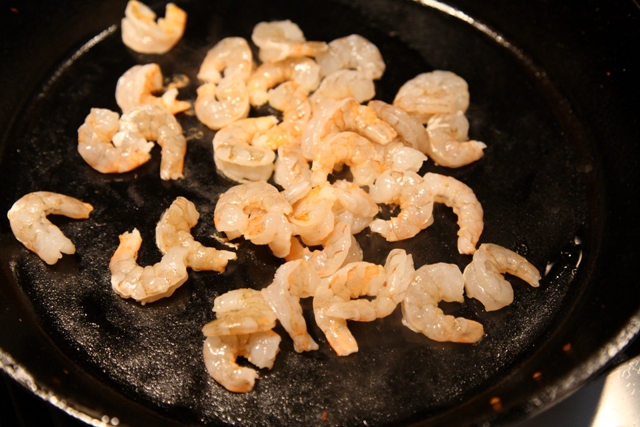
Goes in Raw . . .
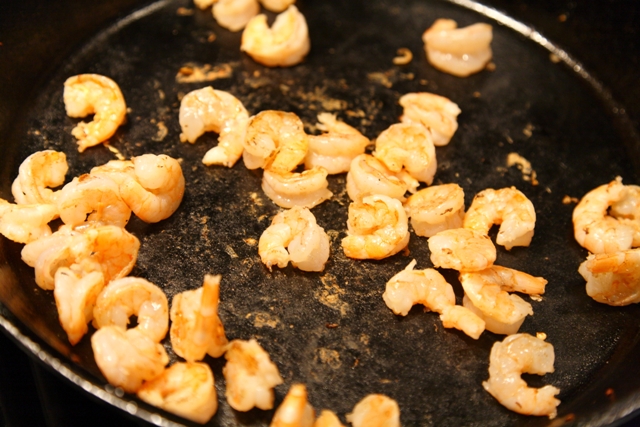
. . . Comes Out Undercooked (don't worry—we'll cook them up more in a minute)

Toss the bacon, garlic, and bell peppers back in with all the shrimp and evenly sprinkle on the chipotle.  Use caution, because this stuff is hot.  If you’re using fish filets, sprinkle the chipotle over the bacon, garlic, jalapeños, and bell pepper, mix thoroughly, and spoon over the filets.
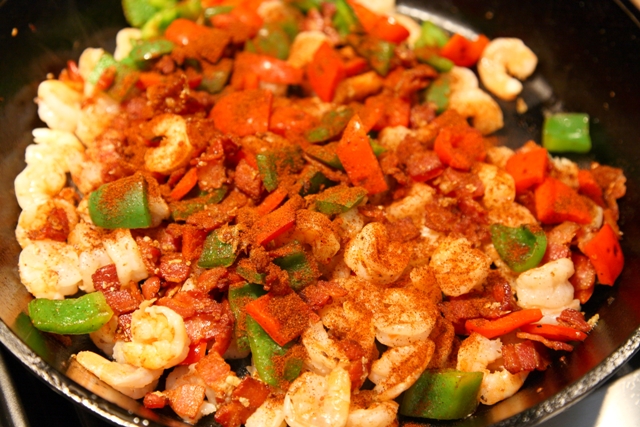
Toss in Everything . . .
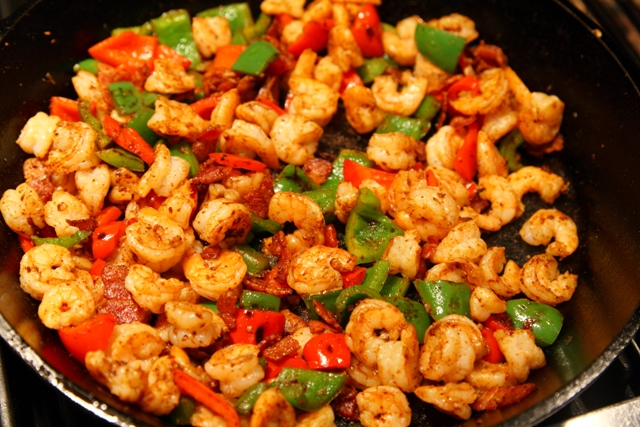
. . . and Toss Well—Finish Cooking Those Shrimp!

Serve your diabla over buttered rice (I use parboiled, such as Uncle Ben’s, for this recipe).
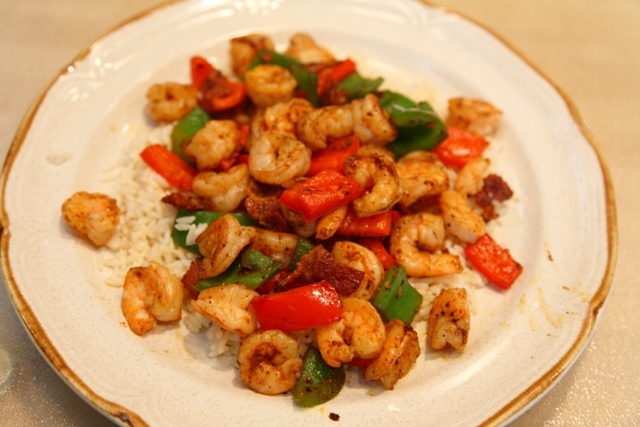
MMMmmm . . . Looks Good Enough to Eat!

Wine selection—Because of the spicy nature of this dish you’ll need something to quench the fire.  As sweetness counteracts spicy, this calls for a semi-sweet white wine such as German Riesling, Gewürztraminer, or one of the sweeter Sémillons.

Chipotle Hint:  El Potrero Trading Post is the only place to get dried chili powders.  Their selection includes green, sun-dried reds from mild to hot, over-dried reds that are darker in color, and the absolute best chipotle I’ve found anywhere.  El Potrero’s chipotle has a smooth, smoky flavor that perfectly complements an explosive spiciness that’s just this side of rocket fuel.  Whether it’s oven-dried red powder for enchilada sauce, sun-dried powder for a deep red chili colorado con puerco, or chipotle for everything from brisket or rib dry rubs to fish filets, make sure you get your powder from El Potrero.  You simply cannot go wrong with any of their chili products.  Yes, they ship, and their number is: (505) 351-4112.  And here’s El Potrero’s Contact Information Page.

But you really should go visit El Potrero in person because, right next door, you’ll find the famous El Santuario de Chimayo, and this is what you’ll see:
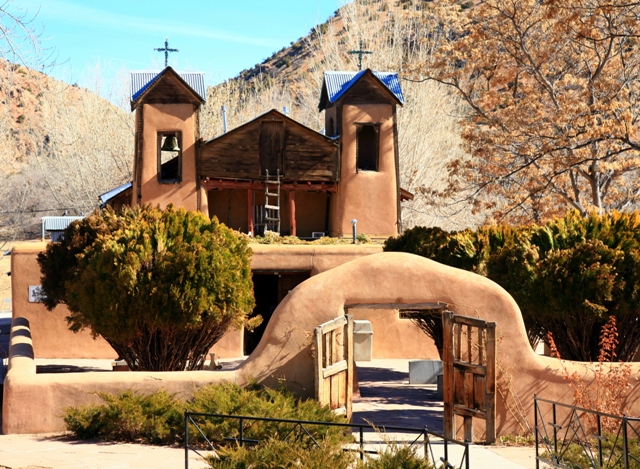
El Santuario de Chimayo
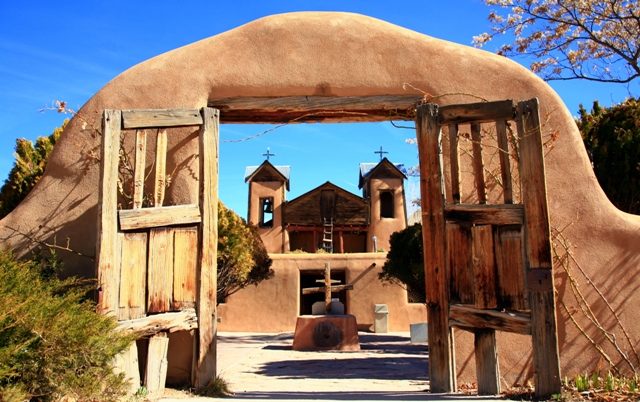
Looking Through the Gates
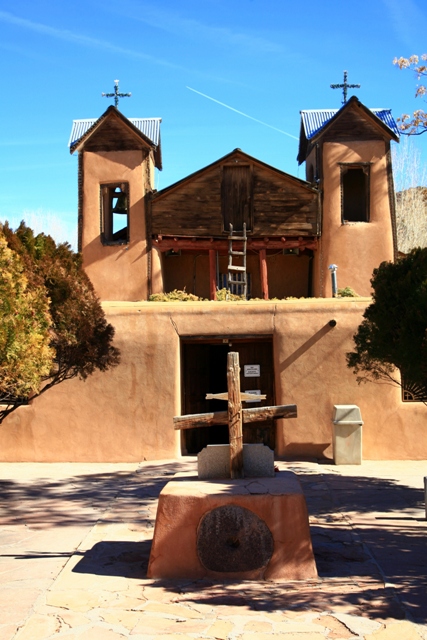
Adobe Enchantment
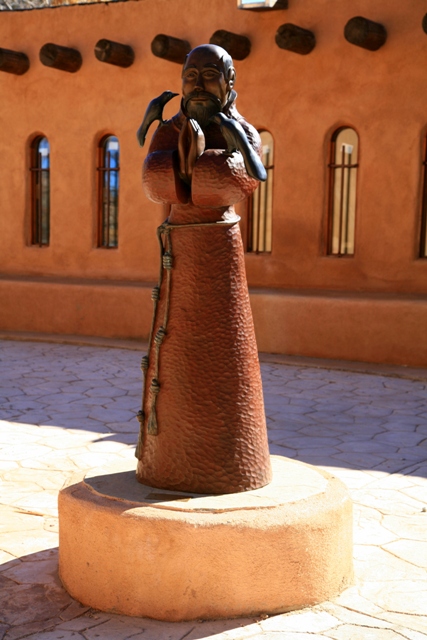
St. Francis and a few of his closest Friends
 

1 Comment

Filed under Photography, travel, Wine & Food

The Art and Joy of Roadstering—Part 2


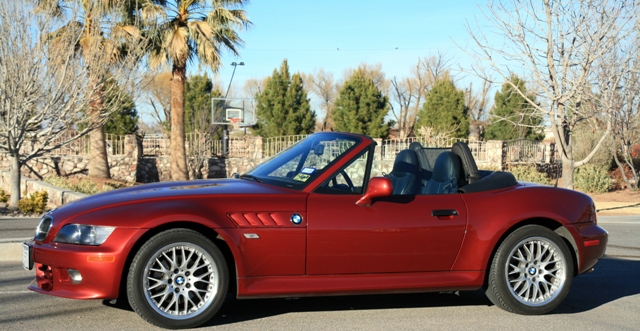
That Z3 remains my roadster today, and is in my mind the logical successor to everything the MGB tried to be in its eighteen-year production run.  Both cars handle tight corners in remarkably similar fashion.  But the Z3 roadster comes with power of which the MGB designers could only dream.  Even the rare MG RV8—a limited-run MGB offshoot with a 190 horsepower V-8 engine that was produced between 1993 and 1995 did not come close to the 231 horsepower inline-six of the BMW.

Now to describe the roadster experience.  If you love driving, there is simply nothing quite like it.  You owners of the Mazda MX-5 Miata and Honda S2000 know all about this, especially if you were savvy enough to get your roadster equipped with a manual transmission.

It’s the first truly nice weekend of spring.  The temperatures climb into the high 60s to low 70s.  The convertible roof is lowered and stowed behind the seats.  You place your beautiful bride (Ursula, in my case) in the passenger seat.  Roll down the windows.  Depress the clutch pedal.  Release the fly-off handle for the parking brake.  Engage first gear.  Goose the throttle and easily engage the clutch.  The roadster rolls out onto the street, a hint of wind licking at your hair and seducing you with the promise of the adventure that is to follow.

You speed past the busy streets of the city, eager to find open spaces on sparsely traveled roads, preferably roads with many twisty turns and trees and fields lining either side.  The sun is warming you as you slip the transmission into a gear compatible with the speed limit . . . or perhaps just a tad more.  Make that a lot more.  Your hear is now whipping around, and you are silently grateful for the sunglasses that double almost as protective goggles for your vulnerable eyes.  You press down on the throttle and get up to speed on a short straight then, just before hitting the next turn, you depress the clutch and rev up the engine to match the downshift into a lower gear.  You ease back on the throttle, using the engine to slow the car into the tight turn, then mash down on the gas to accelerate smoothly out of the corner and into a line that positions you nicely into the next straight.  You press down again on the clutch, ease up on the throttle, upshift, and then resume the pace ahead, the elements once again bathing you in the sights, sounds, and smells of surrounding nature.

Rinse.  Wash.  Repeat.  Straight after straight.  Corner after corner.  Hill after hill.  Bridge after bridge.  The roadster becomes an extension of you, following precisely the commands of your feet on the pedals and your hands on both the wheel and the shifter.

In such a scenario, horsepower takes a backseat to technique and the cornering ability of the car you’re driving.  Sure, it’s nice to be able to power out of a tight turn, but even a 63 horsepower MGB becomes a very capable intermediary between you and the road if you know how to drive well and get the most out of the car.  Much more important than horsepower to the roadster experience are weight, balance, steering responsiveness and, most importantly of all, driving skill.

A lot of that skill comes with understanding the gear ratios of your car and how they manipulate the power band of the engine.  More comes from an intuitive feel for the approaching road and the ability to visualize the line the car will take going through that corner that is rushing to greet you—when to brake, when to downshift and by how many gears, how much throttle to give the engine while engaging the clutch, and how much more to give it when accelerating out onto the next straight.

So, while driving to work may be a chore, sports driving in a roadster is a joyous, almost mystical experience any true lover of cars really must take the time to both master and experience.

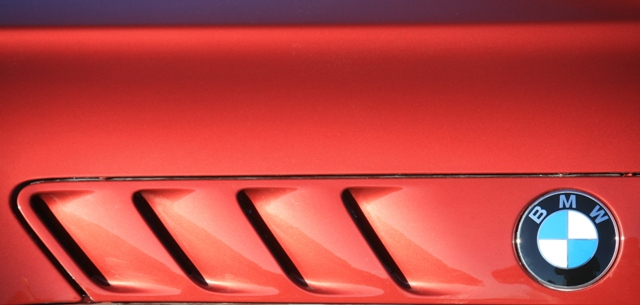
Monday’s blog showed my old Tr6.  Today we look at the BMW Z3:

Comments Off on The Art and Joy of Roadstering—Part 2

Filed under Automobiles and Driving

The Art and Joy of Roadstering—Part 1


I have a love affair with roadsters in general, British roadsters in particular.  So, what is a roadster?  Beyond being pure motoring enjoyment, I define a roadster as a smallish, fairly lightweight, maneuverable, open-air, two-seat automobile.  You’ll notice that my definition of roadster does not address power, as that is not what truly defines the roadster driving experience, which I’ll get to in the next installment of this two-part series.

I acquired my first roadster when I was stationed at RAF Lakenheath in England back in the 1970s.  That car was a custom-ordered 1977 MG MGB clad in Brooklands Green.  The interior was trimmed in Autumn Leaf-colored, Naugahyde-style seats and side cockpit panels with black dash/instrument panel and center console.  Naugahyde, for the uninitiated, is the exquisitely expensive, meticulously prepared, beautifully handcrafted hide of the elusive and rare Nauga Beast—otherwise known as vinyl-clad fabric to which your sweaty skin would stick like glue in hot weather.  Climbing out of the car after a drive in shorts required the use of cooking spray beforehand and a spatula afterward.  Included in the custom order was the Laycock overdrive option, which effectively gave the manual transmission six speeds instead of the four indicated, as overdrive was available in both 3rd and 4th gear.

This car cost me about $4,500.  I drove it for nearly ten years and sold it for $3,500.  Not bad.  But in the meantime, it was a maintenance nightmare.  I cannot recount how many times I rebuilt that power-sapping Zenith CD5T carburetor, and I had to work on that little beast every other weekend to keep it reliably running.  And don’t even get me started on the Lucas electricals.  There’s a reason why enthusiasts of British roadsters of that era refer to Lucas as, “The Prince of Darkness.”  It’s because frequently when you reached for the headlight switch, darkness was all you got.

Yes, it was a true love-hate relationship with that car, and I missed it almost immediately after selling it to finance the acquisition of a 1986 Pontiac Fiero SE with a V-6 engine mated to (shudder) an automatic transmission.  There is just something about sports cars and roadsters that cries out for a clutch pedal and a stick shift, but I digress.  Be that is it may, that great ol’ MGB was not my first choice.  I actually lusted after the 1976 Triumph TR6, but being an enlisted man in the USAF precluded that expenditure, and by the time I was ready to purchase my first new car the TR6 was being phased out in favor of the TR7—a car that was introduced in 1975 and the car upon which I blame for the eventual demise of both Triumph and MG.  The TR7/8 is the poster child for what was wrong with British Leyland and BL management at that  time.

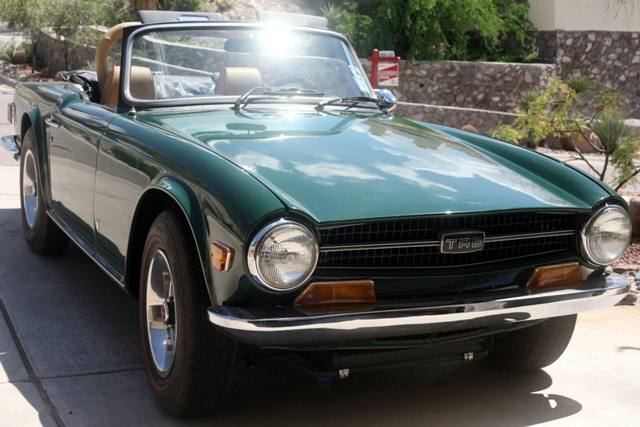
Oddly enough, I found a fairly nice example of the TR6 some three decades later, a 1972 that Ursula got for me back around 2006.  Nearly identical coloration to the Brooklands Green exterior and Autumn Leaf interior of my beloved MGB.  Fun to drive.  Much more power than the 63 horsepower 1977 MGB (a whopping 104 horsepower).  Certainly turned heads wherever we drove it.  Alas, it lacked the ergonomics and comfort of the MGB, and really fell short in comparison to modern roadsters.  I sold it a year later, after acquiring the Teutonic equivalent of a modern MGB, a 2001 BMW Z3 with a 3.0-liter engine that makes driving just that much more enjoyable.

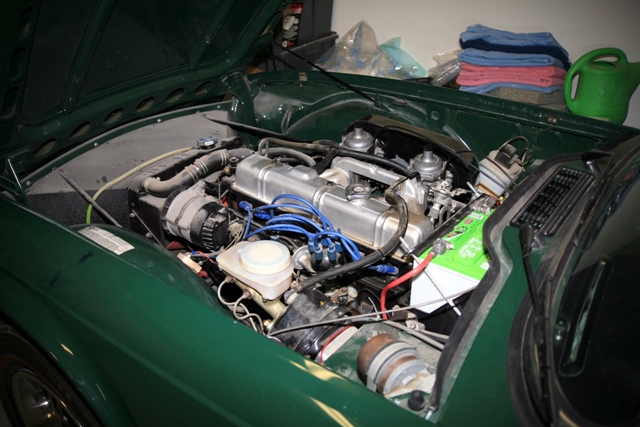
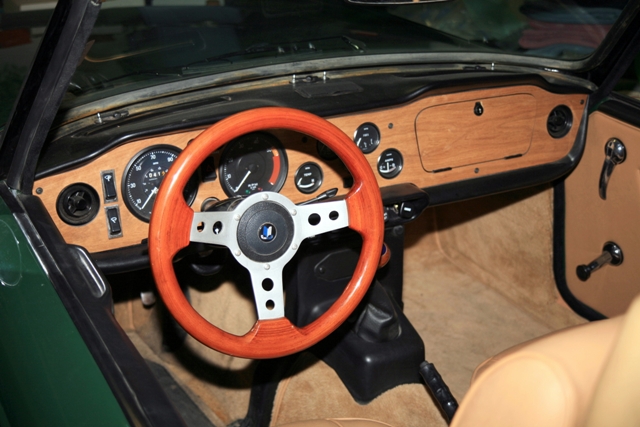
I’ll need to dig through my 35mm photo archives to see if I can find pictures of that old MGB, but in the meantime here’s that TR6:

1 Comment

Filed under Automobiles and Driving