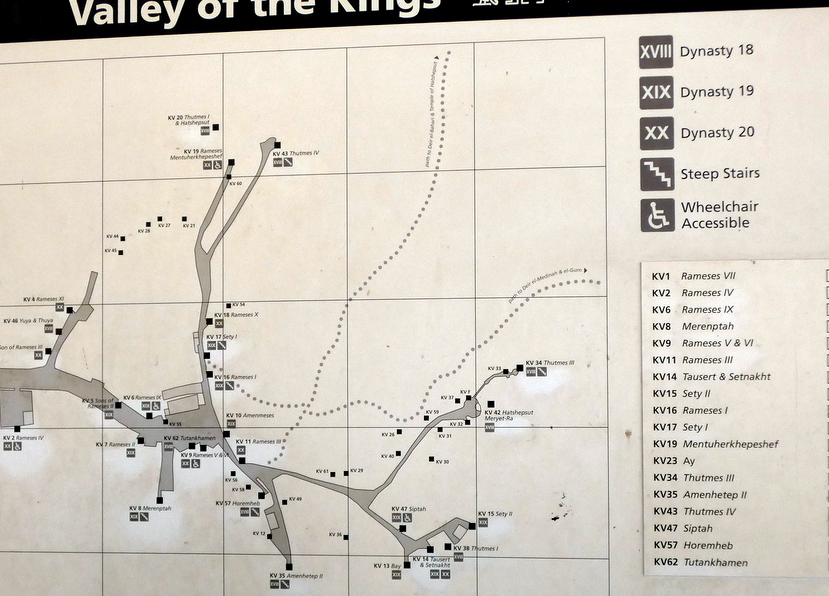
In case you’re wondering, the answer is “yes.” You can indeed go into some of the tombs in the Valley of the Kings. Some are off limits. Some charge an additional entry fee, such as the tomb of Tutankhamen. But many are included in the price of admission into the Valley. Today’s Fun Photo Friday will concentrate on what you’ll find inside:
There are several drawbacks to building pyramids, but the primary one is that they’re expensive as heck. If one could find, say, an area of soft limestone into which one could carve underground burial chambers, just imagine the cost savings. But Egyptian pyramids had been around for a long, long time, starting with the Pyramid of Djoster during Egypt’s Third Dynasty (Old Kingdom) circa 2700 BC, and finishing up around 1525 BC with the completion of the Pyramid of Ahmose I during the 18th Dynasty (New Kingdom). So, if that burial area were situated beneath a huge pyramid-shaped mountain, so much the better. Welcome to the Valley of the Kings!
A map of Valley of the Kings burial chambers
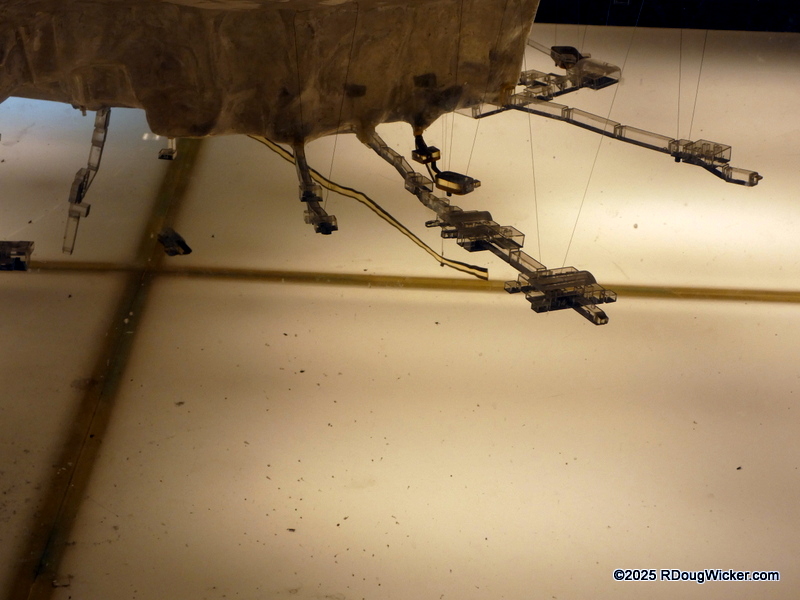
Since these tombs are beneath the ground, here’s how they would appear if you could see through the surface:
Valley of the Kings 3D representation
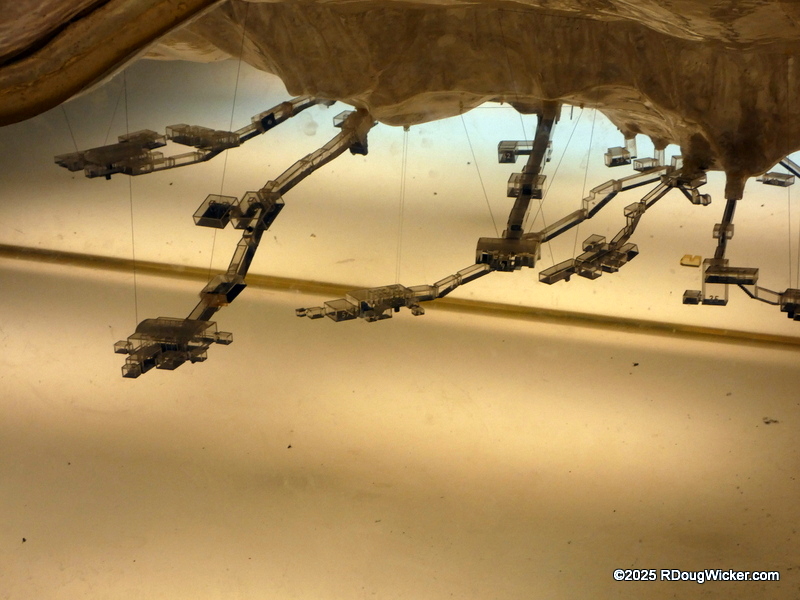
And while the official count is 65 chambers, that’s not really accurate because many of those tombs hold more than one chamber. Indeed, tomb KV5, belonging to Ramsesses II, contains an almost incomprehensible 120 chambers!
Many tombs contain multiple chambers
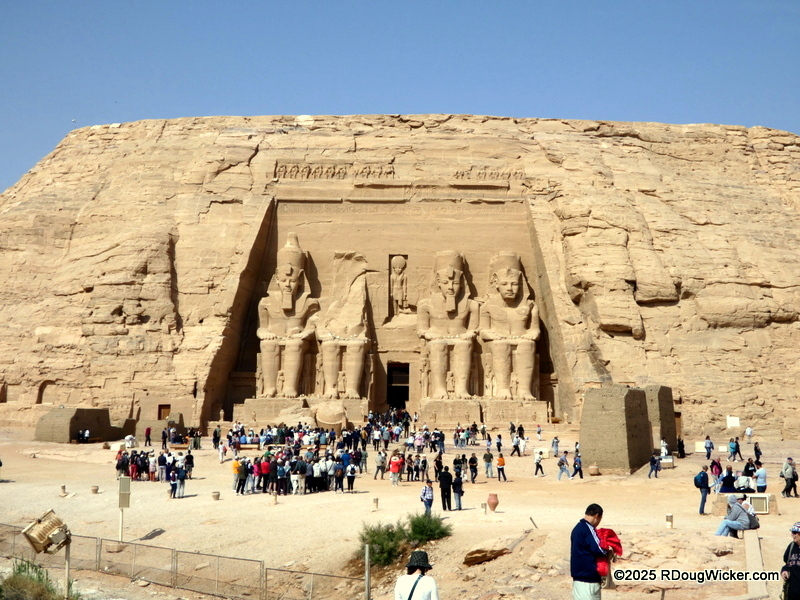
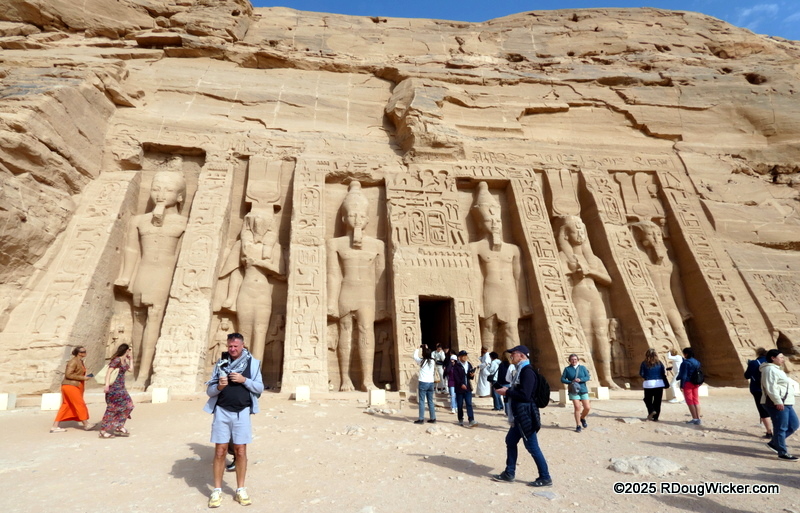
Remember Ramsesses II? We’ve talked about him before in reference to Abu Simbel:
Abu Simbel
Abu Simbel
Abu Simbel
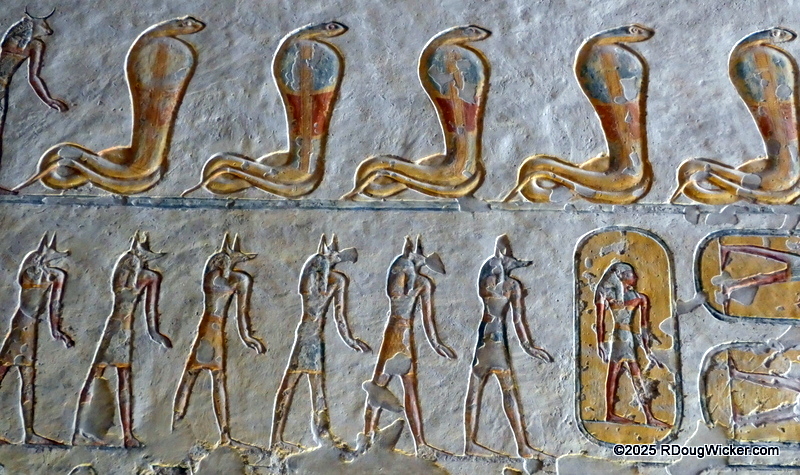
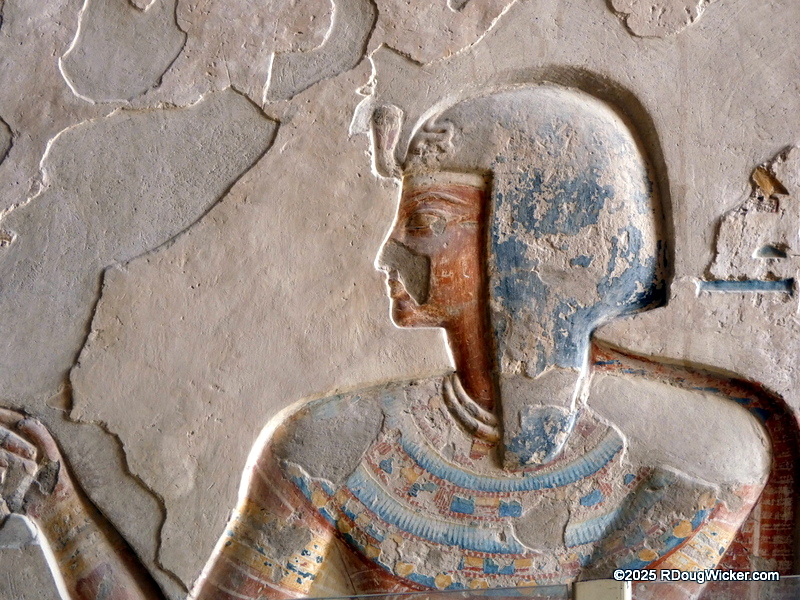
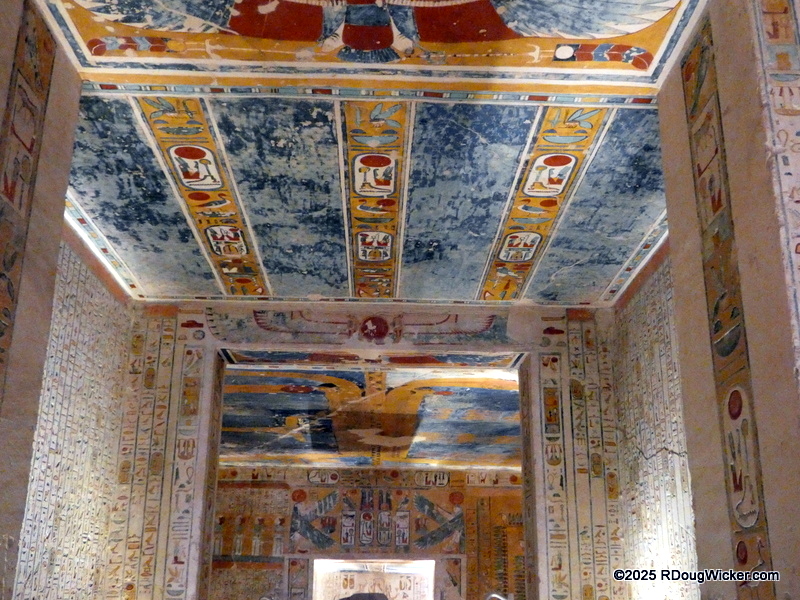
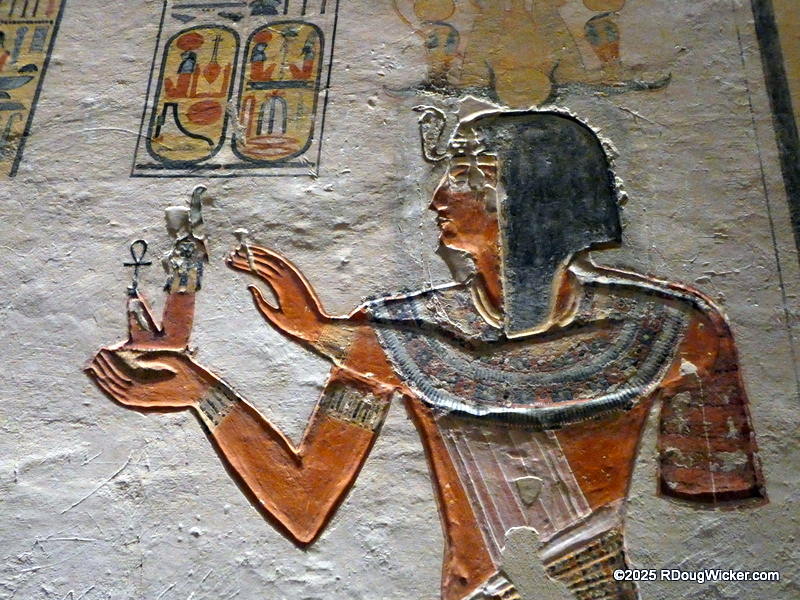
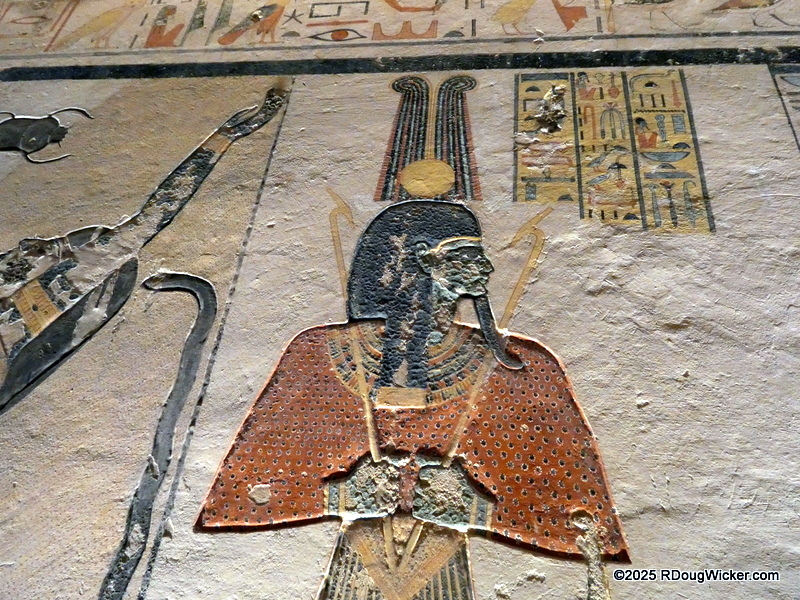
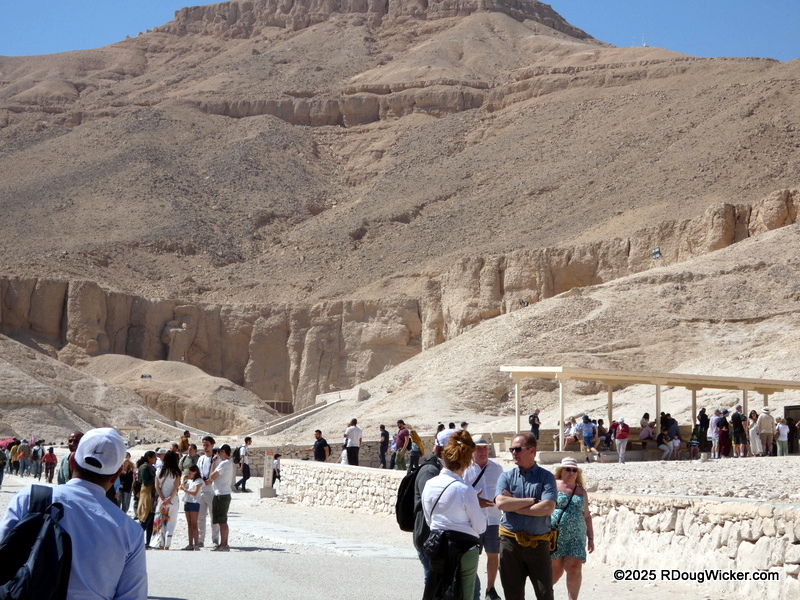
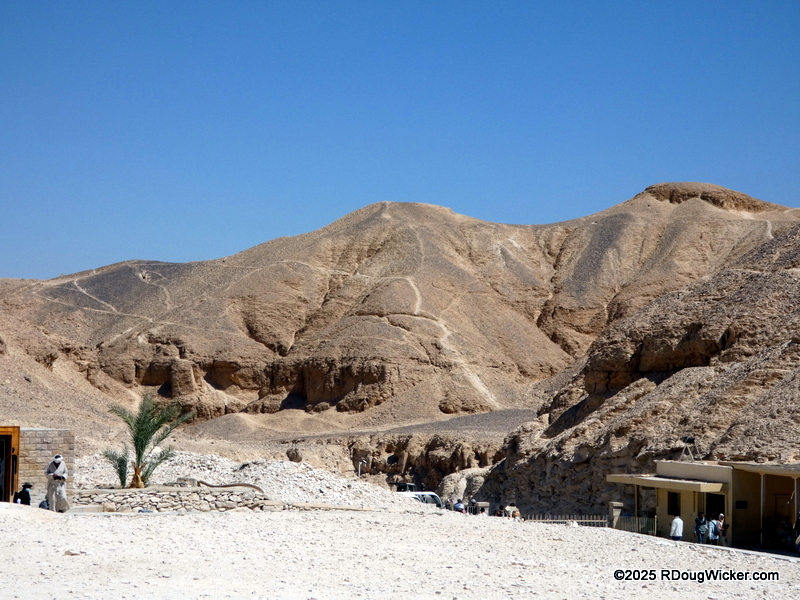
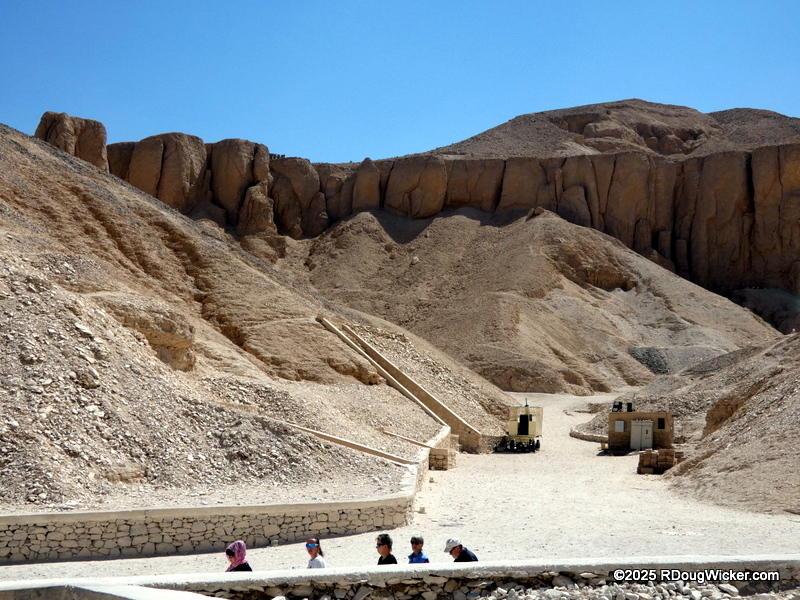
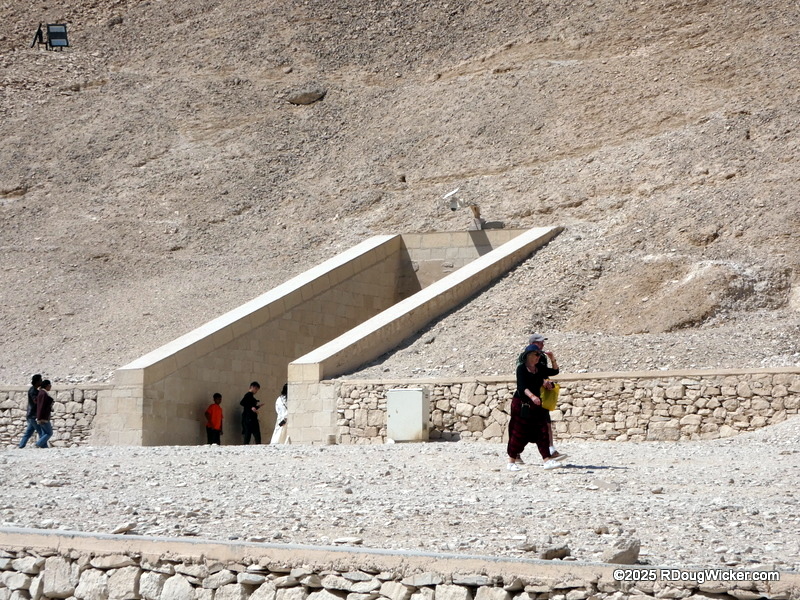
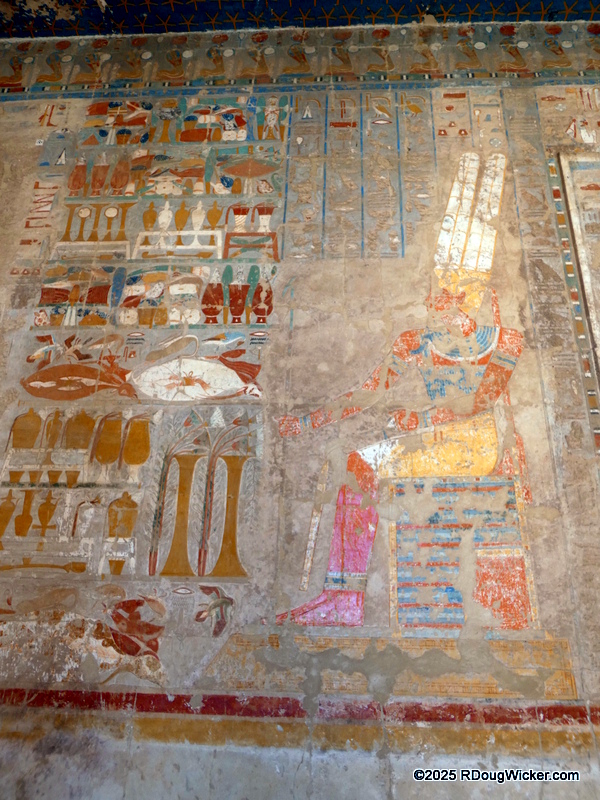
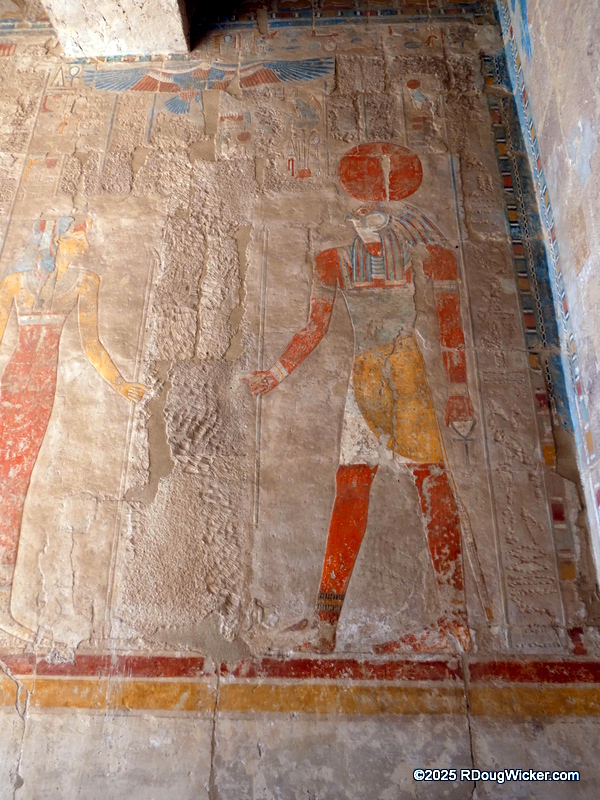
There is much to see here at the Valley of the Kings, so expect many more images from now through 14 November’s Fun Photo Friday. To whet you appetite, I’ll leave you with today’s final three images:
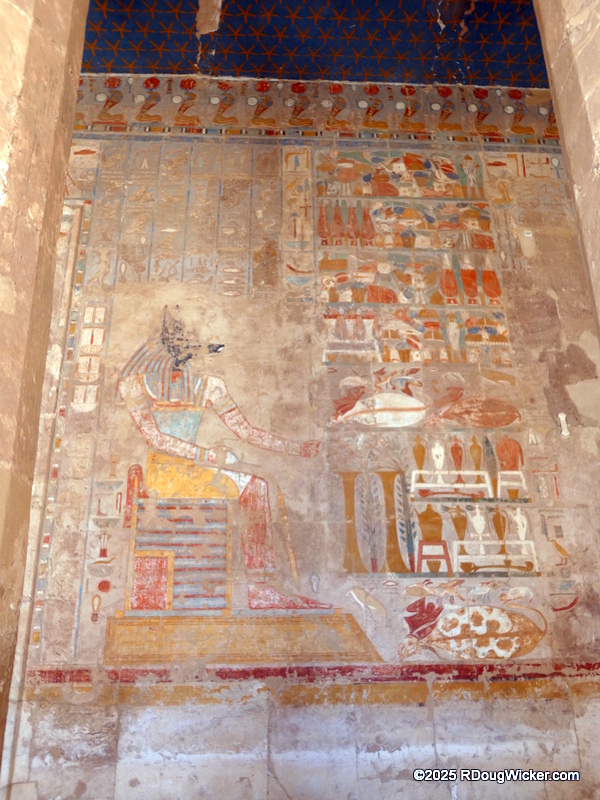
Painted Anubus relief of the Mortuary Temple of Hatshepsut
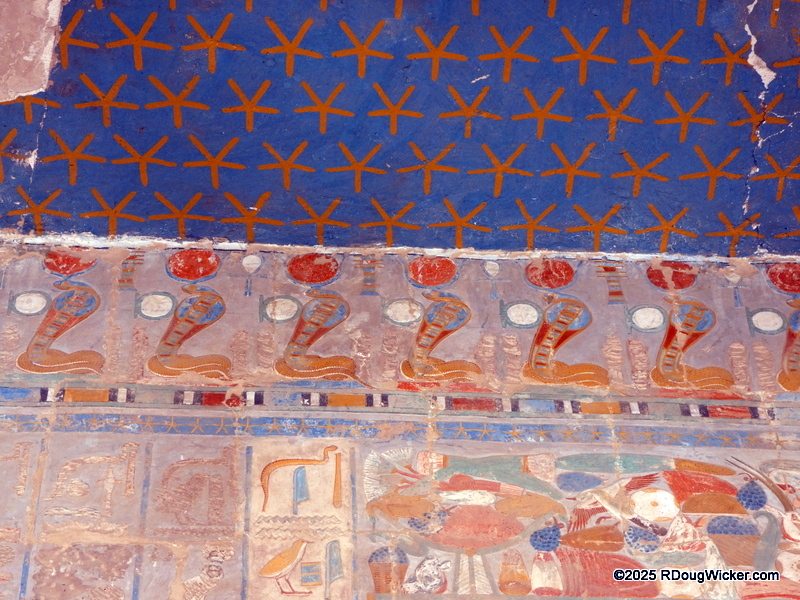
Unlike most of the Ancient Egyptian temples I’ve shown you so far, there’s something a bit different here at the Mortuary Temple of Hatshepsut, one of Egypt’s few female pharaohs. Here you’ll find many of the reliefs painted, and the paint doesn’t even look 3,400+ years old. Indeed, they don’t look a day over 3,000 (just kidding). So, today I’m going to present images of these impressive painted reliefs. Below is our old friend Horus, whom we’ve seen many times in this series, as well as a plethora of images depicting the Egyptian goddess Uraeus (“Rearing Cobra):
Horus and Uraeus playing basketball
Above Uraeus you’ll discover a rich blue ceiling containing many gold stars:
Starry night sky over ready-to-strike Uraeus
Don’t pin me down on this next one, but I believe this may be a depiction of Egyptian goddess Hathor, whom we’ve met before:
Hathor(?)
And once again we have Horus in his half-falcon/half-human form:
Horus
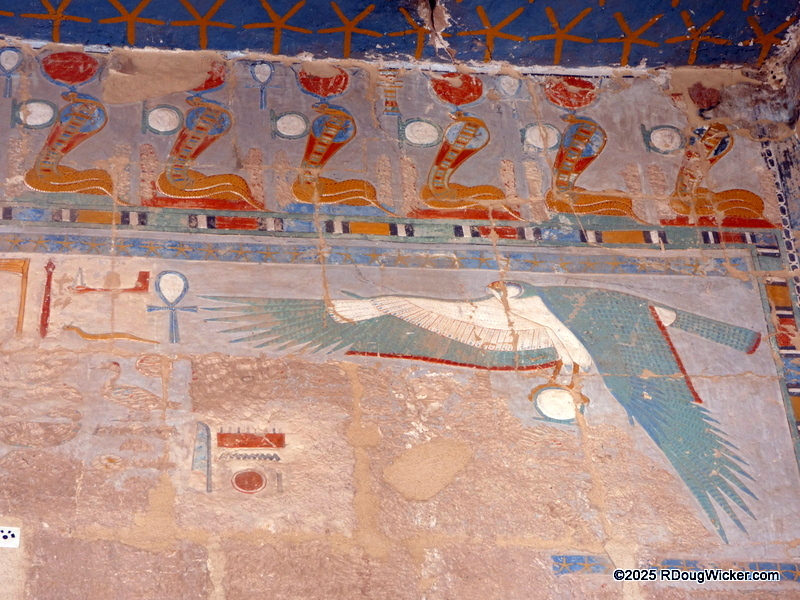
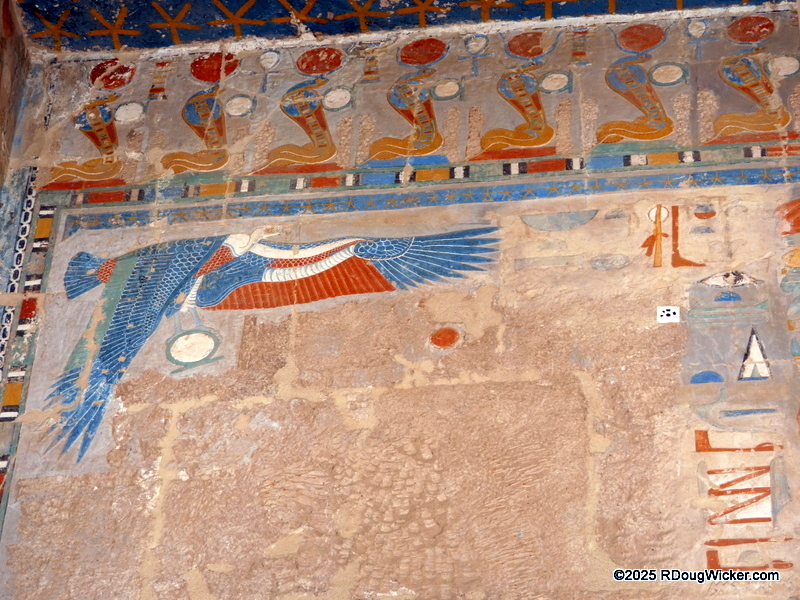
This next bird is not Horus. You’ll notice it looks more like a vulture than a falcon, and that’s precisely what it is. Behold the Egyptian goddess Nekhbet, protector of Upper Egypt:
Ancient Egyptian vulture goddess Nekhbet
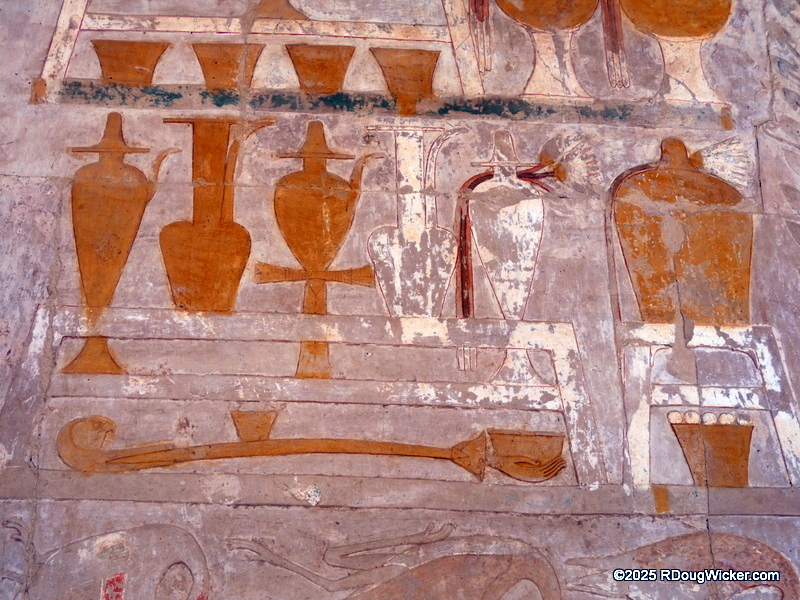
I shall leave you today with one more painted relief from the Mortuary Temple of Hatshepsut:


 Decisions — Murder in Paradise
 The Globe — Murder in Luxury
 R. Doug Wicker — Author