Tag Archives: Beijing

Beihai Park — Part 1


Beihai Park 16

Beihai Park 16

Northwest of the Forbidden City lies an imperial garden dating back to the 11th Century.  This is the 171-acre/68-hectar Beihai Park, our China Spree destination after the Forbidden City and our rickshaw ride to lunch.  As always our guide Jim Mao was ever helpful in pointing out the sights and areas of interest.

Beihai Kitty

Beihai Kitty

Nearly half Beihai Park is taken up by a large lake.  In the center of that lake is Qionghua Island, atop of which sits the famous White Dagoba, a Buddhist stupa built during the Ming Dynasty (1368-1644).

Five-Dragon Pavilion on left; Qionghua Island and the White Dagoba on right

Five-Dragon Pavilion on left; Qionghua Island and the White Dagoba on right

One of the first sights upon entering the park from the north is the colorful and impressive Nine-Dragon Wall built in 1756.  This wall is made of bricks glazed in seven different color.  It measures nearly 88 feet (27 meters) in length and stands nearly 16 feet (5 meters) high.
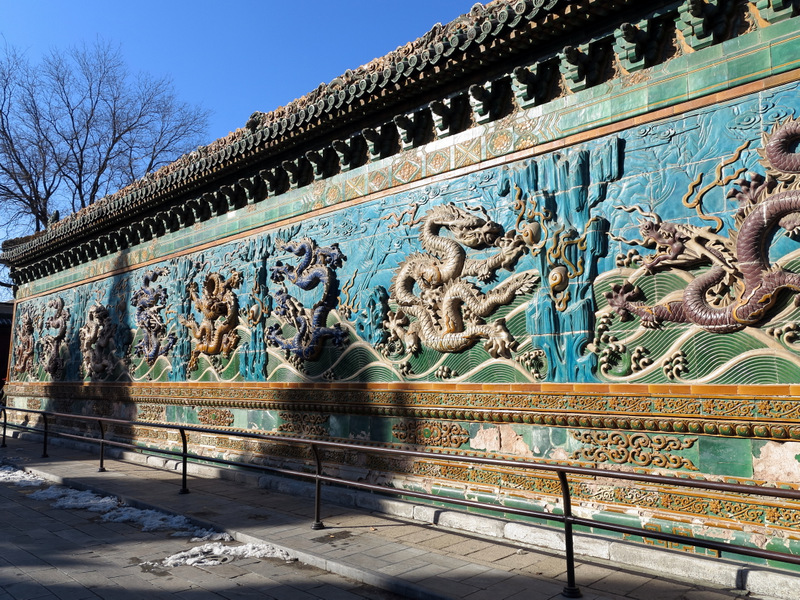
88 feet of dragons — Nine-Dragon Wall

88 feet of dragons — Nine-Dragon Wall

Each of the nine playful dragons is depicted cavorting in the clouds while playing with a pearl.  It appears that the mythical dragon has quite a place in Chinese culture.

Nine-Dragons closeup

Nine-Dragons closeup

Most of our time in Beihai Park was spent along the north shore of the lake.  As you travel around this portion of the lake you’ll stumble across some really great photo opportunities.

Five-Dragon Pavilions; White Dagoba in the background

Five-Dragon Pavilions; White Dagoba in the background

One of the more colorful sights in this area is the Five-Dragon Pavilions — a set of five pavilions interconnected by a series of stone zigzag bridges.   The bridges form a V-shape, so two are hidden from view in the photograph below.  The largest of the five pavilions is the middle one (on the right side of the photo), and it’s the only one with a round roof peak.
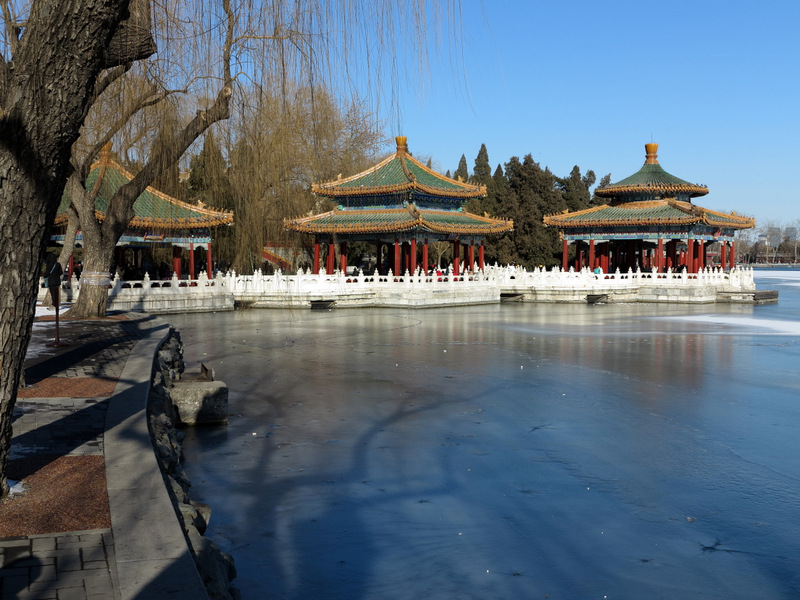
Five-Dragon Pavilions

Five-Dragon Pavilions

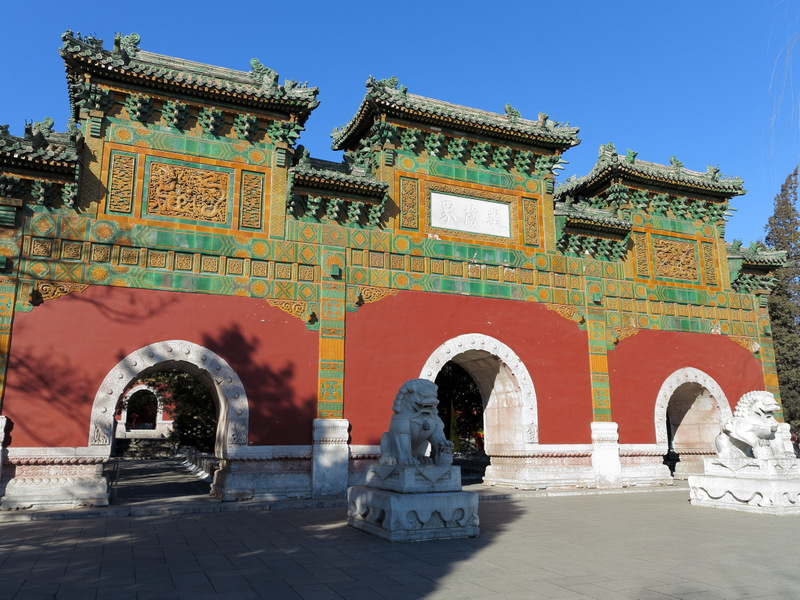
Photographically Beihai Park is definitely worth the stop.  I’ll have more on this imperial garden on Wednesday, and it’ll also be the subject of Fun Photo Friday.
Beihai Park 12

Beihai Park 12

Beihai Park 05

Beihai Park 05

3 Comments

Filed under Photography, travel

Fun Photo Friday — Forbidden Photos


Time to bring to a close our look of the Forbidden City.  Enjoy the scenery:

2 Comments

Filed under Fun Photo Friday, Photography, travel

The Forbidden City — Part 2


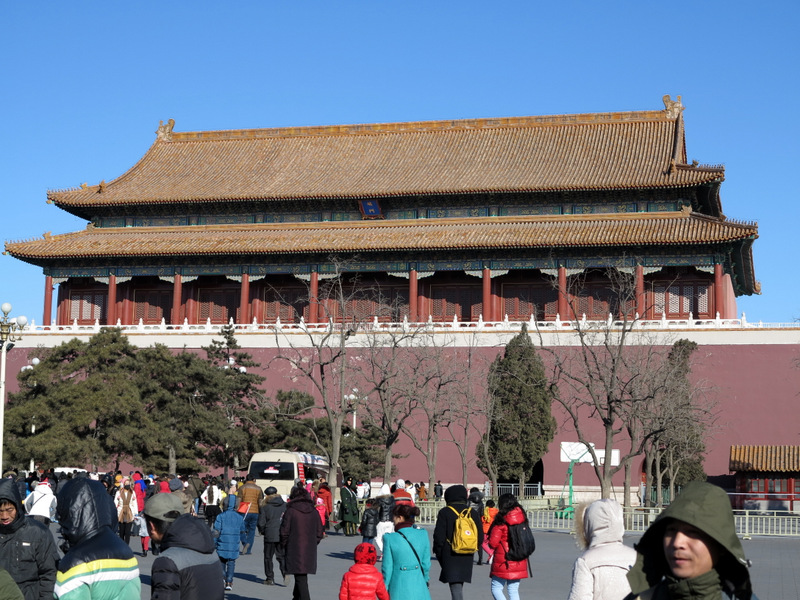
Backside of the Gate Tower entrance from Tiananmen Square

Backside of the Gate Tower entrance to the Forbidden City from Tiananmen Square

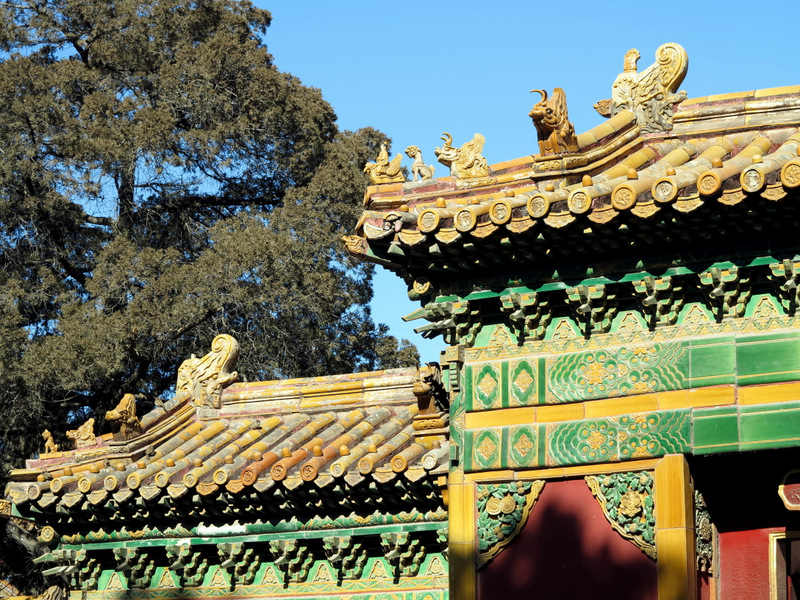
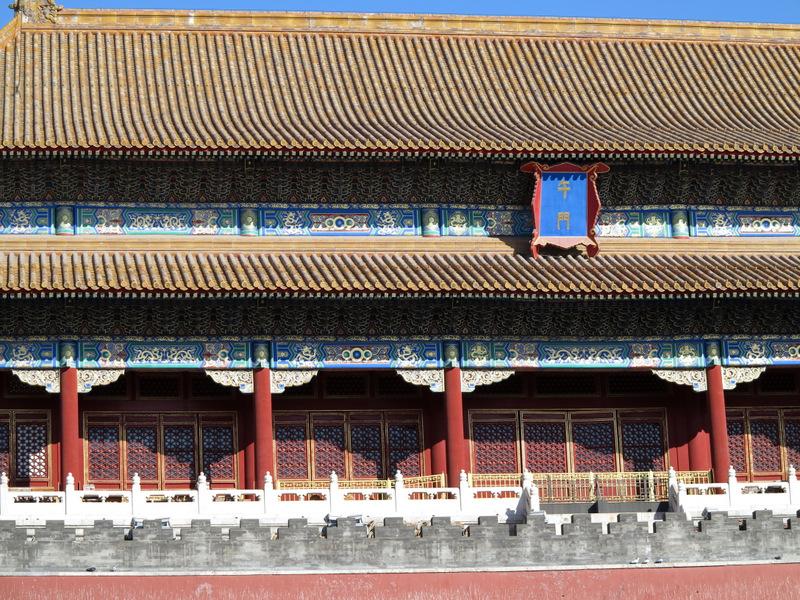
Passing through the Gate of Heavenly Peace at the north end of Tiananmen Square brings you into the Forbidden City.  This UNESCO World Heritage site is currently undergoing a rather extensive renovation and has  for quite some time, including the many finely detailed architectural details found on structures throughout the imperial palace grounds.

Forbidden City-063

Intricate Exterior Details

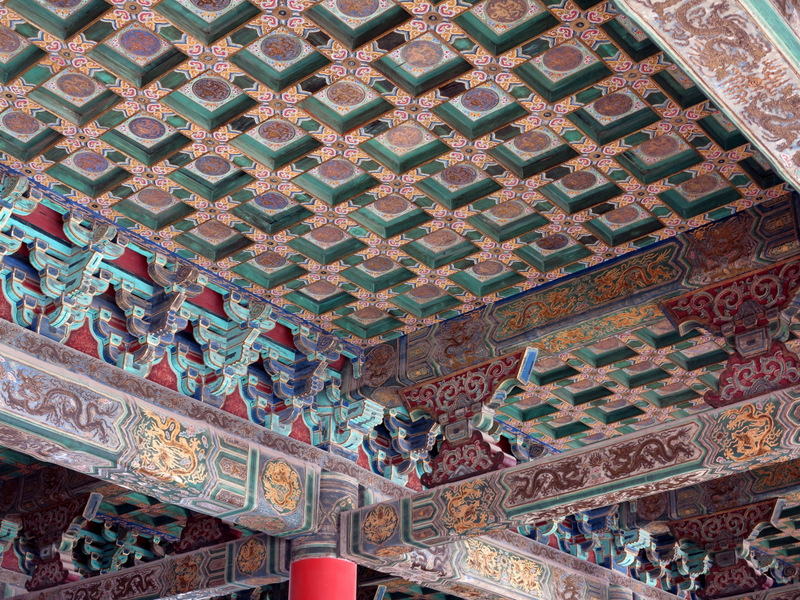
This renovation extends to some very detailed interior work as well.

Equally Impressive Interior Details

Equally Impressive Interior Details

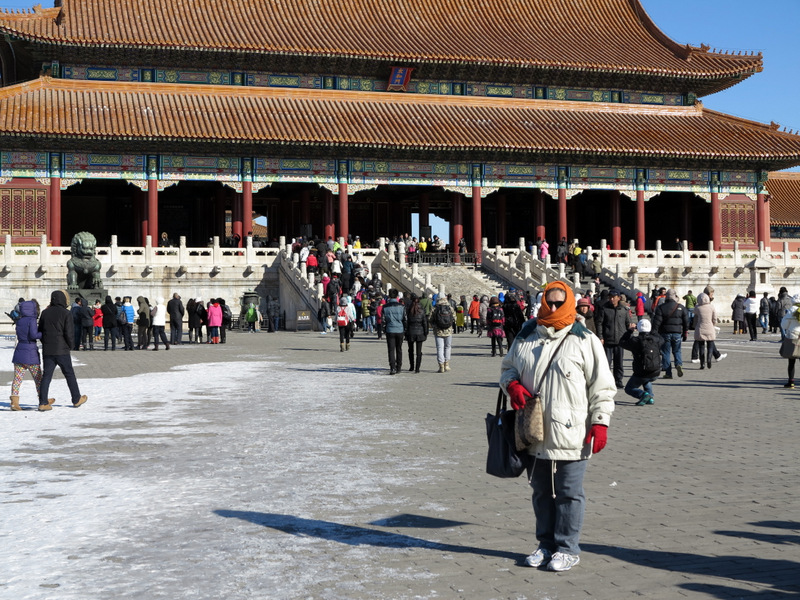
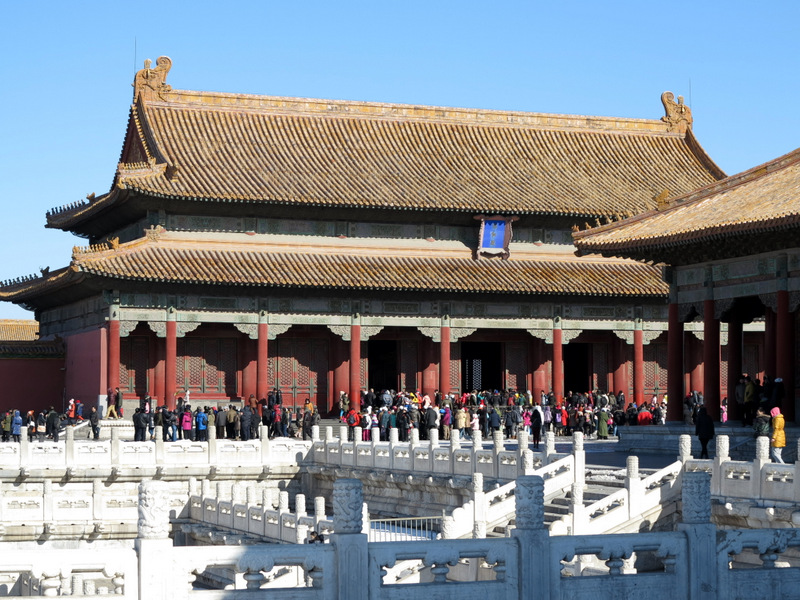
The largest of the three halls in the inner court of the Forbidden City is the Palace of Heavenly Purity.  This served as the royal reception hall during much of the Qing Dynasty.

The really cool chick I picked up outside the Palace of Heavenly Purity

The really cool chick I picked up outside the Palace of Heavenly Purity

Palace of Heavenly Purity architectural details

Palace of Heavenly Purity

Another impressive structure is the Hall of Preserving Harmony.  Noticeably smaller than the Palace of Heavenly Purity, this hall was used mostly for practicing upcoming imperial ceremonies.

Hall of Preserving Harmony

Hall of Preserving Harmony

The Forbidden City has a very long and extensive history, as one would expect of a complex used as an imperial palace for the better part of 500 years.  And even after the abdication of the last Qing Dynasty ruler — Emperor Aisin-Gioro Puyi Emperor Puyi continued to live in and control the inner court until he was finally expelled in 1924.  The Forbidden City has officially been a museum since 1925.  In all the Forbidden City was home to 14 emperors of the Ming Dynasty and another 10 emperors from the Qing Dynasty during the 493 years it served as an Imperial Palace (1420-1912), and served as a royal residence for 505 years (1420-1924).

Click on any image below to bring up today’s slide show:

2 Comments

Filed under Photography, travel