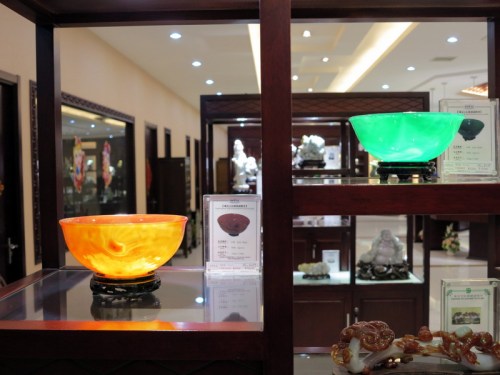
Government-owned Jade Factory
Let’s face it, nobody knows jade like the Chinese know jade. Sure, the stuff is beautiful, but if you don’t know what you’re getting then you will probably feel ripped off later.
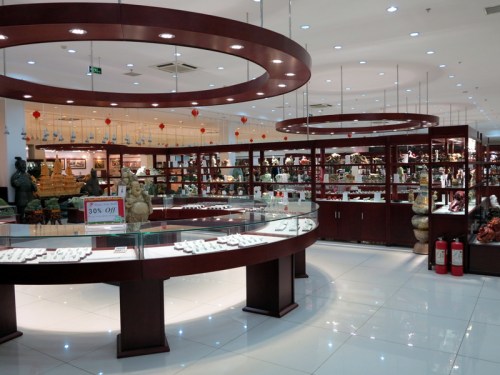
Government-owned Jade Factory
At the government-owned jade factory you will most assuredly leave feeling good about your purchase. You’ll find that you most likely made some really great buys as you compare at other stores during your China journey. I’ve read other travel blogs that have labeled this a “tourist trap.” Those bloggers obviously didn’t check retail outlets later for both quality and price or they never would have made such a blatantly silly statement. The government-owned pearl store? That’s another story. We didn’t buy there.

Government-owned Jade Factory
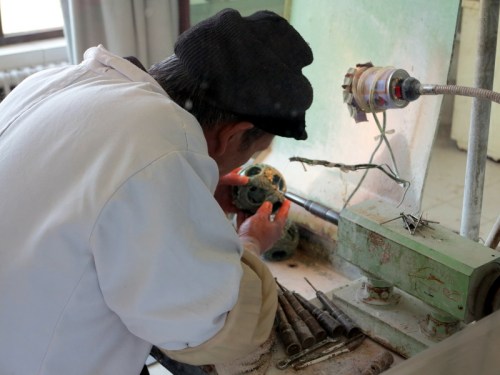
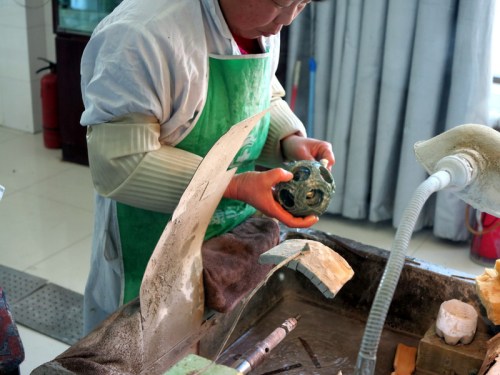
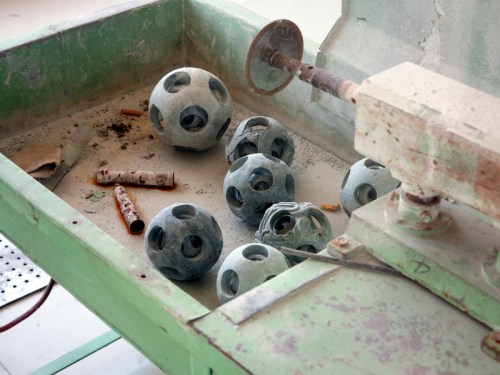
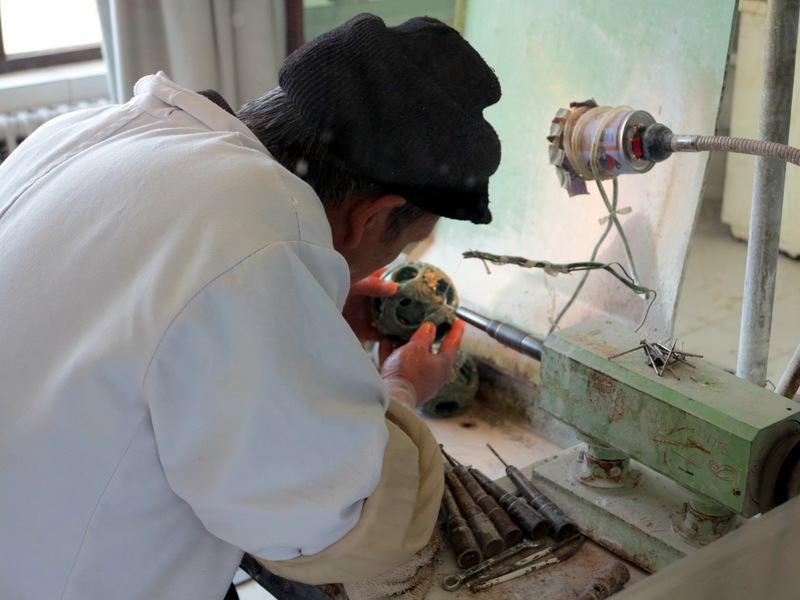
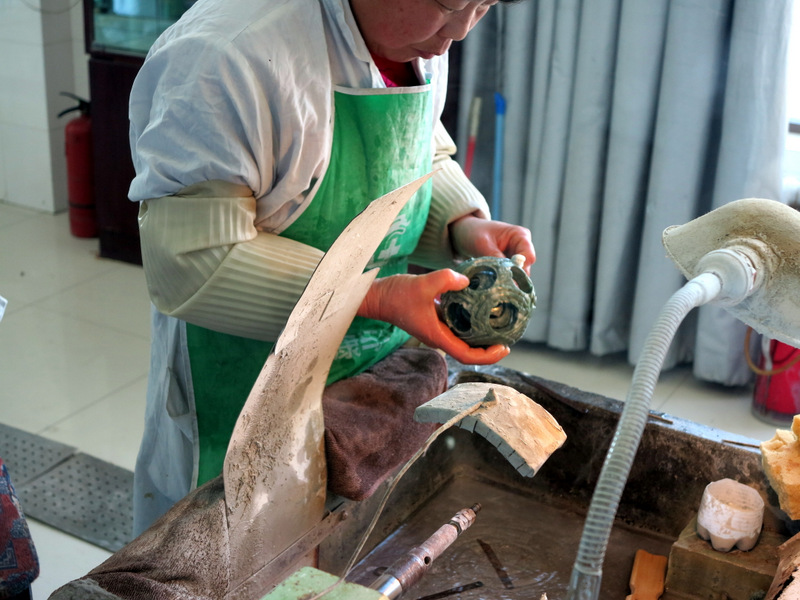
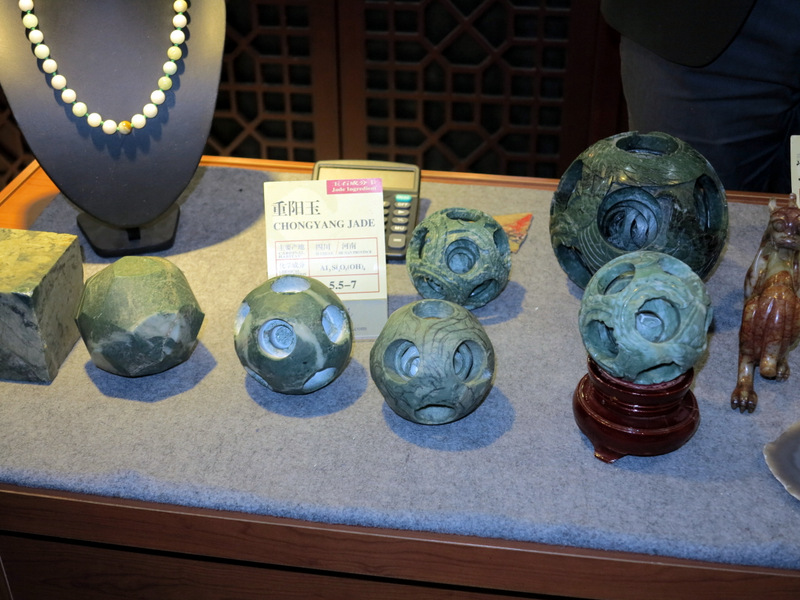
Upon our arrival to this government-owned factory our wonderful China Spree guide Chen “Jim” Mao handed us off to a very knowledgeable host who first showed us the delicate craftsmanship that goes into working jade. By the way, jade is not “carved.” It’s simply too tough. Instead, jade is worked through a delicate and time-consuming abrasion method. The demonstration below shows the incredible work that goes into crafting out of a single block of green jade an intricate, nested series of spheres that all rotate independently of one another once completed.
Government-owned Jade Factory
Government-owned Jade Factory
Government-owned Jade Factory
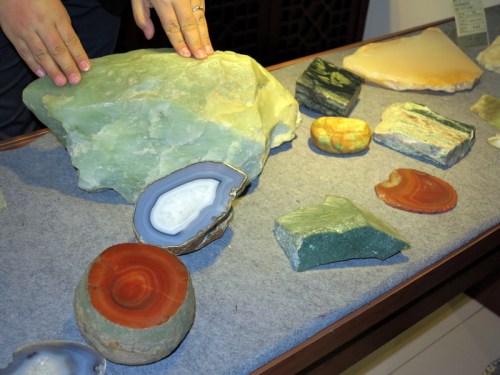
Following this portion of the tour we were then given a lecture on the various types, colors, and translucent qualities of both jade (nephrite) and its more expensive, denser, harder, and much rarer cousin jadeite.
Government-owned Jade Factory
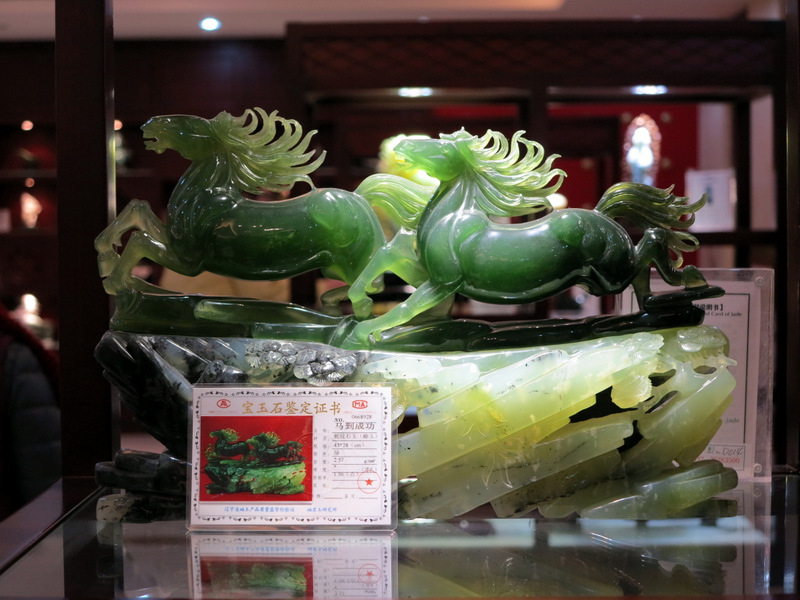
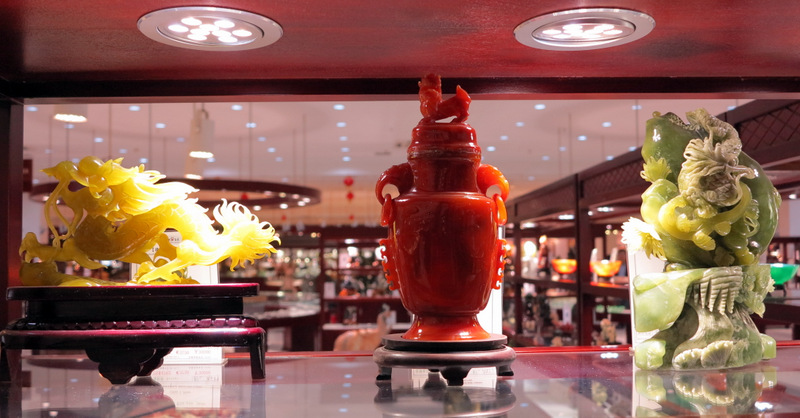
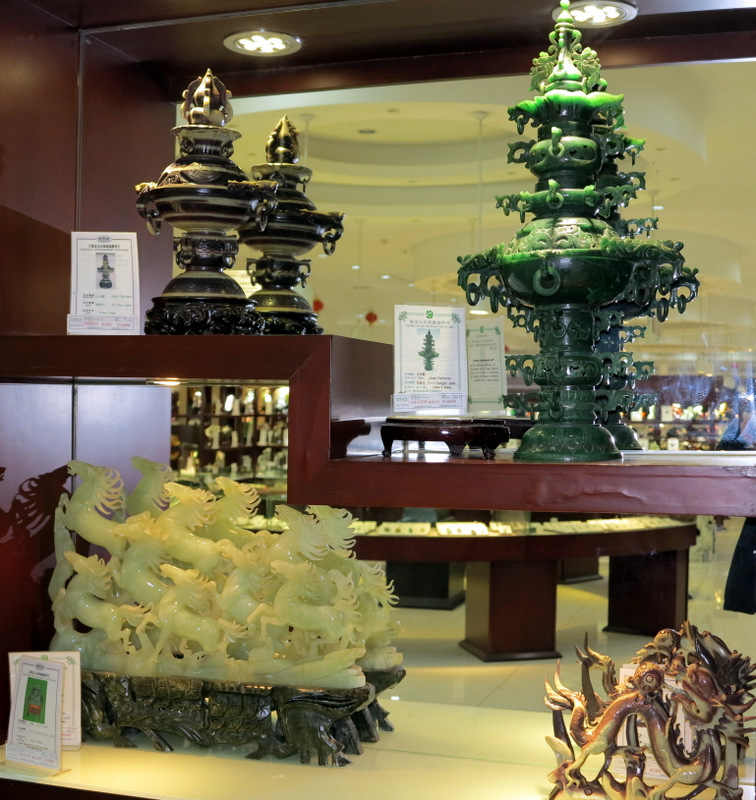
We were also schooled in the art of determining real from fake and then shown some rather exquisite pieces.

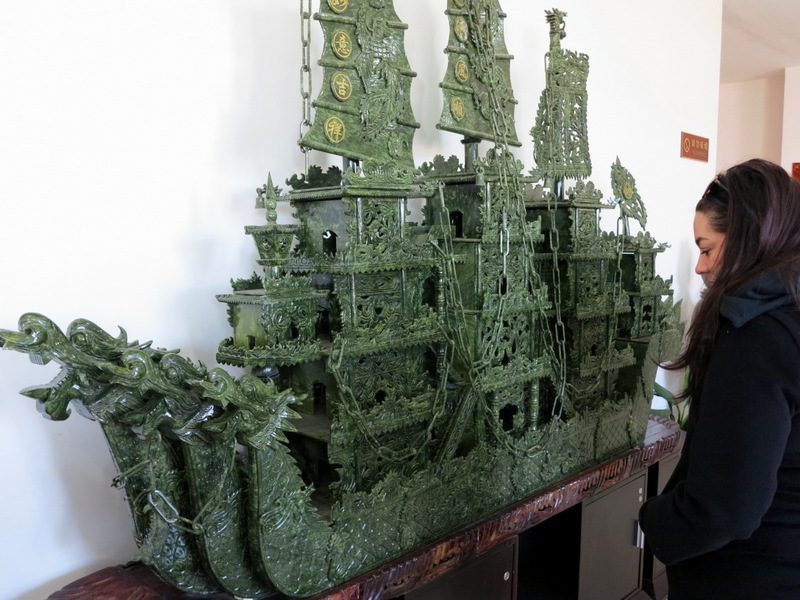
That Boat is worth in excess of $60,000 U.S. The chains are crafted from single pieces of raw jade.
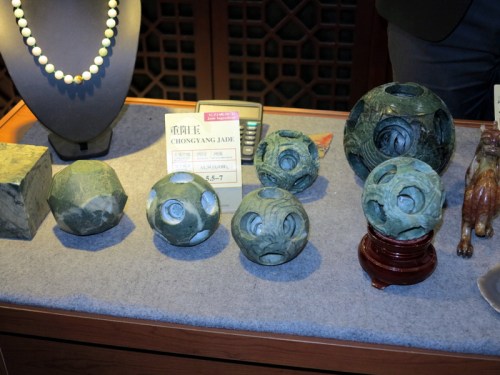
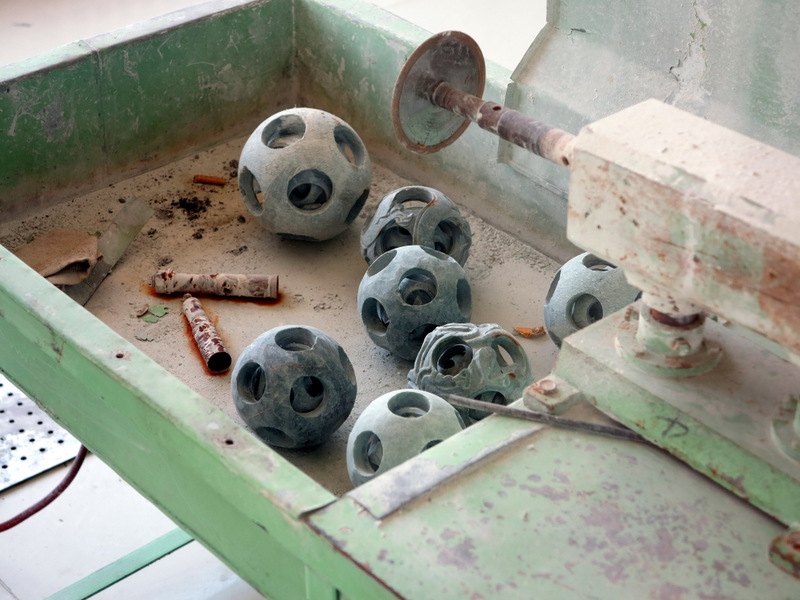
Remember those nested spheres? Here are examples of the various stages leading to the finished product:
Government-owned Jade Factory
The store has in back a separate room for what is classified as “museum quality” pieces. Of course, this is where Ursula migrated.
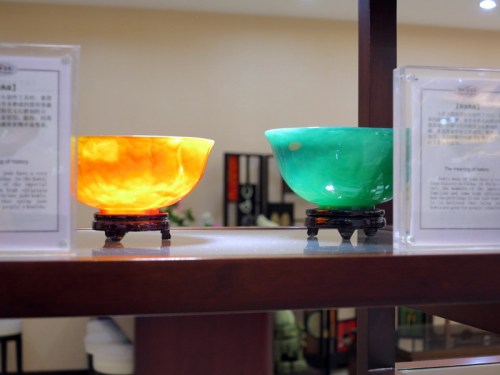
The Expensive Stuff from the Back Room
Several bloggers have also said that prices here are “set,” and that it does no good to haggle. Baloney. Show interest in something expensive, but insist upon walking away, and eventually — if you’re persistent enough — your salesperson will go fetch the “manager” to see what they can do for you. It’s almost like a car dealership back home.
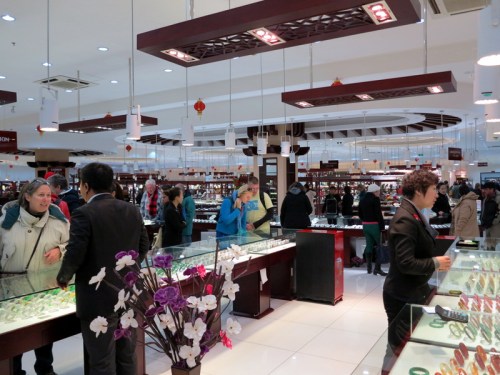
Uh, oh. She’s starting to get that “look” in her eye (far left). And did you see that smile?
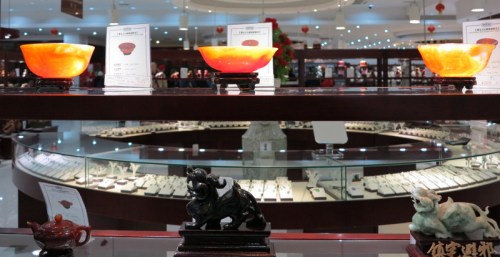
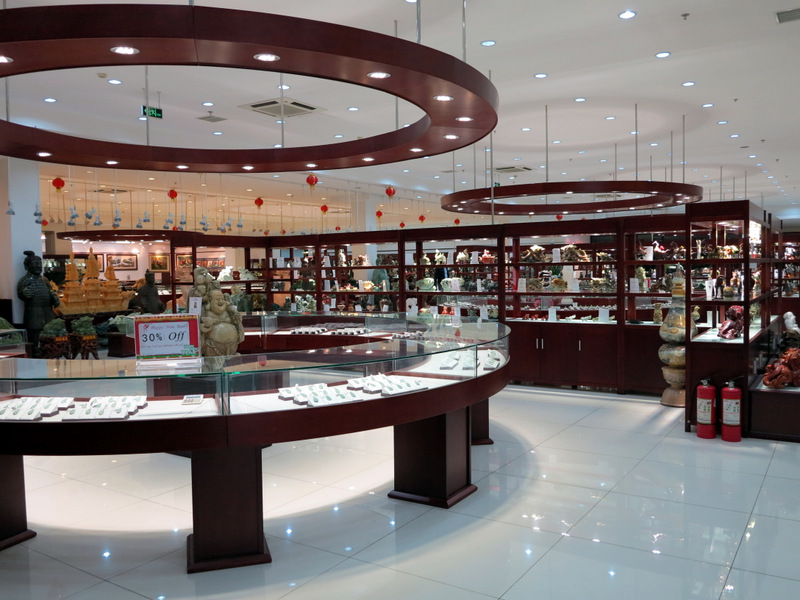
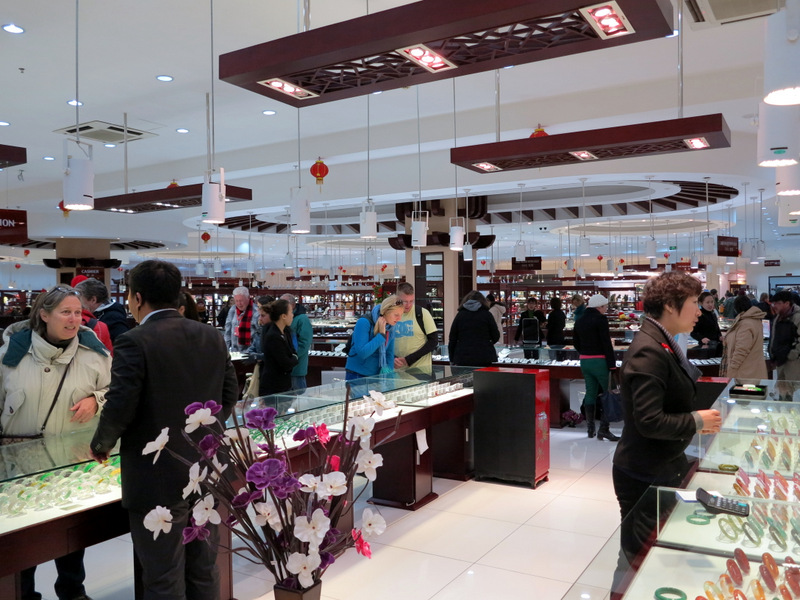
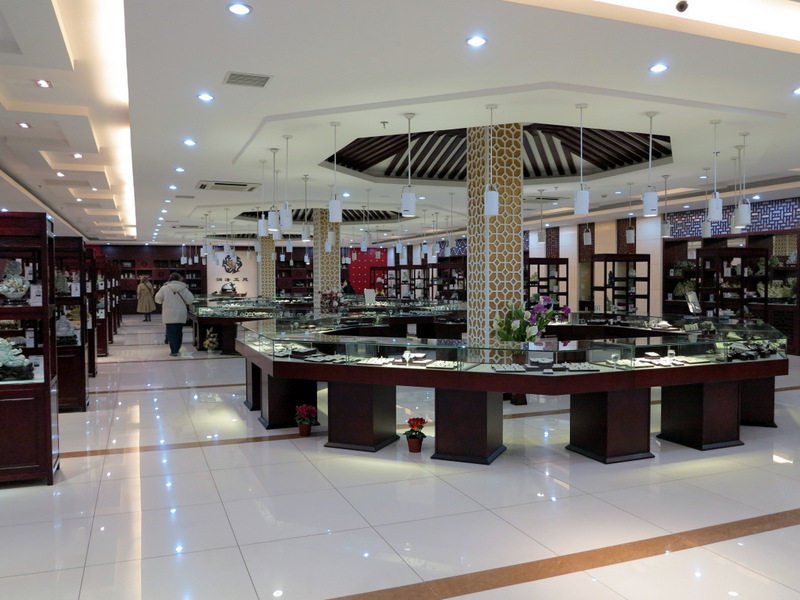
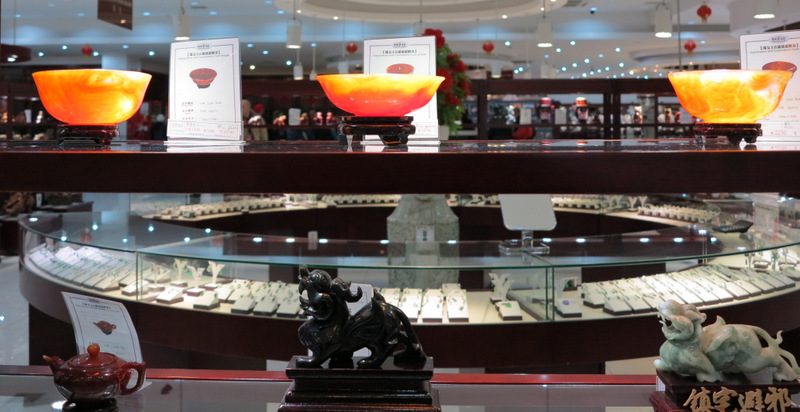
The store portion of the factory is huge by any standard, with pieces separated by quality and type (jewelry, statuary, bowls, etc.). It’s a truly fascinating experience, and one not to be missed on you travels to Beijing.
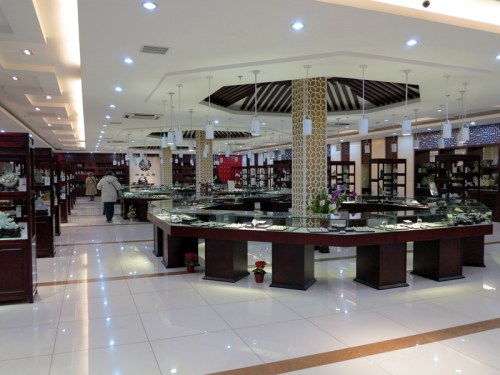
Government-owned Jade Factory
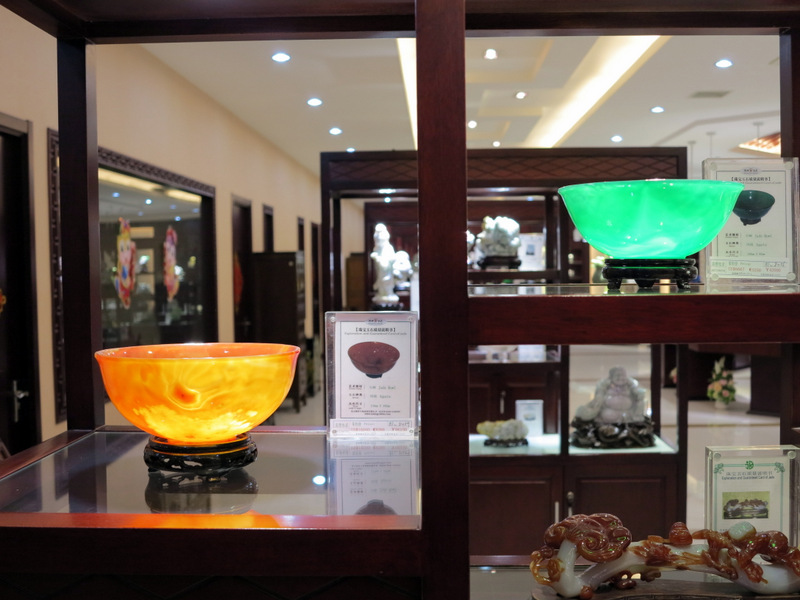
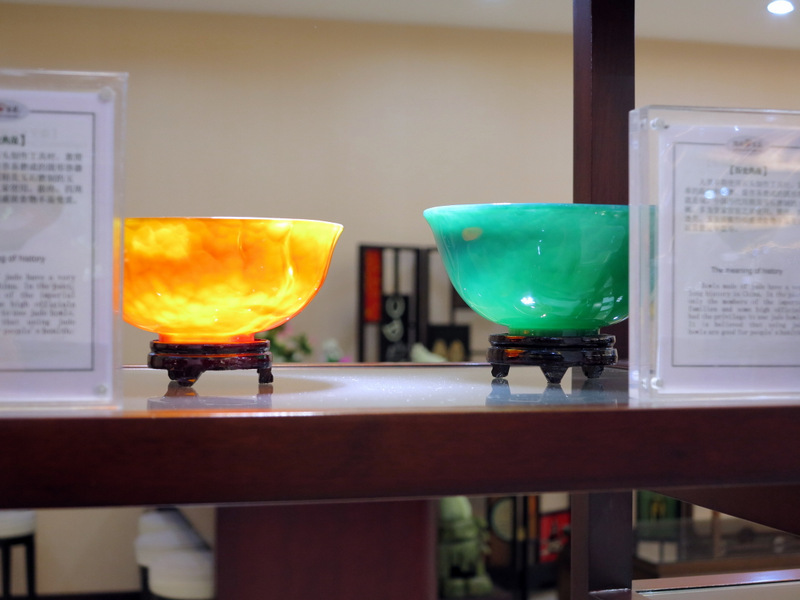
You may be surprised at the array of colors displayed in both jade and jadeite. But, whereas jadeite can be polished to a high gloss mimicking that of glass, jade is duller in finish and often waxed to produce luster.
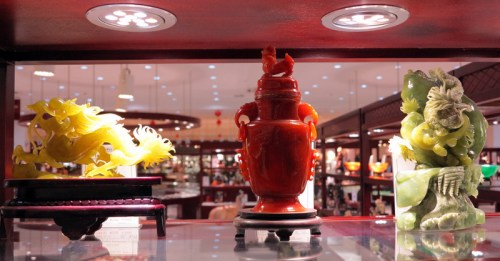
Government-owned Jade Factory
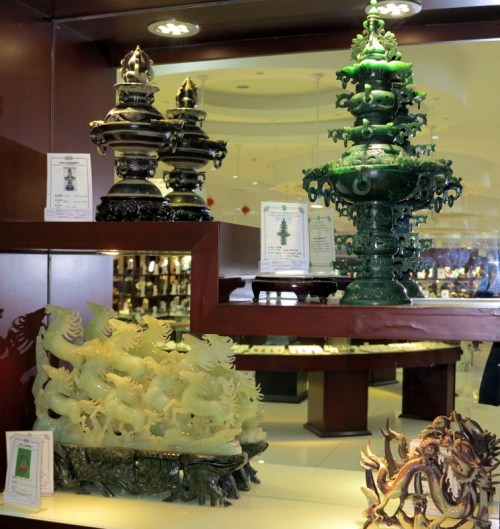
The highly prized jadeite found in China is actually mined in Myanmar (formerly Burma). Other sources around the world account for only a small portion of the jadeite that has been mined there.
Government-owned Jade Factory
As for both jade and jadeite, color is not the only measure of desirability. Translucency plays an equally important role in determining the value of a piece.
Government-owned Jade Factory
I hope you enjoyed the tour of the jade factory and store in Beijing.





 Decisions — Murder in Paradise
 The Globe — Murder in Luxury
 R. Doug Wicker — Author