
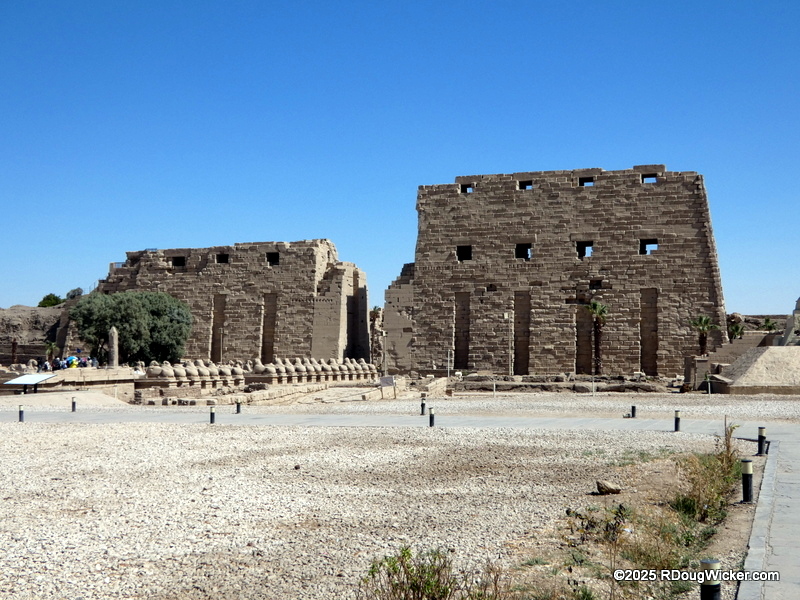

Our last stop on this River Nile cruise aboard the Jazz Celebrity, and indeed our last stop in Egypt before flying out to Istanbul the next day, was the Karnak Temple Complex. This last stop would be particularly bittersweet, as it also meant the end of our wonderful time with our exceptional tour guide throughout this journey, Mohamad Salah. If you can one day make this trip, I cannot recommend highly enough Luxor and Aswan Travel and Mohamad Salah. And since the tour included all entry fees, chauferred transportion, and other amenities, it’s not as expensive as one might think. For the two of us it ran about $1,900, of which $250 was reimbursed because our hot air balloon ride was cancelled.
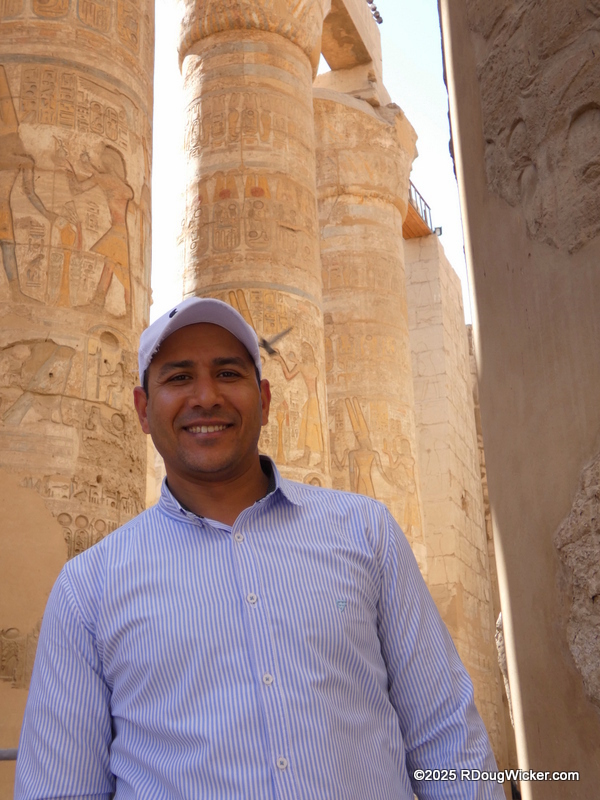
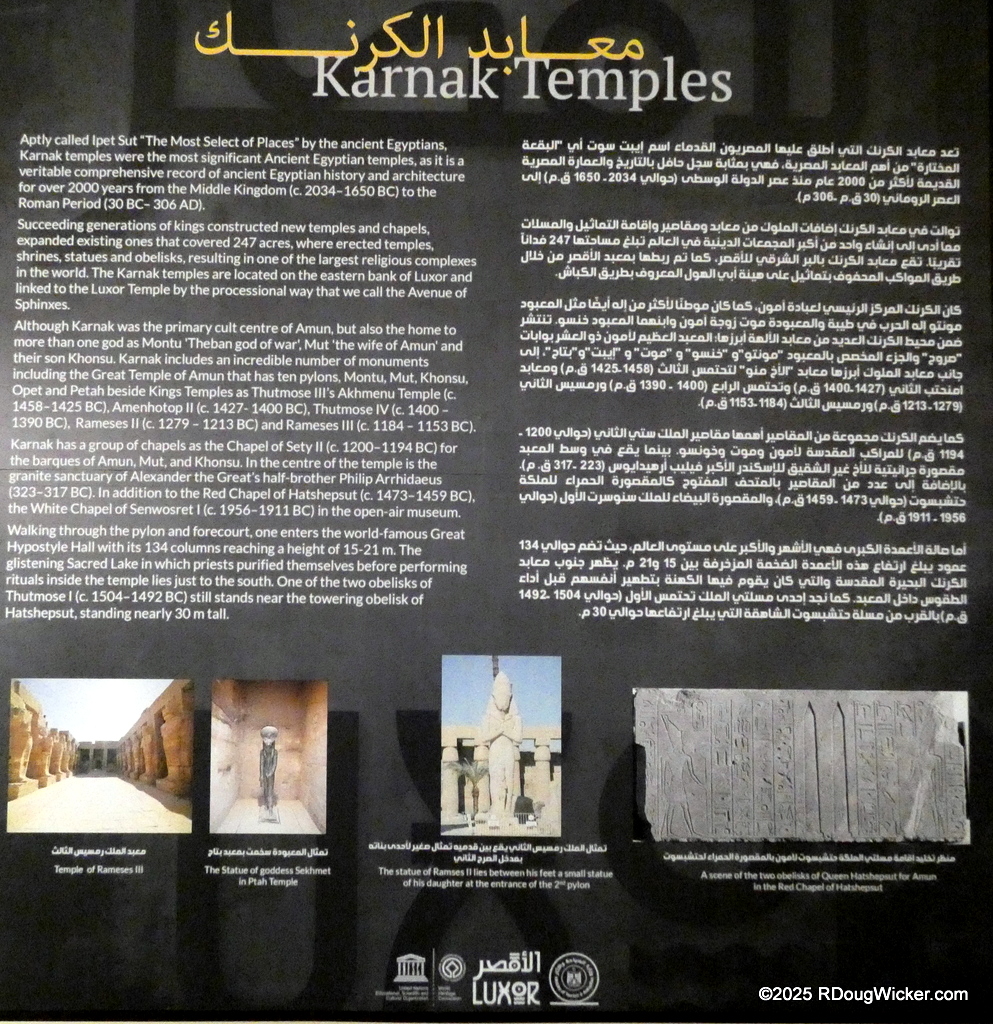
But enough about the tour details. Let’s get back to talking about Karnak. The temple complex sits on 247-acres/100 hectares. Founded in 1970 BC, it contains a huge collection of massive Egyptian temples, pylons, obilisks, columns, and chapels. Because of the incredible amount of things to see here, I’ll be running photos of Karnac over both this week and next.
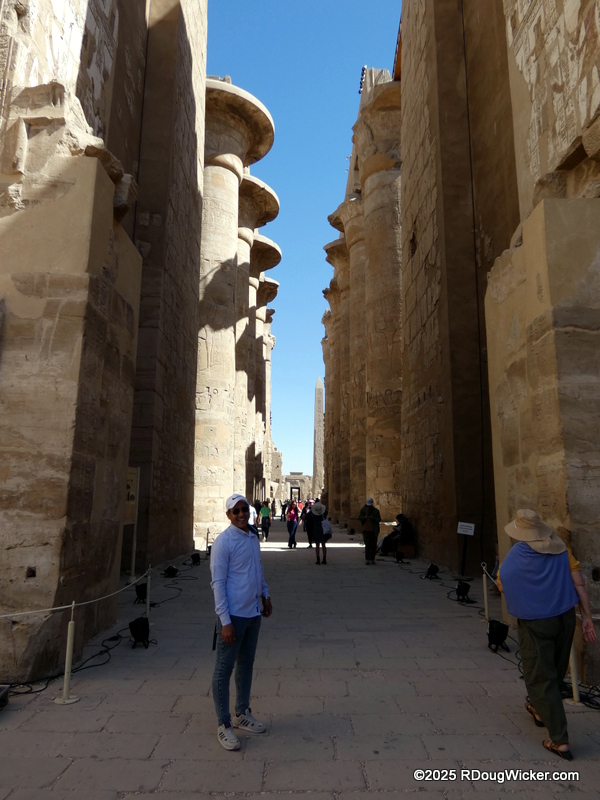
When I say that objects here are massive, I mean massive. For instance, within this 247 acres, the Great Hypostyle Hall alone covers 1.2 acres/5,000 meters². The roof covering this structure is long gone, but many of the 134 original columns remain.
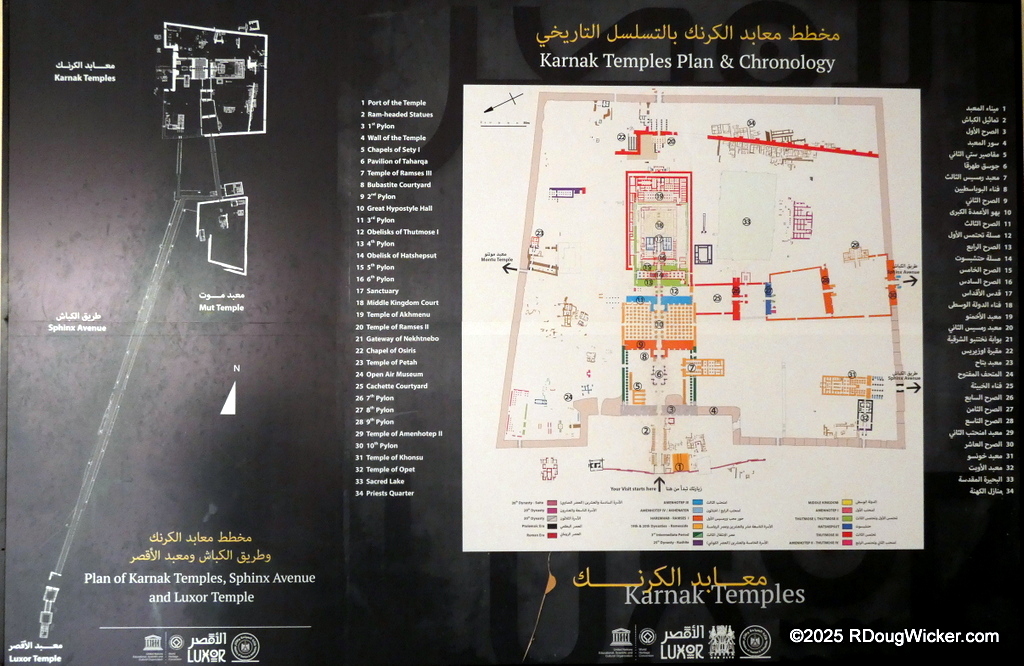
But before you get that far into the complex, you’ll first pass through the exhibition hall. Included in that hall is a map of the complex:
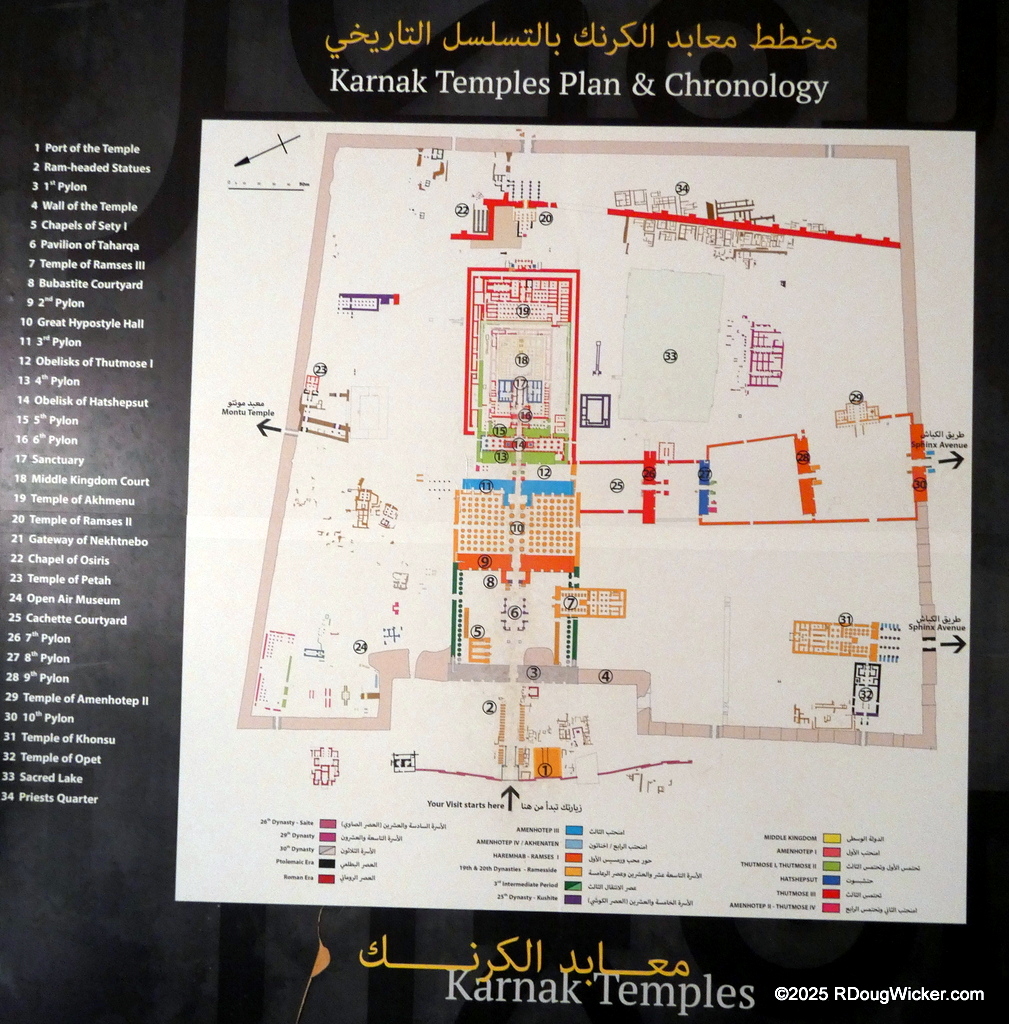
Of course, the important thing here is the actual annotated complex diagram, so let’s zoom in on that. The arrow at the bottom is the entrance into the complex. The aforementioned Great Hypostyle Hall is the orange colored area labeled #10.
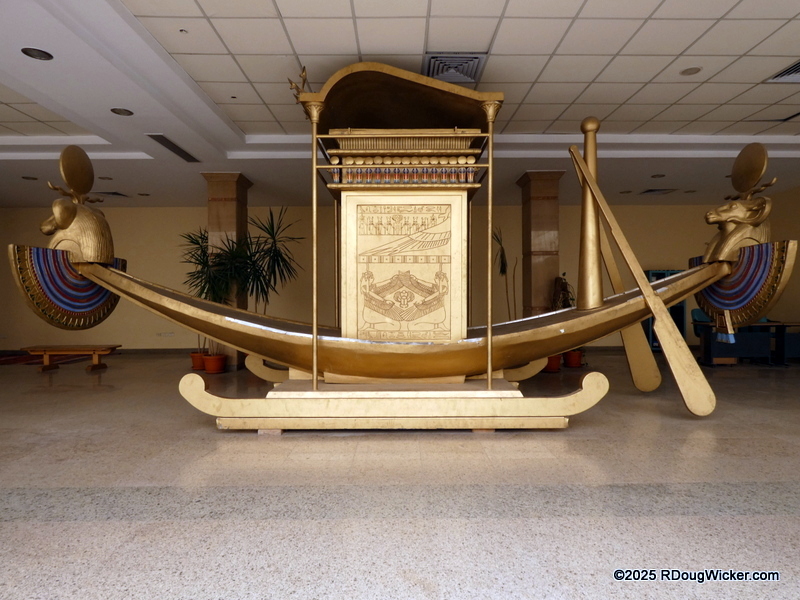
Before you get to that arrow and the Great Hypostyle Hall, however, you still must get through the exhibition hall. In that hall are, among other things, replicas of Ancient Egyptian solar barques used in rituals and funerary practices. This particular solar barque depicts the ram-headed god Amun:
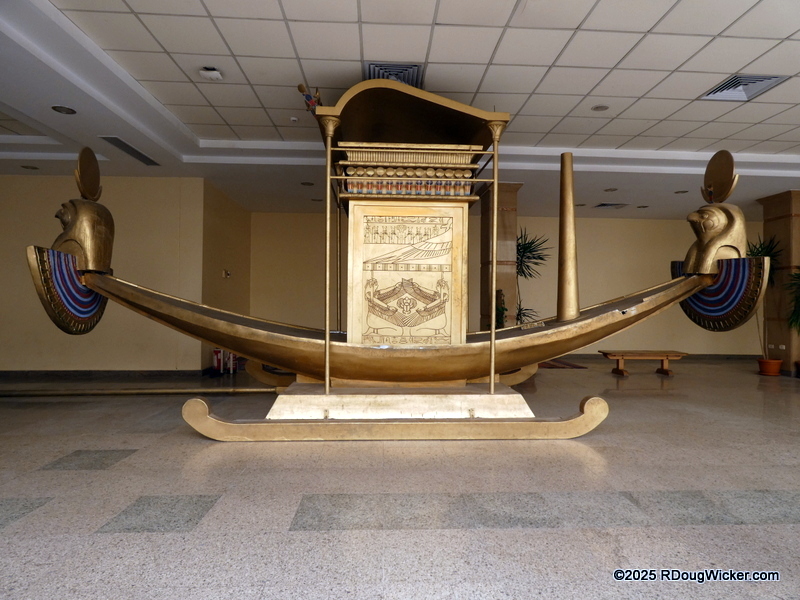
And this next one shows the head of our old friend Horus, the falcon god:
Exiting the exhibition hall, it’s now time to make our approach toward the massive first pylon. The pylon lies east of our position, and this is the view:
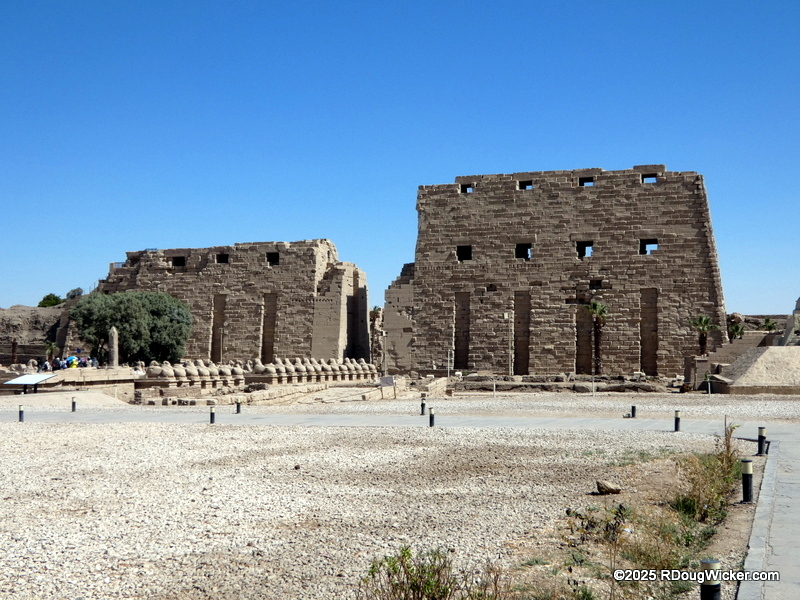
As you can see in the above image, you’ll pass through the Avenue of Rams lining the approach to the pylon entry. The Avenue of Rams is not far away from the Avenue of Sphinxes that I showed you in my previous Luxor Temple article. Indeed, the Avenue of Rams is considered an extension of the Avenue of Sphinxes. This 1.67-mile/2.7km dromos is lined with 1,057 statues, of which 807 are sphinxes leading into Luxor and 250 are criosphinxes (ram heads on lion bodies) on the approach to Karnak.
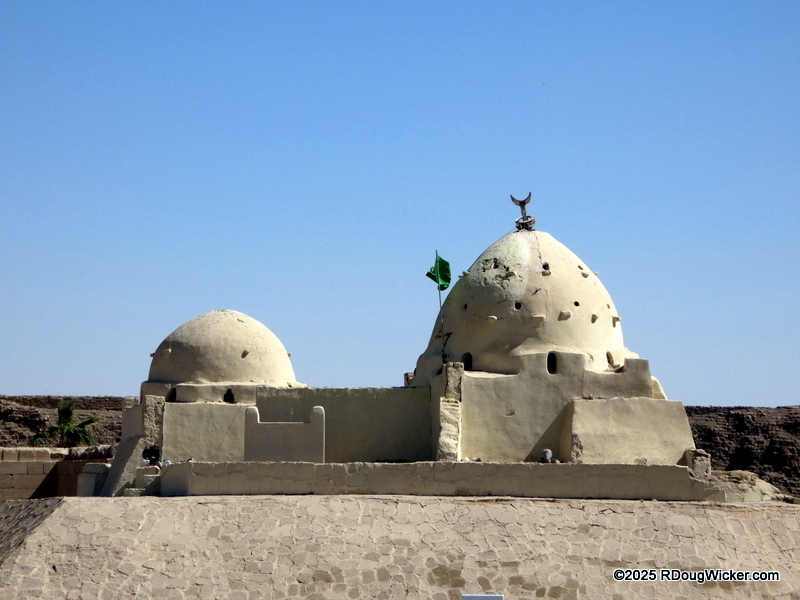
As you approach the first pylon of Karnak you will pass by a more recent edition — what appears to be an Ancient Egyptian shrine converted into a Mosque:
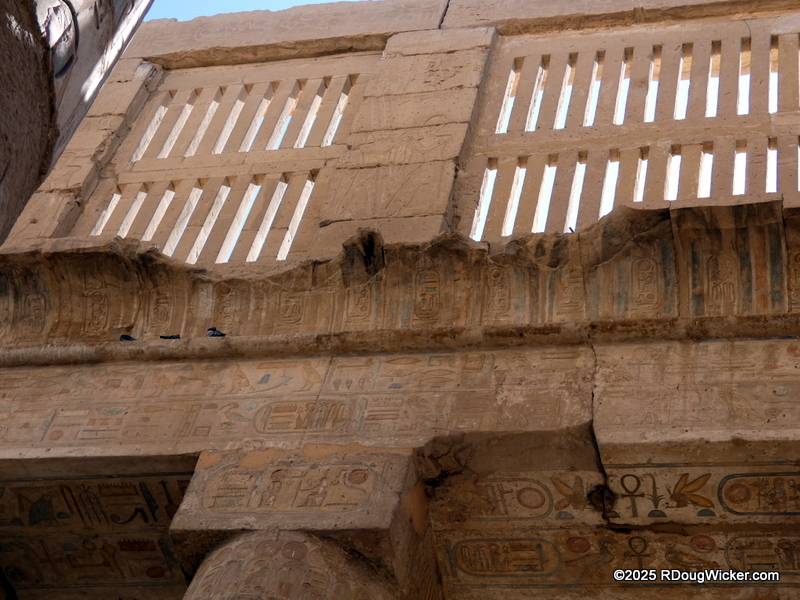
Time now to step through the first pylon and see what wonders await:
Слава Україні! (Slava Ukraini!)
 Decisions — Murder in Paradise
 The Globe — Murder in Luxury
 R. Doug Wicker — Author