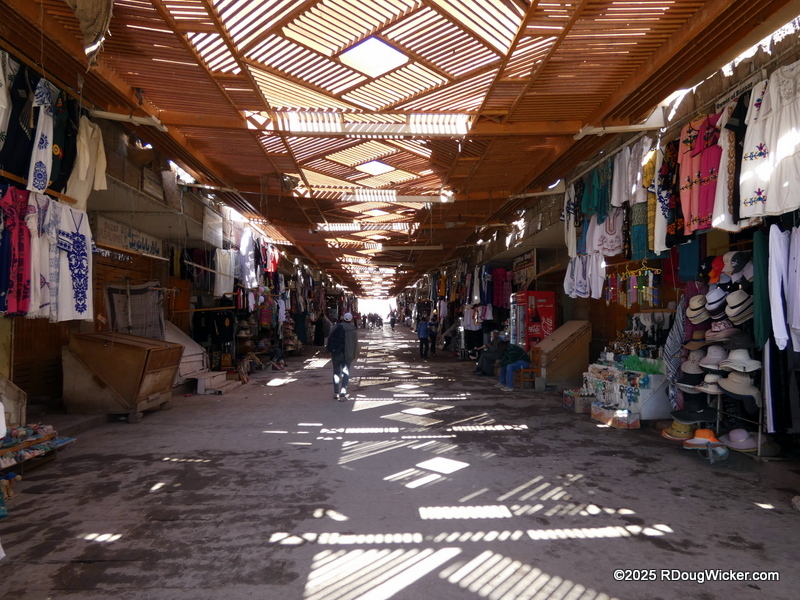
Our driver dropped the three of us off at the parking lot for our next stop this fine, 1 March 2025 day, and Mohamad led us through the ever-present souvenir vendor gauntlet toward our next Ancient Egypt archeological site — the Mortuary Temple of Hatshepsut. The image below is courtesy of Wikipedia. I borrowed it for this article to give you a sense of this temple’s immense size from an aerial perspective:
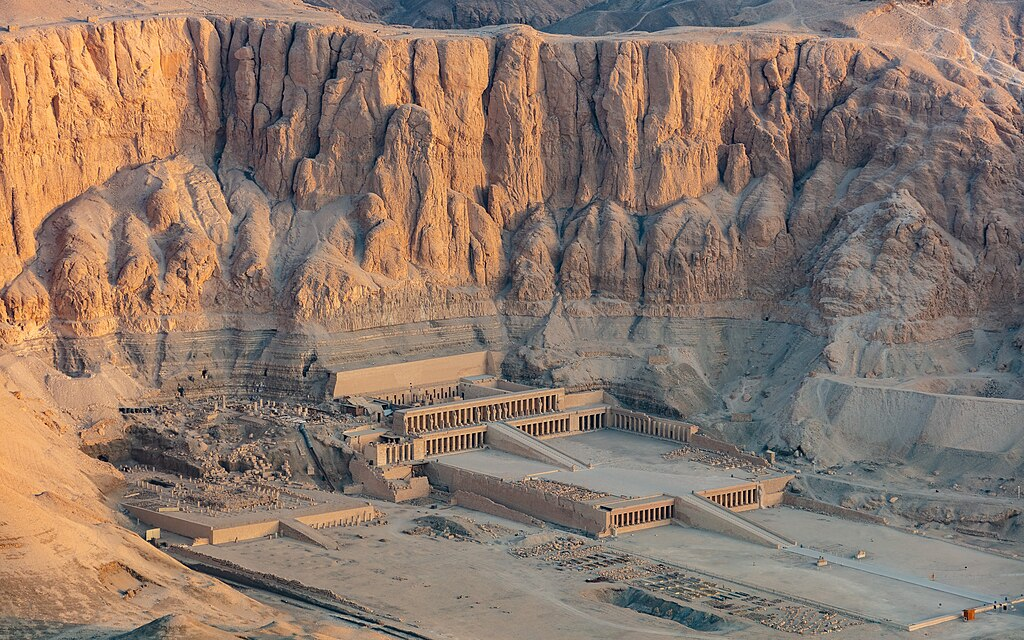
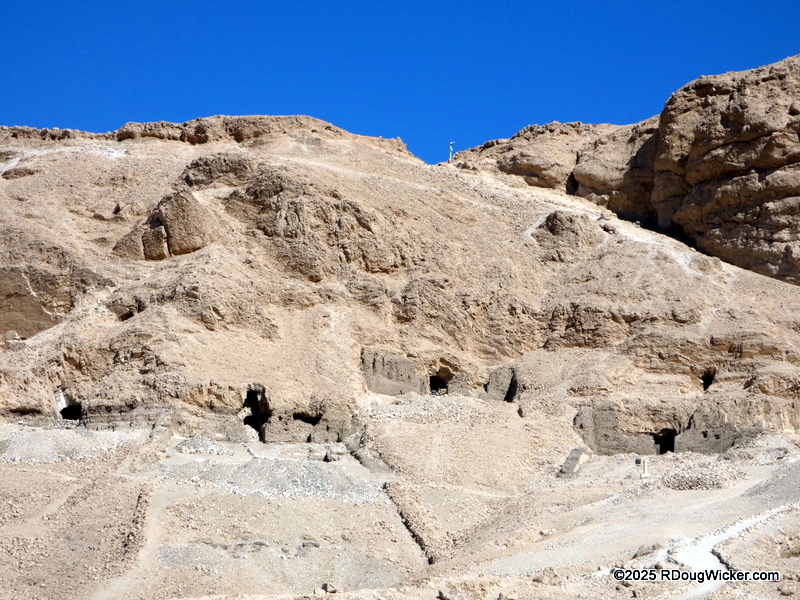
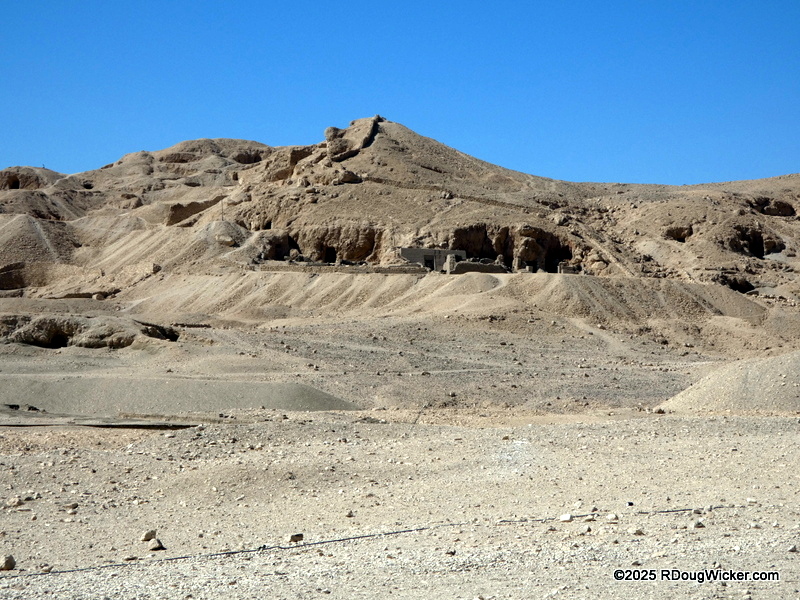
I know what you’re probably thinking right about now: 1) That’s impressive! 2) Hatshepsut must’ve been a really important king to warrant this mortuary temple! Well, it is indeed impressive. The mortuary’s design is very unique among others we’ve seen, and the detail is extraordinary. This is some truly classic Ancient Egyptian architecture! Where you would go wrong, however, is on that second thought. This pharoah wasn’t a king. Hatshepsut, the sixth ruler of Ancient Egypt’s Eighteenth Dynasty, was the second confirmed queen regnant (female “king”) to rule Egypt, the first being Sobekneferu from Ancient Egypt’s Twelth Dynasty some 350 years earlier. We’ll head on over the mortuary momentarily, but first I want to show you what you’ll see in the surrounding hillsides. There are many other temples and mortuaries around here in what is but a small part of the entire Theban Necropolis:
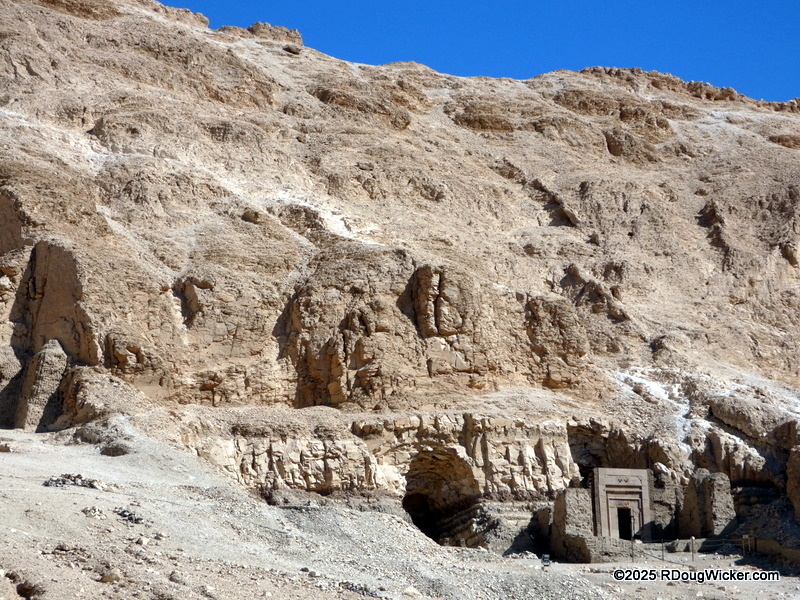
The closer you get to the main attraction, the more impressive some of these temples appear:
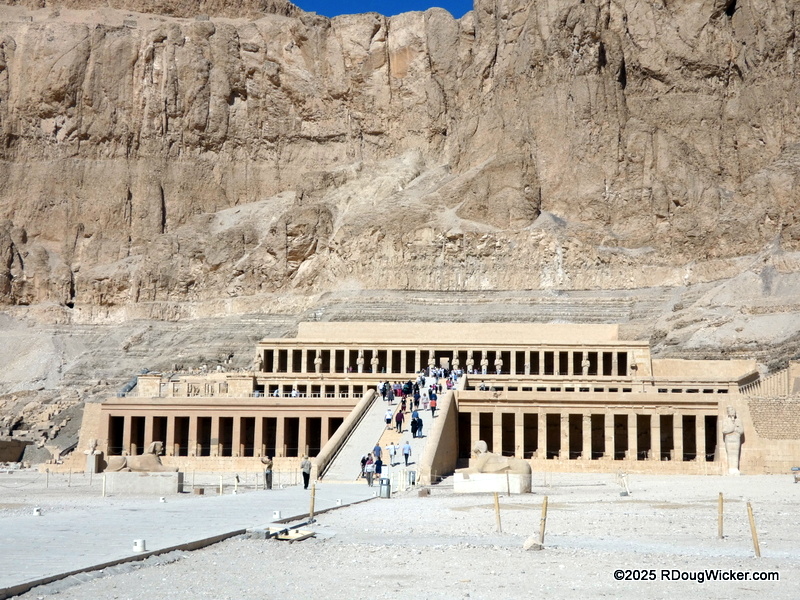
But the main attraction is coming into view. Here is the Mortuary Temple of Hatshepsut:
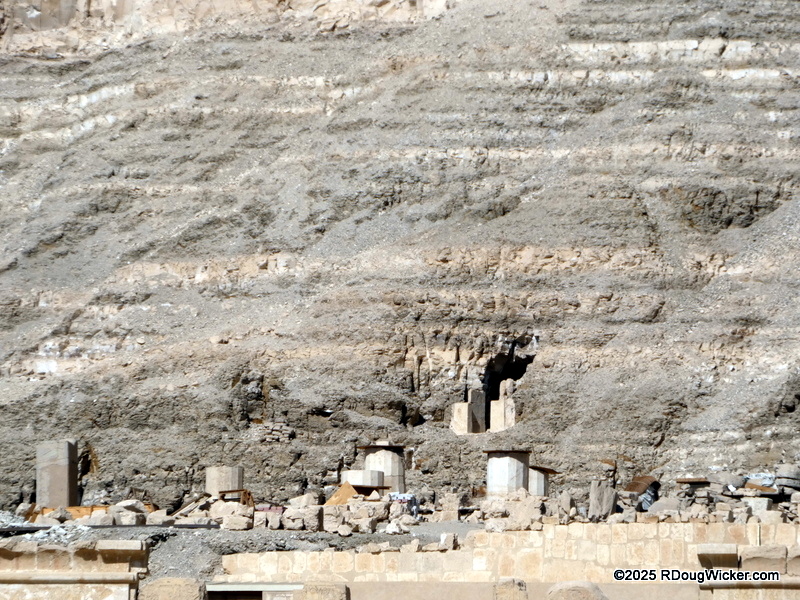
In the photograph I borrowed from Wikipedia, the second from the top in today’s article, you’ll notice what appears to be a second platform with rubble above it. You also might wonder, in a land known for earthquakes, just how stable is that sheer cliff above Hatshepsut? You would do well to wonder, for that rubble belongs to two other Deir el-Bahari temples — Thutmose III and Mentuhotep II — and they were destroyed by an earthquake and resulting cliff collapse during the beginning of the Twenty-First Dynasty. Not a whole lot remains of either structure:
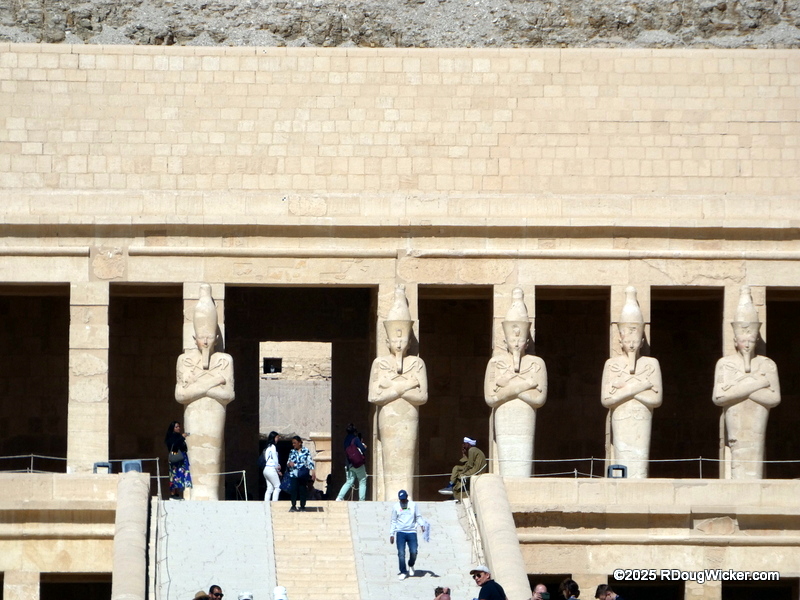
As you approach Hatshepsut’s temple, you’ll notice a series of bearded figures. Why bearded figures for a queen? Because she felt the need to establish her authority as ruler in a historically male-dominated role.
Next week we take a look at some Hatshepsut interior decorations. And this week’s Fun Photo Friday will feature Hatshepsut favorites.
Слава Україні! (Slava Ukraini!)
 Decisions — Murder in Paradise
 The Globe — Murder in Luxury
 R. Doug Wicker — Author