

Behold the Luxor Temple. It was Friday, 2 February 2025, and we’re one day from the beginning of Ramadan. As much as we were immensely enjoying the company of our wonderful, ever-present guide throughout this trip, we were feeling a bit sorry that Mohamad Salah would not be spending the start of this holiday with his wife and young son.

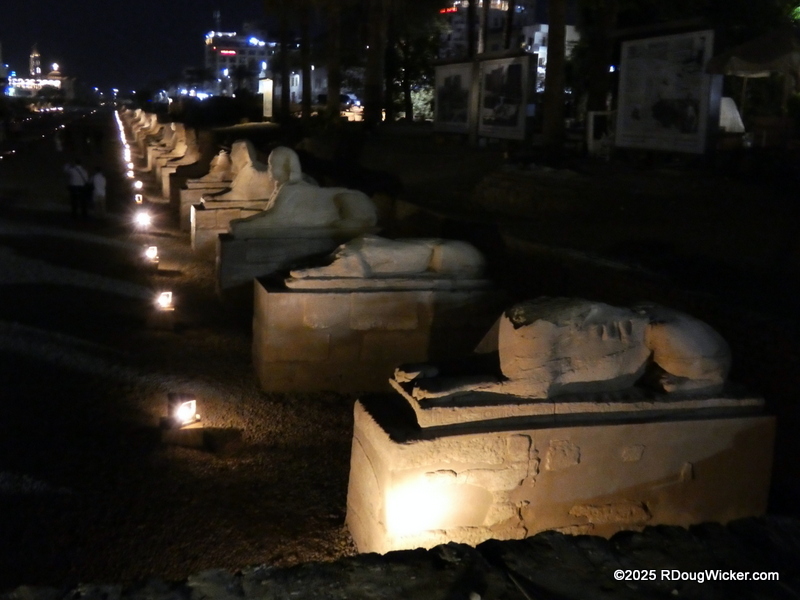
As you may recall, it’s already been a very busy day for us. We began with an early morning jaunt to the Temple of Edfu, a transit through the Esna Lock which took around four hours beginning with a lengthy delay south of the Esna Dam while we awaited our turn through the lock. Now it’s after sunset, we’ve already dined with Mohamad aboard our riverboat the Jaz Celebrity, and Mohamad has delivered us to the Luxor Temple. To our south is the massive Luxor entrance pylon (top image), and to the north lies the 1.24-mile/2km long Avenue of Sphinxes along which over 600 sphinxes line both sides:
We would be overnighting in the city of Luxor because we had a lot of sightseeing to do the following day. And all those agenda items meant we had to visit Luxor Temple now, in the dark, or miss it altogether. In case you’re wondering what all was in store for us, the next day would include the Colossi of Memnon, the Mortuary Temple of Hatshepsut, the Valley of the Kings, and the Karnak Temple Complex. So, you see what’s coming up in this blog over the next five or so weeks.
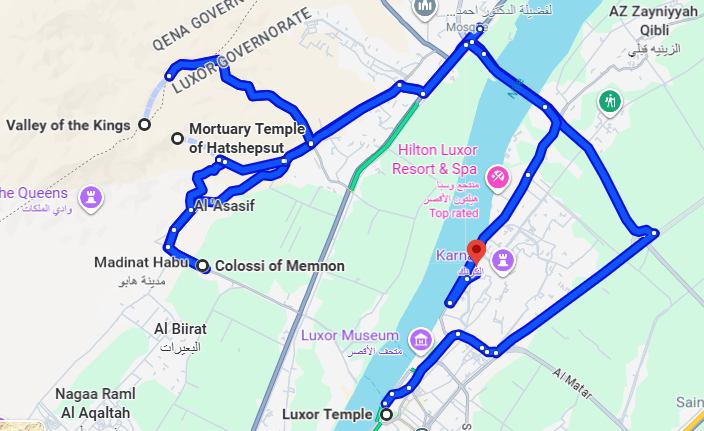
And while that series will finish up Egypt, we still have a long way to go on this month-long trip that started with a visit to the Coral Castle in Homestead, Florida; then continued on to Bucharest (and many other sights in Romania); then Cairo. Still ahead of us on this journey are Istanbul; Cape Town, South Africa; a cruise along the west coast of Africa; finishing up with a flight to the Netherlands to visit Keukenhof and other sights in and around the Amsterdam area. But this week I’m concentrating on Luxor Temple, so let’s get back to that:
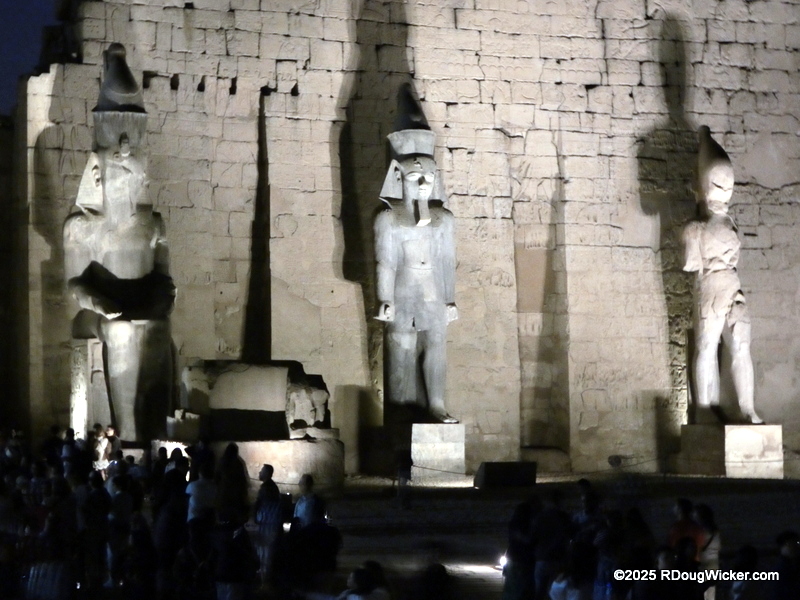
Luxor Temple was built during the reign of Amenhotep III (18th Dynasty pharoah who ruled between approximately 1391 and 1351 BC). The site was later expanded during the reign of Ramses II (19th Dynasty between 1279 and1213 BC). And if Ramses II sounds familiar to you, it’s because we’ve already seen some of his other handiwork — Abu Simbel. And if you remember the statues at Abu Simbel, you’ll recall that Ramses the Great loved seeing himself. Luxor Temple is no exception, as the pylon originally featured six statues of him.
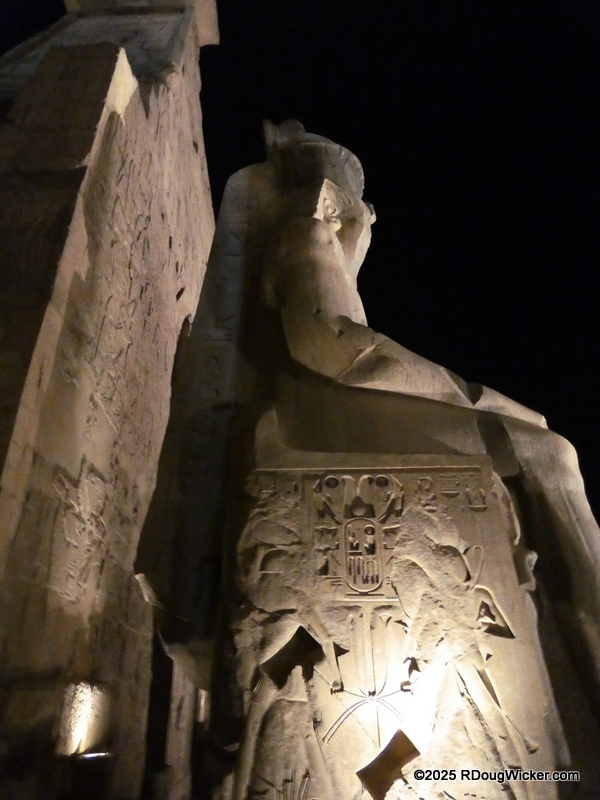
Once you get past the entrance pylon and enter the Court of Ramses II, you’ll find even more statues of him alongside Amhotep III.
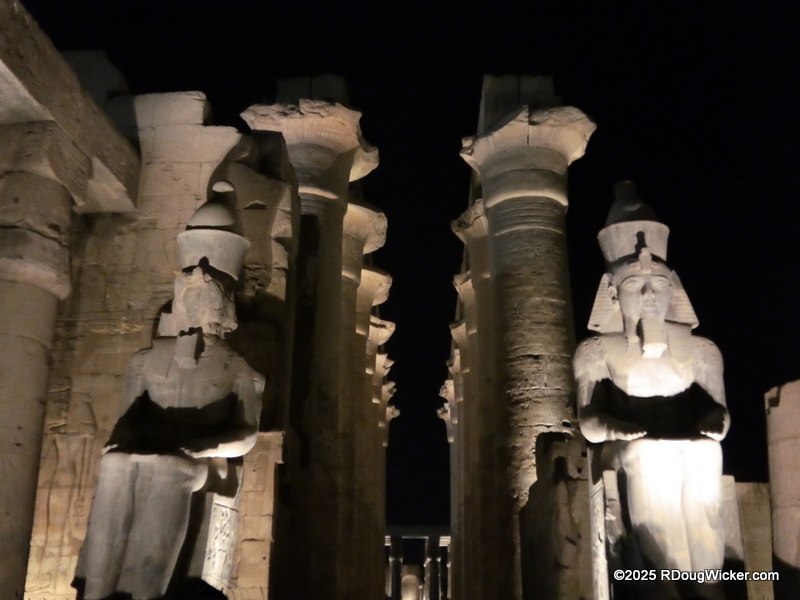
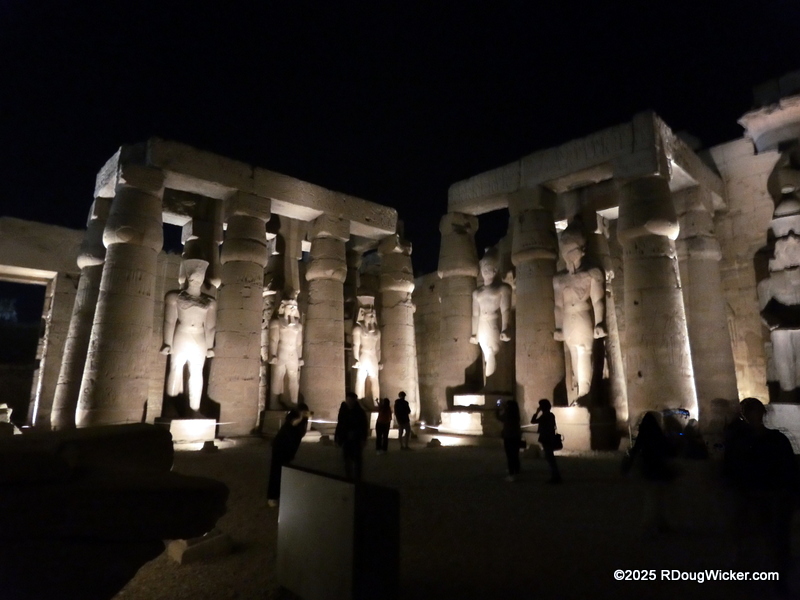
In addition to statues, the papyrus columns are a fascinating touch as well:
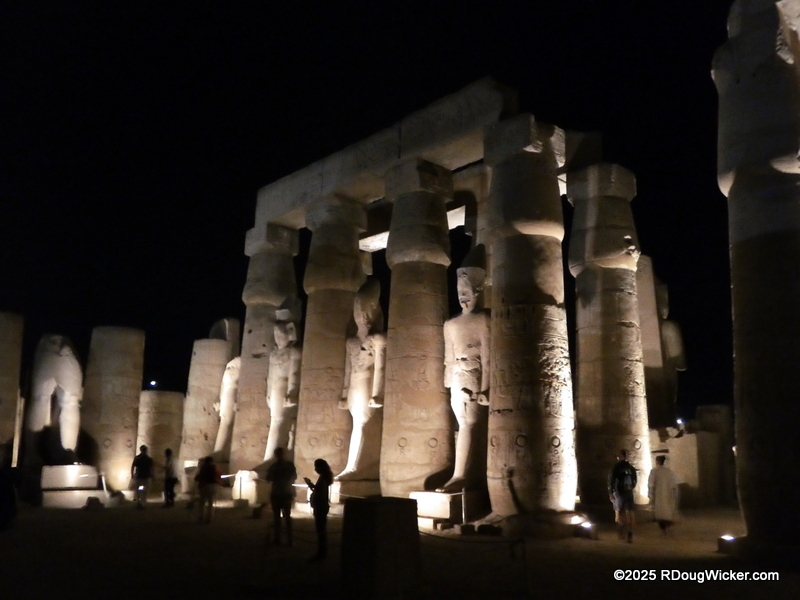
On Wednesday I’ll take you farther into the Luxor Temple, and show you a chapel that was added there much later, during the rule of Egypt by the Roman Empire.
Слава Україні! (Slava Ukraini!)
 Decisions — Murder in Paradise
 The Globe — Murder in Luxury
 R. Doug Wicker — Author