Tag Archives: Portmeirion

Portmeirion—Part 3


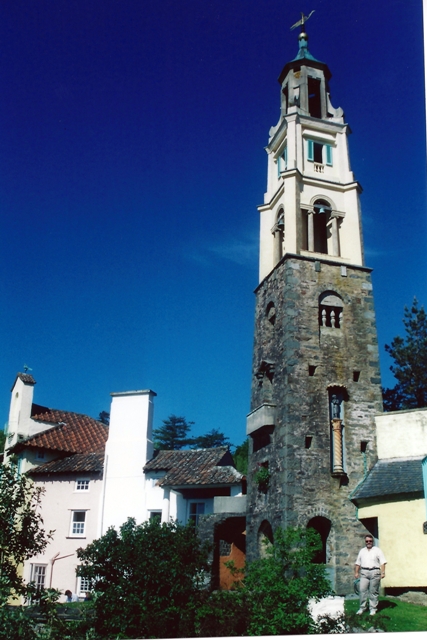
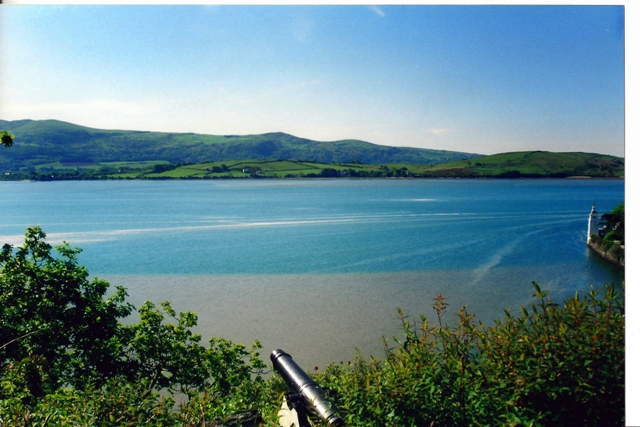
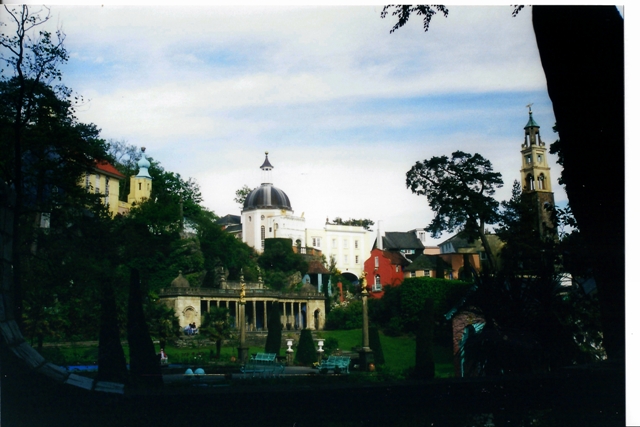
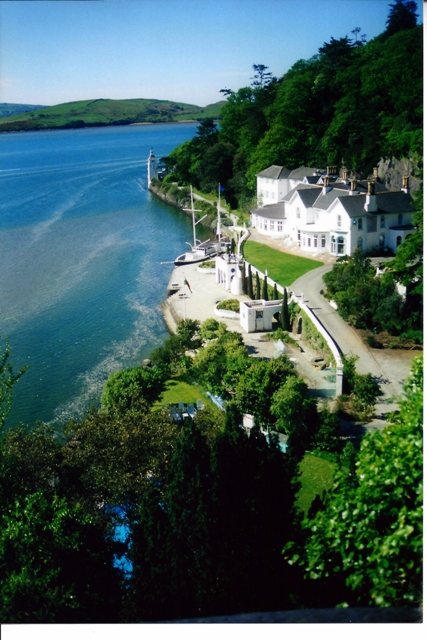
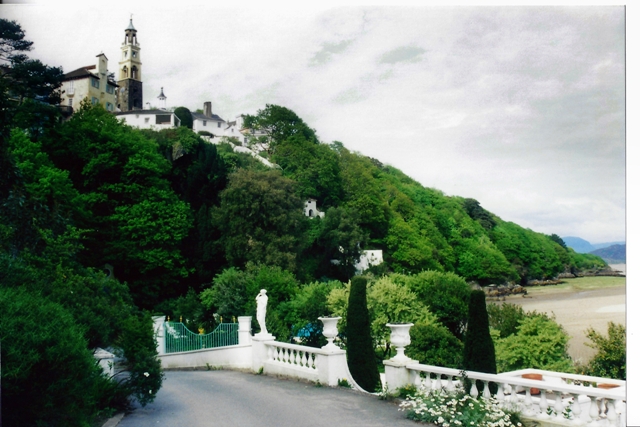
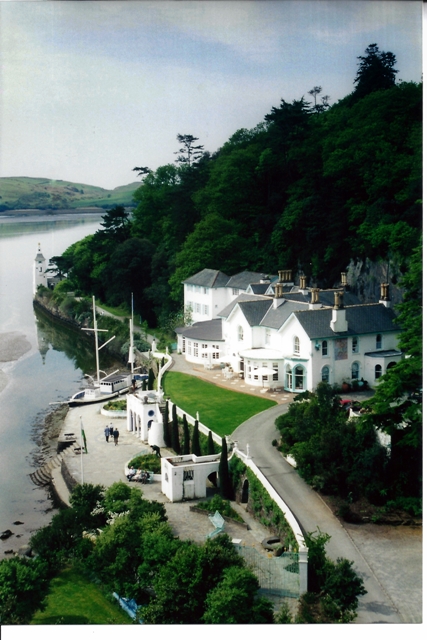
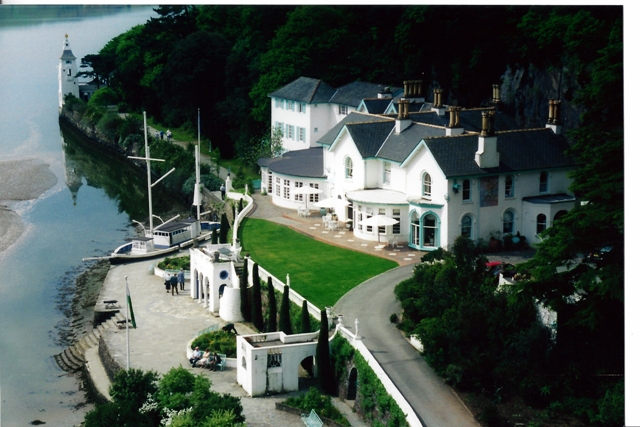
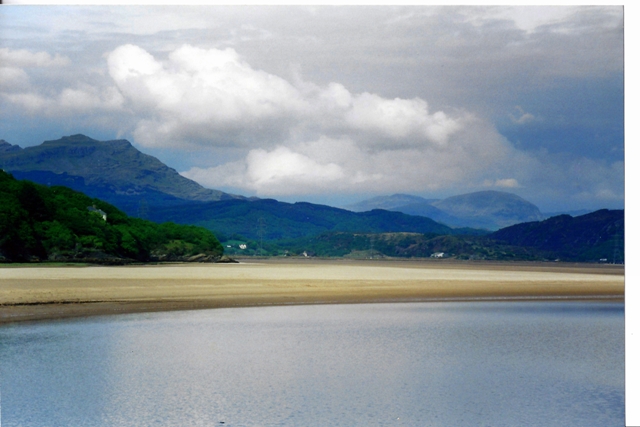
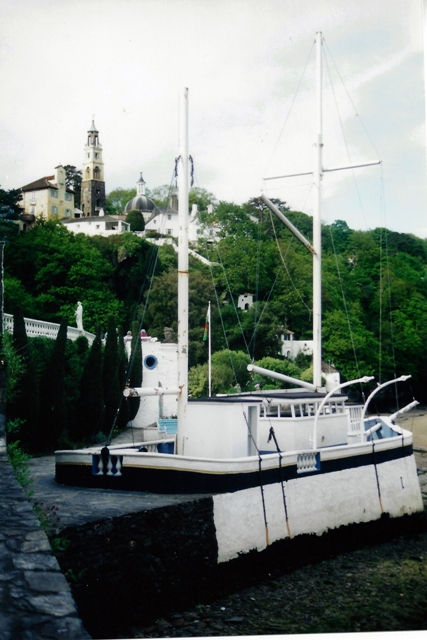
Despite what you might think looking at the photographs in Part 1 and Part 2 of this series on Portmeirion, the skies weren’t just varying shades of gray.  Occasionally the buildings of Portmeirion were framed in blue during our stay.  You’ll also see how the topography changes during high tide—blue waters caressing the frontage of the main hotel and lapping at the base of White Horses.

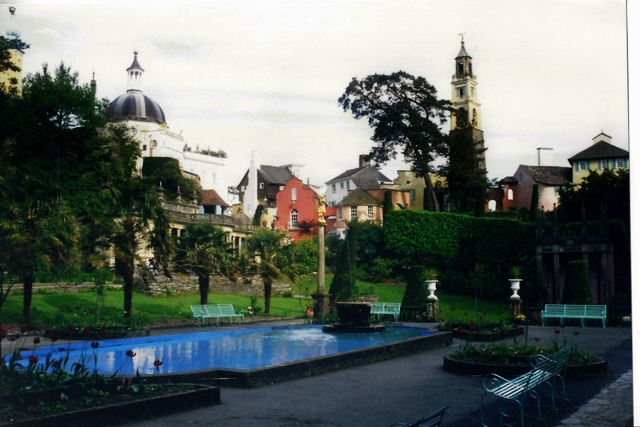
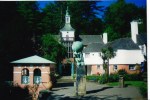
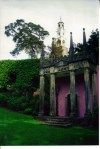
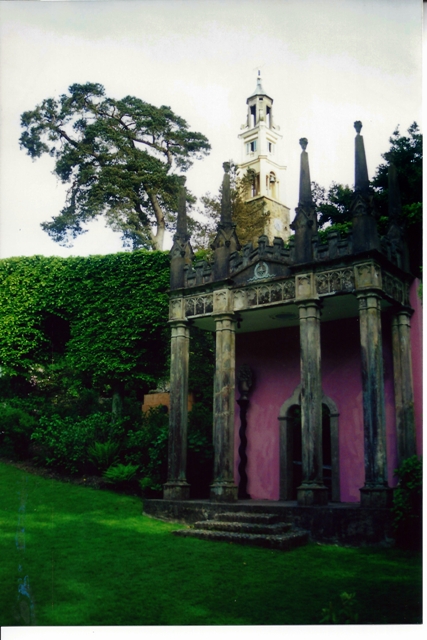
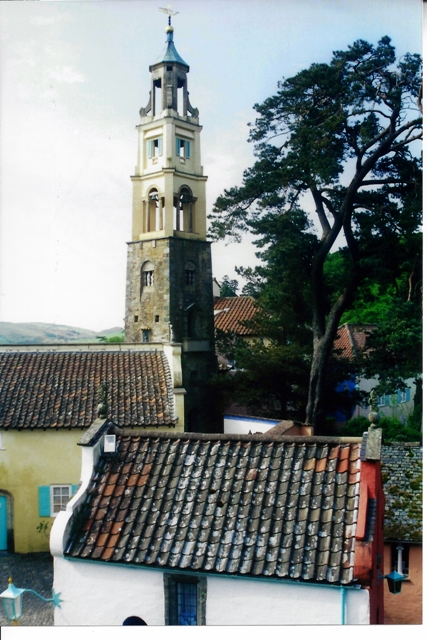
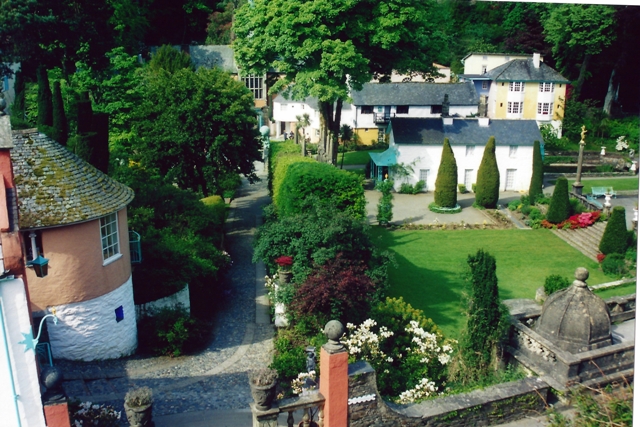
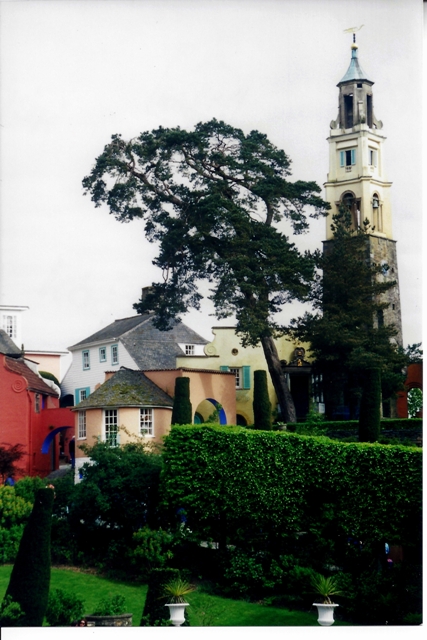
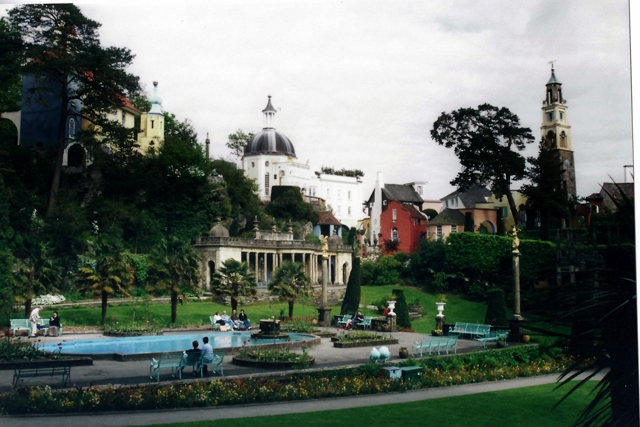
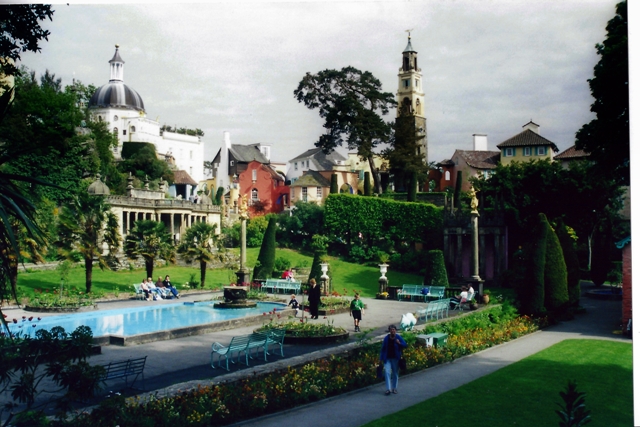
Fans of The Prisoner will also note other points of interest—”Town Hall” and the statue of Hercules holding the world for Atlas; Battery Square with its shops connected by a pedestrian bridge (the shop on the left is The Prisoner Shop); a stunning shot of the Bell Tower; and, of course, the Village Green with its pool and the fountain from which “Rover” springs forth. Rover, for the uninitiated, was the sentry that made The Village escape proof—a gigantic, almost gelatinous ball that would chase down and suffocate those who made the attempt.  Rover was in fact nothing more than a large weather balloon, but the beastly roar emanating from it made it appear far more ominous than its true identity would dictate.

If you plan a visit to the British Isles in general and Wales in particular, you need not be a fan of The Prisoner to enjoy a stay here.  The accommodations are incredible, and the views even more so.  But before you go, you owe it to yourself to find a copy of the series and prepare yourself for the experience.

Have you put The Prisoner into your Netflix queue, yet?  Before it arrives, a word of warning:  What you think the series is about is not what the series is about.  The beginning leads you to believe this is, at its core, a spy drama.  It’s nothing of the sort, and you don’t get a sense of that until at least two-thirds of the way into the series.  There are hints throughout, even starting as early as Episode One, of the deeper meaning, but . . . well, that would be telling.

I will say this much:  Listen for references to individuality, social conformity, and society.  Then prepare for a shock at the final, psychedelic conclusion.  Indeed, you may want to watch the series a second time to see what you missed in the lead-up to the finale.  How shocking was it?  Well, let’s just say that angry viewers who missed the clues, who were unaccustomed to having to think about what they watched on the proverbial “Idiot Box” known as television, were positively outraged.  Because of the intense emotions the final episode evoked, Patrick McGoohan reportedly found it necessary to pack up his family and flee England—first to Switzerland, and then to the U.S. (the country of his birth).

Now for some closing images of this remarkable, enchanted place:

2 Comments

Filed under Photography, Television, travel

Portmeirion—Part 2


Today we continue with the second of our three-part tour of Portmeirion, Wales.

There are three things for which Portmeirion is most famous.  We’ve touched upon two—the exquisite Italianate architecture of Sir Clough Williams-Ellis; and the use of Portmeirion as The Village in the 1960s cult television classic The Prisoner.  The third claim to fame is, of course, Portmeirion Pottery and china.  Portmeirion’s pottery and china business was the brainchild of Susan Williams-Ellis, daughter of Sir Clough, and the intent was to sell these creations in a Portmeirion-based souvenir shop.  So, Portmeirion Pottery gets its name not from the site of manufacture, but rather from the original site of sale.  The actual pottery is made at factories in Stoke-on-Trent in Staffordshire, England.  Interested shoppers and collectors can click on this link to peruse Portmeirion wares.  I’m sure you’ll recognize some of the various patterns and styles, as they’re sold around the world (including here in the U.S.).

Some of the interesting sights you’ll see today include White Horses Cottage, on the beach just beyond the main hotel.  White Horses’ claim to fame is that actor Patrick McGoohan chose this cottage as his residence whenever he filmed on-site in Portmeirion.

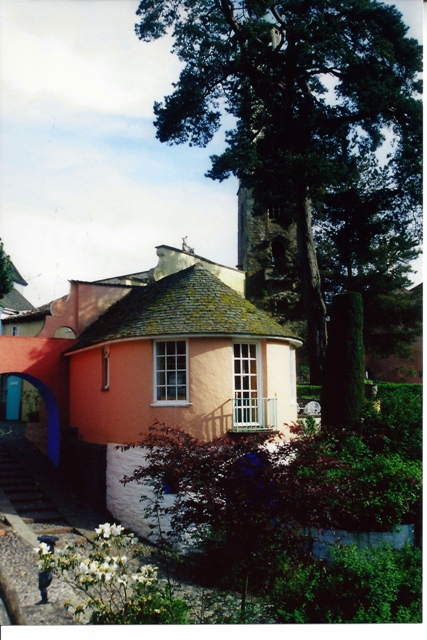
Also pictured below are various angles of Round House, which currently hosts a shop that sells collectibles, memorabilia, and books related to the television series The Prisoner.  But, during filming of The Prisoner back in 1966-1967, it was transformed into Number Six’s residence.

Below the main village you’ll see the main hotel, which in the series doubled as the “Retirement Home.”  It was where those who gave up their secrets to their village captors lived out their golden years.  Both the main hotel and White Horses lie along the beach.  The beach itself is a very interesting feature.  One can walk out onto it for hundreds of yards during low tide, but at high tide it completely floods.  Indeed, during spring tides, this flooding can extend into the first floor of White Horses, making it uninhabitable during that time.
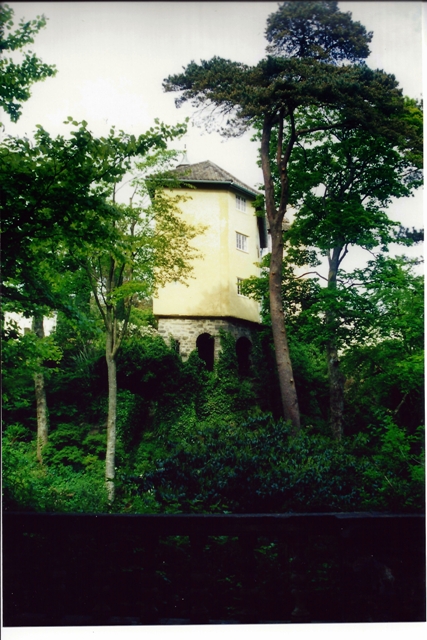
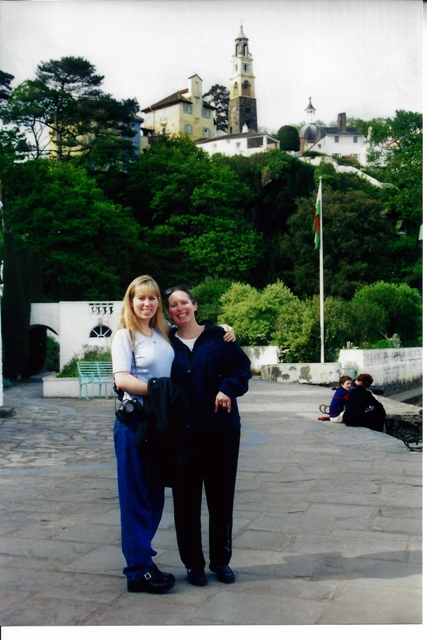
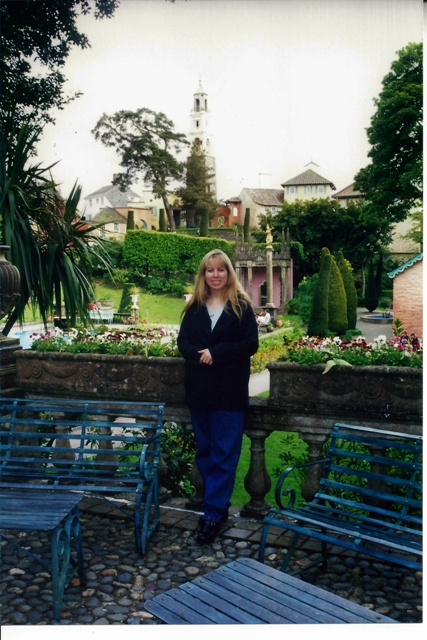
And, finally, while on Monday you got to see pictures of Ursula and me, today you’ll get to see the third member of our expedition, our eldest daughter Cherry.

More to follow in Friday but, until then, content yourselves with these:

1 Comment

Filed under Photography, Television, travel

Portmeirion—Part 1


So, this week we take a mysterious and magical tour of Portmeirion, Wales.

Portmeirion, as you’ll recall from last Friday’s blog on The Prisoner, was the setting for The Village—an apparently idyllic community that harbors a dark side, a side dedicated to separating from people the secrets they acquired from their previous government employers.  Those who cough up their secrets live out their lives in peaceful bliss.  Those who do not . . . well, The Village has a very impressive graveyard, and a deadly sentry that makes escape impossible.

It was in the mid to late 1990s, on a trip to visit our eldest daughter at her Air Force duty station somewhere in England.  Knowing of my admiration for The Prisoner, Ursula had set up a surprise for me—two nights stay in one of the Portmeirion Cottages.  It was quite an experience, as we were only a few short steps away from the residence of Number Six (Patrick McGoohan)—the protagonist of The Prisioner.  Alas, Number Six’s residence is not one of the available cottages.  Instead, the “Round House” is home to The Prisoner Shop, and you get only one guess as to the theme of the merchandise sold there.

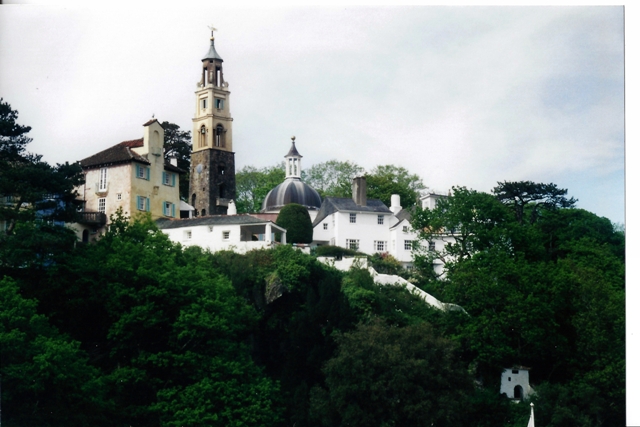
The man behind this Italianate village was architect Sir Clough Williams-Ellis.  He devised every aspect of the village, and supervised its construction over a fifty-year period that started in 1925 and finished just three years before his death in 1978 at the age of 94.  Some aspects of his grand vision were not completed until well after his death—the Pantheon (a.k.a., “The Green Dome,” Number Two’s residence in the television series) for instance.  Initially, the dome was green—a wooden structure painted that color.  But in the early 1990s that dome was replaced with copper which, in several more years, may actually become green yet once again.

More on Portmeirion (including their world-famous pottery and China) on Wednesday.  Until then, enjoy the show below.  But bear in mind that these photographs were taken the old fashion way—35mm color negative film converted to color prints.  These original prints were scanned a couple of days ago, and then corrected with a little computer post-processing.  So, what I’m really trying to say is, don’t expect the usual quality you’ve come to expect of my photographs.

3 Comments

Filed under Photography, travel