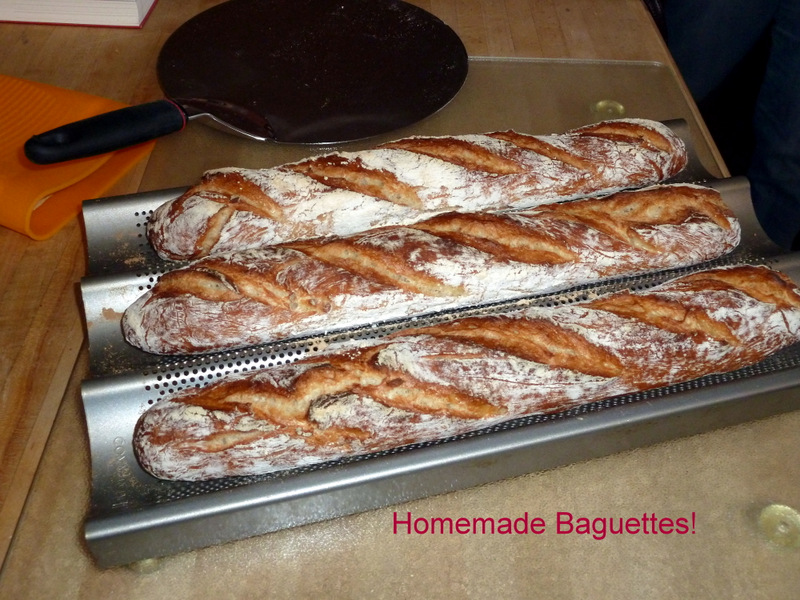
Homemade Rustic French Baguettes
Who says you can’t teach an old Doug a new trick? Remember this recipe?: It’s in the Bag(uette)
Today I’m going to show you my new favorite French baguette recipe, derived from The King Arthur Flour Baker’s Companion. But don’t worry. We’ll get back to that China series on Wednesday.
Today’s recipe is modified to make slightly larger baguettes better suited to my larger baguette rack. I’ve also changed the steaming procedure and baking time slightly from that called for in the King Arthur version.

Poolish ingredients
As with all really good rustic breads, this one starts with a fermented poolish. For this you’ll need:
- Unbleached all purpose flour, 148 grams/5.25 ounces by weight
- Cool water, 148 grams/5¼ ounces by weight
- Yeast, ¼ tsp.
Mix the flour and yeast together, then add the cool water. Blend until the flour and water are fully incorporated.
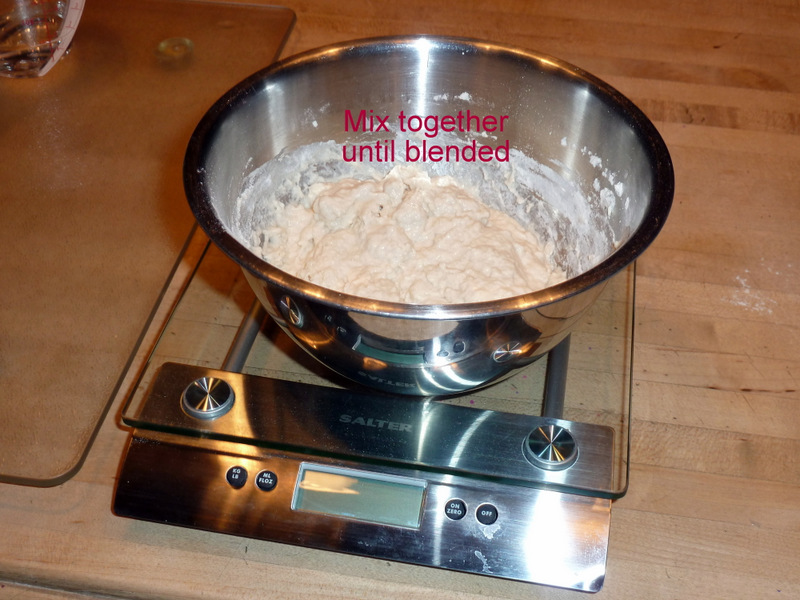
Blend together
Cover and let the poolish ferment for 12 hours.

Fermented Poolish
Next comes the dough.

Dough ingredients
This portion of the recipe calls for a lot more of the same plus salt, butter, and the poolish:
- Poolish
- Butter
- Flour, 298 grams/10½ ounces by weight
- Water, 148 grams/5¼ ounces by weight
- Salt, 2½ tsp. table or 5 tsp. coarse Kosher
- Yeast, 1¾ tsp.
Pulse together in a food processor the flour, salt, and yeast.

Flour, yeast, and salt
Add the poolish.
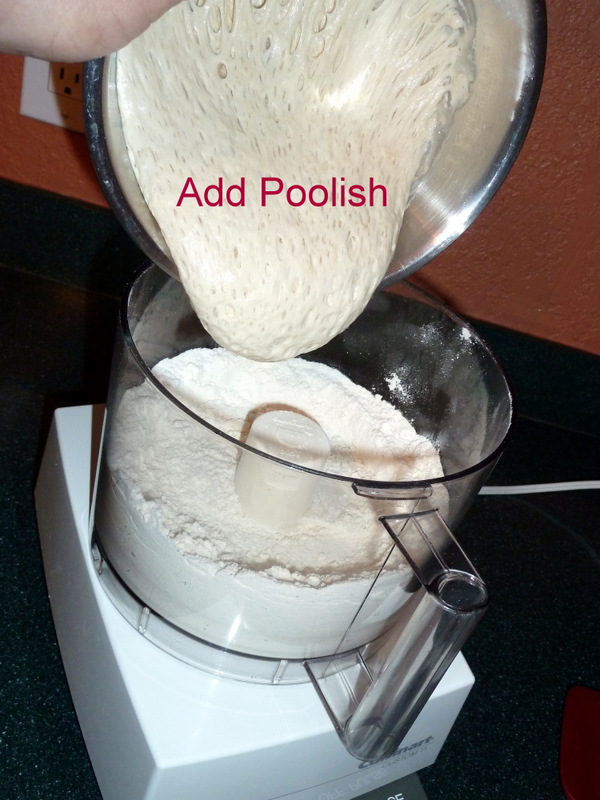
Add the poolish
Add the water. I like to first swish the water around the now-empty poolish bowl to get all the remaining fermented goodness out of it.

Add Water
Pulse together all the ingredients except for that pat of butter. You’ll be using that in a moment.
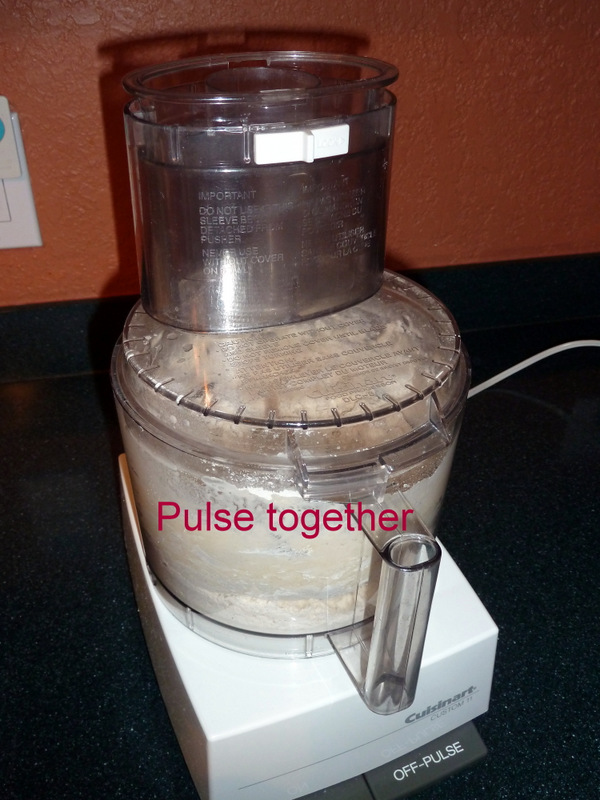
Pulse together
Scrape the sides of the processor.

Scrape sides and pulse again
Wait about 20 minutes to let the flour hydrate, then start pulsing again. Don’t overdo it! You want to pulse just enough that the dough holds together and the ingredients are fully incorporated, but you don’t want the dough to smooth out and become elastic. If you do that then your bread will become tough and chewy on the inside.

Don’t overdo it
Now, remember that butter? Use it to liberally coat a large bowl and plop the dough into the bowl.
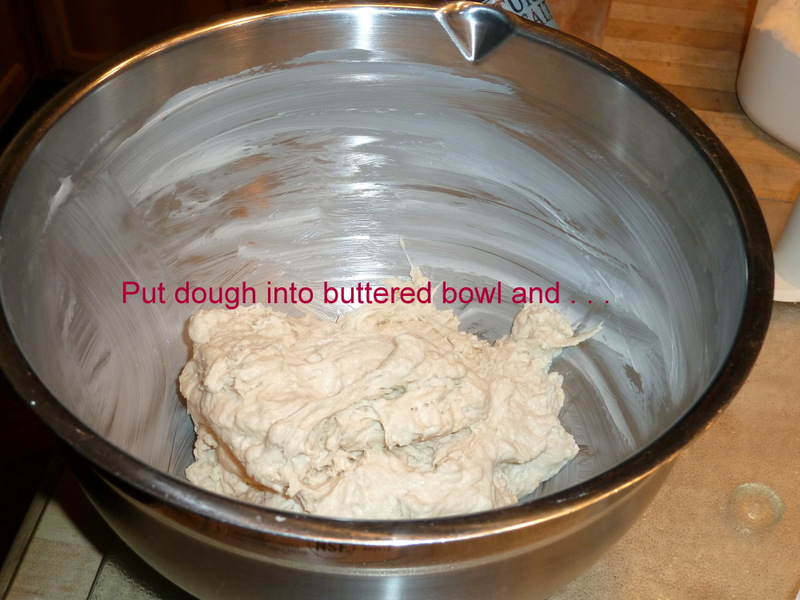
Place dough into buttered bowl
Turn the dough so that it’s well greased on all sides, then cover the bowl and let the dough rise for two hours.
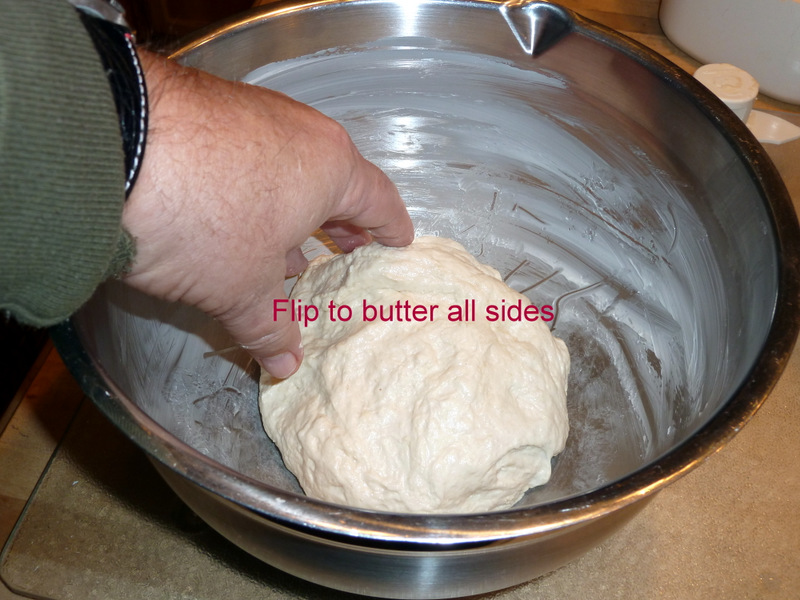
Turn to butter all sides, cover and let rise
During that two hours you’re going to uncover the bowl twice — once at the 40-minute mark and again at the 80-minute mark. During these times you’re going to pick up the dough, let it gently elongate, and then you’re going to fold the dough onto itself. This redistributes the yeast and removes excess carbon dioxide from the dough.
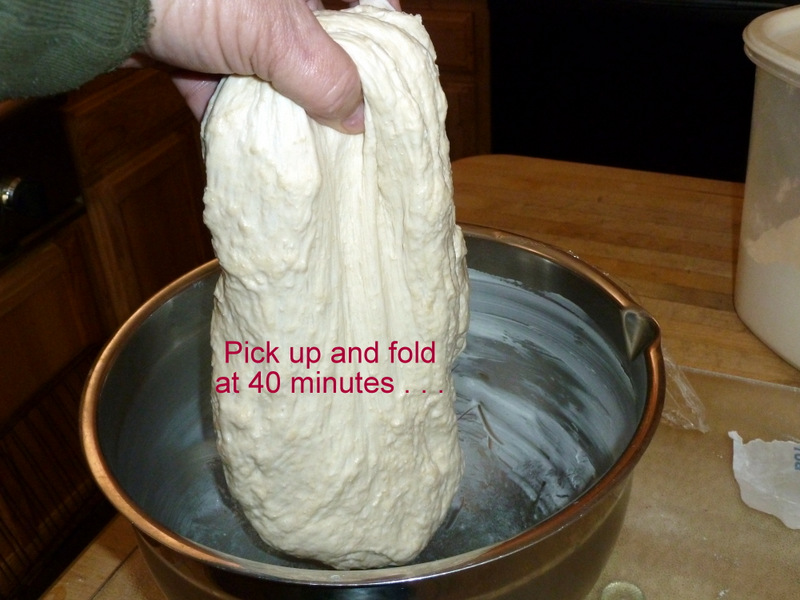
Deflate and fold at 40 minutes
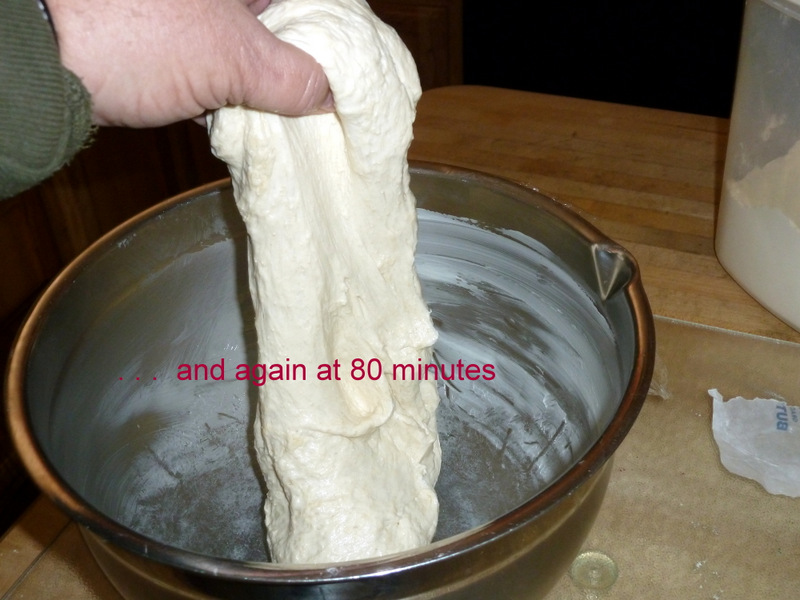
And again at 80 minutes
After the two hours are up divide the dough into three equal pieces of about 250 grams/8⅞ ounces each and place the pieces onto some parchment paper. Roll each piece into a rough log shape, cover, and let rest for 20 minutes.

Divide and form into logs; rest for 20 minutes covered
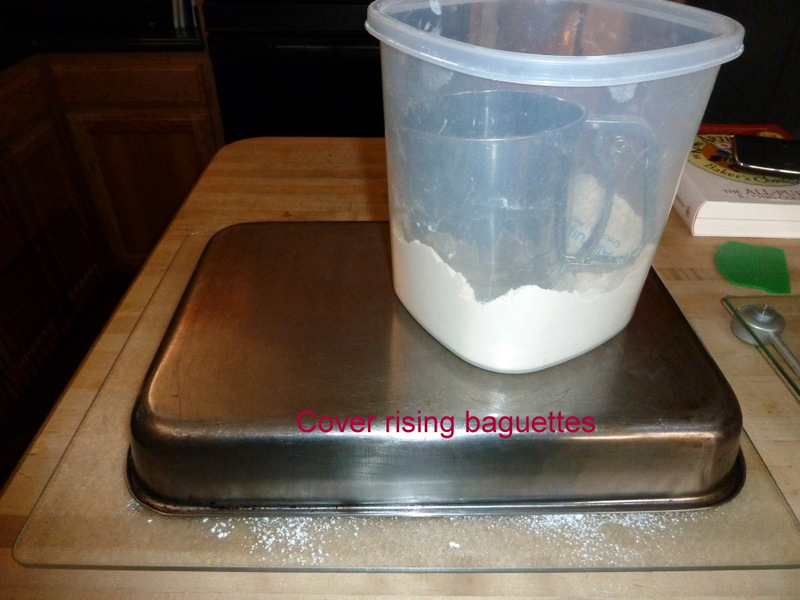
Cover during rests and risings
Uncover the logs and place them onto a well-floured surface. Keep that parchment paper. You’ll use that again later. Generously flour the tops of the logs as well.

Flour tops
Now hand-roll the logs into long, thin baguette shapes.

Hand rolled
Place the floured, rolled baguettes into your baguette rack, which you’ve now lined with that piece of parchment paper you saved from earlier. Cover the baguettes again and let them rise one final time for about fifty minutes.
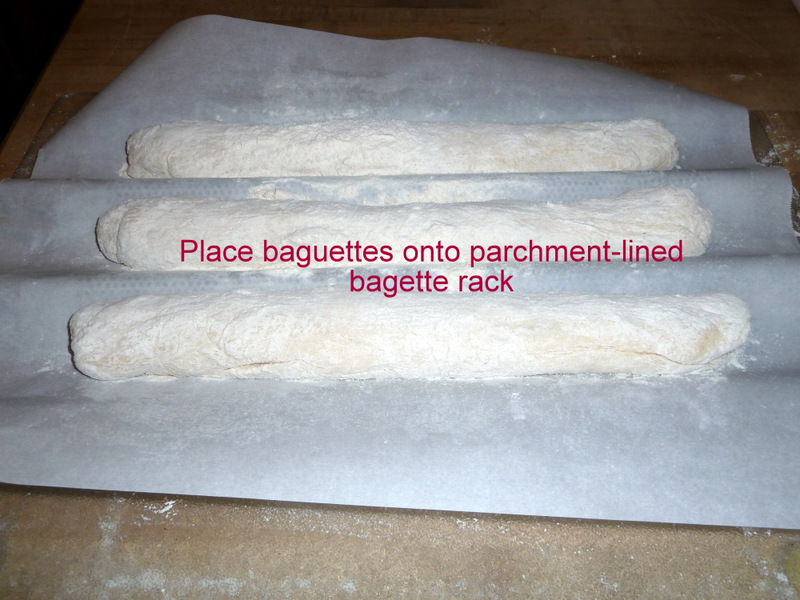
Baguettes ready to rise
While the baguettes are doing their final proofing, place a cast iron skillet on the lowest rack of your oven and crank that sucker up to 500°F/260°C. You read that right. We want that oven almost crematorium hot. Well, that’s a slight exaggeration.

Place your racks in this configuration and start heating that skillet to 500°
After the final rise uncover the baguettes and gently pull out the parchment paper lining. Allow the baguettes to roll as you pull away the paper.

Carefully remove parchment paper after the rise
Put on a good heat resistant glove for this next step. Water boils at 212°, but the temperature of steam is unlimited! Open the oven, quickly pour into the heated skillet one cup of water, and immediately shut the over door.

Add water to that 500° skillet, but BEWARE THE STEAM!
Without delay start slashing the tops of your baguettes with a razor blade or other extremely sharp implement. The trick here is quick, shallow, diagonal cuts holding the blade at about a 45° angle rather than slashing straight downward. Make four or five cuts almost lengthwise with a slight side-to-side bias.

Shallow, angled, diagonal slashes
Immediately following the slashing (starting to sound like an early Jamie Lee Curtis film, isn’t it) transfer the baguette-laden rack to the oven, placing the baguettes directly over the hot, steaming skillet. Shut the oven and lower the temperature to 475°F/245°C. Let the baguettes bake for 20 minutes, then quickly remove the skillet, shut the door, and bake for another four or five minutes at most. This will allow direct heating to crisp and brown the bottom of the baguettes.
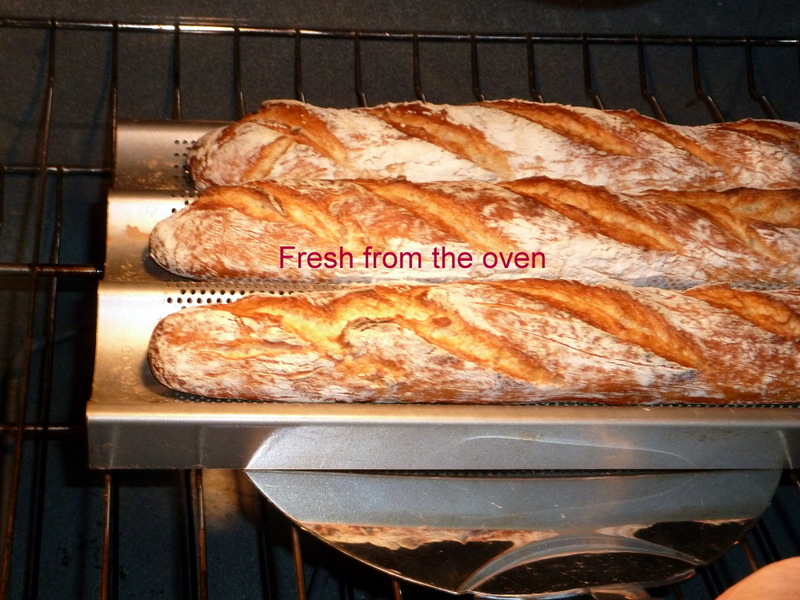
Fresh from the oven
If you’ve done this last step correctly, your baguettes will have an even, dark brown, rustic look on all sides.

Rustic look on all sides
As with any rustic baguette this bread is great on its own, served with butter, used as an accompaniment with escargot or pasta dishes, or as the supporting actor in a steamy production of Swiss fondue, which is the fate that awaited these particular examples.

Swiss Fondue and Rustic French Baguette Bread — What a Combo!
 Decisions — Murder in Paradise
 The Globe — Murder in Luxury
 R. Doug Wicker — Author