Choosing a Camera—Part 2


On Monday I presented Part 1 in a three-part series on helping someone select a new digital camera based upon their current needs.  Today, I present the actual recommendations based upon what we discovered from our future buyer on Monday:

So, we’ll want a camera with good resolution and low noise through at least ISO 400, and preferably up to ISO 800 or even higher.  We’ll want to accompany that with a telephoto lens that zooms from 24mm (ultra-wide angle) to at least 105mm (mild telephoto) with an aperture (lens width—the wider the lens, the more light it gathers) of at least f2.8, but we may have to go up to f4.0 (the larger the number, the narrower the lens) to keep within budget.  We’ll want to set all this with an external flash, and preferably one on which the head swivels up (and left and right if you can afford it) so you can bounce the flash for more natural indirect lighting.  That’ll run an additional $50 up to $200 for a good one.  I’d be inclined to budget in at least $150 for this, which brings our camera budget down to around $850.  So, here goes:

Compact cameras (with the added bonus of being able to shoot in Raw format):

Canon Powershot G12 (but the lens is a 28mm-140mm zoom, and may not be wide enough for your needs on this shoot; small sensor; good aperture at wide angle—f2.8-f4.5).  $380 (all prices are shop-around prices)
Nikon Coolpix 7100 (Same problem—28mm-200mm; good aperture on the wide side—f2.8-f5.6; small sensor).  $404
Olympus XZ-1 (28mm-112mm; great aperture—f1.8-f2.5; larger sensor).  $414
Panasonic LX5 (24mm-90mm, the first camera listed with enough wide angle, but limited on the telephoto; excellent aperture—f2.0-f3.3; larger sensor)  $348

Interchangeable Lens Cameras (ILCs—one step below a DSLR; these cameras will be more versatile in the future, but right now lens availability may be limited):

Olympus Pen series—$500 to $900 MSRP with kit lens (28mm-84mm f3.5-f5.6)
Panasonic Compact System Cameras—$500 to $800 MSRP with kit lens (28mm-84mm f3.5-f5.6)
Sony Alpha NEX series—$500 to $850 MSRP with kit lens (27mm-82.5mm f3.5-f5.6, but you can get a 24mm f2.8 lens with no telephoto capability); largest sensor so far—APS-C size; no hot-shoe, so no external flash capability—a deal breaker for your above application, in my view.

Digital Single Lens Reflex Cameras (DSLR):

There are a whole slew of cameras from which to pick in this field, with any lens you’ll need and just about any price range you can afford.  The big three in this field are Sony, Canon, and Nikon, with some great offerings also coming from Olympus and Pentax.  I’m a Canon man from way back, but I do have to say that the current leader in innovation is Sony with their new SLT series—not really a DSLR, and not strictly an ILC, but rather something in between.  The base-model SLT-A35 with two kit lenses (27mm-82.5mm f3.5-f5.6 and 82.5mm-300mm f/4-5.6—again, I’ve converted all focal lengths to their 35mm equivalent for comparison) has an MSRP of $900.  But you can get comparable capabilities for a lesser price from either Canon or Nikon.  In this range of cameras, just shop for the features you want.

Friday, the conclusion:  The pros and cons of the above suggestions

Comments Off on Choosing a Camera—Part 2

Filed under Photography

Choosing a Camera—Part 1


I recently received a call for help on selecting a new camera, and I thought the process in determining the needs of the buyer and matching them to the eventual purchase might be instructive.  So, today we’ll begin Part One of a three-part series.  The advice given follows a series of questions I asked of the buyer:

Okay, so we’ve established that you’re a relative but potentially enthusiastic novice who may decide to go further with photography later.  You have some DLSR experience with a friend’s Nikon DX-series.  The upper limit of your budget is $1,000 (I’ll disregard the lower end because we shouldn’t be constrained by a lower limit if we can find something that will meet your needs below the $800 mark).  You also said that you’re willing to go higher, but only if the chosen camera will be of some benefit to you after this particular assignment.  So, with all that in mind, let’s get started.

First, let’s review the most critical need—the prom party you’ll be photographing next week.  I’m going to make some assumptions here—this is a nighttime event, probably indoors, under dim artificial lighting from multiple sources.  There will be dancing, which means potentially rapid movement, and you’ll want to capture action with minimal blurring.  You’ll probably be taking pictures of large groups of people in a confined space (or within flash distance), so you’ll want a wide angle lens of at least 24mm if you can find it (that’s measured in 35mm equivalency rather than actual focal length, so make sure you’re comparing apples to apples here).  You’ll also want some close-in portraits with a nicely defocused background, which means a telephoto equivalent of at least 105mm.  You didn’t mention the maximum size of any potential prints, so I’ll assume a maximum of 8×12 inches.  That means you’ll need a sensor with at least 4 megapixels and preferably up to around 6 megapixels (this gives you between 200 and 300 “pixels” per inch, which is plenty).  Of course, if you go with more megapixels (which you’ll be doing anyway, as anything I suggest here will have at least 10 megapixels), then you can do more aggressive cropping of the image later on a computer.

The above situation dictates the following in a camera:  A larger-size sensor for good low-light performance with minimal sensor “noise” (the digital equivalent to film “grain,”—the small, grainy botches you see in large prints of old).  You have limited experience with manual controls, so any camera will need to be program-heavy with a lot of presets (aka, “screen modes”) for various photographic situations.  It’ll also need a built-in hot-shoe for mounting an external flash to better control lighting, thus allowing you to become the master of your own photographic destiny on everything from shutter speeds to white balance (at least for closer shots of people out to about a range of thirty feet or so).  To go with that built-in hot-shoe, you’ll need flash to mount onto it, so we have to include that into the price, and on the flash you’ll want a diffuser.  Omni-Bounce makes a good, affordable one that’ll only cost you around $10 or less.

Next up:  My suggestions.

2 Comments

Filed under Photography

In the Twilight of 2011


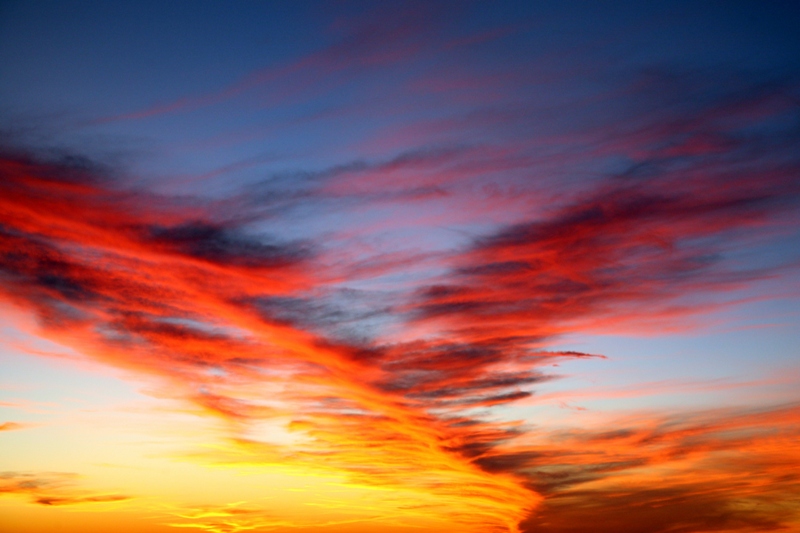
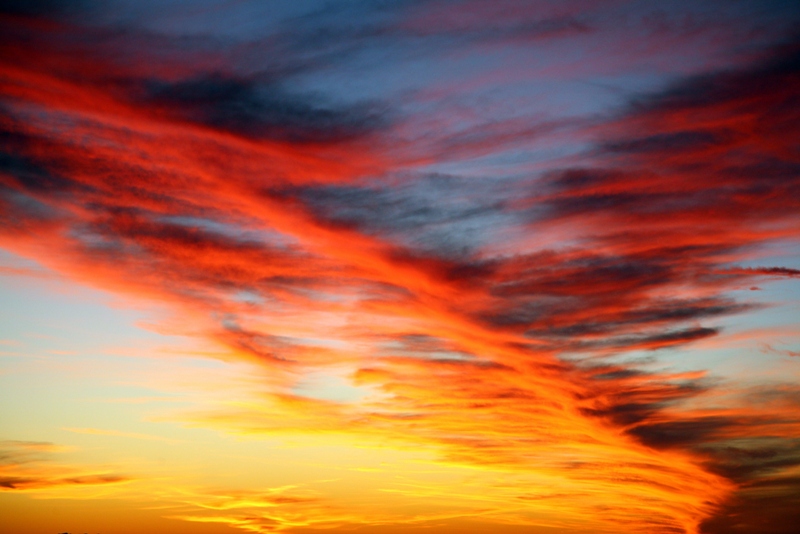
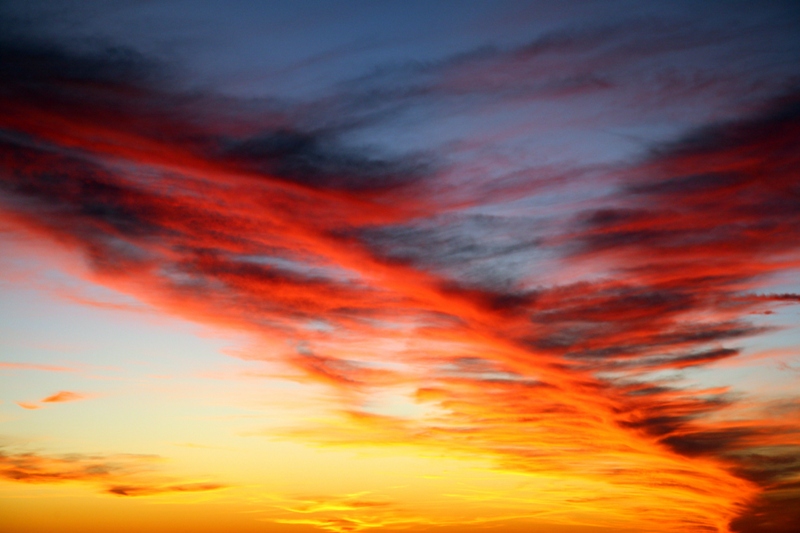
This is not a normal blog day, but we had a spectacular sunset this evening and it seems only fitting that I share it with you considering that today also sees the sun setting for the last time on the year 2011.  May the coming New Year be to each and every one of you as big, as bright, as colorful, and as full of hope and promise as was this great Desert Southwest sunset today.
So, sit back and enjoy nature’s spectacular show of light:

1 Comment

Filed under Photography