Category Archives: Wine & Food

Swiss Winter Dishes—Raclette


The temperatures have dropped.  The sweaters are out.  The booties are on.  The fireplace is fireplacing.  Must be that time of year.  What time of year?

Swiss winter cooking time of year, of course.

And this dish is so simple that even a husband can do it.

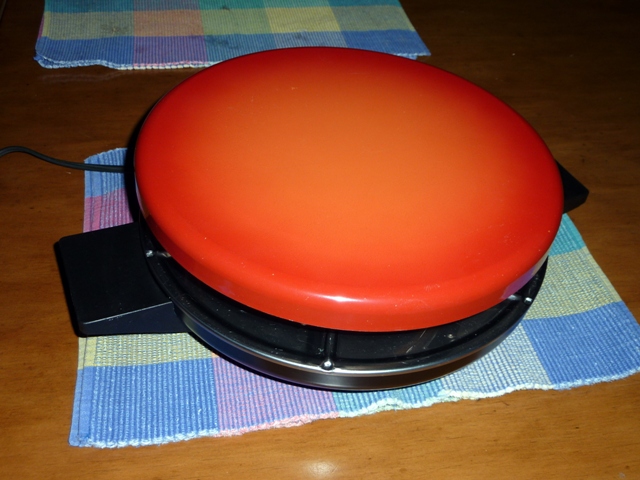
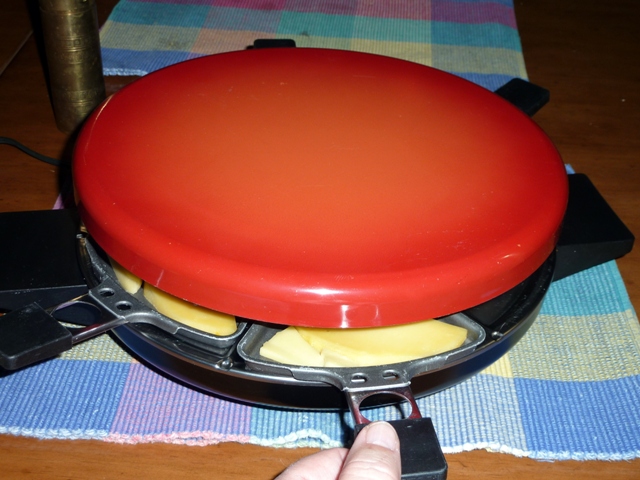
Traditional Raclette cheese comes from Switzerland and France (or so the French claim), and in restaurants it’s served by taking a half-wheel of Raclette and placing it cut-side facing the roaring fire until is melts, and then the melted portion is scrapped onto some eager, hungry person’s plate.  That might work great for a restaurant, but it’s pretty impractical and not nearly as much fun as using a Raclette oven/grill at home.

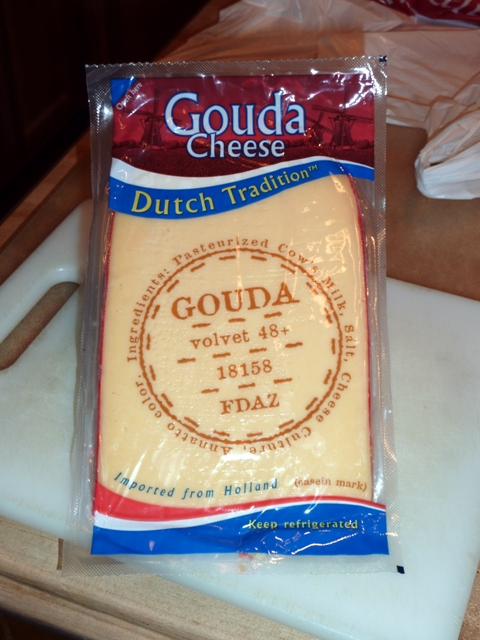
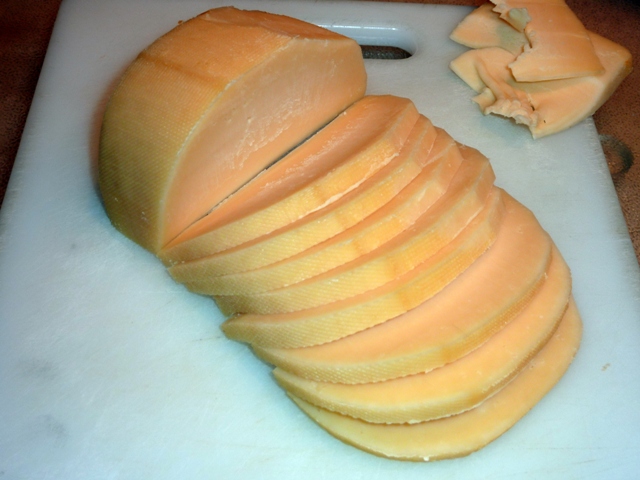
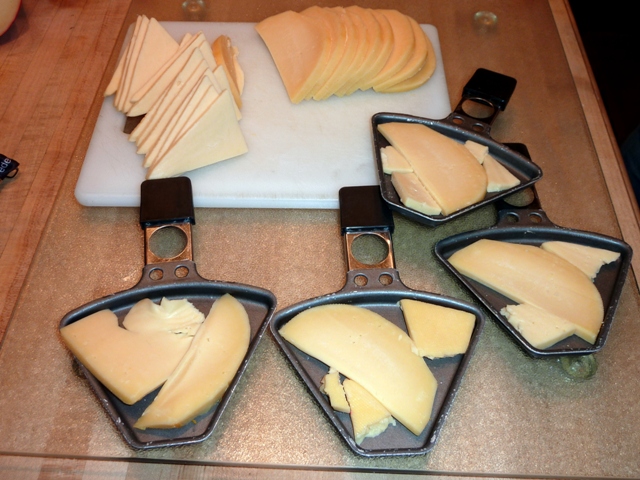
For this dish you’ll need a semi-firm cheese (Raclette if you can find it, but we’ve found that Gouda works equally well and we’ve actually grown to prefer the flavor.


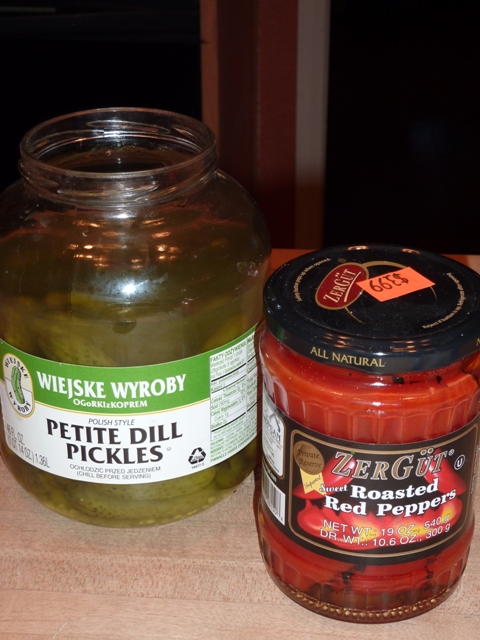
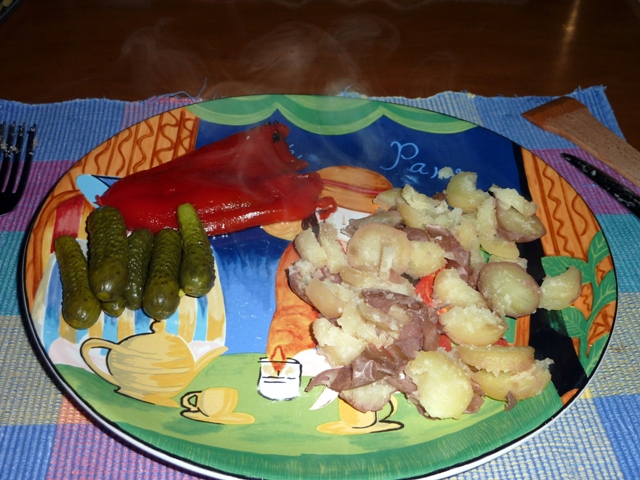
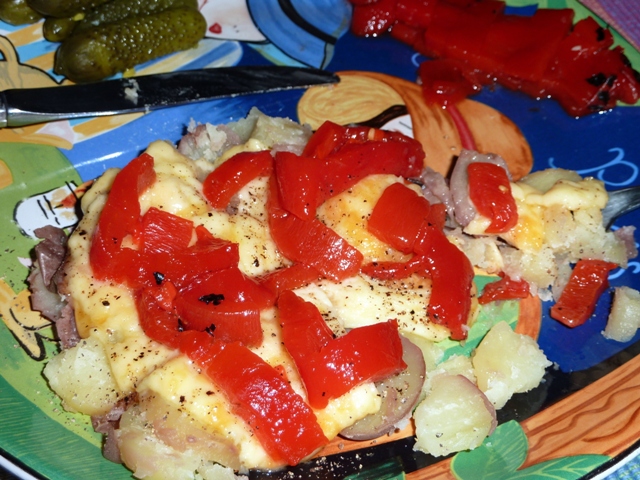
You’ll also need a jar of fire-roasted red peppers and dill-pickled gherkins (small, cucumber-like vegetable):

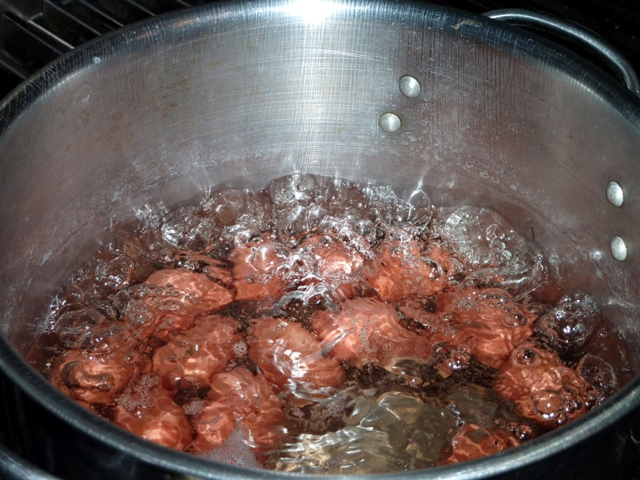
And freshly boiled small new potatoes:

Pearl onions are also a traditional accompaniment, but Ursula is not a big fan so we forgo these little wonders.

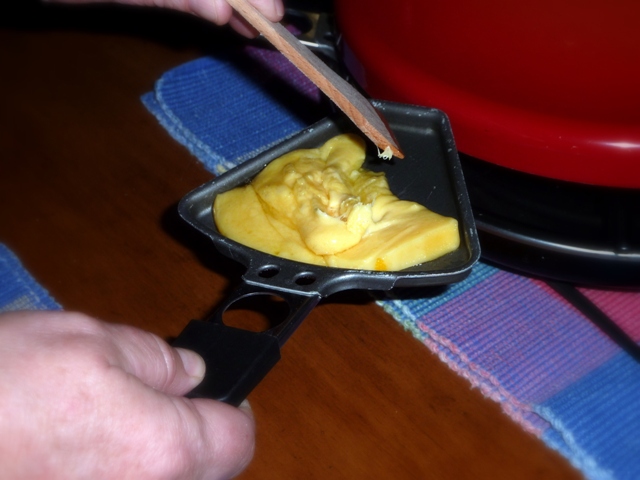
Place the Raclette oven/grill on your dining room table and get it good and hot.  Give your guests their own Raclette tray to load with your chosen cheese and place under the heating coils.  Meanwhile, keep those boiled potatoes warm by placing them on a plate atop the oven/grill.


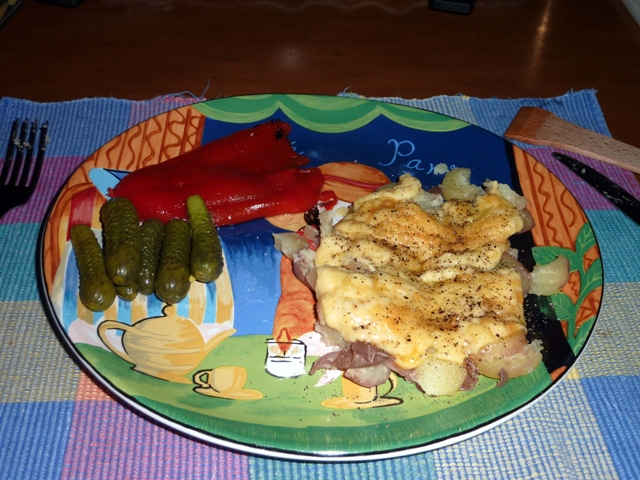
While the cheese is melting, grab a couple of potatoes and thinly slice them onto your plate.  Pile on some gherkins and red pepper while you’re at it.

Using a small wooden spatula, occasionally stir your cheese so that it melts evenly and thoroughly.  Heat until it gets nice and bubbly.

Pour the melted cheese over your potato slices and season with some freshly cracked pepper—white pepper being the traditional choice, but I prefer black.

Instant party, people!

But don’t forget the wine.  Go with something white and dry.  Fendant is what is served with Raclette in Switzerland, but it’s hard to find here in the U.S.  Instead, try a good Pinot Grigio (Cavit of Italy makes a readily available, exceedingly affordable and, most importantly, consistently good Pinot Grigio no matter what the vintage—I’ve yet to have a bad bottle in all the years I’ve been buying it).  Johannisberg Riesling is also a good choice, as long as it’s dry.

Finicky Kids Tip:  Our oldest daughter throws in kid-yucky vegetables—broccoli, cauliflower, green peppers, and the like.  The cheese disguises the vitamins (SHhhhh—it’s a secret).

3 Comments

Filed under Wine & Food

It’s in the Bag(uette)


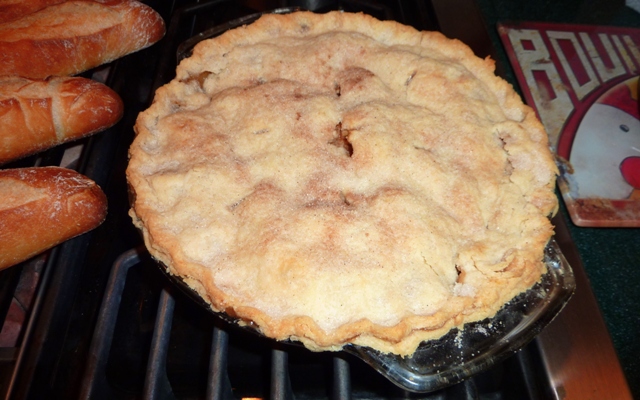
Baking Day at the Casa de Wicker.  I usually bake three baguettes on weekends and then cut them in half and freeze them wrapped in aluminum foil for sandwiches during the workweek.  This weekend I was called upon for a bit more—a double batch of baguettes and an apple pie.

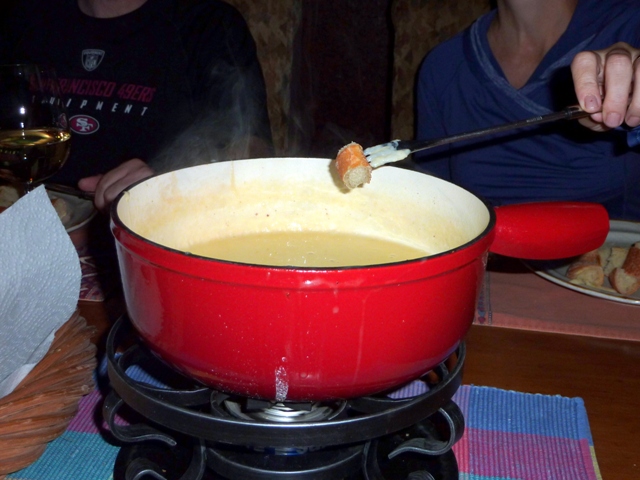
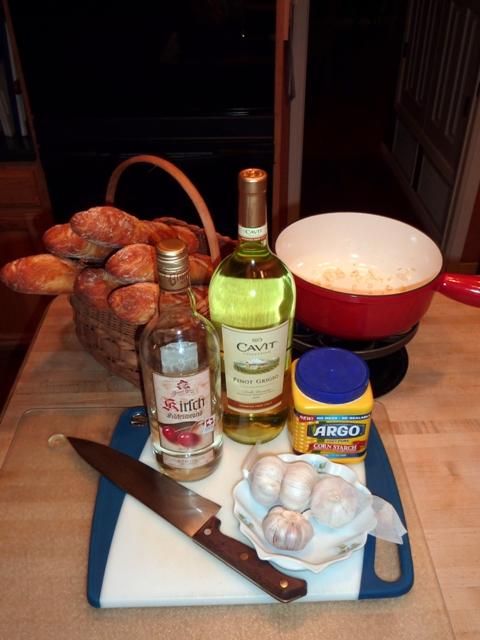
With the downturn in temperatures, Ursula was in the mood for one of her favorite Swiss winter cheese specialties—Raclette or fondue and fondue won out as we were hosting our good next-door friends, Randi and Jim Brewer for dinner Sunday.  Jim’s favorite desert also just happens to be apple pie, and I’d just discovered a new recipe I wanted to try.  So . . . .

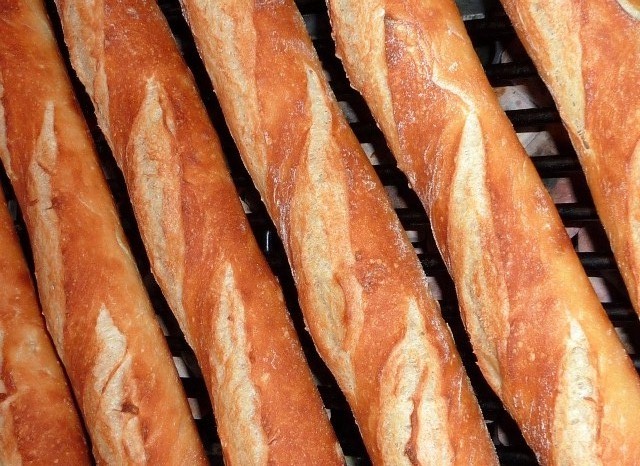
But a really good, traditional cheese fondue requires a good, traditional, crusty French baguette.  Time to go to work, and work began the day before—on Saturday.

This recipe, borrowed and modified slightly from Alton Brown’s Knead Not Sourdough recipe (and very similar to my related pizza dough recipe), is just too simple to waste time and money going to the local bakery for a product that is probably inferior in taste, texture, and crunch.

Ingredients:

One pound, two ounces (18 ounces total avoirdupois—as in weight—ounces) bread flour

1 tbs. course Kosher salt (half that amount if using fine-grain table salt)

¼ tsp. yeast

12 fluid ounces of warm tap water

Step 1:

In a large pan or Dutch oven, stir together the salt and flour.  Dissolve the yeast in the water or also stir into the flour (your choice; both work).  Stir water into the flour mixture and combine until the water is completely incorporated into the flour.  Cover the dough and let ferment for nineteen hours, folding or stirring occasionally (I do this using a dough scrapper once before going to bed and once again after awakening in the a.m.) to redistribute the yeast, make sure the flour is completely incorporated, and to ensure that there are not dry spots.  No kneading necessary.  Yep—it’s that simple!

Step 2:

Sprinkle more flour onto the counter, a glass cutting board, or a marble or granite pastry board.  Measure out the dough into three equal amounts.  I usually get around 856 grams (30.2 ounces) of dough which, when divided by three, give me three portions of dough weighing approximately 285 grams (10 ounces) each.

Step 3.

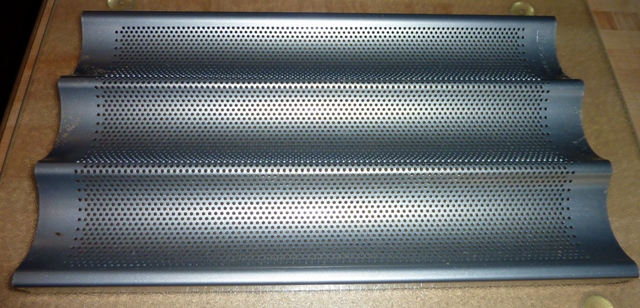
Using your hands, roll the dough portions into three long, thin ropes approximately eighteen inches in length (use lots of flour here or the dough will be too sticky to work).  Place the dough ropes onto a three-trough, nonstick, perforated baguette pan (see a picture of mine below).  Cover the baguette pan with a large roasting pan to keep the dough from drying out while the loaves rise.  Let the loaves rise for one and a half (warm kitchen) to two hours (cooler kitchen) until at least doubled in bulk.

Step 4.

When the loaves have at least one hour more to rise, place a cast iron skillet into your oven on a rack in its lowest position.  Place another rack into place above the skillet, just high enough to clear the skillet.  Preheat the oven to 450° F (230° Celsius).  You want that skillet and the inside of the oven heated thoroughly, so err on the side of longer time rather than shorter.

Step 5.

With ten minutes or less in rising time to go, take a razor, hobby knife (such as an Exacto), or other extremely sharp implement and make three to four long, half-inch deep slashes down the center of the loaves, offsetting each slash slightly from one side to the other.  Just before the loaves go into the oven, pour one cup of water into the heated skillet.  Caution:  Steam will burn you.  Rapidly.  That flash of steam is water vapor that was suddenly heated to 450°, so get your hands away from that steam immediately.  Shut the oven door for a couple of minutes to build up the humidity in the oven.  This humidity, contrary to expectations, is what will give your baguettes that incredible, crunchy crust.

Step 6.

Quickly open the oven door and slide the baguette pan onto the upper rack above the skillet (I use a pizza spatula for this to keep my hand from being steam burned).  Shut the door as soon as possible.  Bake the baguettes for 20 minutes.  Remove the skillet and bake the baguettes for another five minutes.  Removing the skillet allows direct heat to brown the underside of the loaves.

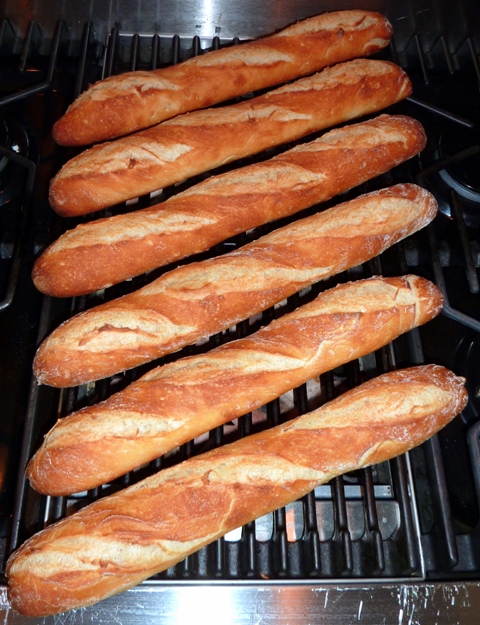
You’re done.  Remove the baguette pan and your crispy, homemade baguettes should have a nice, evenly browned patina on all sides.  Let the baguettes cool atop a rack, or even leave them on the baguette tray to cool if you desire.
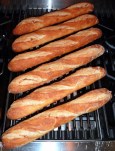
If you’re going to freeze the loaves, wrap them in heavy-duty aluminum foil.  When you’re ready to serve the bread, unwrap the loaf and place it directly into a preheated 400° F (200° Celsius) oven for ten minutes to crisp up the crust again.  Remove and allow to cool (and the inside to completely defrost) for twenty minutes, then serve.

Cast iron seasoning tip:  While your skillet is still hot, remove it from the oven and pour out any remaining water and quickly dry the surface.  Take a good, high-temperature cooking oil (peanut, corn, safflower, sunflower, or soybean, for example) and thoroughly coat the pan on all sides and the bottom, but especially on the inside rim and along the bottom cooking surface.  Because of the intense heat, the oil will seal the iron for a rust-resistant coating on the outside and a relatively nonstick surface on the inside.  Remember—never wash a good, well-seasoned cast iron pan in soapy water.  Doing so will strip away the protective, nonstick oil coating.  To scrub out a cast iron skillet, Dutch over, or pan, use salt mixed with cooking oil as an abrasive and wipe away the salt-oil mixture once the pan is scrubbed clean.  If your cast iron is ever exposed to soap or detergent, you’ll have to start the seasoning process all over again, so be careful.

1 Comment

Filed under Wine & Food

Sauvignon Blanc—The White Wine for the Rest of Us


Okay, I admit it—I don’t care for Chardonnay.  Oh, sure, I come across a bottle every now and again that manages to impress, but it’s just not one of my favorite varietals.  What’s wrong with it?  First, it’s oaked and aged.  Whites should be neither, and if you have to oak it and age it then there’s something inherently wrong with it.  Kind of the opposite of the Gamay grape used in the making of Beaujolais and (shudder) Beaujolais nouveau—a red wine that doesn’t take well to either aging or oaking.  Indeed, I can honestly say I’ve never had a bottle of Beaujolais or (worse) Beaujolais nouveau that I could even stomach.  It’s quite simply that bad.

But, last time I read figures on wine popularity, Chardonnay ranked number one in the good ol’  U.S. of A.  Go figure.  I mean, yeah, it pairs well with heartier stuff that you could normally get by pairing with a good Pinot Noir, just as Pinot Noir will oft times work with some things you would normally accompany with a heartier white.  Think of Chardonnay, then, if you will, as a bridge between white and red, with Pinot Noir waving to it  just on the other side of the border.

So, what’s a wine connoisseur to do when it comes to finding a nice, dry white that pairs well with everything from seafood and chicken all the way to veal and pork?  Well, for me, the answer is Sauvignon Blanc, also sometimes referred to as Fumé Blanc.  And if you really miss the oak characteristic of Chardonnay (which gives Chardonnay its “buttery” character and silky smooth texture), you can find oaked Sauvignon Blanc/Semillon blends that may surprise you.

Like Chardonnay, Sauvignon Blanc has its historic roots planted firmly in the soil of France—the Burgundy region for Chardonnay; the Bordeaux region for Sauvignon Blanc.  But don’t get caught up in thinking this a French wine, because our Kiwi Cousins from New Zealand have taken this varietal to heights the French never dreamed possible.  And the Kiwis have done this while keeping the cost per bottle exceptionally reasonable.

When looking for a good New Zealand Sauvignon Blanc, concentrate on the Marlborough appellation.  My particular favorite, scoring consistently in the low 90s year after year after year, is the incredibly versatile, readily available, and extraordinarily affordable examples coming out of the Kim Crawford winery.  Other fine examples I’ve tried and can recommend come from the wineries of Kato, Matua, and Brancott.

Pairing well with this varietal—goat cheese; creamy cheeses such as Boursin, Camembert, Brie and Gouda; lobster and crab dishes, and various shellfish such as oysters, scallops, and even shrimp, and various seafood-based chowders; fish ranging from red snapper to wild salmon; fatty fish such as tuna, mackerel, and swordfish; lighter flavored fowl such as chicken and Cornish game hen; veal dishes of all strips; pork dishes from oven roasted loin to slow-smoked barbeque and even ham; earthier vegetarian fare using eggplant, various mushrooms, asparagus, and artichoke; tomato-based sauces with pasta; and vegetarian pizzas, especially when loaded with garlic.

Thinking of dessert?  Try pairing Sauvignon Blanc with fruit-based deserts—both fresh and baked (pies and tarts).  Try lighter cakes and cookies (angel food and sugar cookies), and don’t hesitate to serve it with creamy cheese-based deserts ranging from tiramisu (which uses marscapone cheese) to cheesecakes (especially cheesecakes with fruit-based toppings).

It’s just amazing all the different pairings this particular varietal handles well.  Is it any wonder that Sauvignon Blanc has become my go-to wine for so many different courses?

3 Comments

Filed under Wine & Food