Category Archives: travel

And You Haven’t Checked Out the Local Sights Because . . . ?


Quick:  Name the people in New York mostly likely to have never visited the Empire State Building or take the Staten Island Ferry to the Statue of Liberty.  Without putting any thought into it, who in Seattle has probably never have ascended the elevators of the Space Needle or spent an afternoon at The Music Experience and The Science Fiction Hall of Fame?  Who do you think has been to San Francisco, yet has never set foot on Alcatraz Island?

Answer: Those would be respectively the residents of New York, Seattle, and San Francisco themselves.

We’re all guilty of it.  We all have a tendency to do it. We are, in fact, the least likely visitors to the attractions offered by our own communities . . . unless we’re trying to show off our cities or local areas to the occasional guest, and then only if we have the time to do so.  Think about it.  Do you go to your local art museum?  Do you visit the zoo?  Do you go downtown, camera in hand, and just photograph the glass and concrete edifices lining the canyon-like streets?  Do you search for that one great photo composition of the statue in your town square?  If you’re like most people, the answer is invariably, “Oh, I’ll get around to it one day.”  In actuality though, chances are you never will unless you take off the weekend, get out of the house, get behind the wheel of your car or take city transit, and make the effort.  It’s not so much that familiarity breeds contempt so much as the knowledge that you enjoy easy and quick access to those nearby sights.

I live in El Paso, Texas—one of the most beautiful and photogenic jewels in the American Desert Southwest located in an area rich with natural wonders and surrounded by quaint Western towns.  Yet I frequently hear the lament that El Paso offers nothing to do.

Are you kidding me?

Art: We have in our local art museum a substantial portion of the incredible Samuel Kress Collection, not to mention the works of Tom Lea, Eugene Thurston, and many others.  For more recent artists we have on display at various galleries the works of Krystyna Robbins, Mauricio Mora, Alberto Escamilla, Daniel Padilla, and many, many more.  And the great thing about these galleries?  Since they have works for sale, gallery owners just love to have you come in a browse for free hoping you’ll take advantage of the low prices and great artistry produced here locally.

Architecture: Hard to believe today, but El Paso was once known as the most progressive and modern city in the Desert Southwest.  Henry C. Trost left his mark here with numerous examples.  El Paso was the first city west of the Mississippi to have an indoor mall.  El Paso claims the first concrete-framed skyscraper ever built in the entire United States, the Mills Building of 1911.  Conrad Hilton built his very first Hilton Hotel here, the soon to be restored Plaza.  Samuel Kress’s downtown building still stands today as an incredible tribute to Moor-influenced Spanish architecture.  Just how innovative and modern were El Paso architecture and construction techniques?  Not located in El Paso, but built by the El Paso-based Robert E. McKee Construction was the iconic, Paul Williams-designed Theme Building on the grounds of Los Angeles International Airport.  For more historical sites El Paso offers the Mission Trail with the Ysleta Mission (established in 1682, rebuilt in 1851), Socorro Mission (built in 1682, currently under renovation), and San Elizario Chapel built in 1789.  Now be honest—you though all the neat, really historic stuff 17th Century stuff was all in New England, didn’t you.

Day trips are something many people just do not do out of their home bases. In El Paso’s case that is really unfortunate.  I’ve lost track of how many El Paso residents who’ve told me they’ve never visited the stark, blindingly white, surreal gypsum dunes at the White Sands National Monument.  People who’ve never descended into the magnificent, jaw-dropping, stalactite-decorated Carlsbad Caverns, or who in the summer months stayed at sunset to watch hundreds of thousands of bats spiral out of the cavern in a dense cloud of fluttering wings.  Fellow El Pasoans who have never made the drive to the tall pines surrounding the nearby mountain communities of Ruidoso and Cloudcroft in New Mexico.

Weekend trips get even more interesting. Historic Santa Fe to the north and Tombstone to the West have whole sections of town still frozen in the mid-19th Century or even earlier.  Native American Country in the Four-Corners Area (where New Mexico, Arizona, Colorado, and Utah all join at a central point) boasts the cliff dwellings of Mesa Verde, Canyon de Chelly, the Painted Desert, the Petrified Forest, and little further up the road Barringer Meteor Crater, the Grand Canyon, and the red rocks of Sedona.

And I’m sure the area in which you live is no different. Don’t be the guy who complains that there’s nothing locally to do, or the one who says, “Oh, I’ll get around to it one day.”  Make the effort now, before you find that “one day” never got here before time or physical ability deserted you.  Leave a legacy of doing rather than merely thinking about it.  It’s like the joke about the old air traffic controller who, at his annual flight physical, was ordered by the flight surgeon to give up half his sex life, and who later lamented he didn’t know if that meant whether he was supposed to give up thinking about it or talking about it.

Comments Off on And You Haven’t Checked Out the Local Sights Because . . . ?

Filed under travel

The View from Atop Diamond Head


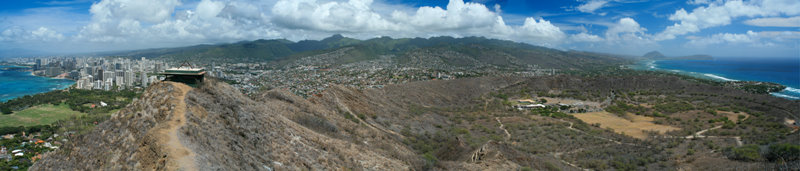
You know the iconic profile (photos 1 and 2 below) from innumerable movies and television series.  You’ve seen that background on everything from postcards of Honolulu to book covers.  It is one of the most instantly recognizable volcanic cones on Earth.  It is Diamond Head.  But what you may not know is that you can climb to the top of this natural wonder for some really stunning views of the city of Honolulu, the island of Oahu, and even the Diamond Head Lighthouse immediately below the uppermost lookout.  On a really good day you will be greeted by puffy white cumulus drifting through intensely blue skies over water ranging from aqua to deep oceanic blue.  If you have a DSLR, this is the hike on which you want to haul it with you.  To get the most striking colors out of the sky and surrounding ocean, don’t forget to pack a good polarizing filter.  And bring along plenty of drinking water.  You’re going to need that most of all.

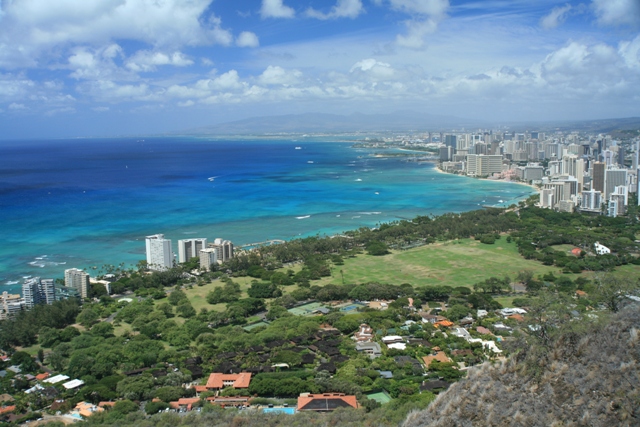
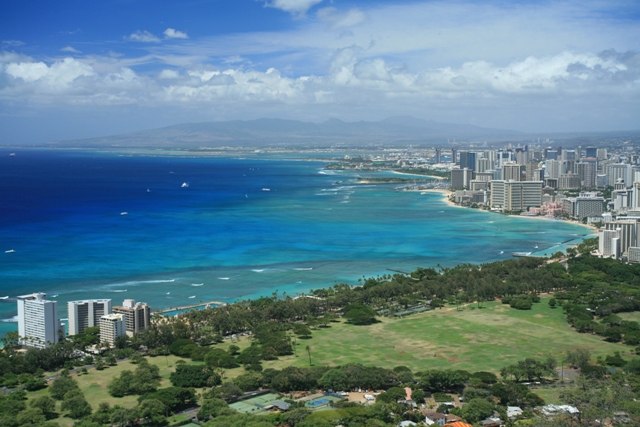
The Diamond Head State Monument is easy to get to from downtown Honolulu and Waikiki Beach.  Just hop on a city bus.  Take route 22, 23, or 24 (current as of this writing).  From the bus stop your journey on foot begins.  You will climb up a gradual slope with several lookouts (photos 3 and 4 below) along the way.  Eventually you will reach the Kahala Tunnel (photo 5), which will grant you access to the floor of the crater (photo 6).

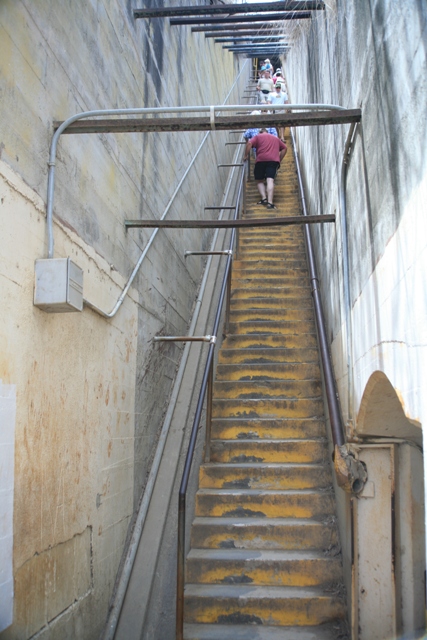
It is here where you will find the toll booth for further access. Walking across the crater, you will pass by a National Guard Armory and other buildings (Hawaii’s primary Air Traffic Control Center used this crater as its base of operations until 2001).  Beyond this trek of the crater floor is where your real work begins as you ascend (photos 7 and 8 ) to the highest point on Diamond Head’s southwest rim.  Take it slow, go easy, and give yourself plenty of breaks on the rather strenuous climb.  The walk is neither dangerous nor overly difficult, but the steep incline will take a toll on you especially if you’re not in the fittest of physical shape.  But once you get to the top, Wow! The views are simply incredible.

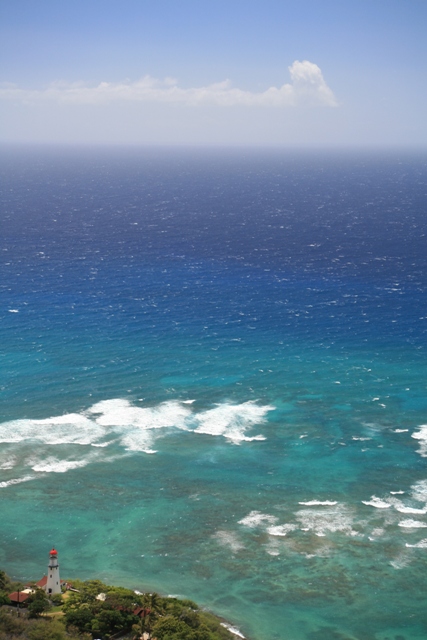
Diamond Head has been used by the military since 1909 and former artillery command and control posts still occupy the rim (photo 14).  Below the lookout is the picturesque Diamond Head Lighthouse (photos 9 and 10) standing against the colorful aqua backdrop of the Pacific Ocean.  To the east lie Honolulu and the white sand beaches of Waikiki.  For a really interesting shot, try stitching together a panoramic of the entire crater (photo 18).

A Question to My Readers:

I’ve now been doing this blog since January 3rd of this year, and this is the twenty-fourth blog entry.  During this time I have covered a wide range of topics:  photography, travel, food & wine, eBook readers, movie reviews, aviation safety, and even an informational piece on QR codes.  Now I need to hear from you, the readers of this blog.

What topics have been of the most interest to you? What would you like to see more?  What would you like to see left on the cutting room floor?  Since the entire raison d’être for this blog is to bring attention and sales to my books (one out currently; more on the way soon), how might I best serve that purpose?  What brings you, the reader, to consider making the purchase?  Please weigh in by leaving a comment and let me know your likes and dislikes concerning the topics covered to date.  I’m looking forward to hearing from you.

Comments Off on The View from Atop Diamond Head

Filed under Photography, travel

Istanbul in Words and Pictures


Today’s intended blog has been preempted by an information request from my literary agent.  He’s going to Istanbul this summer, and he wanted some tips on the sights and things to do.  So, today’s blog will deal with intriguing Istanbul, with a little photography thrown in as well.  Henry, my friend, this blog’s for you:

My wife Ursula and I visited Istanbul over two days last April.  As it turns out, I wish the visit had been longer.  There is just so much to see and so many things to do.  Alas, we were on a cruise and two days was all we were allotted.  Istanbul is a city that spans both sides of the Bosporus Strait, thus it is in two continents—Europe and Asia.  The city is further divided on the European side by the Golden Horn, a natural harbor on the European side of the Bosporus.  The “old” city is built upon seven hills on the south side of the Golden Horn, and it is there where the most historic sites and exotic locales reside.  If your time in Istanbul is limited, this area should be your base of operations during your stay.  Let’s take a look at some of the sights in this area:

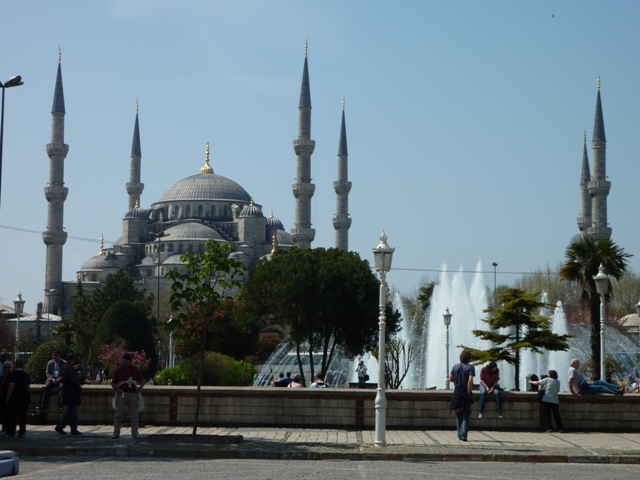
Sultan Ahmed Mosque or, by its more famous name, the Blue Mosque is an incredible structure that was completed in 1616.  The most notable external architectural features include the 140-foot-tall dome and the six statuesque, pencil-shaped minarets, two of which are separate from the main structure.  But as impressive as the outside is, the inside is even more spectacular beneath the great dome that towers at an incredible height overhead.  Inside you are greeted by over 20,000 hand-made tiles laid in a multitude of artistic patterns, including the blue tiles lining the underside of the main dome that give the Blue Mosque its popular name.

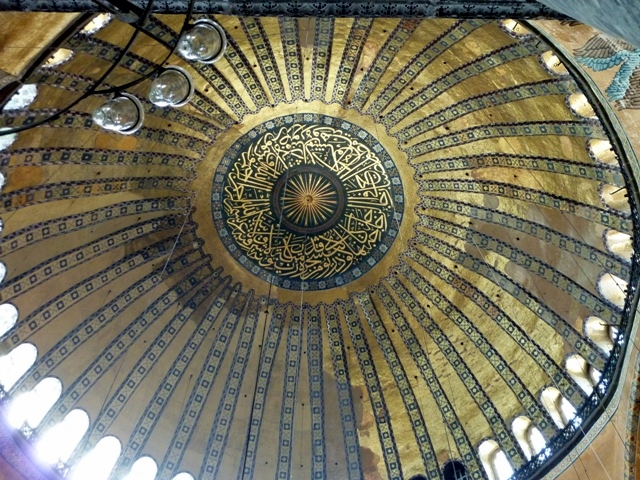
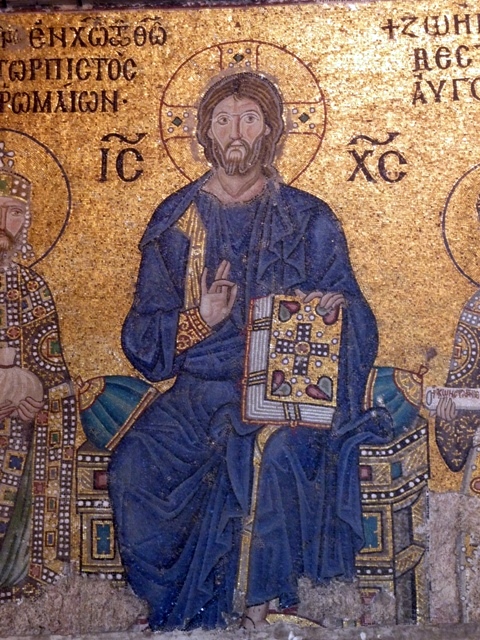
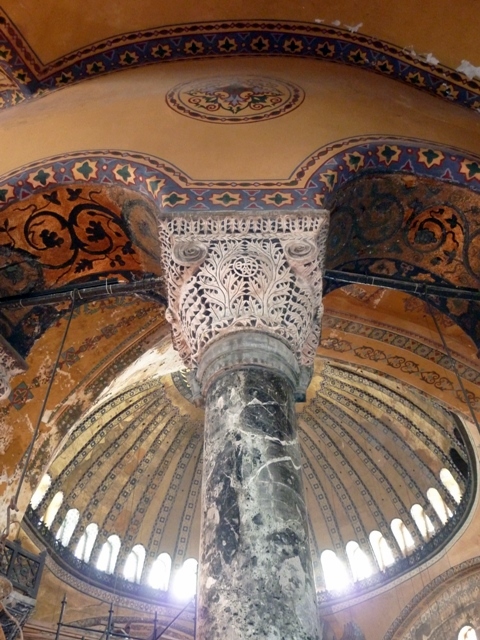
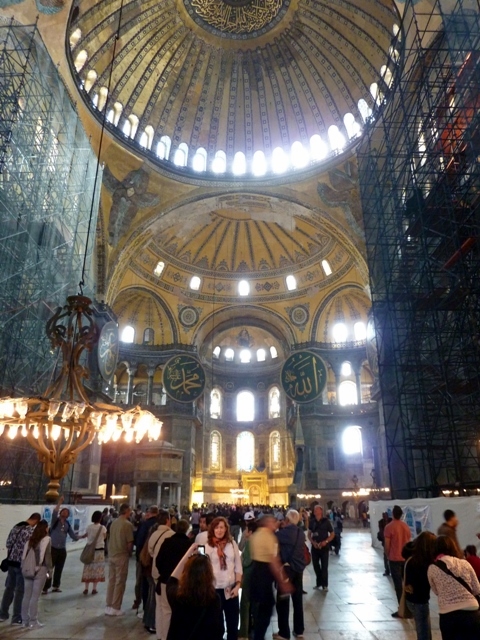
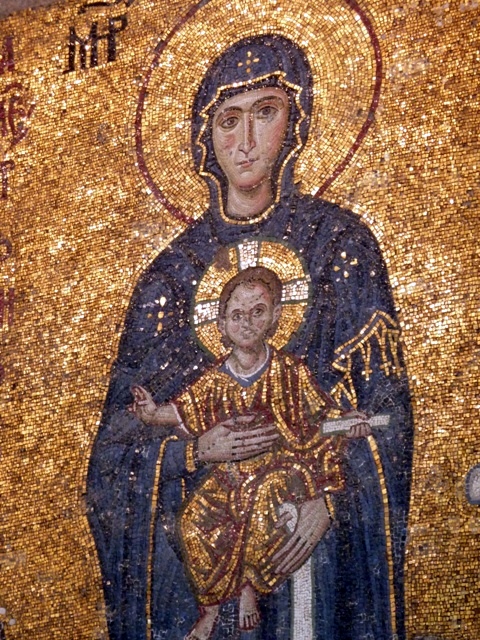
The site upon which sits the Hagia Sophia, just a short walk from the Blue Mosque, has been home to religious structures since AD 360 and was originally an Eastern Orthodox basilica.  The current structure is the third to be built there, and was completed in AD 537.  Earthquakes soon undermined the dome, resulting in its collapse in AD 558.  The dome reconstruction was completed in AD 562, and from that time until 1520 the Hagia Sophia was the largest cathedral ever built.  But from 1453 until 1935 it was no longer a cathedral.  Following the Ottoman conquest the Hagia Sophia was converted into a mosque, and in 1935 it became a museum highlighting its classic Byzantine architecture and incredible Christian mosaic tile depictions of religious figures.  Make sure you take a stroll into the upper gallery.  And while you’re up there, look for a great photo opportunity that captures the Blue Mosque framed by domes on the Hagia Sophia.

The Basilica Cistern is less than three minutes’ walk from the Hagia Sophia and well worth the price of admission.  Deep below the streets of Istanbul, an army of 336 marble columns standing like soldiers on the parade field and reflected in the water surrounding them present you with some really great Kodak moments.  Make sure you trek to the back of the cistern.  There you’ll find two columns with Medusa-head bases.  One Medusa head lies on its right side; the other upside down.


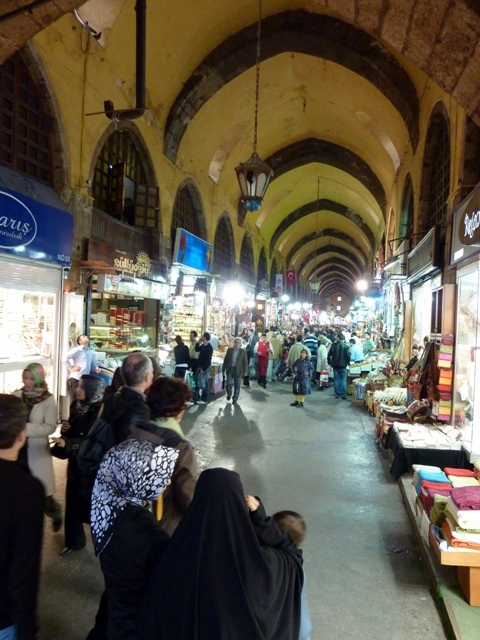
Take in the Grand Bazaar. There you will find an incredible array of spices, gold jewelry so brightly lighted and sparkling that it will dazzle you, intricate hand-inlaid backgammon and chess boards, lamps using glass in every color imaginable, and much, much more.  Don’t be shy with your camera, but make sure you ask permission before photographing any of the vendors or their wares.  You’ll almost never get a ‘no’, but you may be chastised if you don’t ask beforehand.  Many vendors will even pose with you while others snap the shot for you.  And, no, you needn’t worry about thieves as you would in pickpocket-rich Athens, Rome, Barcelona, or many other European cities.  Istanbul is a place where you will never feel safer from these types of petty but irritating and inconvenient crimes.  Chalk this up to the Islamic code of justice and a friendly people who take pride in their city and what travelers think of it.

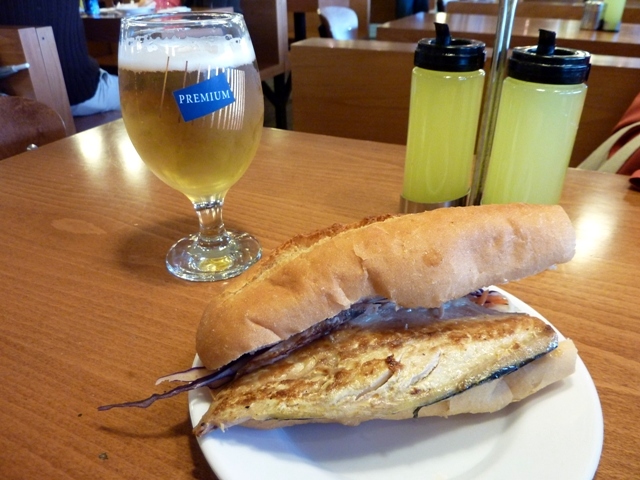
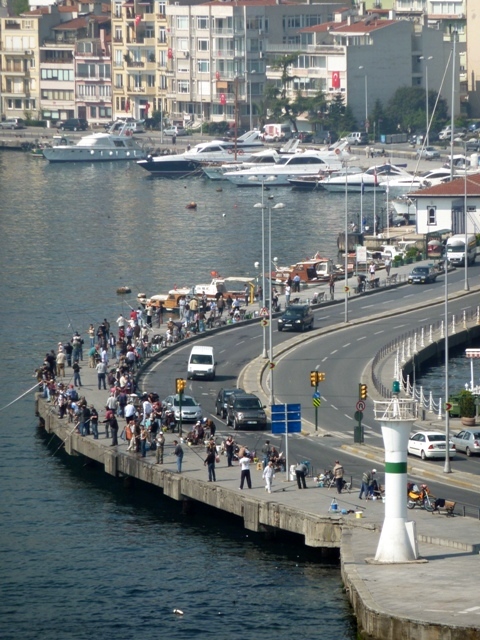
The Galata Bridge spanning the Golden Horn and connecting old Istanbul to new is a real treat.  Along the railing you will find a row of fishermen, poles jutting outward, lines in the water.  Buckets of bait and coolers holding lunch and soft drinks lay at many a fisherman’s feet.  Picturesque boats of every size, shape, and color pass beneath the center of the bridge, and restaurants and shops are built beneath it near either shoreline.  For lunch, try one of these restaurants for a great meal consisting of a sandwich containing fresh-caught Bosporus fish, European-style pomme frites (French fries . . . only a whole lot better than you’ll get nearly anywhere here) and an ice-cold beer.  Shop around and compare and your lunch tab will be less than what you would spend at a fast-food restaurant in your home town.

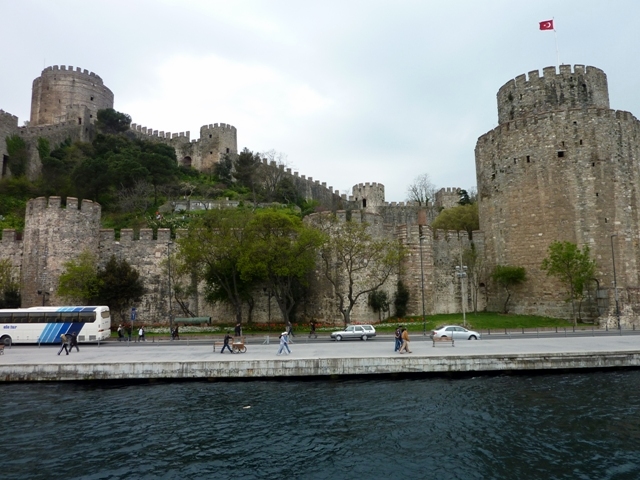
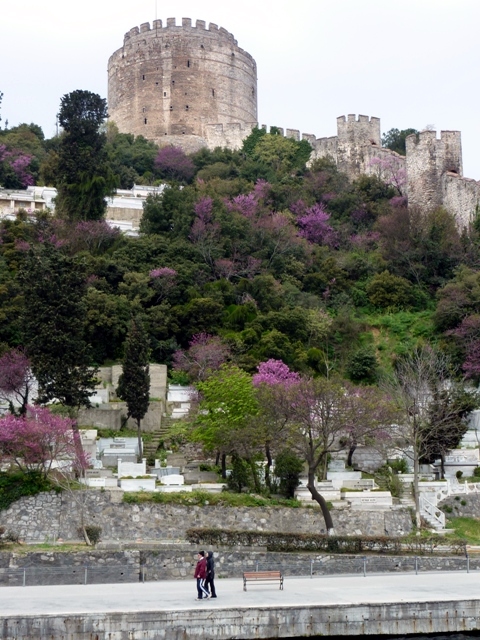
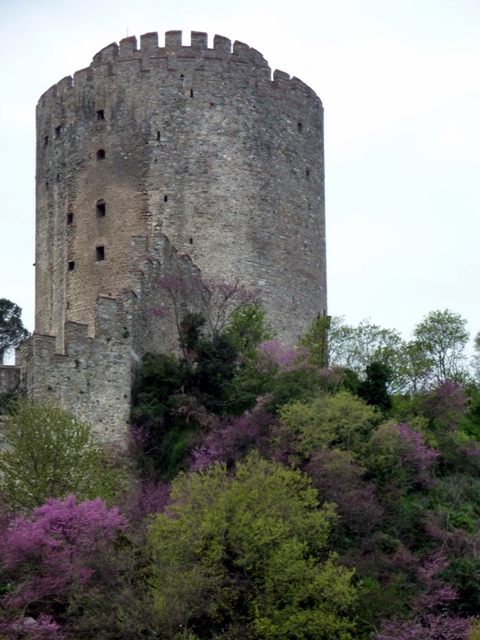
The best deal in town simply has to be one of the sightseeing boats that depart from the ferryboat docks on the south side (old Istanbul side) of the Galata Bridge.  The trip is one and a half hours of pure, peaceful, fun and picturesque photographic joy.  Along the way you will see the modern skyscrapers of new Istanbul in the background; the medieval castles that once guarded the Bosporus; palaces and homes of the rich, and mosques of every size, shape, and era.  You’ll pass beneath the dramatic and modern suspension bridges that connect Asia to Europe all the while dodging everything from ferries to freighters to fleets of small fishing boats and even multimillion-dollar yachts.

Topkapi Palace in Old Istanbul is the sight we did not see, but my fellow cruise companions raved about it.  It served as the residence of the Ottoman Sultans from 1465 until 1856 whenever they were in Istanbul.  Contained within its fortress-like walls are many buildings and four main courtyards.  There, inside, you will find treasures such as the sword of the Prophet Muhammed and priceless collections of weaponry, armor, jewels, and irreplaceable manuscripts done in artistically flowing calligraphy.  Make sure you pay the extra price required to visit the Imperial Harem and its 400+ rooms.  You could say that I was told it was a very eunuch experience, but that would just be so wrong on so many levels.
Thank You Linda S. Prather: Linda is just the latest in an ever-increasing list of bloggers to feature Decisions as you can see at:  http://jacodypress.blogspot.com/

Comments Off on Istanbul in Words and Pictures

Filed under Photography, travel