Category Archives: travel

Portmeirion—Part 2


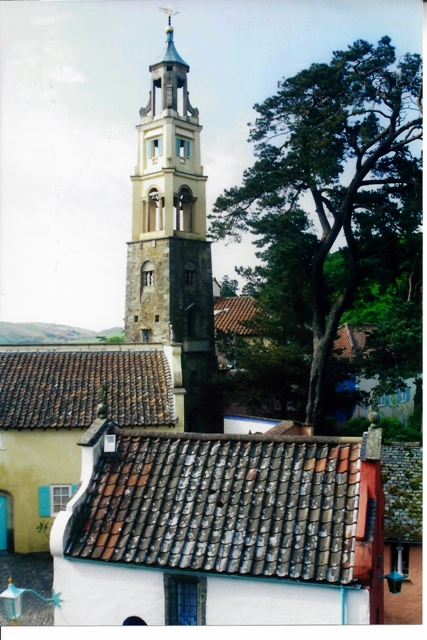
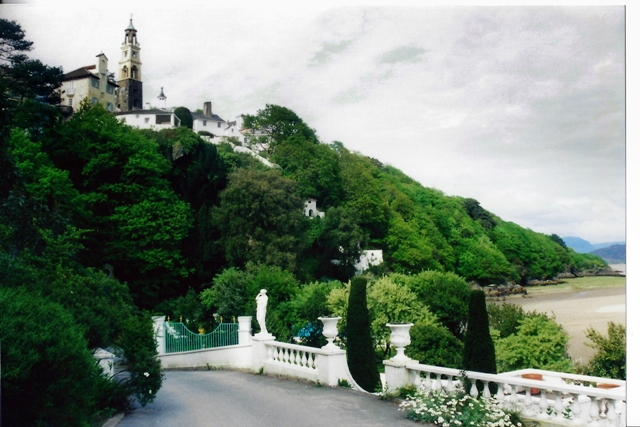
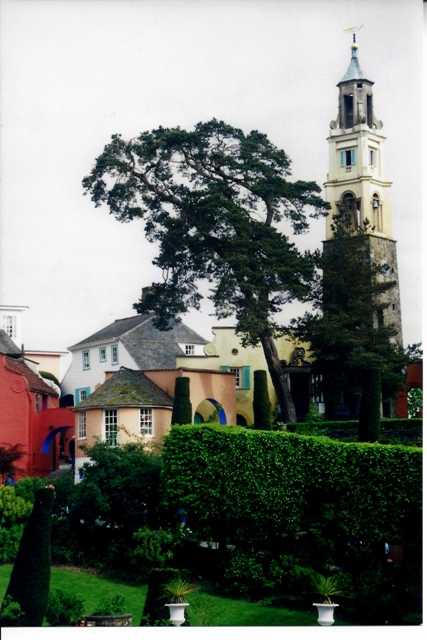
Today we continue with the second of our three-part tour of Portmeirion, Wales.

There are three things for which Portmeirion is most famous.  We’ve touched upon two—the exquisite Italianate architecture of Sir Clough Williams-Ellis; and the use of Portmeirion as The Village in the 1960s cult television classic The Prisoner.  The third claim to fame is, of course, Portmeirion Pottery and china.  Portmeirion’s pottery and china business was the brainchild of Susan Williams-Ellis, daughter of Sir Clough, and the intent was to sell these creations in a Portmeirion-based souvenir shop.  So, Portmeirion Pottery gets its name not from the site of manufacture, but rather from the original site of sale.  The actual pottery is made at factories in Stoke-on-Trent in Staffordshire, England.  Interested shoppers and collectors can click on this link to peruse Portmeirion wares.  I’m sure you’ll recognize some of the various patterns and styles, as they’re sold around the world (including here in the U.S.).

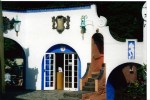
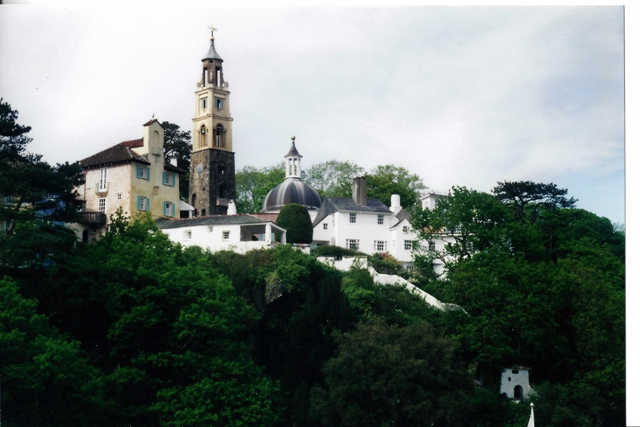
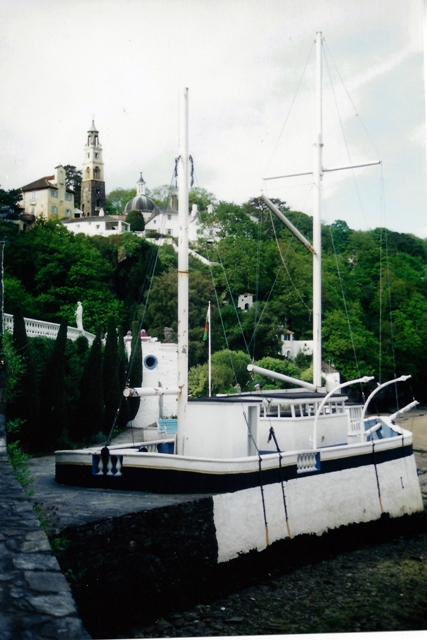
Some of the interesting sights you’ll see today include White Horses Cottage, on the beach just beyond the main hotel.  White Horses’ claim to fame is that actor Patrick McGoohan chose this cottage as his residence whenever he filmed on-site in Portmeirion.

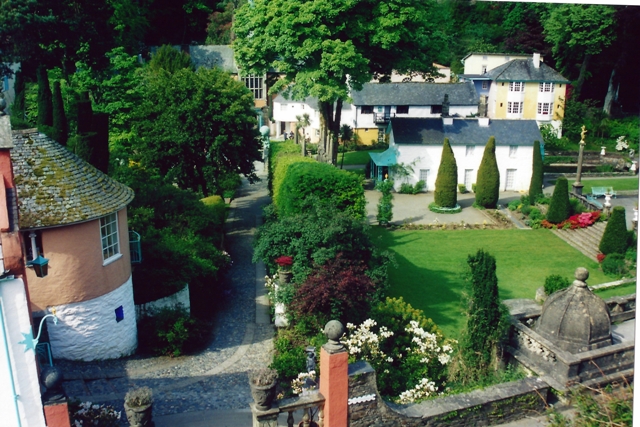
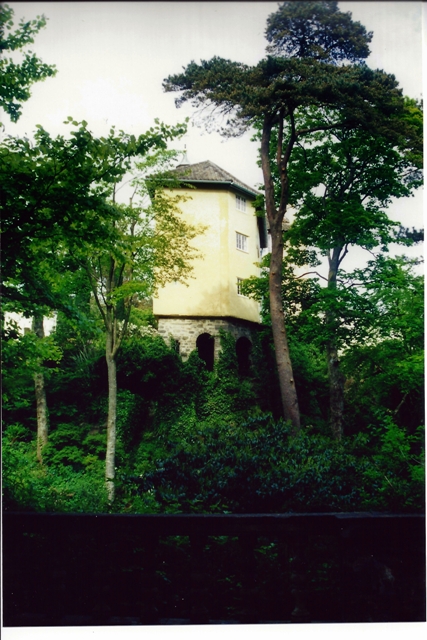
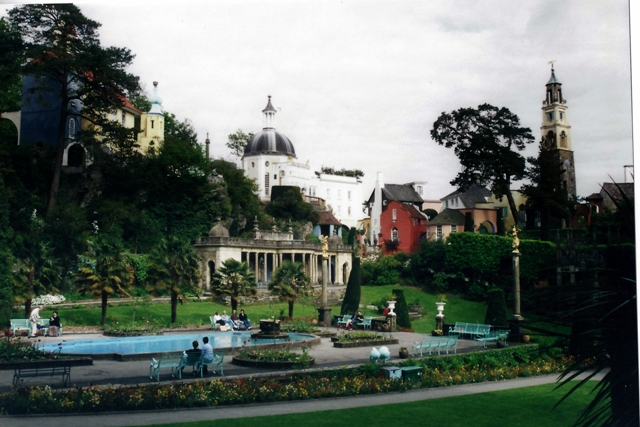
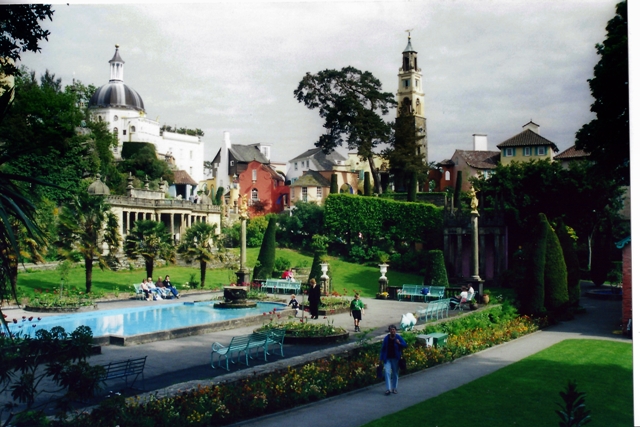
Also pictured below are various angles of Round House, which currently hosts a shop that sells collectibles, memorabilia, and books related to the television series The Prisoner.  But, during filming of The Prisoner back in 1966-1967, it was transformed into Number Six’s residence.

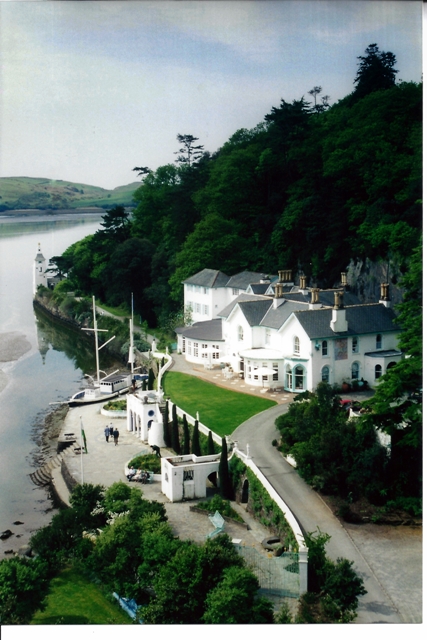
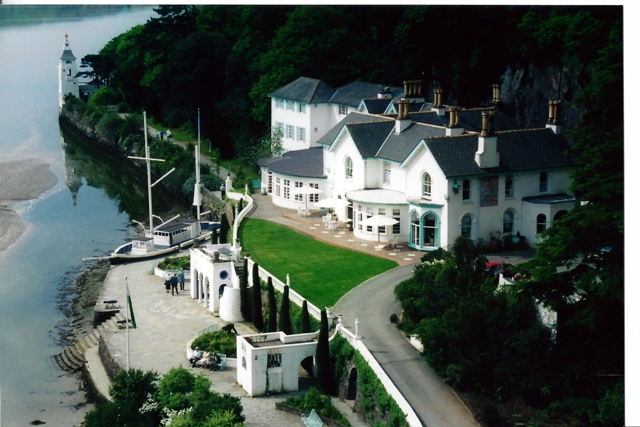
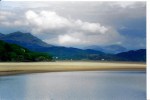
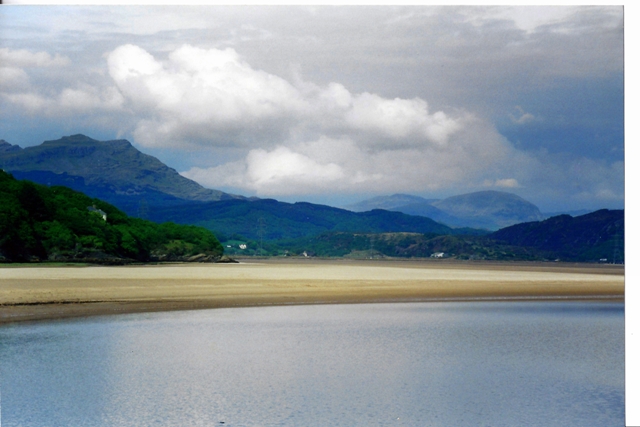
Below the main village you’ll see the main hotel, which in the series doubled as the “Retirement Home.”  It was where those who gave up their secrets to their village captors lived out their golden years.  Both the main hotel and White Horses lie along the beach.  The beach itself is a very interesting feature.  One can walk out onto it for hundreds of yards during low tide, but at high tide it completely floods.  Indeed, during spring tides, this flooding can extend into the first floor of White Horses, making it uninhabitable during that time.

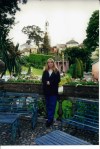
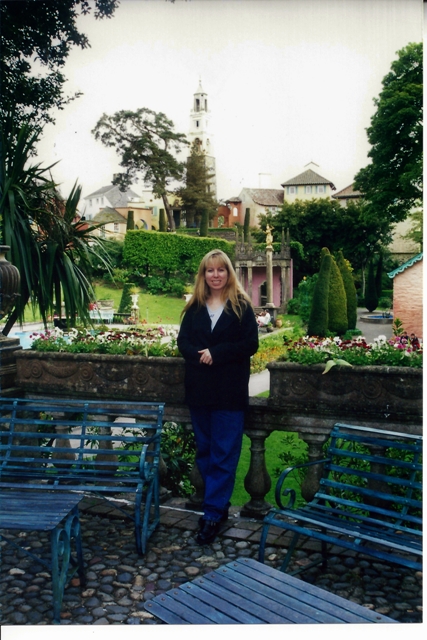
And, finally, while on Monday you got to see pictures of Ursula and me, today you’ll get to see the third member of our expedition, our eldest daughter Cherry.

More to follow in Friday but, until then, content yourselves with these:

1 Comment

Filed under Photography, Television, travel

Portmeirion—Part 1


So, this week we take a mysterious and magical tour of Portmeirion, Wales.

Portmeirion, as you’ll recall from last Friday’s blog on The Prisoner, was the setting for The Village—an apparently idyllic community that harbors a dark side, a side dedicated to separating from people the secrets they acquired from their previous government employers.  Those who cough up their secrets live out their lives in peaceful bliss.  Those who do not . . . well, The Village has a very impressive graveyard, and a deadly sentry that makes escape impossible.

It was in the mid to late 1990s, on a trip to visit our eldest daughter at her Air Force duty station somewhere in England.  Knowing of my admiration for The Prisoner, Ursula had set up a surprise for me—two nights stay in one of the Portmeirion Cottages.  It was quite an experience, as we were only a few short steps away from the residence of Number Six (Patrick McGoohan)—the protagonist of The Prisioner.  Alas, Number Six’s residence is not one of the available cottages.  Instead, the “Round House” is home to The Prisoner Shop, and you get only one guess as to the theme of the merchandise sold there.

The man behind this Italianate village was architect Sir Clough Williams-Ellis.  He devised every aspect of the village, and supervised its construction over a fifty-year period that started in 1925 and finished just three years before his death in 1978 at the age of 94.  Some aspects of his grand vision were not completed until well after his death—the Pantheon (a.k.a., “The Green Dome,” Number Two’s residence in the television series) for instance.  Initially, the dome was green—a wooden structure painted that color.  But in the early 1990s that dome was replaced with copper which, in several more years, may actually become green yet once again.

More on Portmeirion (including their world-famous pottery and China) on Wednesday.  Until then, enjoy the show below.  But bear in mind that these photographs were taken the old fashion way—35mm color negative film converted to color prints.  These original prints were scanned a couple of days ago, and then corrected with a little computer post-processing.  So, what I’m really trying to say is, don’t expect the usual quality you’ve come to expect of my photographs.

3 Comments

Filed under Photography, travel

The Prisoner of Portmeirion


The date was Saturday, June 1, 1968.  The network was CBS.  The television show, new to the U.S., had already run on Britain’s ITV Channel 3 from September 29 the year before through to its 17-episode conclusion on February 1.  And from the opening thunderclap, blaring trumpets, and image of Patrick McGoohan driving a Lotus Seven (registration KAR 120C) along a deserted airstrip, I was hooked.

The television show was the cult classic The Prisoner, and it was the brainchild of George Markstein and executive producer Patrick McGoohan.  Mr. McGoohan died January 13, 2009, and I was deeply saddened by his passing because this show still holds a special place in my heart.

What makes The Prisoner so unique is its blend—It’s a spy drama.  It’s a thriller.  It’s science fiction.  It’s fantasy.  It’s psychological.  It’s allegorical.  It’s existential.  It’s simultaneously psychedelic and nostalgic.  It’s a commentary on society at the time, and it’s still relevant to the society (and the politics) of today.  It is, in short, television at its finest and most promising.  It makes you think, and it deals neither kindly nor gently with those unaccustomed to doing so for a full hour.

The initial premise seems pedestrian, and it has been copied at least a couple of times since.  A man (Patrick McGoohan) resigns from an agency from which one does not resign.  It’s simply not done, old man.  There are consequences for such an act.

He rushes to his flat (ominously followed by a hearse) and starts packing his luggage—brochures of tropical beaches thrown atop hastily packed clothing.  Meanwhile, the undertaker steps away from the hearse and approaches the front door.  Gas starts pouring in through the keyhole, and the man’s expression shows that he knows he’s too late to escape.  His last sight before losing consciousness, through the window of his flat, is of the towering skyscrapers of London.

The man awakes in what appears to be his own flat.  But when he goes to the window it is not London that greats him.  It’s The Village.  Names are not used in The Village; everyone has a number.  He is Number Six.  His nemesis is the man in charge of The Village, and that man is Number Two.  Initially, Number Two wants to know only one thing of Number Six, “Why did you resign?”  But what Number Two really wants is . . . well, now, that would be telling.  Here is the dialog during the opening credits during most of the subsequent episodes:

Number Six: Where am I?
Number Two: In . . . The Village.
Number Six: What do you want?
Number Two: Information.
Number Six: Whose side are you on?
Number Two: That would be telling. We want information… information… in-for-mation!
Number Six: You won’t get it.
Number Two: By hook or by crook, we will.
Number Six: Who are you?
Number Two: The new Number Two.
Number Six: Who is Number One?
Number Two: You are Number Six.
Number Six: I am not a number! I am a free man!
Number Two: [Ominous, haunting laughter]

And what happens if, by the end of the show, Number Two fails to get information?  He gets replaced . . . by a new Number Two even more bent on breaking Number Six.

But there’s another star to this show besides Patrick McGoohan/Number Six.  That is The Village itself.  Indeed, if not for The Village, this show may never have attained its cult status.

I know The Village.  I’ve stayed in The Village.   If you’re a fan of The Prisoner, a stay in The Village is equal parts chilling, fascinating, and exhilarating.

And, all next week, I will take you on a personal tour of . . . The Village.  Enjoy a teaser below.  Until then, and in the immortal words of the standard Village greeting, “Be seeing you.”

The Village—Number Two’s Residence is the domed structure on the right

3 Comments

Filed under Television, travel