Category Archives: Television

Portmeirion—Part 2


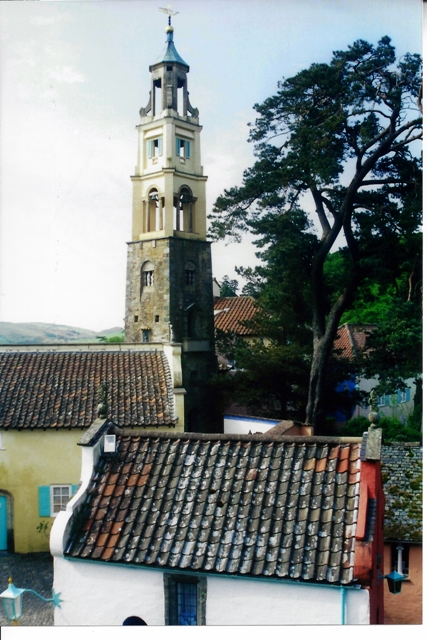
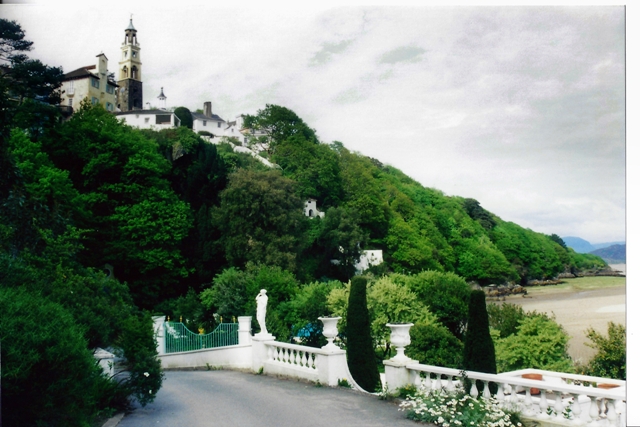
Today we continue with the second of our three-part tour of Portmeirion, Wales.

There are three things for which Portmeirion is most famous.  We’ve touched upon two—the exquisite Italianate architecture of Sir Clough Williams-Ellis; and the use of Portmeirion as The Village in the 1960s cult television classic The Prisoner.  The third claim to fame is, of course, Portmeirion Pottery and china.  Portmeirion’s pottery and china business was the brainchild of Susan Williams-Ellis, daughter of Sir Clough, and the intent was to sell these creations in a Portmeirion-based souvenir shop.  So, Portmeirion Pottery gets its name not from the site of manufacture, but rather from the original site of sale.  The actual pottery is made at factories in Stoke-on-Trent in Staffordshire, England.  Interested shoppers and collectors can click on this link to peruse Portmeirion wares.  I’m sure you’ll recognize some of the various patterns and styles, as they’re sold around the world (including here in the U.S.).

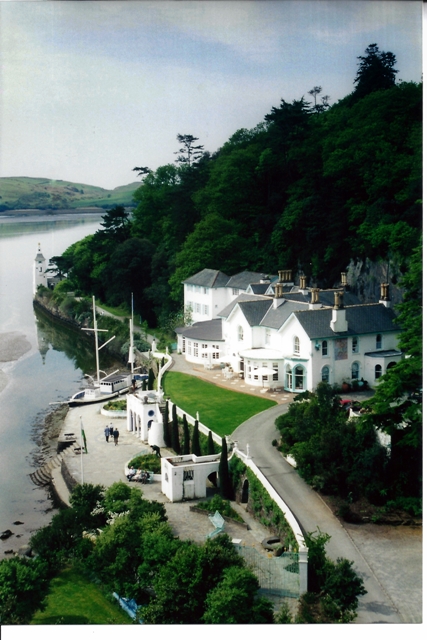
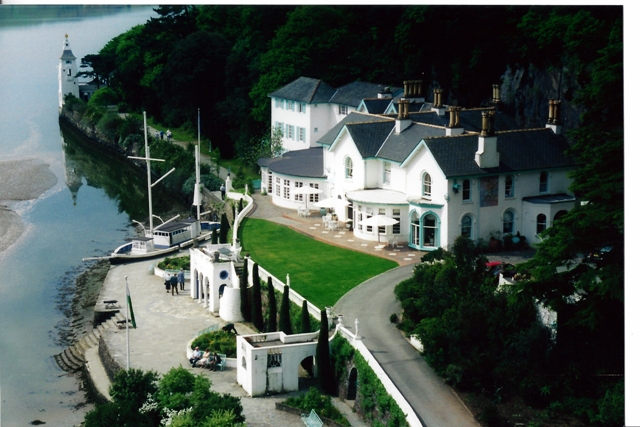
Some of the interesting sights you’ll see today include White Horses Cottage, on the beach just beyond the main hotel.  White Horses’ claim to fame is that actor Patrick McGoohan chose this cottage as his residence whenever he filmed on-site in Portmeirion.

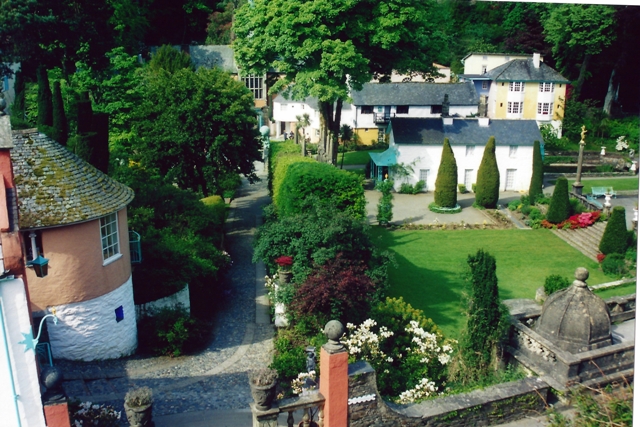
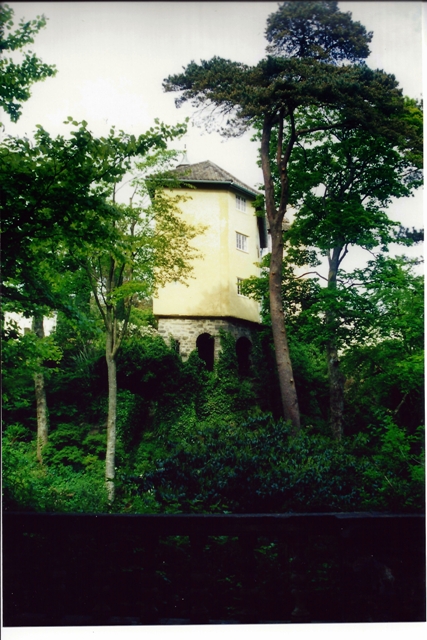
Also pictured below are various angles of Round House, which currently hosts a shop that sells collectibles, memorabilia, and books related to the television series The Prisoner.  But, during filming of The Prisoner back in 1966-1967, it was transformed into Number Six’s residence.

Below the main village you’ll see the main hotel, which in the series doubled as the “Retirement Home.”  It was where those who gave up their secrets to their village captors lived out their golden years.  Both the main hotel and White Horses lie along the beach.  The beach itself is a very interesting feature.  One can walk out onto it for hundreds of yards during low tide, but at high tide it completely floods.  Indeed, during spring tides, this flooding can extend into the first floor of White Horses, making it uninhabitable during that time.

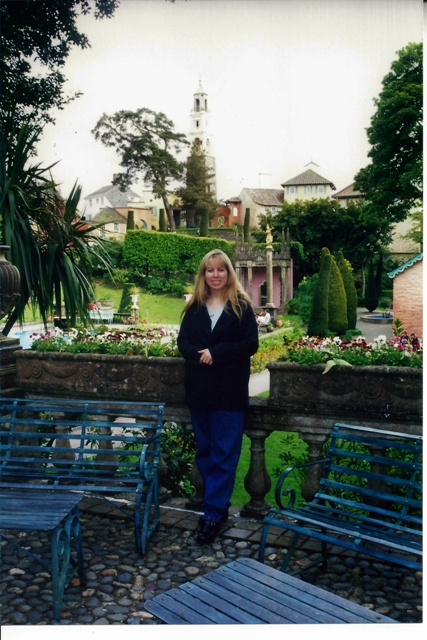
And, finally, while on Monday you got to see pictures of Ursula and me, today you’ll get to see the third member of our expedition, our eldest daughter Cherry.

More to follow in Friday but, until then, content yourselves with these:

1 Comment

Filed under Photography, Television, travel

The Prisoner of Portmeirion


The date was Saturday, June 1, 1968.  The network was CBS.  The television show, new to the U.S., had already run on Britain’s ITV Channel 3 from September 29 the year before through to its 17-episode conclusion on February 1.  And from the opening thunderclap, blaring trumpets, and image of Patrick McGoohan driving a Lotus Seven (registration KAR 120C) along a deserted airstrip, I was hooked.

The television show was the cult classic The Prisoner, and it was the brainchild of George Markstein and executive producer Patrick McGoohan.  Mr. McGoohan died January 13, 2009, and I was deeply saddened by his passing because this show still holds a special place in my heart.

What makes The Prisoner so unique is its blend—It’s a spy drama.  It’s a thriller.  It’s science fiction.  It’s fantasy.  It’s psychological.  It’s allegorical.  It’s existential.  It’s simultaneously psychedelic and nostalgic.  It’s a commentary on society at the time, and it’s still relevant to the society (and the politics) of today.  It is, in short, television at its finest and most promising.  It makes you think, and it deals neither kindly nor gently with those unaccustomed to doing so for a full hour.

The initial premise seems pedestrian, and it has been copied at least a couple of times since.  A man (Patrick McGoohan) resigns from an agency from which one does not resign.  It’s simply not done, old man.  There are consequences for such an act.

He rushes to his flat (ominously followed by a hearse) and starts packing his luggage—brochures of tropical beaches thrown atop hastily packed clothing.  Meanwhile, the undertaker steps away from the hearse and approaches the front door.  Gas starts pouring in through the keyhole, and the man’s expression shows that he knows he’s too late to escape.  His last sight before losing consciousness, through the window of his flat, is of the towering skyscrapers of London.

The man awakes in what appears to be his own flat.  But when he goes to the window it is not London that greats him.  It’s The Village.  Names are not used in The Village; everyone has a number.  He is Number Six.  His nemesis is the man in charge of The Village, and that man is Number Two.  Initially, Number Two wants to know only one thing of Number Six, “Why did you resign?”  But what Number Two really wants is . . . well, now, that would be telling.  Here is the dialog during the opening credits during most of the subsequent episodes:

Number Six: Where am I?
Number Two: In . . . The Village.
Number Six: What do you want?
Number Two: Information.
Number Six: Whose side are you on?
Number Two: That would be telling. We want information… information… in-for-mation!
Number Six: You won’t get it.
Number Two: By hook or by crook, we will.
Number Six: Who are you?
Number Two: The new Number Two.
Number Six: Who is Number One?
Number Two: You are Number Six.
Number Six: I am not a number! I am a free man!
Number Two: [Ominous, haunting laughter]

And what happens if, by the end of the show, Number Two fails to get information?  He gets replaced . . . by a new Number Two even more bent on breaking Number Six.

But there’s another star to this show besides Patrick McGoohan/Number Six.  That is The Village itself.  Indeed, if not for The Village, this show may never have attained its cult status.

I know The Village.  I’ve stayed in The Village.   If you’re a fan of The Prisoner, a stay in The Village is equal parts chilling, fascinating, and exhilarating.

And, all next week, I will take you on a personal tour of . . . The Village.  Enjoy a teaser below.  Until then, and in the immortal words of the standard Village greeting, “Be seeing you.”

The Village—Number Two’s Residence is the domed structure on the right

3 Comments

Filed under Television, travel

Equalizing a Person of Interest


I thought I had a really unique idea with this blog, but Googling the terms, ‘Robert; McCall; John; Reese; Equalizer; Person; and Interest,’ revealed otherwise.  Several bloggers have beat me to it, but I’m going ahead anyway because I find the parallels rather cool.

In the mid-1980s I became a huge fan of a television show titled, “The Equalizer.”  I found the lead character, Robert McCall, fascinating.

Robert McCall—The Equalizer

Robert McCall (played by Edward Woodward) was a very capable operative who abruptly resigns from an unidentified intelligence agency from which you do not just “resign.”  There are consequences to be paid for such impertinence.  Now on his own, with only occasional assistance from his former boss, “Control” (played by Robert Lansing) and fellow operatives (most notably Micky Kostmeyer, played by Keith Szarabajka), the apparently independently wealthy McCall sets about the streets of violent, 1980s New York City righting wrongs and protecting the innocent.  He acts as a vigilante, but for some unexplained reason the NYPD turns a blind if not dubious eye toward his exploits.  His advertisement in the want ads reads:

Got a problem?
Odds against you?
Call the Equalizer.
212 555 4100

The Equalizer has obvious issues from the very start.  He kills when necessary, yet he abhors killing.  Indeed, it becomes evident as the series progresses that McCall is using his current avocation to atone for the sins of his previous vocation.  And frequently his past catches up to him, often with very devastating results—not only for McCall, but also his clients and even his past associates.

Fast forward to the current television season some quarter century later.

The new Robert McCall roaming the streets of New York City is a guy named John Reese (played by Jim Caviezal).

John Reese is a Person of Interest . . . to both the NYPD and the CIA

The title of the show is Person of Interest.  The mysterious Mr. Reese has quit an agency (by faking his own death) from which you do not quit.  There are consequences to be paid for such impertinence, not least of which is that he’s now targeted for assassination by his former CIA colleagues.  Not only that, the NYPD is not nearly as accommodating of this vigilante.  They, too, want this man stopped.  And Robert McCall thought he had it bad?

This latest incarnation of The Equalizer is far from wealthy, however.  And his clients don’t find him through some want ad; he finds them.  Reese’s version of “Control” is a mysterious billionaire who goes by the name of “Mr. Finch” (played by Michael Emerson).  In 2006, Mr. Finch invented a machine, a machine that, “. . . sees everything,” from video feeds to internet postings to computer records—public, private, and secret.  “The Machine” then processes everything it sees and predicts acts of terrorism in time for the government to intervene.

Alas, that is not “The Machine’s” only talent.  It also sees and predicts other violent crimes about which the federal government doesn’t care.  But Mr. Finch cares.  Thus, before Mr. Finch (who is a genius at surveillance, wire tapping, breaching computer firewalls, and otherwise making a mockery of anything “security” related) turned over The Machine to the federal government, he built in a backdoor.  When The Machine determines that a violent crime is about to occur, it forwards a nine-digit number embedded inside a bunch of gobbledygook (in case The Machine’s operators catch on) to Mr. Finch.  That nine-digit number is a social security account, and the person to which it belongs can be either the potential victim or the future perpetrator.

It becomes Mr. Reese’s job to find out which, and to stop the violent act before it occurs.  All that while avoiding capture by the NYPD or death at the hands of the CIA.

And if that weren’t complicated enough, Mssrs. Finch and Reese have blackmailed a corrupt Detective Lionel Fusco (played by Kevin Chapman) and placed him alongside the woman detective charged with tracking down Reese.  That would be Detective Joss Carter (Taraji P. Henson) who, unbeknownst to Detective Fusco, has “seen the light” and is also occasionally helping our intrepid duo even as she pretends to still be on their trail.

As with The Equalizer, Person of Interest is pure escapist fun with many interesting, conflicted characters and loads of intrigue.  Unfortunately, only DVD Season One of The Equalizer was ever released in the U.S (back in 2008), but it’s well worth renting or even owning a copy if you’re unfamiliar with the show.  Season Two has been released in other regions.  Person of Interest airs Thursdays on CBS, and has just been renewed for another season.

3 Comments

Filed under Television