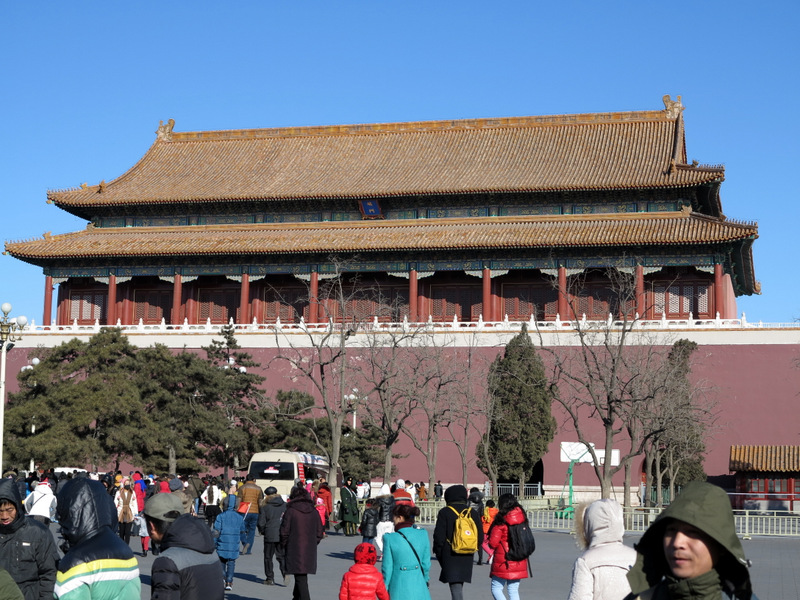
Backside of the Gate Tower entrance to the Forbidden City from Tiananmen Square
Passing through the Gate of Heavenly Peace at the north end of Tiananmen Square brings you into the Forbidden City. This UNESCO World Heritage site is currently undergoing a rather extensive renovation and has for quite some time, including the many finely detailed architectural details found on structures throughout the imperial palace grounds.
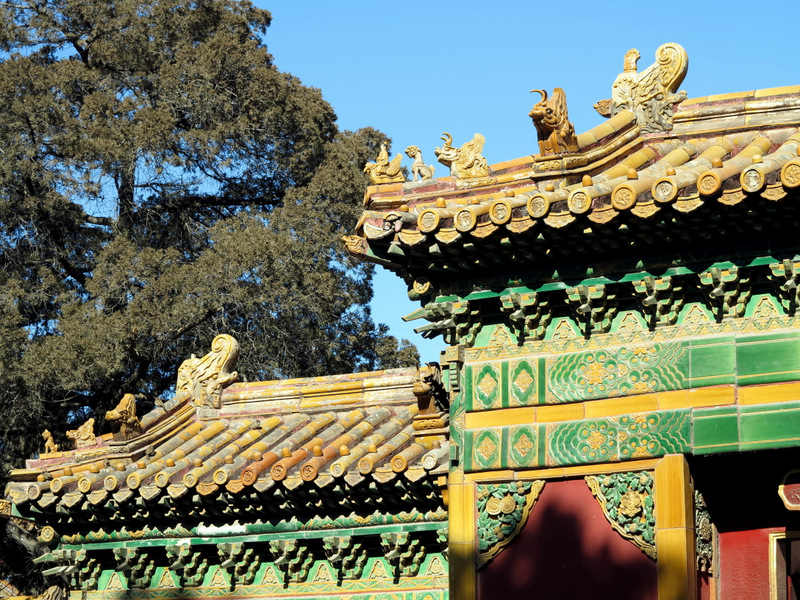
Intricate Exterior Details
This renovation extends to some very detailed interior work as well.
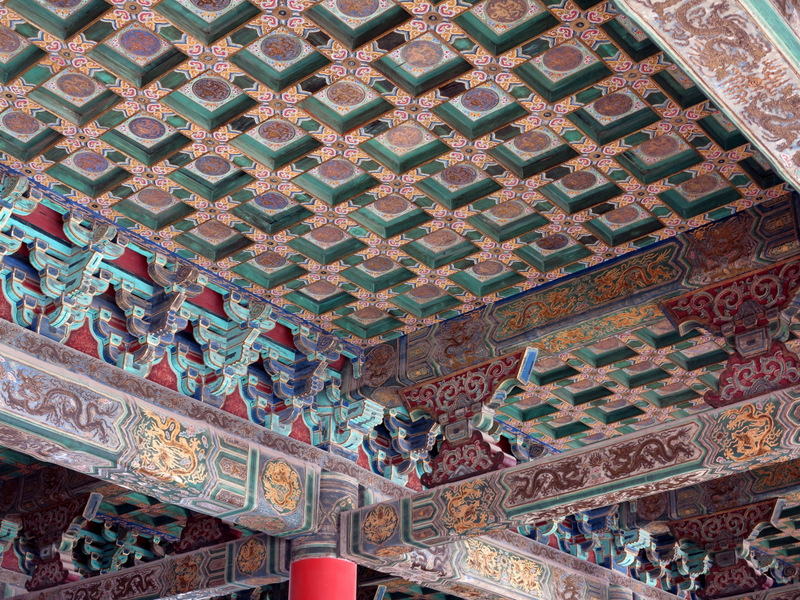
Equally Impressive Interior Details
The largest of the three halls in the inner court of the Forbidden City is the Palace of Heavenly Purity. This served as the royal reception hall during much of the Qing Dynasty.
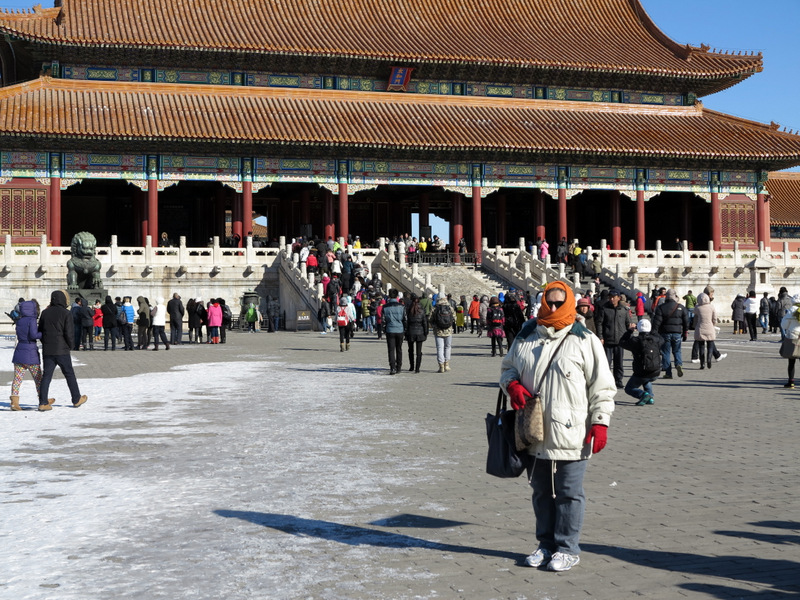
The really cool chick I picked up outside the Palace of Heavenly Purity
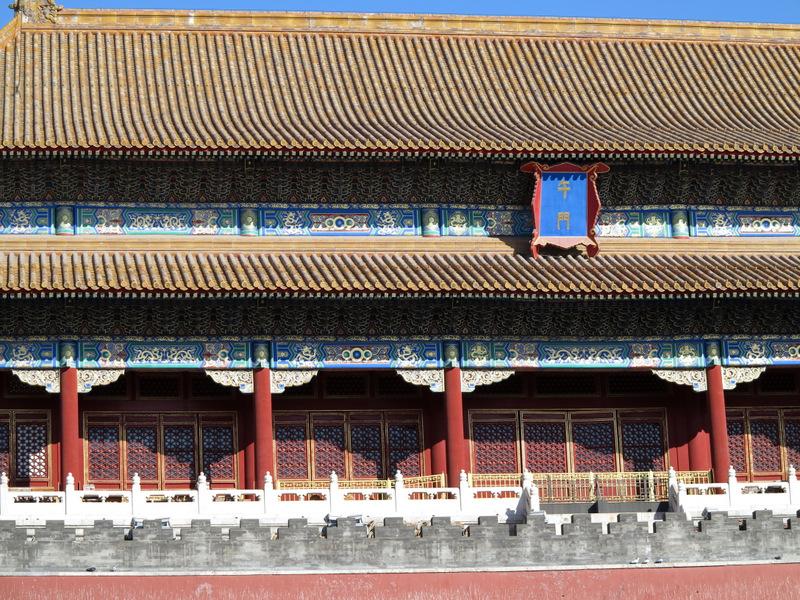
Palace of Heavenly Purity
Another impressive structure is the Hall of Preserving Harmony. Noticeably smaller than the Palace of Heavenly Purity, this hall was used mostly for practicing upcoming imperial ceremonies.
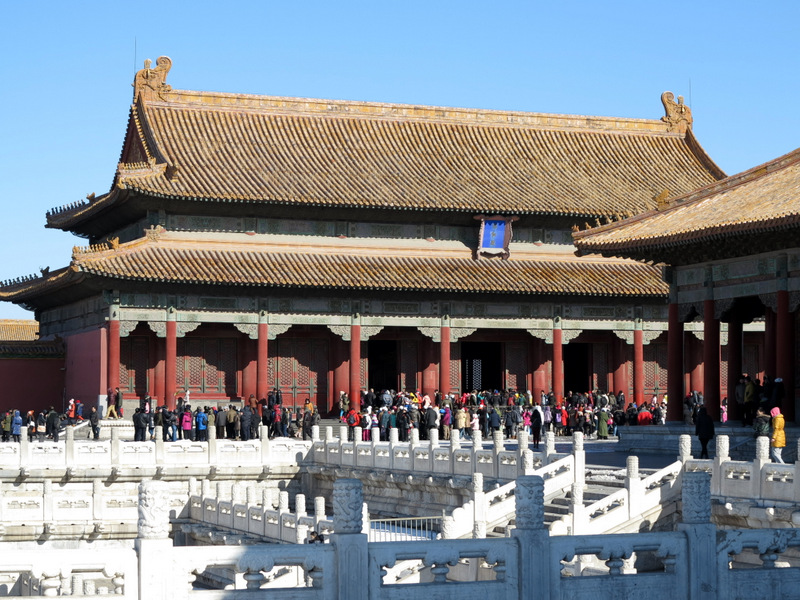
Hall of Preserving Harmony
The Forbidden City has a very long and extensive history, as one would expect of a complex used as an imperial palace for the better part of 500 years. And even after the abdication of the last Qing Dynasty ruler — Emperor Aisin-Gioro Puyi — Emperor Puyi continued to live in and control the inner court until he was finally expelled in 1924. The Forbidden City has officially been a museum since 1925. In all the Forbidden City was home to 14 emperors of the Ming Dynasty and another 10 emperors from the Qing Dynasty during the 493 years it served as an Imperial Palace (1420-1912), and served as a royal residence for 505 years (1420-1924).
Click on any image below to bring up today’s slide show:


 Decisions — Murder in Paradise
 The Globe — Murder in Luxury
 R. Doug Wicker — Author
Pingback: China PhotoBlog Series Begins - Page 2 - WaltherForums