Monthly Archives: August 2013

Fun Photo Friday — Using Portrait Orientation for Landscape Shots


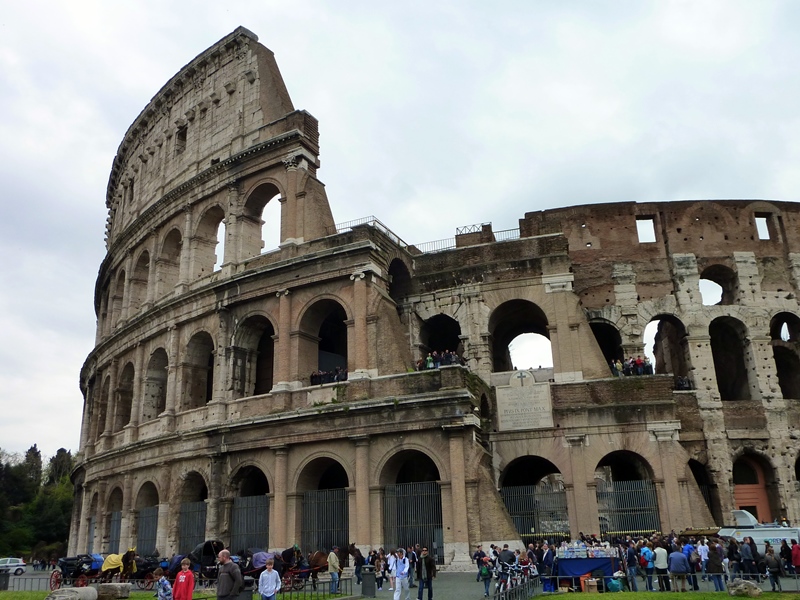
Okay, quick:  Which picture has the most visual impact?  This one?
Rome132

Or this one?Rome133

How about this next example.  Do you prefer the traditional landscape orientation of this shot?

Katakolon57

Or the unique perspective provided by this one?

Katakolon61

Both pair of comparative examples above portray the same subject.  The first shot in each example uses the traditional landscape orientation, in which the camera is held in the normal manner so as to provide a horizontally favored composition.  The latter shot in both examples were taken with the camera rotated 90° in what is normally referred to as a portrait orientation.

It’s really a shame that we’ve come to label these two orientations “landscape” and “portrait,” because such labels really inhibit creativity in both novice and experienced photographer alike.  Far too many people miss a potentially award-winning composition by sticking to landscape orientation for all landscapes and saving portrait orientation for only those times when they’re creating memories of Little Johnnie or their cat George.  Yet utilizing so-called “portrait” orientation can frequently provide far more visual impact and esthetic interest than “landscape” ever will.

For instance, landscape orientation might give you an impressive shot such as this:

???????????????????????????????

But let’s face facts.  Landscape orientation certainly won’t give you a Blow-It-Up-And-Hang-It-On-The-Wall worthy shot such as this:

KLM over Maho Beach

In the above example, the portrait orientation provides not only great negative space, but allows much more leeway in utilizing the often ignored but critically important Rule of Thirds.

So if you really want to enhance the composition of you photographic subjects, forget the label “portrait” and start using this orientation for what it really is — a forgotten, seldom-used, subject-enhancing orientation that could really ramp up your photographic artistry.

Photographic composition is a difficult talent to develop.  It takes time, lots of practice and experimentation, and the ability to mentally visualize how a subject will look in different, often nontraditional ways.  The Rule of Thirds helps in developing this talent, but so too does the simple act of merely rotating your camera on edge and retaking a shot you just took in landscape orientation.  Do both and you’ll find more often than not that you’re keeping the portrait orientations and deleting the shot taken in landscape.

So next time you’re out and about taking landscapes, try both orientations and play around with the compositions in each.  Remember to use the Rule of Thirds as much as feasible unless the subject would be somehow enhanced by foregoing that method.

Do all that and you might wind up with some real keepers:

5 Comments

Filed under Photography, travel

Historic Sunset Heights, El Paso — Part 2


Charming Home

Charming Sunset Heights Home

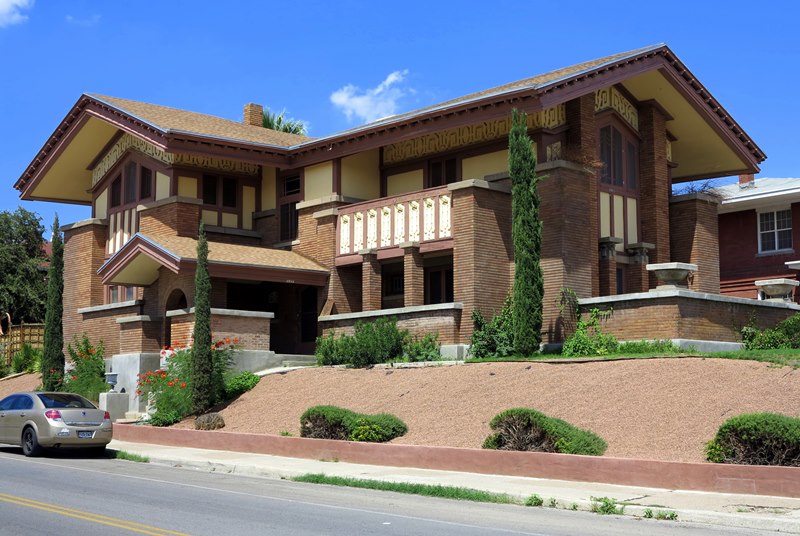
Today we will look at more of the fabulous old homes of El Paso’s Sunset Heights Historic District.  Included in today’s roundup is a glimpse of famed El Paso architect Henry C. Trost’s very own home built in 1908:

The Henry C. Trost Residence — 1908

The Henry C. Trost Residence — 1908

Also on today’s tour is the Texas Historic Landmark Wallace Apartment building which precedes the Trost residence by five years:

Texas Historic Landmark — The Wallace Apartments

Texas Historic Landmark — The Wallace Apartments

And while you may have been amazed at some of the views available from Kern Place — particularly the Rim Road area — Don’t think that Sunset Heights is totally devoid of similar vistas:


A View of Ciudad Juarez, Mexico, Beyond

A View of Ciudad Juarez, Mexico, Beyond

But enough talk.  Let’s get to the slideshow, shall we?

Comments Off on Historic Sunset Heights, El Paso — Part 2

Filed under Photography, travel

Historic Sunset Heights, El Paso — Part 1


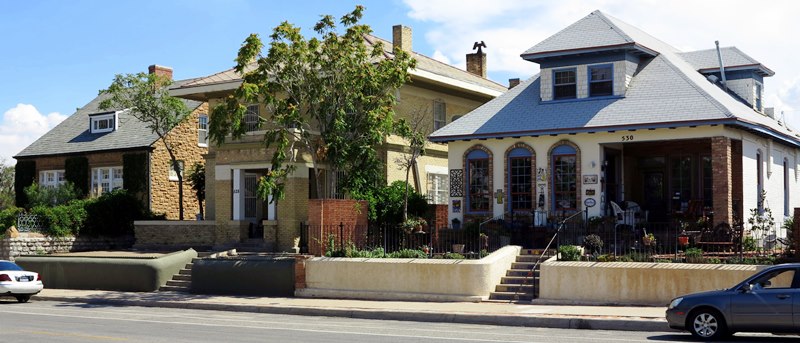
A Typical Sunset Heights Street View

A Typical Sunset Heights Street View

At the end of last month I presented to you in two parts the views and architecture of one of El Paso’s most desirable and oldest areas — Kern Place — which has been around since 1914.  I hope that I didn’t leave you with the impression that this is the oldest existing residential area in the city.  It’s not.

Historic Sunset Heights

Restored Sunset Heights Mansion

Before Kern Place became “The Place” for El Paso’s wealthy, Sunset Heights held that distinction for nearly twenty years.  And not just wealthy El Pasoans lived there.  Wealthy Mexicans such as José Doroteo Arango Arámbula (a.k.a., Francisco “Pancho” Villa) also owned and lived in a Sunset Heights property until his ill-advised 1916 attack on Columbus, New Mexico, made him the target of the U.S. Government and U.S. Army General John “Blackjack” Pershing (pretty colorful if rather obscure history we have here in El Paso).

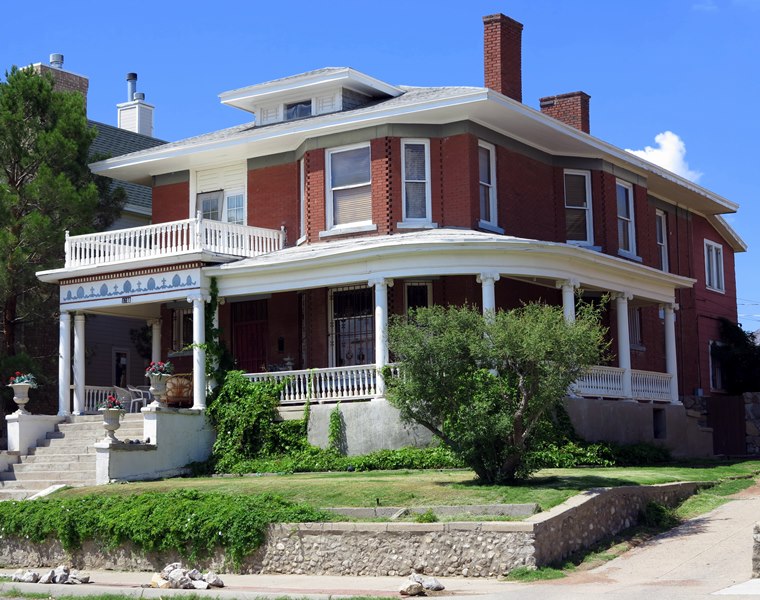
Restored Sunset Heights Mansion

Restored Sunset Heights Mansion

As with some of the more prestigious homes in Kern, many of the more desirable homes in Sunset Heights were designed and built by famed El Paso architect Henry C. Trost.  By the way, Mr. Trost had two brothers who were twins — Gustavus Adolphus Trost, who was the business manager of Trost & Trost, and Adolphus Gustavus Trost who worked for the company as a structural engineer.  Does that remind you of anything?  Larry, his brother Darryl, and his other brother Darryl, perhaps?

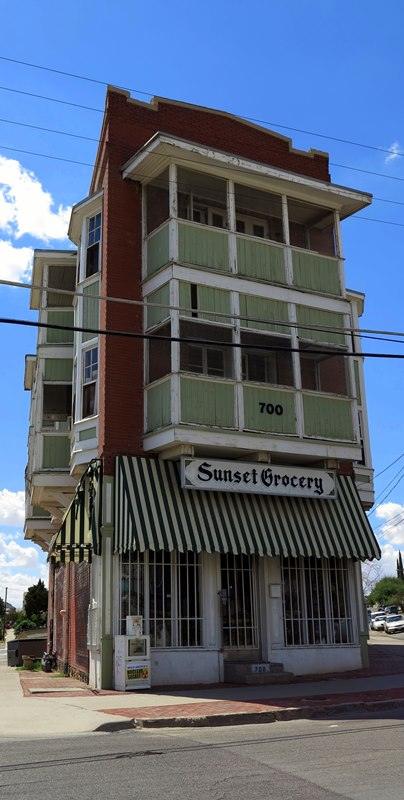
One of this area’s more famous buildings and perhaps the most painted and photographed building in all of El Paso is the charming Sunset Grocery.

Historic Sunset Heights Grocery

Historic Sunset Heights Grocery

We’ll continue our visit of the Sunset Heights area including some of its more famous buildings on Wednesday.  Meanwhile:

1 Comment

Filed under Photography, travel