The Rule of Implied Recognition


When you take a picture of an object of interest, do you strive to get the whole object in the frame, or do you instead attempt to single out an interesting feature and highlight it in your photographs?  Often, the answer to that question is what separates the gifted amateur from the hack, or the really great shot from the ho-hum stills your Uncle Ned used to bore you to tears during one of his interminable slide shows of the annual family beach vacation.

Remember the Rule of Thirds?  That was one of the first photography tips I blogged, and it remains one of my most viewed articles all these months later with regular hits occurring almost daily.  Let’s try another rule.  Let’s call this the Rule of Implied Recognition.  Like that title?  I just now made that up.  It might have another name, but if it does I’m unaware of it.

Let’s take an example of this Rule of Implied Recognition:  Everyone has seen pictures of the Roman Coliseum.  So much so that such pictures, taken from a distance, centered in the frame, and capturing the structure in toto are, let’s be brutally honest here, B-O-R-I-N-G.  Why?  Because we’ve seen it before.  Hundreds of times before.  Everybody who goes to Rome comes back with that stupid shot.  There’s no imagination in that.

But, what if you took a really unique shot of just a portion of the Coliseum?  What if you homed in on just a section of it, just enough to give your shot a really unusual perspective, yet one that is instantly recognizable as the Coliseum?

What if, instead of this  

We chose to do this instead?   

This rule has uses far beyond pictures of landmarks.  It also works great for other recognizable objects such as automobiles and aircraft.  From last week you’ll recall that we’ve been showing our eldest grandchild the local sites.  Last Tuesday, his last full day with us, I took our grandson to the War Eagles Air Museum in nearby Santa Teresa, New Mexico.  It’s a neat little museum that leans heavily toward military aircraft dating from World War II through the Korean Conflict, but it also has many classic cars on display as well.

Most of the shots below follow my made-up Rule of Implied Recognition.  If you’re an aviation buff, you’ll have little trouble identifying most of the aircraft from just the small sections I chose to highlight in these photographs.  Same if you’re a car buff.  In other shots I chose to include more of the subject because it struck me as an interesting angle or configuration, or it just seemed right to do so at the time.  Other shots were cropped in post processing to further focus on a particular feature.  If you practice your photography and are serious about getting the best shots, you will develop an instinct for this type thing.  All that’s required is thinking about the elements that will make the image you’re photographing interesting to others, and then highlighting those elements.

So, here we go with the Rule of Implied Recognition in action alongside a few photographs where that rule was ignored at the photographers discretion:


This blog article was set to auto-post early Monday morning, as Ursula and I have left on another of our journeys.  As I did with our Rio-to-Fort Lauderdale excursion earlier this year, I hope to bring to you a running commentary with photographs of our latest (secret for now) adventure.  This trip will run for around sixteen days, so look for highlights over the next six or seven scheduled blog entries.  And remember, those new articles run on Mondays, Wednesdays, and Fridays, with the occasional extra blog hitting at other times if something important crops up.

1 Comment

Filed under Photography

There Is No “Sand” In White Sands National Monument


Last week I posted pictures from our trip to Carlsbad Caverns and, thanks to a push by WordPress, that blog article has become by far my most popular to date.  Thank you, WordPress, and a big thank you to everyone who dropped by to take a look not only at that article, but others I’ve posted as well.

Today, we’ll continue looking at other highlights from that road trip.

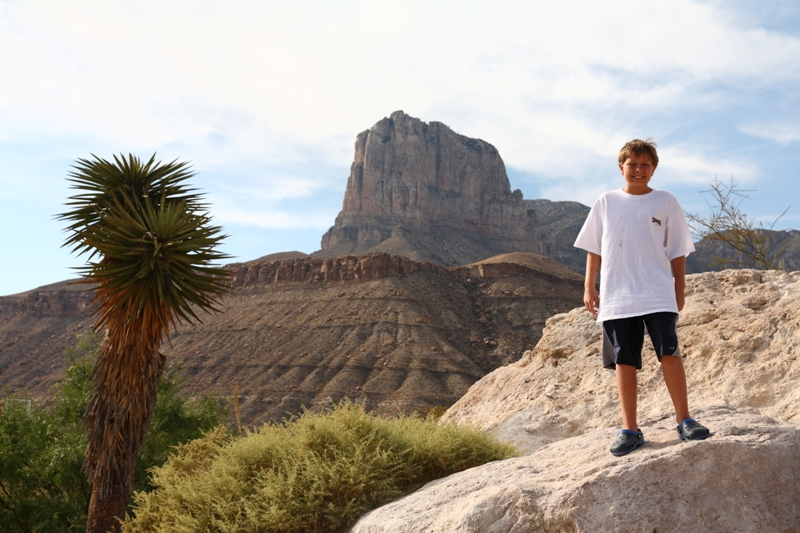
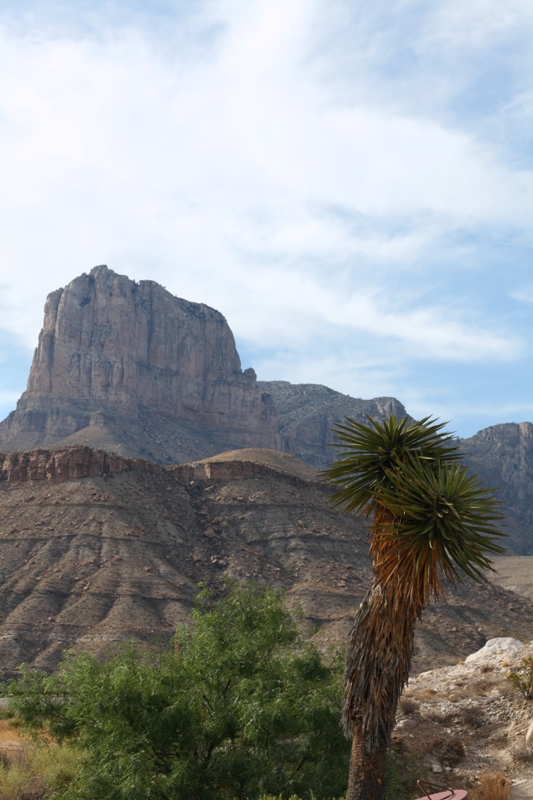
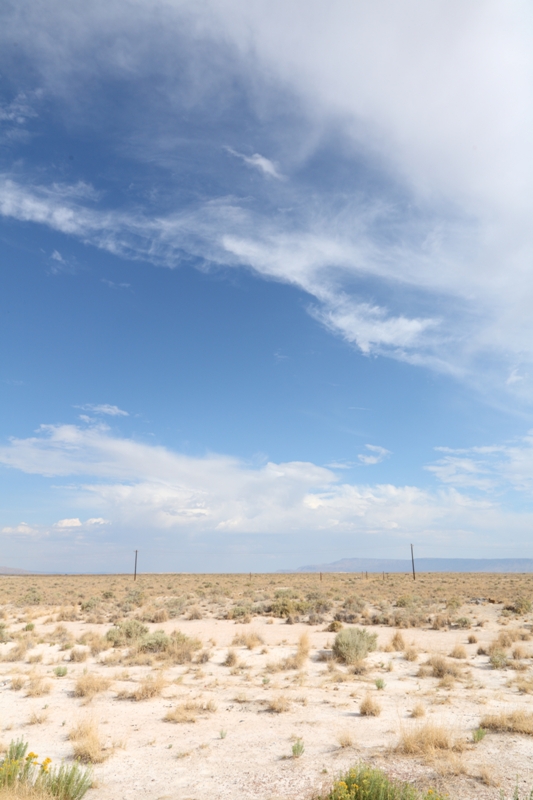
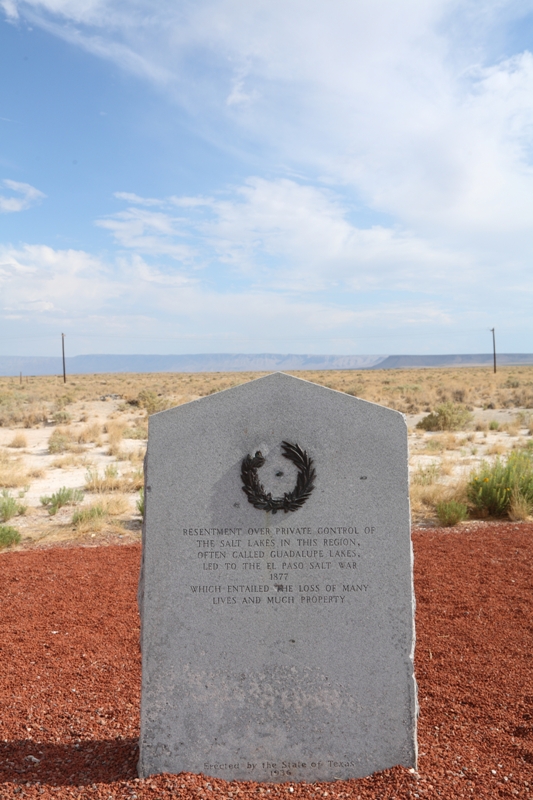
Before reaching Carlsbad we passed through Salt Flat, site of the infamous San Elizario Salt War.  After Salt Flat we traveled into the Guadalupe National Park and motored by El Capitan, the eighth tallest peak in Texas.  Both Salt Flat and El Capitan are pictured below.

After our trek underground through the Caverns the next day, we drove over the through the Lincoln National Forest, the quaint town of  Cloudcroft, and into Alamogordo, where we spent the night.  Just to give you an idea of the vast differences in terrain and climate in New Mexico, our car registered a temperature of 102° Fahrenheit  (39° Celsius) when we passed through Artesia, yet it was only 68° F (20° C) by the time we hit Cloudcroft less than two hours later.

The reason for this is the differences in elevation.  Artesia is at 3,380 feet (1,030 meters) above sea level while Cloudcroft resides at a lofty 8,600 feet (2,621 meters).  By the time we descended into Alamogordo the temperature was back to around 96° F (36° C) and we were at an elevation of 4,336 feet (1,322 meters).  That’s a pretty impressive swing for less than three hours of driving.

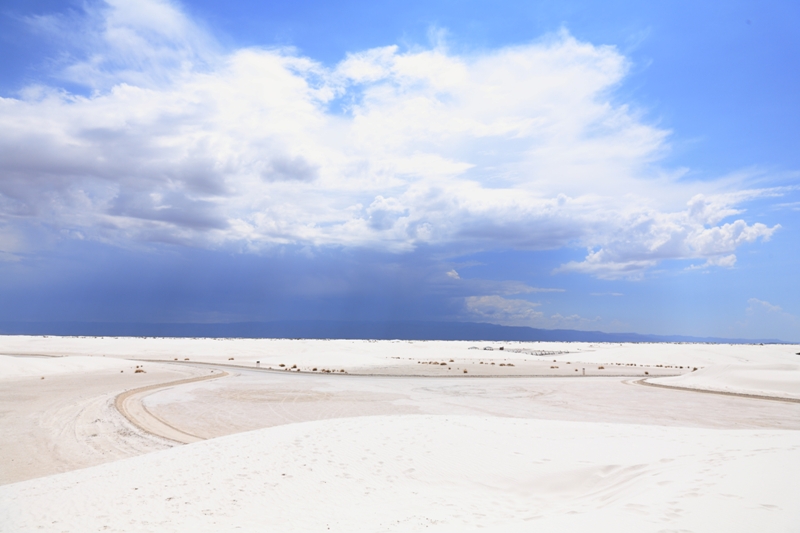
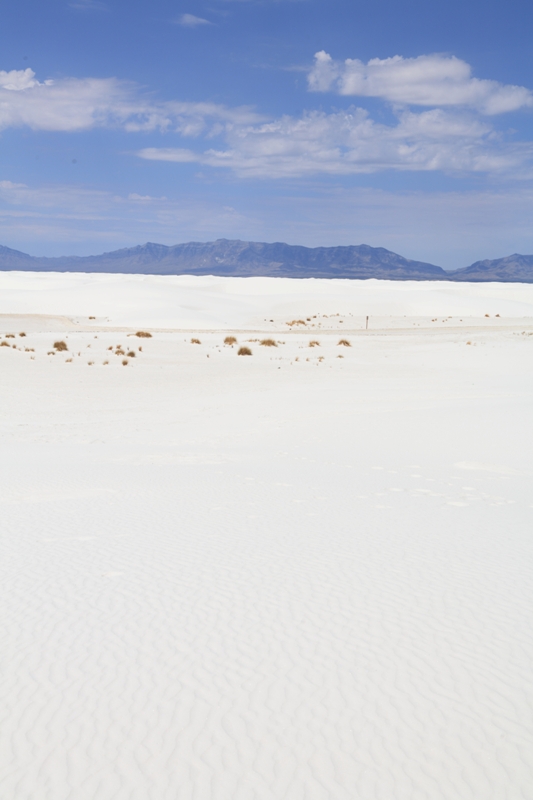
We were less than two hours drive from home with plenty of daylight remaining, but there’s a reason we chose to stop in Alamogordo.  It’s called the White Sands National Monument, and it is home to one of the largest naturally occurring deposits of gypsum “sand” in the world.  All told, these huge gypsum dunes cover an amazing 275 square miles (710 km²).

Photographing White Sands presents much the same problem as we covered in photographing snow.  But exposure compensation isn’t the only problem, especially if the sun is high in the sky.  Because of the intense white and bright sun, shadows get washed out and the landscape becomes featureless even if the exposure is properly compensated.  So, while I generally avoid shooting in raw, this subject really cries out of it.

Camera settings for most of these shots included +1 on the exposure compensation, an ISO set to 100, and white balance manually set to sun.  Post processing then involved tweaking the tonal curves to bring out details in the gypsum dunes.  Oddly enough, on many of these shots that meant bringing down the brightness slightly from the +1 used when the shot was taken, but it worked.

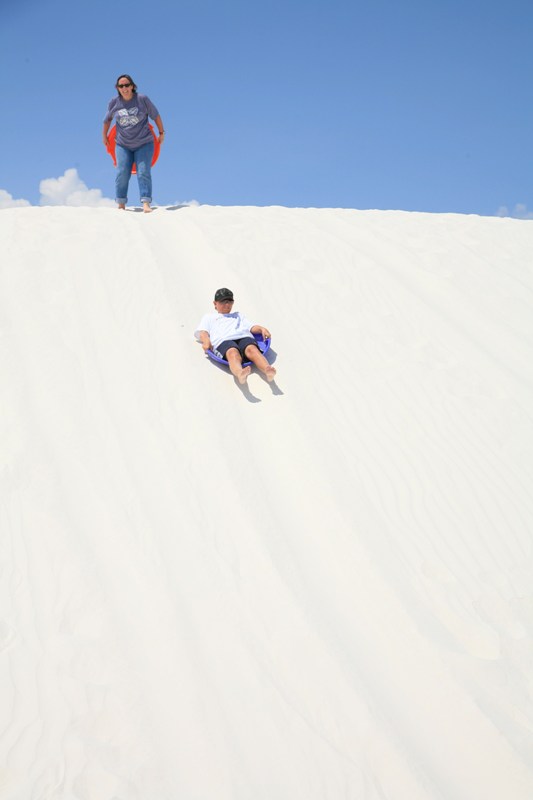
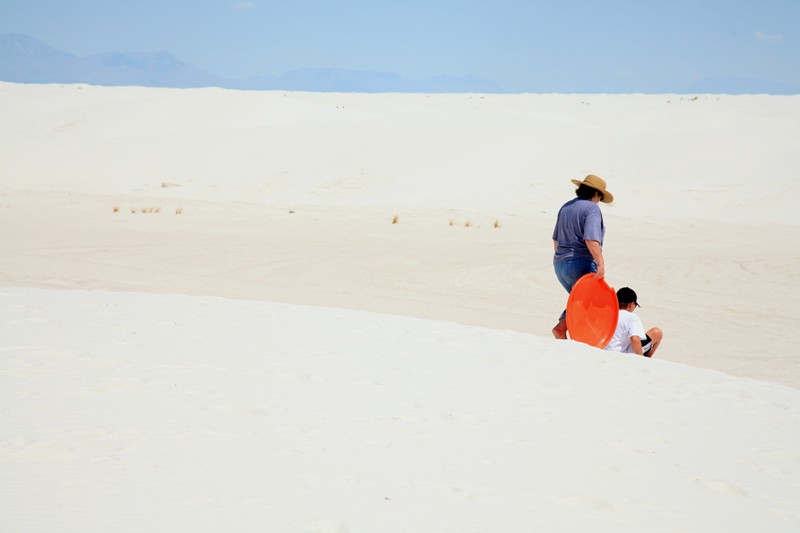
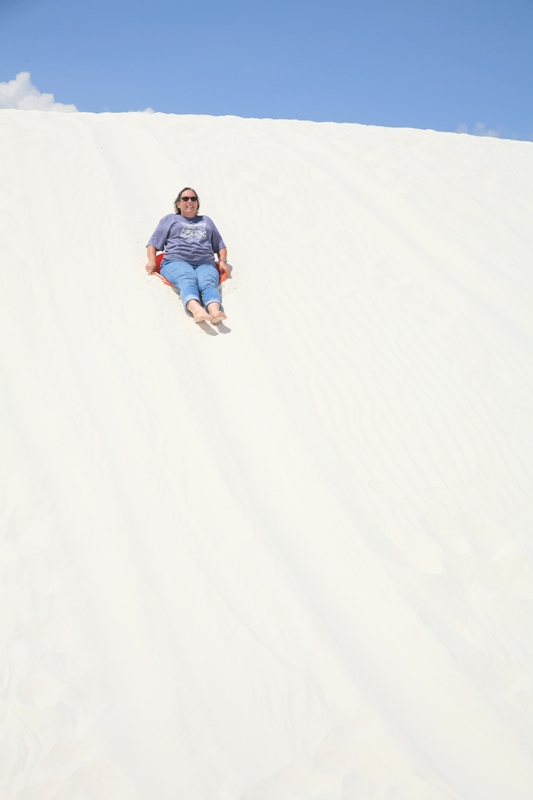
Shots of the grandson and Ursula riding down the dunes were done in JPEG because raw fills up the camera’s buffer far too fast to capture all the action.  This unfortunately limited me to what I could do later in post-processing, but the results aren’t bad, I think.  At any rate, I’ll let you decide how successful those shots were.

3 Comments

Filed under Photography, travel

Can This Economy Take a 90,000-Job Hit?


It’s time to get serious for a brief moment.  We’ve had a lot of fun the past few weeks with blog entries dealing with humor, photography tips, and travel, but today I feel the need to use this forum as a public service of sorts.  Please bear with me, and we’ll get back to the fun stuff on Friday.  That’s a promise.  But, right now, I’m trying to save some people from serious, potentially devastating financial hardship.

Congressman John Mica (Florida Congressional District 7) personally and directly caused last Friday night the furlough of 4,000 government employees.  And along with those 4,000 employees went construction jobs for an estimated 85,000+ contractors.  All this occurred because, it appears, that Congressman Mica doesn’t believe in democracy.

Yes, you read that correctly.  One man—nearly 90,000 workers.  And all because that one man apparently doesn’t believe in the very democratic principles upon which he relies when he runs for reelection every two years.

Now, here’s the story:  The FAA is supposed to be funded in five-year increments through a piece of legislation called “Reauthorization.”  FAA Reauthorization allows the FAA to collect taxes and then use the revenue from those taxes to fund vitally important airport improvement projects that help keep this country’s aviation infrastructure functional.  But the last FAA Reauthorization bill expired several years ago, and because of petty bickering and, quite frankly, total incompetence from the Chairman of the House Committee on Transportation and Infrastructure, the FAA has been limping along under a series of twenty funding “extensions.”  Last Friday Congress adjourned without passing a twenty-first extension and, at the stroke of midnight Washington, D.C. time, extension number twenty lapsed.

And here’s why:  In most elections in this country—and even the rest of the world for that matter—the side receiving the most votes wins.  Up until very recently, this was not the case if you were an employee of either an airline or a railroad and you wanted to unionize.  In that case, the deck was stacked in management’s favor because anyone who didn’t vote on the question of unionization was automatically classified as a “no” vote.

See the inherent unfairness of this situation?  If we counted as a “no” the vote of everyone in this country who chose not to participate in an election, probably no current member of Congress would have been elected . . . including Congressman John Mica.  But Congressman Mica objects to this new rule that only counts actual ballots, so he attempted to thwart the rights of workers by demanding that a vote not cast once again be counted as a “no” vote in a union election.  He inserted that language into the twenty-first FAA extension knowing full well that it would never pass the Senate.

And then there was also a secondary issue of subsidized services to airports serving smaller communities.  It’s called Essential Air Service (EAS), and it’s something Congressional members from both parties have for decades deemed worthy of financing for those who do not live close to a major airport.  We subsidize postal service to rural areas.  We have subsidies for rural telephone/broadband and rural electrical service.  Rural areas in this country also benefit from federally-funded highways and interstates.  But if Chairman Mica has his way, we’ll start down the road of converting our rural areas into third-world enclaves left to fend for themselves with limited resources.

So, starting this past Saturday morning at one minute after midnight, 4,000 dedicated, hard-working FAA employees were furloughed.  Additionally, federally funded airport construction projects around the country ceased, resulting in the loss of yet another 85,000 construction jobs on top of those 4,000 federal positions.

But don’t go spending that money you think you just saved on airline taxes.  Chances are you won’t see it.  With three exceptions (kudos to Alaska Airlines, Spirit Airlines, and Virgin America for doing the right thing here), most airlines have raised their ticket prices by . . . wait for it . . . the exact same amount of those now defunct taxes.  Funny how that works.  The airlines are getting a huge boost in revenue courtesy of a man to whom they collectively gave $620,000 in campaign contributions in 2010.

Yeah, you read that right as well.  Tens of millions of extra revenue going to the airlines on a daily basis and 90,000 working-class Americans sidelined by a man who took in $620,000 from the former and couldn’t care less about the latter.

But Chairman Mica still collects his paycheck.  Remember that.  Remember that on November 6, 2012.  Remember that especially if you live in Florida’s 7th Congressional District.  Remind Chairman Mica how things work in a democracy, because he’s apparently either forgotten or flat-out doesn’t care.

If you find this as outrageous is do I, please contact your Congressional Representative and your two Senators and plead with them to put an end to this nonsense.  While you’re at it, ask your Congressional Representative why someone as incompetent and, yes, even dangerous as John Mica is in charge of such a vital House Committee.

For additional perspectives on this, check out these blogs:  Get the Flick (Another Mess from Mica) and MartinLady’s View Through the Looking Glass (Further Down the Rabbit Hole).

6 Comments

Filed under Aviation Safety