In Wednesday’s blog, I presented photographs I took of fireworks during Monday’s 4th of July celebration here in El Paso, Texas. Today I’ll highlight more pictures taken that same evening, and this time I’ll give you information on how I took them.
I more and more frequently find myself using a simple point-and-shoot for much of my photographic needs, but occasionally I simply have to get out the more sophisticated equipment to get the most out of certain subjects. For these shots I used my trusty, tried-and-true Canon EOS 5D. The great thing about the 5D is that it was the first “affordable” digital single lens reflex (DSLR) on the market using a 35mm-equivalent sensor. That means that not only would all my older Canon 35mm lenses work with the EOS 5D, but they would also have the same magnification factor as they did with my 35mm film cameras of the past.
The glass I chose for this outing was my only L-series, professional grade Canon lens—my Canon 24-105mm f/4 L IS (Image Stabilized) zoom. This is my favorite lens, and the one that fills the requirements for the vast majority of my shooting situations. It’s just that versatile, and the f/4 aperture in conjunction with the EOS 5D’s exceptional low noise performance at high ISO settings make it a true godsend in low light situations.
Also included in my kit that night was a tripod and, of course, a remote switch. In the old days, our “remote switches” were cable releases that screwed into a small hole atop the shutter release button. In the digital age, they’re now electronic switches that plug into the side of the camera to allow operation of the shutter without the need to touch the camera, thus reducing the likelihood of camera shake or vibration ruining the shot. My choice of remote switch is the Canon RS-80N3.
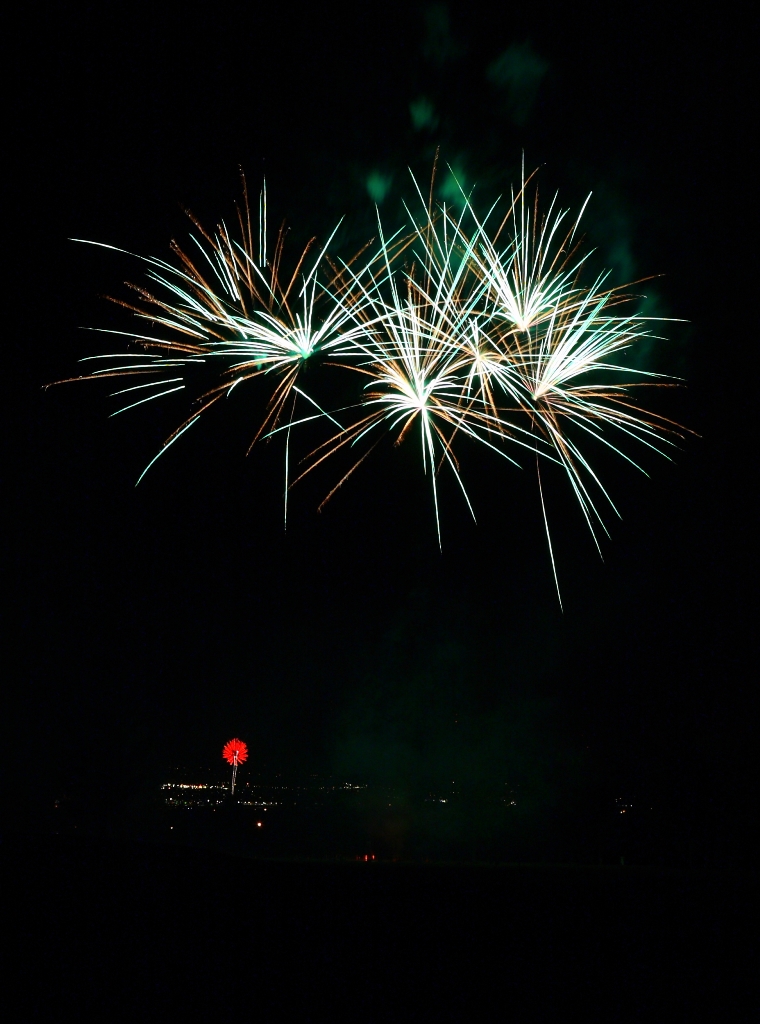
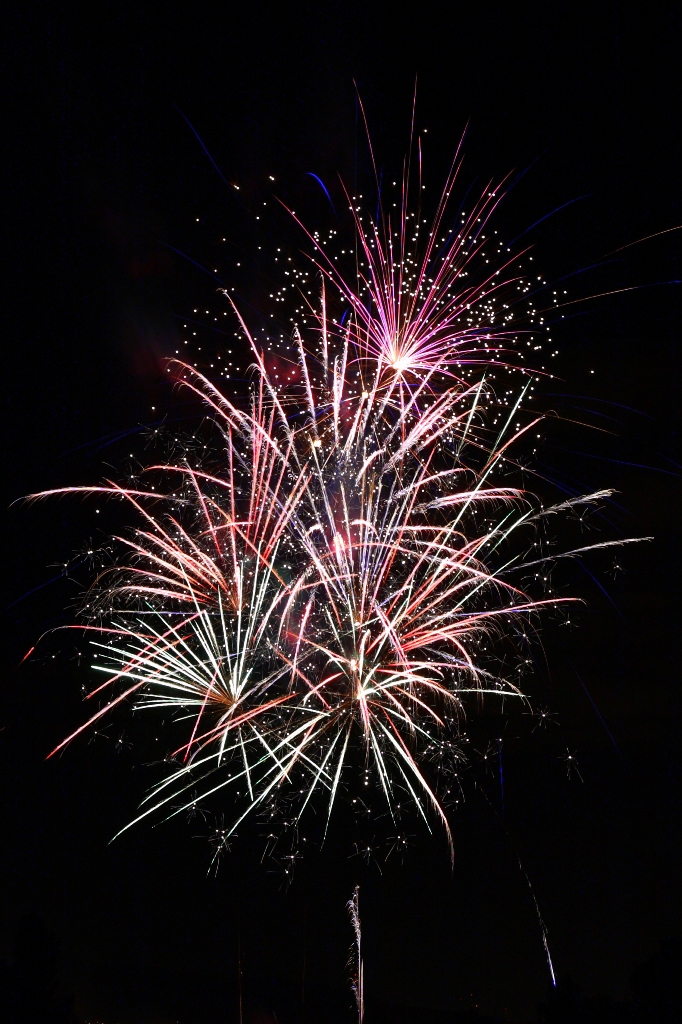
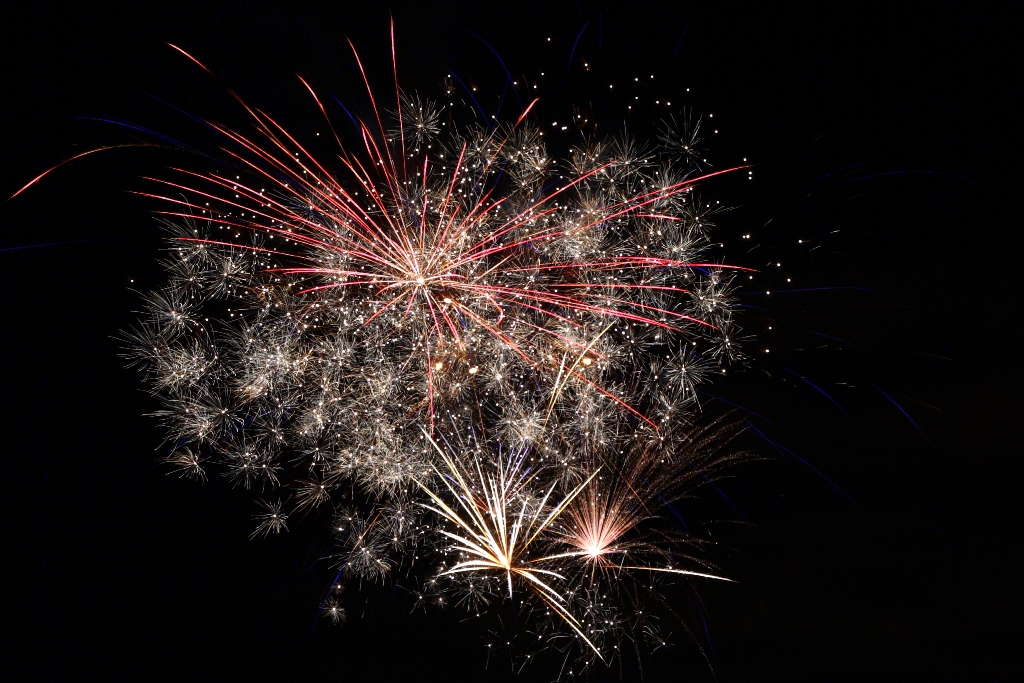
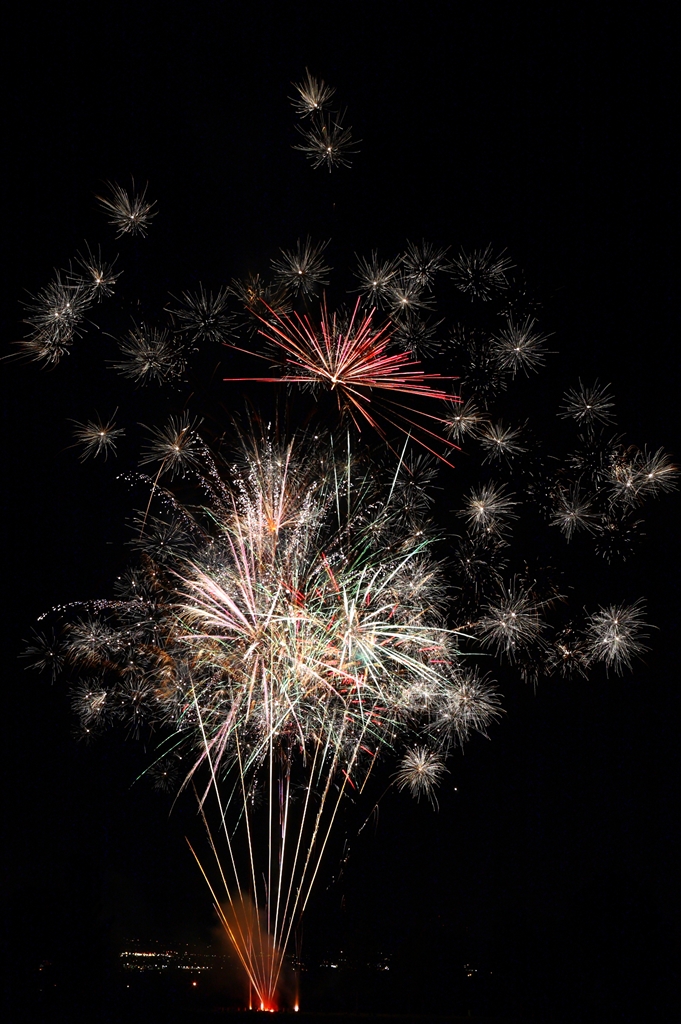
Now, the important stuff—camera settings: I set the ISO to 100 to minimize noise. I also have Custom Function 02 (C.Fn-02) on my EOS 5D set to option 2. But you don’t care about that. You just want to know what it does: This setting applies additional in-camera noise-reduction processing for all exposures over one second. Pictures were taken in Canon raw format to allow for the most leeway in post-processing, but I believe I could have obtained pretty much the same quality if I’d set the camera to shoot in JPEG format. White balance was manually set to “tungsten” to give a more pleasing “warmth” to the colors. I used Canon’s “Standard” picture style to obtain the highest preset color saturation because, let’s face it, with fireworks it’s all about the colors. The lens was zoomed to approximately 40mm to obtain a sufficient amount of width to capture the action, yet still narrow the range enough to bring out detail from the bursts. Exposure times were mostly in the one- to four-second range using the aforementioned remote switch, but some of the photographs were exposed for up to eight seconds with no visible degradation in quality or increase in detectable noise levels. The lens aperture was stopped down to f9.0. This was an arbitrary decision on my part, and it turned out to be almost exactly what I needed. The aperture was wide enough to capture even the smaller sparkles, yet not so wide as to blow out detail in the brighter areas. Indeed, in post processing I found that I could comfortably increase highlights without fear of blowing out details and colors.
The camera was placed in portrait orientation atop the tripod to take full advantage of the vertical travel of the rockets.
Post processing was kept to a minimum. Indeed, after conversion to JPEG, the only post processing I did were minor tweaks in saturation, bumping up the highlights, and some creative cropping to increase the visual impact of the shots. Conversion from raw was performed using Canon’s Digital Photo Professional, which I also used to correct lens aberration prior to conversion. Post processing was done with Google’s Picasa photo editing software, which is available as a free download.
And here are the results:





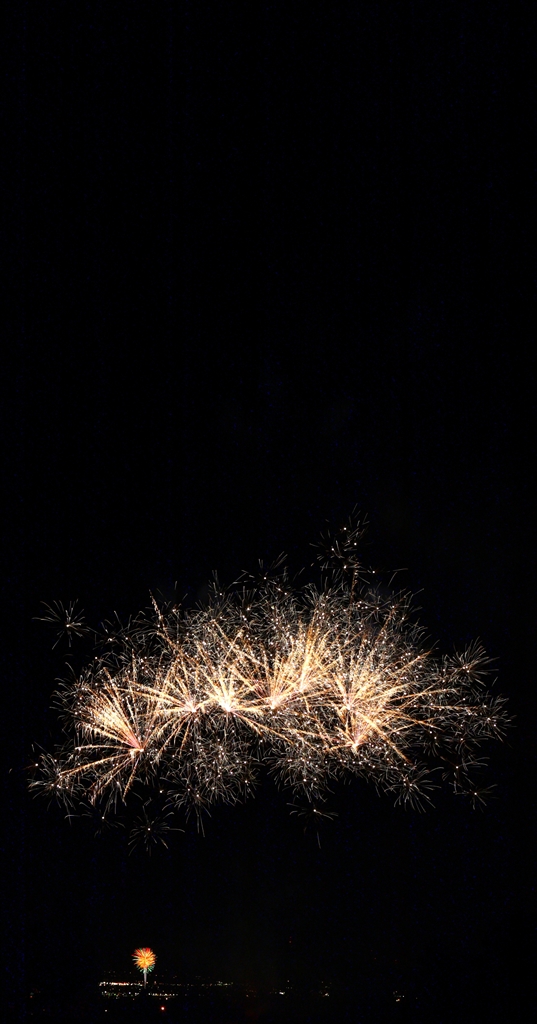
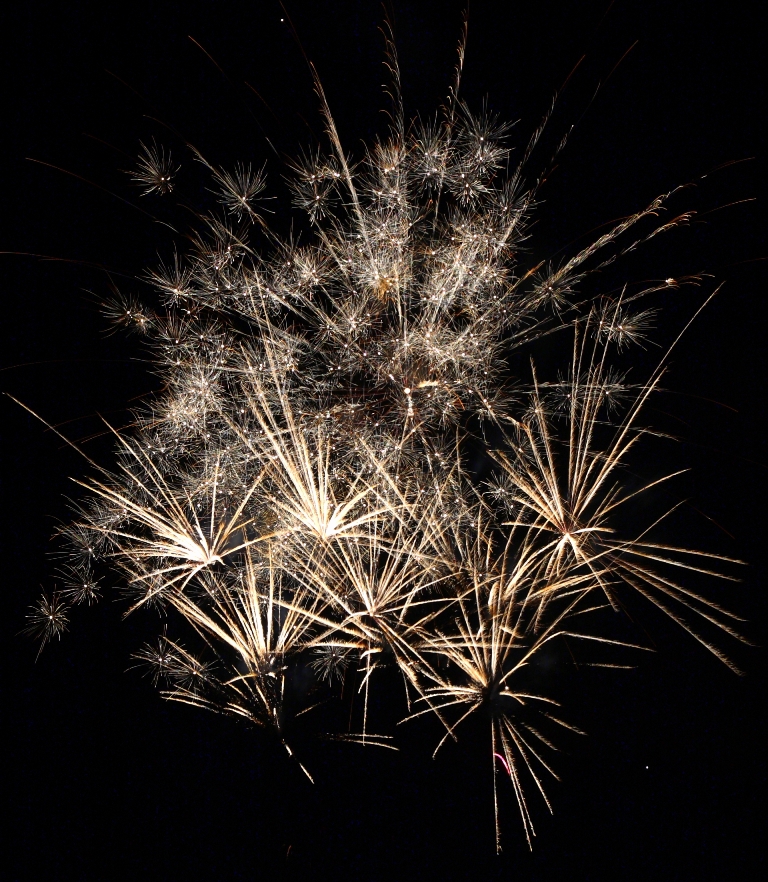

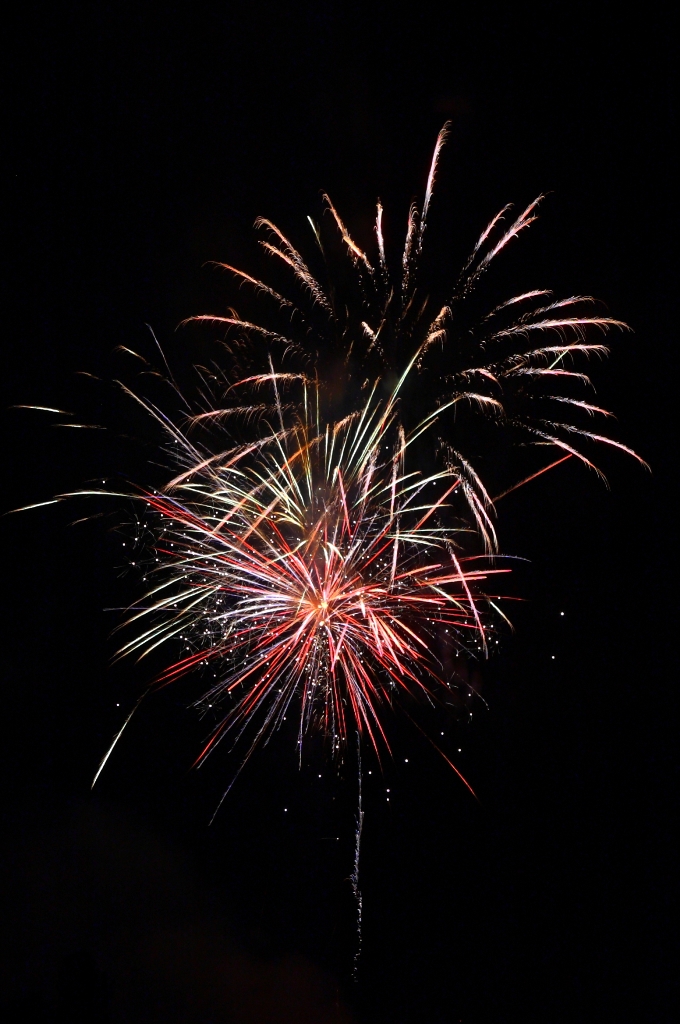

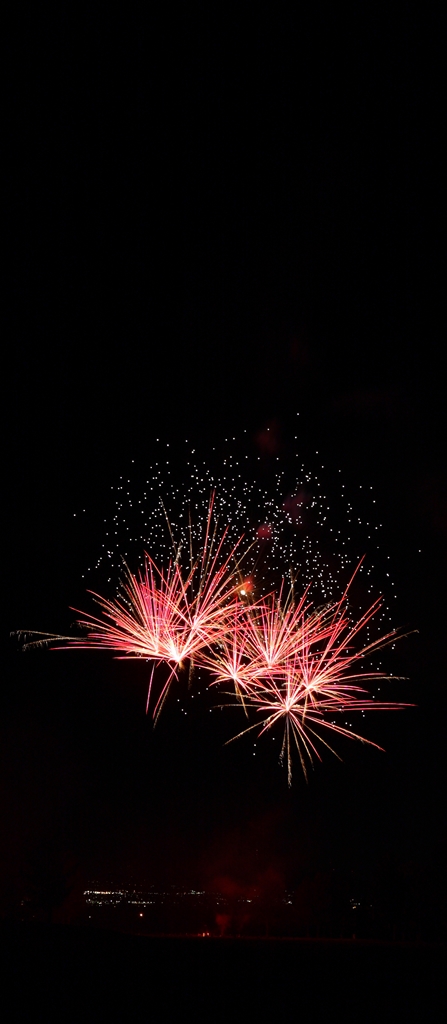
 Decisions — Murder in Paradise
 The Globe — Murder in Luxury
 R. Doug Wicker — Author
Great shots! I’m surprised El Paso had fireworks. We were through there a couple of weeks ago and it looked to be as dry as we are in AZ, where all fireworks were “postponed” or otherwise banned.
I shoot with an EOS 20D and love it.
Thank you, Jeff. El Paso County has temporarily banned fireworks sales and use of fireworks by private individuals this season because of the drought we’ve had and all the dry vegetation everywhere, but public displays were exempted from that ban. So, there were still lots of fireworks to see in and around the area. But as it turns out, these shots were taken at the Santa Teresa Country Club in nearby Santa Teresa, New Mexico—about a twenty-minute drive from our home. There were no restrictions whatsoever across the state line this year.
The EOS 20D was a really nice camera back when it came out in 2004. I’m glad you’re still getting a lot of enjoyment out of it. I know I still love my trusty, old 5D. These things are built like tanks and just last for years, don’t they? Sure makes it hard to justify upgrading.